The Influence of Migrant Communities on Gulf Traditions
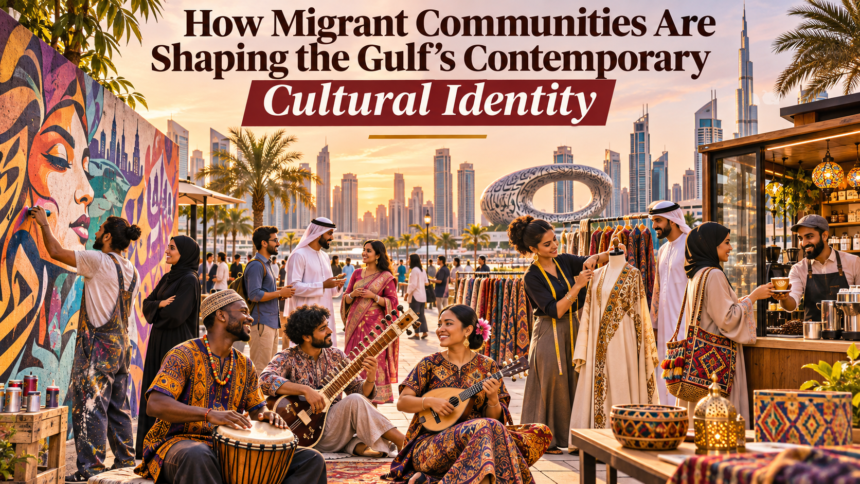
The cultural identity of the Gulf is undergoing a remarkable transformation as people from different parts of the world contribute to the region’s social, economic, and creative development. From traditional markets and neighbourhood restaurants to international schools and contemporary art exhibitions, migrant communities in the Gulf have become an important part of everyday life, shaping how cities function and how cultures interact.
- 1. How Migration Has Transformed the Gulf’s Cultural Landscape
- 2. How Migrant Communities Influence Food, Language, and Everyday Life
- 3. The Growing Influence of Migrant Communities on Arts and Entertainment
- 4. How Migrant Communities Are Reshaping Gulf Cities and Social Spaces
- 5. The Role of Education, Business, and Younger Generations in Cultural Change
- 6. Balancing National Heritage, Cultural Diversity, and Social Inclusion
- 7. The Future of Migrant Communities and Contemporary Gulf Cultural Identity
Across the United Arab Emirates, Saudi Arabia, Qatar, Kuwait, Bahrain, and Oman, generations of migrants have brought languages, cuisines, celebrations, artistic traditions, and professional experiences. Their contributions extend beyond employment and economic growth, influencing social relationships, consumer preferences, public spaces, and cultural expression.
However, this transformation does not mean that traditional Gulf identities are disappearing. Instead, contemporary Gulf societies increasingly demonstrate how established national traditions and international influences can coexist. Understanding this relationship offers valuable insights into the region’s evolving cultural identity and the opportunities and challenges that accompany multicultural development.
1. How Migration Has Transformed the Gulf’s Cultural Landscape
Migration has played an important role in the Arabian Gulf for centuries. Long before modern skyscrapers and international business districts emerged, coastal communities maintained commercial and cultural relationships with traders from India, Persia, East Africa, and neighbouring Arab regions.
These historical connections influenced regional architecture, food, trade practices, and everyday communication. Maritime commerce helped establish the Gulf as a meeting point for different cultures, creating traditions that continue to influence local identities.
The Expansion of Modern Migration
The discovery and development of oil resources during the twentieth century transformed the scale of migration. Economic expansion created demand for workers in construction, transportation, healthcare, education, hospitality, and other industries.
As Gulf economies diversified, migration expanded beyond traditional labour-intensive sectors. Professionals, entrepreneurs, educators, artists, and technology specialists increasingly became part of the region’s international workforce.
Today, migrants represent substantial portions of the resident populations of several Gulf countries. Although population figures vary according to the definitions and reporting periods used, international demographic research consistently demonstrates the importance of migration to Gulf societies.
Different Migration Patterns Across the GCC
| Gulf Country | Characteristics of Migrant Communities | Cultural Influence |
|---|---|---|
| United Arab Emirates | Large, internationally diverse resident population | International dining, arts, business, and multilingual communities |
| Saudi Arabia | Extensive migrant workforce and professional communities | Hospitality, retail, education, and urban lifestyles |
| Qatar | Significant international workforce | International education, food, and cultural exchange |
| Kuwait | Long-established expatriate communities | Community organisations, culinary traditions, and retail culture |
| Bahrain | Historic trading connections and international residents | Commerce, dining, cultural activities, and neighbourhood diversity |
| Oman | Historical Indian Ocean connections and contemporary migration | Trade, food traditions, entrepreneurship, and cultural exchange |
The cultural effects of migration differ across these countries because their histories, policies, population structures, and social environments are not identical.
Nevertheless, migration has become one of the central forces influencing contemporary Gulf society.
Migration Beyond Economic Contribution
While discussions about migration frequently focus on employment, economic statistics alone cannot explain its wider social impact.
Migrants develop friendships, establish businesses, participate in community activities, and contribute to neighbourhood life. Their presence influences the services, products, and cultural experiences available to residents.
These interactions gradually shape the social character of Gulf cities, creating environments where local traditions encounter international influences in everyday settings.
2. How Migrant Communities Influence Food, Language, and Everyday Life
One of the most visible contributions of migrant communities in the Gulf can be found in the region’s food culture. Restaurants, grocery stores, bakeries, and traditional food markets reflect the international backgrounds of residents.
Across Gulf cities, people can experience South Asian curries, Filipino dishes, Levantine specialities, East African flavours, and international dining concepts alongside traditional Arabian cuisine.
Food as an Everyday Form of Cultural Exchange
Food provides an accessible way for communities to share traditions without requiring extensive knowledge of another culture.
A restaurant established primarily to serve one expatriate community may eventually attract customers from many nationalities. Over time, recipes can be adapted to local tastes while preserving their original culinary characteristics.
This interaction creates opportunities for cultural appreciation and commercial innovation.
Examples of everyday culinary exchange include:
- Indian and Pakistani restaurants becoming familiar dining options for residents from different backgrounds.
- Filipino bakeries and restaurants introducing traditional dishes to wider audiences.
- Levantine cafés contributing to the popularity of shared dining and casual hospitality.
- African restaurants introducing regional cooking traditions to international customers.
- International cafés combining global menus with Gulf hospitality preferences.
These culinary experiences create common spaces where residents interact beyond their workplaces and immediate social circles.
The Growth of Multilingual Communication
Language is another area where migration influences daily life. Arabic remains central to the Gulf’s national identities and cultural heritage, while English frequently serves as a shared language in international workplaces and commercial environments.
Hindi, Urdu, Malayalam, Bengali, Tagalog, and numerous other languages can also be heard in residential neighbourhoods, commercial centres, and community gatherings.
This multilingual environment affects advertising, customer service, education, and digital communication.
Businesses frequently adapt their messaging to reach different linguistic communities. Multilingual communication can improve accessibility and strengthen relationships between service providers and residents.
Everyday Cultural Adaptation
Cultural exchange also appears in ordinary social behaviour. People encounter different approaches to greetings, hospitality, celebrations, family relationships, and professional etiquette.
These experiences can encourage greater cultural awareness, particularly in workplaces and educational environments where people interact across nationalities.
However, cultural familiarity does not develop automatically. Meaningful exchange requires respect, curiosity, and opportunities for interaction.
The influence of migrant communities is therefore not limited to introducing new cultural products. It also involves the gradual development of shared social practices.
3. The Growing Influence of Migrant Communities on Arts and Entertainment
Contemporary Gulf culture is increasingly expressed through international artistic collaborations, independent creative communities, exhibitions, and entertainment events.
Migrant artists, musicians, filmmakers, designers, and performers contribute diverse perspectives to the region’s creative environment.
Their work can explore subjects such as migration, belonging, identity, family history, cultural memory, and the experience of living between different societies.
Art as a Bridge Between Cultures
Visual art offers an important platform for exploring multicultural experiences. Artists working in the Gulf may draw inspiration from their countries of origin while responding to the social and architectural environments around them.
For example, a painter might combine traditional artistic techniques with images of modern Gulf cities. A photographer might document everyday neighbourhood interactions, while a filmmaker could explore the experiences of families living across national borders.
These creative expressions help audiences understand aspects of migrant experiences that economic statistics rarely capture.
Art also creates opportunities for dialogue between national and expatriate communities.
The Role of Music and Performance
Music provides another important form of cultural interaction. International concerts, community performances, dance events, and cultural festivals introduce audiences to artistic traditions from different regions.
South Asian music, African rhythms, Western contemporary genres, and Arab musical traditions all contribute to the broader entertainment landscape.
Creative collaborations can produce performances that combine musical styles while maintaining their cultural origins.
Such activities demonstrate that cultural identity can involve both preservation and experimentation.
Creative Industries and Cultural Representation
| Creative Field | Contribution of Migrant Communities | Wider Cultural Impact |
|---|---|---|
| Visual Arts | Diverse artistic techniques and perspectives | Greater representation of international experiences |
| Music | International genres and collaborations | Cross-cultural entertainment |
| Film | Stories of migration, identity, and belonging | Wider understanding of multicultural experiences |
| Fashion | Traditional craftsmanship and international design | New approaches to contemporary style |
| Literature | Multilingual writing and personal narratives | Broader discussions about identity and society |
| Performing Arts | Theatre, dance, and cultural performances | Opportunities for community participation |
Digital platforms have further expanded the visibility of migrant creativity.
Independent artists can reach audiences through social media, online exhibitions, podcasts, and short films without depending entirely on traditional cultural institutions.
This accessibility creates opportunities for emerging voices, although access to funding, professional networks, and exhibition spaces can remain uneven.
4. How Migrant Communities Are Reshaping Gulf Cities and Social Spaces
The influence of migrant communities extends beyond individual cultural activities into the physical and social organisation of Gulf cities.
Residential neighbourhoods, shopping districts, recreational facilities, and community centres often reflect the needs of internationally diverse populations.
As communities grow, they create demand for familiar goods, services, educational institutions, and places to gather.
Neighbourhoods as Centres of Cultural Exchange
Some urban districts become associated with particular restaurants, grocery stores, language services, or community businesses.
These areas can offer migrants a sense of familiarity while also introducing other residents to different cultural traditions.
Local markets are especially significant because they bring together commercial activities and informal social interaction.
A neighbourhood grocery store may sell products from several countries, while nearby restaurants serve customers who speak multiple languages.
Such environments demonstrate how cultural diversity becomes embedded in the ordinary functioning of cities.
The Importance of Shared Public Spaces
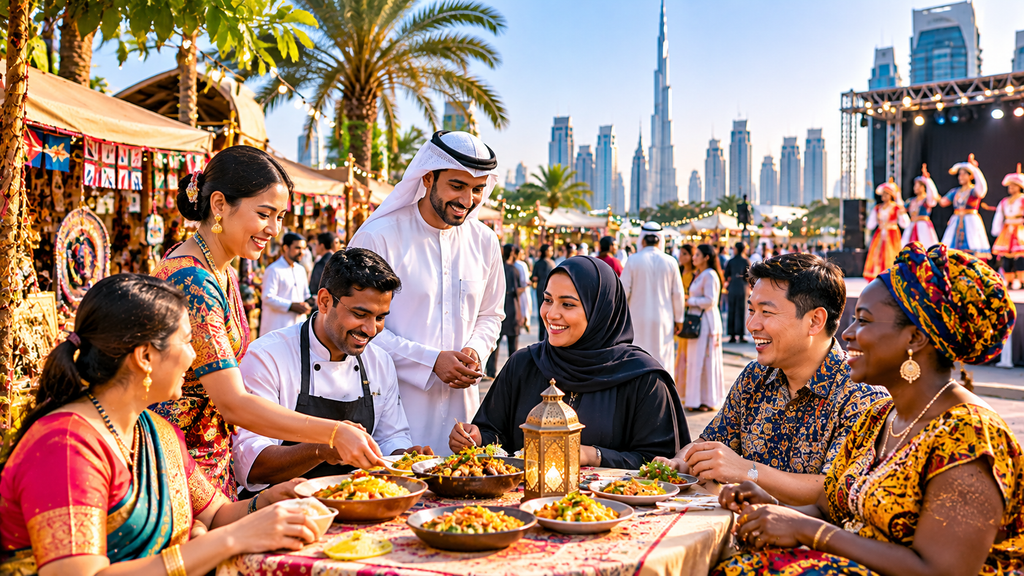
Public parks, waterfronts, libraries, shopping centres, and community facilities can provide places where residents interact outside professional settings.
These spaces are important because cultural integration requires opportunities for everyday contact.
A family spending time in a public park may encounter people from different backgrounds through children’s activities, exercise, or community events.
Libraries and cultural centres can similarly encourage interaction through workshops, exhibitions, and educational programmes.
However, the availability of shared spaces does not guarantee equal access. Transportation, working hours, affordability, and residential location can influence participation.
Urban Design and Cultural Belonging
Urban development can support multicultural communities when it considers how different groups use public environments.
Important planning priorities include:
- Affordable and accessible recreational facilities.
- Safe pedestrian routes connecting residential and commercial areas.
- Public transportation serving diverse neighbourhoods.
- Community spaces suitable for cultural and educational activities.
- Multilingual information where appropriate.
- Inclusive opportunities for residents to participate in local events.
These features benefit residents more broadly rather than serving any single nationality.
A city that supports interaction between communities can strengthen social relationships while improving everyday quality of life.
This makes urban planning an important, although sometimes overlooked, dimension of cultural development.
5. The Role of Education, Business, and Younger Generations in Cultural Change
Schools, universities, workplaces, and businesses are among the environments where multicultural experiences become part of daily routines.
Children growing up in internationally diverse Gulf cities may interact with classmates whose families come from different countries.
Similarly, employees often work within teams that include multiple nationalities, languages, and professional traditions.
These experiences influence how individuals understand cultural identity and social belonging.
International Education and Cultural Awareness
International schools often bring together students from different cultural and linguistic backgrounds.
Through classroom discussions, group projects, sports, and extracurricular activities, students gain opportunities to encounter unfamiliar traditions and perspectives.
Such interactions can encourage communication skills and cultural understanding.
However, the experience varies considerably depending on school curricula, tuition costs, language policies, and student demographics.
Not all children have equal access to internationally diverse educational environments.
Children Growing Up Between Cultures
For young people raised in migrant households, cultural identity may involve several overlapping influences.
They may maintain strong connections to their parents’ countries of origin while developing everyday familiarity with Gulf cities.
Family traditions, food, languages, entertainment, and educational experiences can all contribute to this sense of identity.
Some young people may feel connected to multiple cultures without identifying exclusively with one.
Others may experience uncertainty about long-term belonging, especially when residency arrangements depend on family employment or other legal conditions.
These experiences illustrate why cultural identity cannot always be explained through nationality alone.
Entrepreneurship and Cultural Innovation
Migrant entrepreneurs also contribute to the Gulf’s evolving commercial and cultural environment.
Small businesses may introduce products and services that reflect the needs of specific communities while attracting customers from wider markets.
Restaurants, fashion labels, beauty services, creative agencies, and educational businesses provide examples of enterprises that can connect different cultural traditions.
Entrepreneurship can create employment and encourage innovation, although business ownership opportunities depend on each country’s licensing, investment, and residency rules.
The Influence of Multicultural Workplaces
Professional environments can introduce employees to different communication styles, approaches to leadership, and ways of solving problems.
Teams that successfully manage these differences may benefit from a wider range of perspectives.
However, diversity alone does not guarantee inclusion or effective collaboration.
Organisations must establish respectful workplace practices and provide fair opportunities for participation.
When supported by inclusive policies, multicultural workplaces can become important environments for everyday cultural exchange.
6. Balancing National Heritage, Cultural Diversity, and Social Inclusion
The growing influence of migrant communities raises important questions about how Gulf societies preserve national heritage while engaging with international cultural influences.
Traditional architecture, Arabic language, national celebrations, religious practices, family customs, and local artistic traditions remain important elements of Gulf identity.
Multicultural development does not necessarily require these traditions to weaken.
Instead, cultural institutions and communities can support heritage preservation while recognising the diverse experiences of residents.
Preserving Local Cultural Traditions
Across the Gulf, cultural heritage continues to be represented through museums, festivals, historic districts, craftsmanship, poetry, music, and public celebrations.
These activities help preserve knowledge and practices that connect present generations with their history.
They also provide opportunities for international residents to learn about the societies in which they live.
Cultural education becomes especially valuable when it moves beyond entertainment and encourages genuine understanding.
Recognising the Contributions of Migrants
Migrant communities have made substantial contributions to infrastructure, healthcare, education, hospitality, commerce, and domestic life.
Nevertheless, cultural recognition can be uneven.
The experiences of internationally recognised professionals may receive greater public attention than those of lower-income workers.
This difference matters because migrant communities are not a single social or economic group.
Their circumstances vary according to nationality, occupation, income, gender, legal status, and access to services.
A meaningful understanding of multicultural identity should therefore include the experiences of people across different economic backgrounds.
Challenges Affecting Cultural Participation
| Challenge | Potential Cultural Impact | Possible Response |
|---|---|---|
| Language barriers | Limited access to information and activities | Clear multilingual communication |
| Economic inequality | Unequal participation in cultural events | Affordable community programmes |
| Social separation | Fewer interactions between communities | Shared public activities |
| Residency uncertainty | Difficulty developing long-term belonging | Clear information and appropriate support |
| Limited representation | Some experiences remain overlooked | More inclusive cultural storytelling |
| Work-related constraints | Reduced time for community participation | Accessible events and flexible scheduling |
These challenges demonstrate that cultural diversity and social inclusion are related but distinct concepts.
A society may contain many nationalities without providing equal opportunities for interaction or representation.
Developing Respectful Cultural Exchange
Successful cultural exchange requires more than simply celebrating international festivals or offering global cuisine.
It involves recognising different perspectives, avoiding stereotypes, and creating environments where people can interact with dignity.
Cultural organisations, educational institutions, employers, and community groups can contribute by encouraging dialogue and participation.
At the same time, the preservation of national identity remains an important priority for Gulf countries.
The challenge is to support international engagement while respecting the historical and cultural foundations of each society.
7. The Future of Migrant Communities and Contemporary Gulf Cultural Identity
The future of cultural identity in the Gulf will be influenced by several interconnected developments, including economic diversification, international education, digital communication, urban growth, and changing migration patterns.
As Gulf countries expand industries such as technology, tourism, healthcare, logistics, and creative services, they are likely to continue interacting with international talent and professional networks.
These developments could create new opportunities for cultural collaboration and exchange.
However, the long-term character of migration will depend on labour market conditions, government policies, global economic developments, and individual circumstances.
Digital Communities and New Cultural Connections
Digital communication allows migrants to maintain relationships with families and communities across national borders.
Messaging platforms, online media, streaming services, and social networks make it possible to participate in cultural activities beyond physical location.
A migrant living in the Gulf may follow news from their home country, communicate regularly with relatives, and participate in online communities while engaging with local society.
This creates a form of cultural connection that is not confined to a single geographic location.
Digital platforms can also support multilingual storytelling and independent cultural projects.
Opportunities for Cultural Collaboration
Several areas may become increasingly important in the development of inclusive cultural environments.
- Creative partnerships: Projects involving artists and cultural institutions from different communities.
- Community storytelling: Initiatives documenting the experiences of migrants and long-term residents.
- Educational exchange: Programmes encouraging students to explore regional and international cultures.
- Accessible public events: Activities designed for residents from different income groups.
- Multilingual communication: Information and cultural programming that reach wider audiences.
- Heritage awareness: Projects connecting contemporary multicultural experiences with Gulf history.
These approaches can help cultural institutions recognise the international character of Gulf cities while maintaining meaningful connections to national traditions.
Why Cultural Belonging Matters
Belonging is not determined solely by the number of years a person spends in a particular country.
It can develop through relationships, shared experiences, familiarity with local traditions, and opportunities to participate in community life.
For migrant residents, feelings of belonging may coexist with strong emotional connections to their countries of origin.
These overlapping identities are becoming increasingly relevant to discussions about contemporary Gulf culture.
However, emotional attachment and legal belonging are not the same. Residency, citizenship, and long-term settlement opportunities differ across Gulf countries.
Recognising this distinction is essential when discussing the future of multicultural communities.
A Cultural Identity Shaped by Interaction
The Gulf’s cultural future is unlikely to be defined by a single international influence.
Instead, it will continue to emerge through interactions between longstanding local traditions and the experiences of people who live, work, study, and create across the region.
Food, language, architecture, entertainment, education, and digital communication will remain important spaces for these interactions.
The extent to which they produce meaningful cultural inclusion will depend on opportunities for participation and mutual understanding.
Conclusion
Migrant communities in the Gulf are helping shape a contemporary cultural identity that reflects both regional heritage and international connections.
Their contributions can be seen in neighbourhoods, restaurants, workplaces, classrooms, artistic projects, and community activities. These everyday interactions influence how residents experience the region and how cultural traditions are shared across generations.
At the same time, the Gulf’s multicultural development involves complex questions about representation, economic inequality, residency, and national identity.
Understanding these realities requires recognising migrant communities as diverse groups whose experiences cannot be reduced to their economic contributions alone.
The evolving cultural identity of the Gulf is ultimately a story of continuity and change. Local heritage remains central, while international communities contribute new experiences, perspectives, and creative expressions.
As these relationships develop, the Gulf provides an important setting for understanding how cultural identities can be preserved, negotiated, and reshaped in an increasingly interconnected world.
Do follow us on Instagram
Read More – Electronic Waste in the Middle East: 7 Critical Challenges and Solutions