



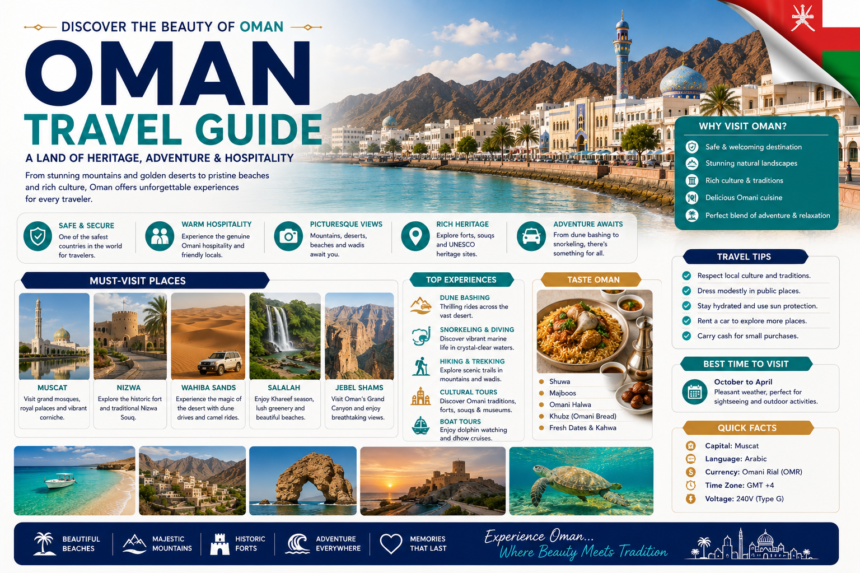
Oman Travel Guide for Tourists and First Time Visitors in 2026
An Oman Travel Guide should begin with one simple idea: Oman is one of the Gulf’s most diverse destinations. The country combines dramatic mountains, long coastlines, desert landscapes, historic forts, traditional souqs, wadis, beaches and modern cities.
- Oman Travel Guide for First Time Visitors in 2026
- 1. Explore Muscat
- 2. Visit Sultan Qaboos Grand Mosque
- 3. Walk Through Mutrah Souq
- 4. Take a Road Trip to Nizwa
- 5. Explore Jebel Akhdar
- 6. Visit Jebel Shams
- 7. Discover Oman’s Wadis
- 8. Experience Sharqiyah Sands
- 9. Travel to Salalah
- 10. Enjoy Oman’s Beaches
- 11. Try Diving and Snorkelling
- 12. Explore Oman’s Forts and Heritage
- Best Time to Visit Oman
- Oman Visa Requirements
- Passport Validity for Oman Travel
- Getting Around Oman
- Driving in Oman
- Public Transport and Taxis
- Oman Travel Guide for Families
- Oman Travel Guide for Couples
- Oman Travel Guide for Solo Travelers
- Omani Food to Try
- Frankincense and Omani Culture
- What to Wear in Oman
- Travel During Ramadan
- Safety in Oman
- Travel Insurance for Oman
- Budget Travel in Oman
- Luxury Travel in Oman
- A 7-Day Oman Itinerary
- Common Oman Travel Mistakes
- Frequently Asked Questions About Oman Travel Guide
- Conclusion
Muscat offers the easiest starting point for first-time visitors, but some of Oman’s most memorable experiences sit outside the capital. Nizwa brings you closer to the country’s historic interior, Salalah offers a completely different climate during Khareef, and destinations such as Jebel Akhdar and the Sharqiyah Sands give travelers access to mountains and desert landscapes within the same trip.
For people who enjoy road trips, nature and cultural travel, Oman can be one of the Gulf’s strongest destinations.
Oman Travel Guide for First Time Visitors in 2026
First-time travelers should allow enough time to see more than Muscat.
A short weekend can work for the capital, but a five to seven day itinerary gives you much more flexibility to combine Muscat with mountains, wadis, desert and historic towns.
The official Oman tourism platform currently highlights categories including nature, culture, adventure, beaches, forts, mountains and heritage experiences, reflecting how varied the country is for visitors.
1. Explore Muscat
Muscat is the country’s main gateway.
Visitors can explore modern waterfront districts, mosques, museums, traditional markets and coastal roads.
Popular experiences can include Mutrah Corniche, Mutrah Souq, the Royal Opera House area and major cultural attractions around the city.
Muscat is also useful as a base because many tour operators and rental-car services are concentrated there.
2. Visit Sultan Qaboos Grand Mosque
The Sultan Qaboos Grand Mosque is one of Oman’s major architectural and cultural landmarks.
Non-Muslim visitors are allowed during designated visiting hours, subject to dress and conduct rules.
Travelers should wear modest clothing and check access times before travelling.
The mosque works particularly well early in a Muscat itinerary because it introduces visitors to the country’s architecture, religion and design traditions.
3. Walk Through Mutrah Souq
Mutrah Souq provides a completely different atmosphere from Muscat’s modern malls.
Visitors can explore small shops selling frankincense, perfumes, textiles, jewellery, spices and souvenirs.
The surrounding Corniche also makes it easy to combine shopping with an evening walk.
For first-time visitors, this is one of the easiest ways to experience a more traditional commercial side of Muscat.
4. Take a Road Trip to Nizwa
Nizwa is one of the best places to visit for history lovers.
The city is known for Nizwa Fort, traditional markets and its connection with Oman’s historic interior.
A day trip is possible from Muscat, but staying overnight can make the experience more relaxed.
Visitors can combine Nizwa with nearby mountain destinations or heritage villages.
5. Explore Jebel Akhdar
Jebel Akhdar is one of Oman’s best-known mountain destinations.
Higher elevation means cooler conditions than Muscat, especially during parts of the year.
The area is known for dramatic mountain scenery, terraced agriculture, hiking routes and luxury mountain hotels.
Travelers should check vehicle-access requirements because some mountain roads may require suitable four-wheel-drive vehicles.
6. Visit Jebel Shams
Jebel Shams is another major mountain destination.
It is often associated with spectacular canyon views and hiking.
The area can work well for travelers who want a more rugged mountain experience.
Accommodation ranges from camps and resorts to more basic stays.
Sunrise and sunset can be particularly impressive, but mountain temperatures can drop significantly compared with the coast.
7. Discover Oman’s Wadis
Wadis are among Oman’s most distinctive natural attractions.
Popular options include Wadi Shab and Wadi Bani Khalid.
These places can combine hiking, swimming, rock formations and freshwater pools.
Visitors should always check weather conditions before entering wadis because flash flooding can be dangerous.
Good footwear and plenty of water are essential.
8. Experience Sharqiyah Sands
A desert stay provides a very different Oman experience.
Sharqiyah Sands offers dune landscapes, desert camps, sunset views and traditional experiences.
Visitors can stay overnight in desert camps or visit as part of a guided trip.
Driving directly into desert terrain without experience is not recommended.
A guided transfer can be easier and safer for first-time visitors.
9. Travel to Salalah
Salalah feels very different from northern Oman.
The city is especially famous for the Khareef season, when monsoon conditions bring mist, cooler weather and greenery to Dhofar.
This seasonal transformation is one of the main reasons travelers visit southern Oman.
Salalah also offers beaches, mountain scenery, cultural sites and regional food.
Because it is far from Muscat, most short-trip visitors fly rather than drive.
10. Enjoy Oman’s Beaches
Oman’s long coastline creates many opportunities for beach travel.
Visitors can find everything from accessible city beaches to quieter coastal areas.
Beach activities can include swimming, snorkelling, diving, kayaking and simple relaxation.
Some coastal areas are particularly attractive for sunrise or sunset.
Travelers should pay attention to local currents, weather and swimming conditions.
11. Try Diving and Snorkelling
Oman has a strong marine environment.
Diving and snorkelling are available around several coastal areas, including locations near Muscat.
Marine life can include reef fish, turtles and other species depending on the season and site.
Beginners should use licensed operators and proper equipment.
More experienced divers can explore deeper sites with qualified dive centres.
12. Explore Oman’s Forts and Heritage
Oman has an extensive network of forts, castles and historic settlements.
Nizwa Fort is among the best known, but other destinations such as Bahla and Jabreen also provide insight into the country’s history.
Oman’s cultural travel experience becomes much stronger when visitors combine architecture, local food and traditional markets rather than treating each fort as an isolated photo stop.
Best Time to Visit Oman
The best season depends on where you are going.
For Muscat, Nizwa, mountains and desert trips, the cooler months are generally more comfortable for outdoor exploration.
Summer can be extremely hot in many parts of northern Oman.
Salalah is different because Khareef typically attracts visitors during the summer months.
This means Oman can offer different seasonal travel experiences in the same period.
Oman Visa Requirements
Visa requirements depend on nationality and length of stay.
Oman operates an official eVisa system through Royal Oman Police.
Some travelers may qualify for visa-free entry or simplified routes, while others need an electronic visa before travel.
GCC residents may also have specific entry options depending on nationality, profession and residence status.
Always check the official eligibility system shortly before travelling because visa rules can change.
Passport Validity for Oman Travel
Travelers should make sure their passport has sufficient validity.
For many Oman visa categories, at least six months of passport validity is expected.
If your passport is close to expiry, renew it before booking a major trip.
This is especially important for multi-country GCC itineraries because neighbouring countries may apply their own passport rules.
Getting Around Oman
A rental car can be one of the best ways to explore Oman.
Distances between attractions can be significant, and public transport is less useful for many remote tourism destinations.
A standard car may be sufficient for Muscat and major highways.
However, mountain and desert trips may require a four-wheel-drive vehicle.
Before renting, check:
Insurance
Mileage limits
Off-road restrictions
Roadside assistance
Second-driver fees
Cross-border permissions
Driving in Oman
Road infrastructure is generally good on major routes, but travelers should drive carefully.
Mountain roads can be steep.
Desert areas require specialist knowledge.
Long-distance routes can involve stretches with limited services.
Keep enough fuel, water and phone battery.
Avoid speeding and follow local traffic laws.
During heavy rain, be particularly cautious around wadis and low-lying areas.
Public Transport and Taxis
Taxis and ride-hailing options are available in Muscat and other cities.
They can be convenient for short stays when visitors do not want to rent a car.
However, travelers planning to visit mountains, wadis and remote heritage sites will usually need a rental car, organised tour or private driver.
Oman Travel Guide for Families
Oman can work very well for families.
Possible activities include:
Beaches
Museums
Forts
Mountain resorts
Wadi trips
Boat tours
Desert camps
Wildlife experiences
Families with younger children should avoid overloading the itinerary with long drives.
One major activity per day often works better than trying to visit several remote destinations.
Oman Travel Guide for Couples
Couples can combine culture, adventure and relaxation.
A romantic Oman itinerary might include:
Muscat waterfront
Mountain resort stay
Desert camp
Private beach
Fine dining
Sunset drive
Wadi day trip
The country’s natural landscapes can make even simple activities feel more memorable.
Oman Travel Guide for Solo Travelers
Solo travel in Oman can be rewarding for people who enjoy road trips, photography and independent exploration.
However, remote travel requires planning.
Share your route with someone.
Keep your phone charged.
Avoid isolated desert driving without experience.
Use licensed operators for adventure activities.
Respect local culture and dress expectations.
Omani Food to Try
Food is an important part of the travel experience.
Visitors can explore dishes based around rice, meat, seafood and spices.
Traditional foods can include shuwa, majboos and various grilled dishes.
Omani coffee and dates are also part of local hospitality.
In Muscat, travelers can easily combine local restaurants with Indian, Lebanese, Turkish, Asian and international cuisines.
Frankincense and Omani Culture
Frankincense has deep cultural and historical importance in Oman.
Visitors to Salalah and Dhofar can learn more about the region’s connection with frankincense production and trade.
It also appears widely in markets and souvenir shops.
Buying from reputable local sellers can provide a more authentic experience than generic tourist products.
What to Wear in Oman
Oman is culturally conservative compared with many tourist destinations.
Visitors should dress respectfully.
Light, breathable clothing works well in warm weather, but shoulders and knees should generally be covered in more traditional settings.
Mosques may have stricter dress requirements.
Swimwear should be kept to beaches, hotel pools and appropriate resort areas.
Travel During Ramadan

Ramadan can be a rewarding time to visit, but daily routines change.
Business hours may be shorter.
Restaurants may operate differently during daylight hours.
Visitors should be respectful about eating, drinking and smoking publicly during fasting hours.
Evening life can become much more active after sunset.
Safety in Oman
Oman is generally regarded as a safe destination for international visitors.
Travelers should still use normal precautions.
Keep valuables secure.
Respect traffic laws.
Follow official weather warnings.
Use licensed tour operators.
Do not enter wadis during unstable weather.
Keep emergency contact information available.
Oman’s national emergency number is 9999.
Travel Insurance for Oman
Travel insurance is strongly recommended.
A good policy can cover:
Medical emergencies
Hospitalisation
Trip cancellation
Lost baggage
Rental-car issues
Adventure activities
Evacuation
Anyone planning hiking, diving or desert excursions should make sure those activities are covered.
Budget Travel in Oman
Oman can be explored on different budgets.
To reduce costs:
Rent a standard car for city travel.
Stay in mid-range hotels or guesthouses.
Eat at local restaurants.
Combine several attractions into one road trip.
Book desert camps directly or compare packages.
Avoid luxury resorts every night.
Premium mountain and beach resorts can be expensive, so mixing one luxury stay with simpler accommodation can balance the trip.
Luxury Travel in Oman
Luxury travelers have strong options.
Oman offers high-end beach resorts, mountain properties, desert camps and premium hotels in Muscat.
The strongest luxury itineraries often combine contrasting environments.
For example:
Two nights in Muscat
Two nights in the mountains
One night in the desert
Two nights at a beach resort
This creates variety rather than spending the entire trip in one luxury property.
A 7-Day Oman Itinerary
A practical one-week trip could look like this:
Day 1: Arrive in Muscat and explore Mutrah.
Day 2: Grand Mosque, museum and city attractions.
Day 3: Drive to Nizwa and explore the fort and souq.
Day 4: Jebel Akhdar or Jebel Shams.
Day 5: Wadi experience and coastal drive.
Day 6: Sharqiyah Sands desert camp.
Day 7: Return to Muscat and relax before departure.
Salalah is better treated as a separate extension because of the distance.
Common Oman Travel Mistakes
Travelers should avoid:
Visiting in peak heat without planning
Trying to see the whole country in three days
Driving off-road without experience
Entering wadis during unstable weather
Ignoring cultural dress expectations
Booking mountain hotels without checking vehicle requirements
Forgetting travel insurance
Underestimating driving distances
Relying only on taxis for remote travel
Ignoring visa requirements
Good preparation makes the trip considerably easier.
Frequently Asked Questions About Oman Travel Guide
Is Oman worth visiting?
Yes. Oman combines mountains, beaches, desert, cultural heritage, historic towns and modern cities in one destination.
How many days are enough for Oman?
Five to seven days is a good starting point for Muscat and several nearby regions. Longer trips allow time for Salalah and more remote destinations.
What is the best month to visit Oman?
Cooler months are generally best for northern Oman, while Salalah’s Khareef attracts visitors during summer.
Do tourists need a visa for Oman?
It depends on nationality. Oman uses an official eVisa system and also provides visa-free or simplified routes for some travelers.
Do I need a car in Oman?
A car is highly useful for exploring beyond Muscat. Remote mountain, desert and wadi destinations often require either a rental car or organised tour.
Is Oman family-friendly?
Yes. Beaches, forts, desert camps, mountains and family resorts can make Oman suitable for children, although long road journeys should be planned carefully.
Conclusion
An Oman Travel Guide becomes much more useful when travelers understand that Oman is not one single type of destination.
Muscat provides modern city life and cultural landmarks.
Nizwa brings travelers into the historic interior.
Jebel Akhdar and Jebel Shams offer mountain landscapes.
Wadis provide swimming and hiking.
Sharqiyah Sands creates a classic desert experience.
Salalah transforms during Khareef and offers a completely different climate and landscape from northern Oman.
The best trips therefore combine contrast.
Do not spend the entire holiday inside Muscat.
Rent a car where practical.
Explore the mountains.
Visit a fort.
Spend time in a wadi.
Stay in the desert.
Try local food.
Walk through traditional markets.
And leave enough time to experience Oman’s landscapes slowly rather than rushing between attractions.
For travelers who enjoy culture, road trips and natural scenery, Oman can offer one of the Gulf’s most memorable and varied travel experiences.
Follow us on Instagram
Read More – Living in Oman: 12 Amazing Reasons to Move in 2026