How UAE Libraries Are Expanding Beyond Books
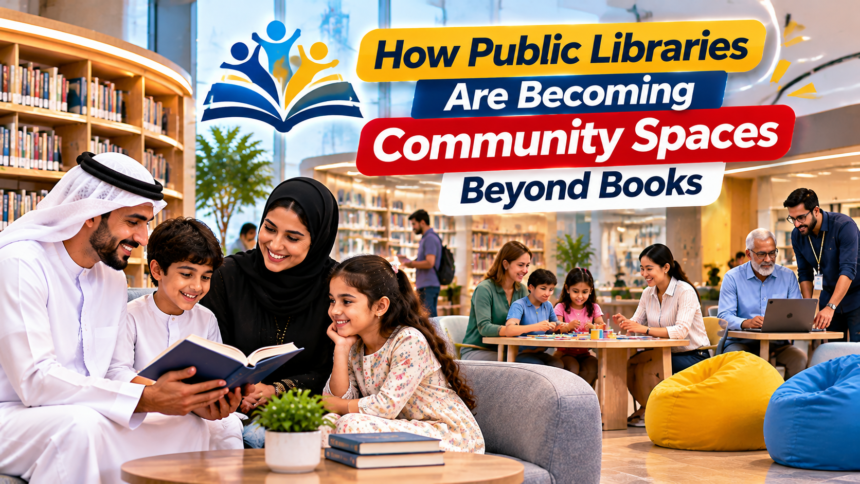
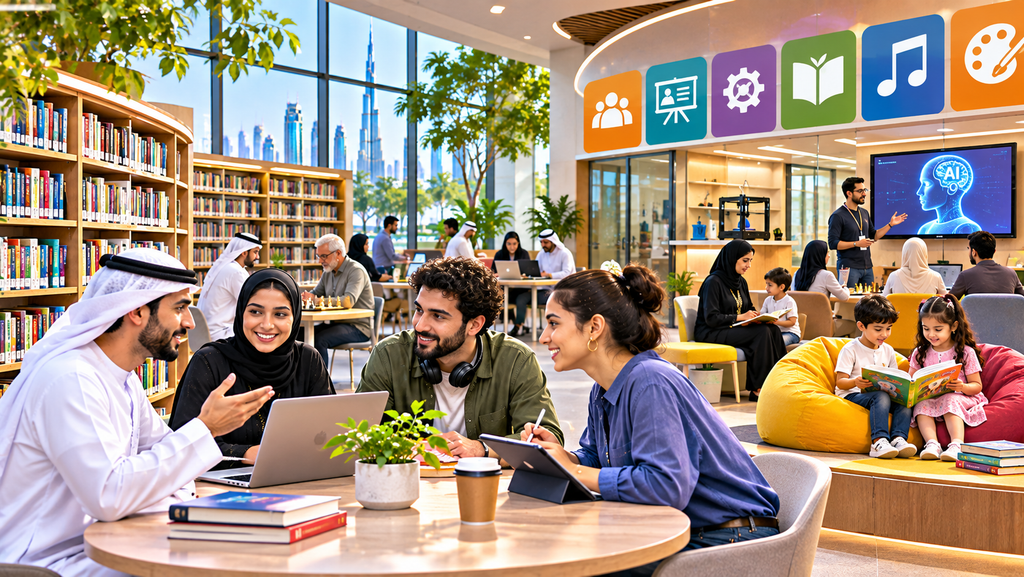
Imagine entering a public library and finding much more than bookshelves and silent reading rooms. Students are working together on assignments, entrepreneurs are discussing business ideas, children are participating in creative workshops, and visitors are attending cultural exhibitions. In another section, someone is experimenting with digital technology while others are enjoying a quiet place to work or study.
- Why Public Libraries as Community Spaces Are Growing
- 7 Ways Public Libraries Are Transforming Community Life
- How UAE Libraries Are Expanding Beyond Books
- Qatar and Saudi Arabia: Libraries as Cultural and Learning Hubs
- Digital Technology, Creative Labs and the Future of Learning
- Why Community Libraries Matter for Families and Cities
- Challenges Facing Modern Public Libraries
- The Future of Public Libraries as Community Spaces and FAQs
This is increasingly the reality of public libraries as community spaces, particularly in cities across the Gulf where cultural institutions are expanding their roles beyond traditional book lending.
Libraries are becoming places where people can learn new skills, connect with others, explore technology and participate in cultural activities.
The transformation reflects changing expectations about what public institutions should provide in an increasingly digital world.
In the UAE, the Mohammed Bin Rashid Library in Dubai combines specialised book collections with exhibitions, study spaces, cultural events and advanced digital resources.
Sharjah’s House of Wisdom offers another example, bringing together reading facilities, creative spaces, gardens, exhibitions and opportunities for collaboration.
Meanwhile, Qatar National Library provides facilities ranging from conventional reading areas to technology-focused Innovation Stations featuring equipment for digital design, recording and 3D printing.
These developments suggest that libraries are evolving into broader centres for education and public participation.
The idea is not entirely new. Libraries have long supported literacy, research and community programmes. What is changing is the range of services, the design of their spaces and the expectations of visitors.
Modern libraries increasingly serve as what urban planners and sociologists describe as third places: environments outside the home and workplace where people can spend time, interact and participate in community life.
For Gulf cities, this development is particularly relevant because libraries can bring together residents from different cultural, linguistic and professional backgrounds.
However, expanding services also creates practical questions about funding, accessibility, staffing and the need to preserve quiet spaces for reading.
The future of libraries may therefore depend on balancing their traditional educational purpose with a broader role in community development.
Why Public Libraries as Community Spaces Are Growing
Public libraries have historically provided access to books, reference materials and information.
While these responsibilities remain important, technology and changing lifestyles are influencing how people use public facilities.
Many visitors now seek environments where they can study, attend events, improve their digital skills or work independently.
Changing Expectations of Public Spaces
Modern city residents often need spaces that are accessible, comfortable and suitable for different activities.
Students may require reliable study facilities, while families look for educational programmes for children.
Freelancers and remote workers may seek quiet locations where they can concentrate without having to purchase services from a commercial establishment.
Libraries can help address these needs, although their facilities and access arrangements vary.
The Rise of Third Places
The concept of a third place refers to a social environment outside the home and workplace.
Examples can include community centres, public parks and certain cafés.
Libraries have a distinctive role because many offer free access to information and public spaces without requiring visitors to make purchases.
Some specialised facilities, workshops or memberships may nevertheless involve charges or eligibility requirements.
Why the Gulf Is an Important Example
Cities such as Dubai, Abu Dhabi, Sharjah, Doha and Riyadh have invested in cultural and educational infrastructure.
Libraries can support these wider objectives by creating places where people encounter knowledge, cultural activities and other community members.
In October 2026, Qatar National Library hosted its Libraries Lead Forum under the theme Reimagining Libraries as Social Infrastructure.
The event examined how libraries can support community connections, learning and participation.
This approach demonstrates how institutions are increasingly discussing their role in society rather than measuring success exclusively through book collections.
Traditional and Modern Library Services
| Traditional Library Functions | Expanded Community Functions |
|---|---|
| Book Lending | Creative Workshops |
| Reading Rooms | Collaborative Study Areas |
| Reference Assistance | Digital Skills Training |
| Printed Archives | Interactive Exhibitions |
| Research Support | Entrepreneurship Programmes |
| Children’s Books | Family Learning Activities |
| Educational Resources | Community Events |
The expanded services complement traditional library functions rather than replacing them.
7 Ways Public Libraries Are Transforming Community Life
The changing role of libraries can be understood through seven major developments.
Each creates opportunities for residents to engage with public institutions in ways that go beyond borrowing books.
1. Providing Accessible Study and Workspaces
Libraries offer environments where students and professionals can concentrate.
Dedicated study rooms, seating areas and access to information resources may help people complete academic or professional tasks.
In expensive urban environments, such facilities can provide an alternative to commercial workspaces.
However, access to meeting rooms and specialised facilities may require reservations or membership.
2. Supporting Digital Literacy
Libraries increasingly provide opportunities to learn about digital tools.
Training activities may cover computer use, online research, digital design and other technology-related skills.
These services can help residents who want to improve their confidence with digital systems.
The value depends on whether programmes are accessible to people with different skill levels.
3. Hosting Cultural Events
Book discussions, exhibitions, lectures and literary programmes create opportunities for cultural participation.
Libraries may also introduce visitors to regional history, languages and artistic traditions.
These activities can encourage people to engage with subjects they might not otherwise explore.
4. Encouraging Creative Experimentation
Some libraries now provide makerspaces, recording facilities and equipment for creative projects.
These resources may allow visitors to explore activities that would otherwise require expensive equipment.
For example, a visitor might experiment with 3D design or audio production before deciding whether to pursue the activity further.
5. Creating Family-Friendly Learning Environments
Children’s programmes can introduce young visitors to storytelling, science, art and educational activities.
Parents and caregivers may also participate in workshops that support learning at home.
These activities can strengthen the relationship between libraries and families.
6. Connecting People Across Communities
Libraries bring together visitors with different backgrounds and interests.
Workshops and discussion groups may create opportunities for interaction between students, professionals, families and older residents.
However, community participation requires thoughtful programming and an environment where visitors feel welcome.
7. Supporting Entrepreneurship and Lifelong Learning
Libraries can provide access to business information, educational resources and professional development events.
Some institutions also organise entrepreneurship workshops and networking opportunities.
These programmes may help people explore career changes or develop new ideas without committing immediately to expensive commercial training.
Seven Changes Compared
| Change | Community Benefit | Example Activity |
|---|---|---|
| Study Facilities | Accessible learning space | Individual and group study |
| Digital Literacy | Technology skills | Computer workshops |
| Cultural Programming | Public engagement | Exhibitions and talks |
| Creative Facilities | Practical experimentation | 3D printing and recording |
| Family Activities | Learning across ages | Storytelling and STEM |
| Social Connections | Community participation | Reading and discussion groups |
| Career Development | Professional learning | Startup and skills workshops |
The strongest libraries combine several of these functions while maintaining their responsibility to provide reliable access to information.
How UAE Libraries Are Expanding Beyond Books
The UAE provides several examples of libraries that combine traditional collections with community-oriented services.
Dubai, Sharjah and Abu Dhabi have developed different approaches shaped by their cultural institutions and local audiences.
Mohammed Bin Rashid Library, Dubai
The Mohammed Bin Rashid Library opened to the public in 2022 along Dubai Creek in Al Jaddaf.
The building contains specialised collections, reading areas, exhibition spaces and facilities for cultural activities.
It also includes study rooms, a digitisation laboratory and an indoor theatre capable of accommodating approximately 550 people.
These facilities allow the institution to host activities that extend beyond conventional library services.
In June 2026, the Government of Dubai Media Office reported that the library had welcomed more than 2.5 million visitors since its inauguration.
Its membership base had also exceeded 41,000.
These figures indicate substantial public engagement, although visitor numbers alone do not measure the educational or social outcomes of its programmes.
House of Wisdom, Sharjah
Sharjah’s House of Wisdom was developed as part of the emirate’s cultural legacy following its designation as UNESCO World Book Capital in 2019.
The institution combines book collections with exhibition areas, gardens, creative facilities and spaces for discussion.
Its amenities include a Fabrication Lab, reading areas and print-on-demand technology.
The design encourages visitors to use the building for different purposes, from quiet reading to creative activities.
A Gulf News feature published in August 2026 described how students, artists, remote workers and young professionals use the space.
The example illustrates how contemporary libraries can operate as informal meeting places as well as educational institutions.
Abu Dhabi’s Maktaba Network
The Department of Culture and Tourism – Abu Dhabi manages public library services through Maktaba.
The network includes facilities serving different neighbourhoods and communities.
Maktaba’s stated responsibilities extend beyond book collections to educational events, creativity, recreational activities and awareness programmes.
Its public libraries include Zayed Central Library in Al Ain and branches such as Khalifa Park, Al Bahia and Al Wathba.
The network approach can make library services accessible through multiple locations rather than depending on a single large cultural building.
UAE Library Models Compared
| Institution | Location | Community-Oriented Features |
|---|---|---|
| Mohammed Bin Rashid Library | Dubai | Exhibitions, study rooms, theatre and digital resources |
| House of Wisdom | Sharjah | Creative facilities, gardens, workshops and cultural events |
| Maktaba Public Libraries | Abu Dhabi Emirate | Educational activities, reading programmes and neighbourhood services |
These institutions demonstrate different approaches to creating public spaces centred on knowledge and participation.
Qatar and Saudi Arabia: Libraries as Cultural and Learning Hubs
Beyond the UAE, libraries in Qatar and Saudi Arabia are also expanding their educational and community roles.
Their programmes demonstrate how libraries can support creative activities, entrepreneurship and cultural interaction.
Qatar National Library
Qatar National Library combines national heritage collections, public reading services and research facilities with community programmes.
Its Innovation Stations provide access to technology-related resources, including 3D printing and scanning, recording equipment, photography facilities and virtual reality accessories.
These facilities allow eligible members to explore digital creation and practical technology skills.
However, access to specialised equipment is subject to library membership and booking conditions.
Entrepreneurship and Family Programmes
In August 2026, Qatar National Library organised activities covering entrepreneurship, professional development, art and family learning.
Its programme included a startup-related workshop with Qatar Development Bank and activities designed for children and teenagers.
The library also hosted regular gatherings such as Art Majlis and Chess for All.
These programmes demonstrate how a library can bring together people who may have different interests but share a desire to learn and participate.
Reaching Communities Outside the Library
Qatar National Library’s 2025 annual report describes efforts to extend services beyond the main building.
These included a book-lending machine at Al Khor Mall and a temporary family-friendly reading space at Doha Festival City.
The institution also expanded study arrangements and access to innovation and sensory spaces.
These developments suggest that library services increasingly extend beyond a single physical location.
Ithra Library, Saudi Arabia
The library at the King Abdulaziz Center for World Culture, known as Ithra, forms part of a wider cultural institution in Dhahran.
Ithra brings together library services with exhibitions, cultural programmes, creative activities and educational experiences.
Its wider institutional model illustrates how reading facilities can operate alongside other cultural resources.
Representatives from Ithra Library also participated in Qatar National Library’s October 2026 Libraries Lead Forum.
This reflects continuing professional discussion across regional institutions about libraries and community engagement.
What These Examples Demonstrate
| Institution | Key Direction | Community Opportunity |
|---|---|---|
| Qatar National Library | Technology and public programming | Creative learning and collaboration |
| Qatar National Library Outreach | Services beyond the building | Wider access to books and activities |
| Ithra Library | Integrated cultural environment | Learning, creativity and cultural participation |
Different institutions use different facilities, but their programmes share an emphasis on public learning and participation.
Digital Technology, Creative Labs and the Future of Learning
Digital technology has changed how information is accessed, stored and shared.
Libraries are responding by offering both digital resources and physical opportunities to explore new tools.
However, the future of libraries does not depend on adopting every available technology.
The more important question is whether technology improves access and learning.
Digital Collections
Libraries increasingly provide electronic books, databases and other online resources.
Digital access can help people use information without visiting the building.
However, electronic collections may involve licensing restrictions, membership requirements and limits on simultaneous access.
Makerspaces and Innovation Labs
Makerspaces provide opportunities for practical experimentation.
Depending on the institution, equipment may include 3D printers, electronics tools, design software or audiovisual technology.
These spaces can introduce users to creative skills without requiring them to purchase specialised equipment.
They also require trained staff, safety procedures and maintenance.
Media and Content Creation
Recording studios and photography facilities can support people exploring media production.
Students, independent creators and community groups may benefit from supervised access to such resources.
However, equipment availability and eligibility vary, and use may be subject to reservation rules.
Digital Inclusion
Not everyone has equal access to technology or the skills needed to use it effectively.
Libraries may help address some gaps by providing learning opportunities and assistance.
However, digital inclusion also requires accessible facilities, suitable language support and staff capable of helping beginners.
Technology Opportunities and Limitations
| Technology | Potential Value | Practical Challenge |
|---|---|---|
| E-Books | Remote information access | Licensing restrictions |
| Digital Archives | Research and heritage preservation | Digitisation costs |
| 3D Printing | Creative experimentation | Equipment and training |
| Recording Facilities | Media skills development | Booking and maintenance |
| Virtual Reality | Interactive learning | Accessibility and cost |
| Online Workshops | Wider participation | Internet and device access |
A technology programme is most valuable when visitors can understand and use the tools, rather than simply observe them.
Why Community Libraries Matter for Families and Cities
Libraries contribute to communities in ways that are not always captured by membership numbers or book-loan statistics.
They may provide educational opportunities, support cultural participation and create public environments where residents can spend time without commercial pressure.
However, their impact depends on effective management and whether services reach the people who need them.
Accessible Public Spaces
Many cities contain commercial venues where people are expected to purchase goods or services.
Libraries can offer an alternative for studying, reading and spending time in a public environment.
Not every library service is free, but the availability of accessible public spaces remains an important distinction.
Benefits for Children and Families
Children’s reading areas and educational workshops can encourage regular engagement with learning.
Family programmes may also help parents discover resources for supporting children at home.
Libraries can complement schools, although they do not replace formal education.
Opportunities for Older Residents
Libraries may offer social activities, reading groups and introductory digital training.
These services can create opportunities for older adults to maintain interests and participate in community life.
However, accessible seating, clear signage and suitable facilities are important for people with mobility or sensory needs.
A Place for Cultural Exchange
Gulf cities contain people from different linguistic and cultural backgrounds.
Public events, literary programmes and exhibitions can provide opportunities to learn about different traditions.
The value of these programmes depends on inclusivity and meaningful participation.
Community Value Beyond Attendance
| Community Need | Library Contribution | Possible Indicator |
|---|---|---|
| Education | Reading and learning resources | Programme participation |
| Digital Skills | Technology training | Completed workshops |
| Family Engagement | Children’s activities | Family attendance |
| Cultural Participation | Exhibitions and events | Audience diversity |
| Social Connection | Discussion groups | Repeat participation |
| Accessibility | Inclusive facilities | Visitor feedback |
Libraries should assess outcomes rather than relying exclusively on the number of people entering their buildings.
Challenges Facing Modern Public Libraries
Expanding library services creates opportunities, but it can also increase operational complexity.
Institutions must balance their traditional responsibilities with new demands for technology, events and flexible spaces.
Funding and Maintenance
Libraries require ongoing investment in collections, employees, facilities and digital services.
Specialised equipment can add expenses for repairs, software and technical support.
A new facility may attract attention when it opens, but its lasting value depends on sustainable operation.
Preserving Quiet Study Areas
Not every visitor wants a busy community environment.
Some people depend on libraries for silent reading and focused research.
Institutions need to separate noisy activities from quiet spaces where possible.
Staff Training
Library employees may increasingly support visitors with technology, workshops and specialised resources.
These activities can require skills beyond traditional collection management.
Training and appropriate staffing are therefore essential.
Balancing Free and Paid Services
Some institutions may charge for certain workshops, equipment or memberships.
While fees can help manage operating expenses, they may also create access barriers.
Libraries need transparent policies that explain which services are free and who qualifies for others.
Measuring Community Impact
Attendance figures and event totals can indicate activity, but they do not necessarily establish educational benefits.
Libraries can also examine participant feedback, programme completion and whether visitors return.
Challenges and Responses
| Challenge | Potential Impact | Practical Response |
|---|---|---|
| Funding Constraints | Limited services | Sustainable operating plans |
| Noise | Reduced study quality | Separate activity zones |
| Technology Costs | Maintenance pressure | Equipment lifecycle planning |
| Staff Skills | Inconsistent support | Professional development |
| Accessibility | Excluded visitors | Inclusive design |
| Programme Relevance | Low participation | Community feedback |
Successful libraries need to balance innovation with dependable everyday services.
The Future of Public Libraries as Community Spaces and FAQs
The future of public libraries is likely to involve a combination of reading, digital learning and community engagement.
However, not every library needs a large building or expensive technology laboratory.
Neighbourhood branches can also deliver meaningful value through accessible collections, practical workshops and activities that reflect local interests.
Community-Led Programmes
Libraries may increasingly involve residents in identifying the activities they need.
For example, students might request extended study hours, while families may be interested in children’s educational workshops.
Qatar National Library’s Libraries Lead Forum 2026 included discussions on community-led transformation and the role of libraries as places of belonging.
This approach places greater emphasis on public participation in programme planning.
Combining Physical and Digital Access
Future services may increasingly connect online collections with in-person facilities.
Residents could use digital resources at home while visiting library buildings for workshops, research support and community activities.
The objective is to make library resources useful in different circumstances.
Why Books Will Remain Important
The expansion of community activities does not mean that books are becoming irrelevant.
Reading, research and access to reliable information remain central library responsibilities.
The challenge is to strengthen these functions while offering additional services that support public needs.
Frequently Asked Questions
Why are public libraries becoming community spaces?
Libraries are expanding their programmes to meet demand for learning, digital skills, cultural activities and accessible places to study and connect.
What activities can people do in modern libraries?
Depending on the institution, visitors may attend workshops, use study rooms, explore exhibitions, join reading groups or access creative equipment.
Are public libraries in the UAE free?
Many libraries offer free visitor access, but memberships, specialised services and selected activities may have separate conditions or fees.
What makes Mohammed Bin Rashid Library different?
It combines extensive collections with specialised libraries, exhibitions, digital facilities, study rooms and a large theatre.
What is Sharjah’s House of Wisdom?
It is a cultural and library destination offering reading facilities, creative spaces, exhibitions, gardens and community activities.
Does Qatar National Library have creative technology facilities?
Yes. Its Innovation Stations include equipment for activities such as 3D printing, recording and digital design, subject to applicable access conditions.
Can freelancers work in public libraries?
Some libraries provide study and work-friendly seating, but rules on commercial activities, meeting rooms and equipment vary.
Are libraries replacing community centres?
Not necessarily. Libraries increasingly provide some similar services, but community centres and libraries have different responsibilities and audiences.
Do libraries still need physical books?
Yes. Printed collections continue to support reading, research and access to information alongside digital services.
How can libraries remain relevant in the future?
They can maintain reliable collections while responding to local needs through accessible spaces, digital resources, suitable programming and community feedback.
Final Thoughts
Public libraries are increasingly becoming places where books, technology, culture and community life intersect.
Across the Gulf, institutions such as Mohammed Bin Rashid Library, House of Wisdom and Qatar National Library demonstrate how reading facilities can support a wider range of activities.
Their programmes provide opportunities for students, families, professionals and creative communities to learn and participate.
However, the transformation does not mean abandoning the traditional purpose of libraries.
Books, research materials and reliable information remain essential.
The challenge is to combine these services with new facilities and activities without compromising accessibility, financial sustainability or quiet study environments.
For Gulf cities, modern libraries can contribute to cultural participation and lifelong learning while offering welcoming public spaces.
Ultimately, public libraries as community spaces represent an evolution in how knowledge institutions serve society.
Their future will depend less on the number of technologies they introduce and more on how effectively they help people read, learn, create and connect.
Do follow us on Instagram
Read More – Multigenerational Living in the Gulf: 7 Powerful Reasons Families Are Reuniting Under One Roof