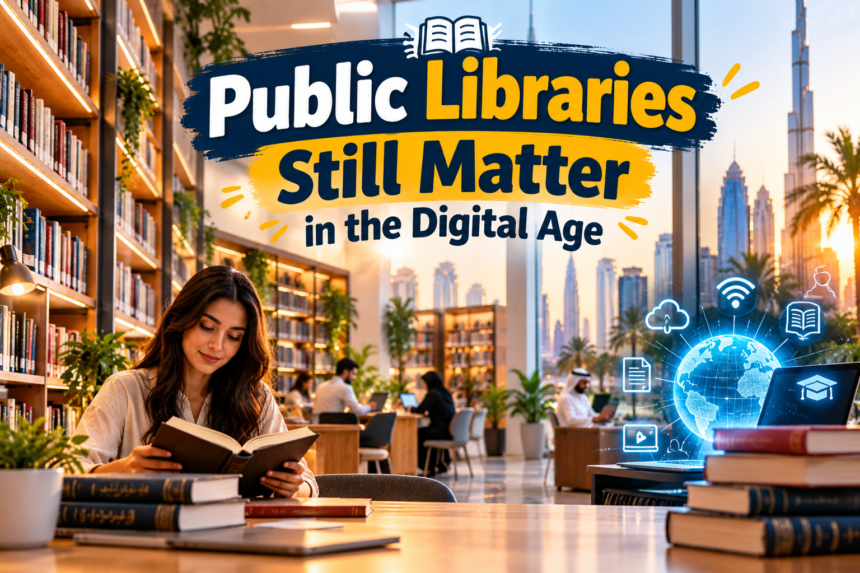
Why Public Libraries Still Matter in the Digital Age
We live in a world where almost every type of information seems to be available online. With a smartphone, tablet, or computer, people can read books, watch educational videos, attend online classes, and search for answers within seconds. Digital technology has made learning faster and more convenient than ever before.
- 1. Free Access to Knowledge for Everyone
- 2. Libraries Help People Develop Digital Skills
- 3. A Quiet and Comfortable Place for Students
- 4. Public Libraries Support Job Seekers and Career Development
- 5. Libraries Bring Communities Together
- 6. Reliable Information Matters More Than Ever
- 7. Digital Libraries Make Learning More Convenient
- 8. Libraries Encourage Reading and Lifelong Learning
- 9. Libraries Preserve Local History and Cultural Heritage
- 10. Public Libraries Help Make Technology More Inclusive
- 11. Five Challenges Public Libraries Must Address
- 12. What Will Public Libraries Look Like in the Future?
- Conclusion: Public Libraries Are Still Important in a Digital World
- Frequently Asked Questions (FAQs)
However, despite these changes, public libraries continue to play an important role in modern society. They offer much more than shelves filled with books. Today’s libraries provide internet access, digital learning resources, research support, educational activities, quiet study spaces, cultural programmes, and opportunities for people to connect with their communities.
For students, job seekers, parents, senior citizens, researchers, and people who simply enjoy reading, public libraries can be valuable places to learn and grow. They also help people who may not have reliable internet access, suitable devices, or the skills needed to find trustworthy information online.
The role of libraries has changed with technology, but their main purpose remains the same: making knowledge accessible to everyone.
The International Federation of Library Associations and Institutions (IFLA) and UNESCO recognise this role in their updated Public Library Manifesto 2022. It describes public libraries as important centres for education, information, culture, inclusion, and lifelong learning.
So, why do public libraries still matter when information is available online? How do they support communities, and what could their future look like?
Let’s explore 10 powerful reasons public libraries remain essential in the digital age.
1. Free Access to Knowledge for Everyone
One of the most important reasons public libraries still matter is that they make knowledge available to people from different backgrounds.
Not everyone can afford to buy books, pay for online learning platforms, subscribe to digital newspapers, or purchase academic research materials. A public library gives people an opportunity to explore information without having to pay for every resource.
Depending on the library, visitors may be able to access:
- Printed books, magazines, newspapers, and reference materials.
- E-books and audiobooks.
- Online newspapers and academic journals.
- Computers and internet connections.
- Educational videos and learning platforms.
- Research collections and digital archives.
This access is particularly useful for students, families, people looking for work, and individuals who want to learn new skills without spending too much money.
Public libraries also provide an environment where people can explore subjects that interest them. Someone may visit to prepare for an examination and discover books about history, technology, science, business, or personal development.
The IFLA-UNESCO Public Library Manifesto 2022 supports the principle that public library buildings and services should generally be freely accessible. It also highlights the need to provide resources in formats and languages that reflect local communities.
In the digital age, free access to knowledge is more than a convenience. It helps people participate in education, employment, and everyday society.
2. Libraries Help People Develop Digital Skills
Having a smartphone or computer does not automatically mean someone knows how to use digital technology effectively. People may know how to open social media applications but struggle with online forms, research tools, digital documents, or privacy settings.
Public libraries can help close this gap by offering digital learning opportunities.
Depending on their facilities and programmes, libraries may provide:
- Basic computer training.
- Internet browsing and email guidance.
- Help with online applications.
- Introduction to word processing and spreadsheets.
- Support with using e-books and digital collections.
- Guidance on online safety and privacy.
- Digital skills workshops for older adults.
These skills are useful in everyday life. People need digital knowledge to apply for jobs, communicate with organisations, complete educational activities, and access many public services.
UNESCO’s November 2025 policy brief, developed with IFLA, highlights how libraries can help people gain meaningful access to digital technology. It identifies digital literacy, connectivity, information integrity, and digital trust as important areas for building an inclusive digital future.
Libraries are therefore not simply places where people use computers. They can also be places where people learn how to use technology with confidence.
3. A Quiet and Comfortable Place for Students
Students often need a peaceful environment where they can concentrate without distractions. Studying at home is not always easy, especially when there is limited space, household noise, or no suitable study area.
Public libraries offer an alternative.
Many libraries provide reading rooms, desks, comfortable seating, reference materials, and internet access. Some also have dedicated areas for children, teenagers, and university students.
Students can use library facilities for:
- Preparing for school and university examinations.
- Completing assignments and projects.
- Reading textbooks and reference books.
- Conducting research.
- Attending educational workshops.
- Developing regular reading habits.
Libraries are also useful for students who do not have a personal computer or a quiet place at home.
In addition, library staff can help visitors locate information and understand how to use research resources. This support can save time and encourage students to explore subjects more deeply.
For younger learners, a library can make reading an enjoyable activity rather than just another school responsibility. Children’s reading sessions, storytelling activities, and educational events can help build curiosity from an early age.
4. Public Libraries Support Job Seekers and Career Development
Finding a job today often involves more than preparing a printed CV and attending an interview. Many employers use online application systems, professional websites, digital tests, and video interviews.
People who are unfamiliar with these tools may find the process difficult.
Public libraries can provide useful support by giving job seekers access to computers, the internet, learning materials, and employment-related information.
For example, a visitor may use a library to:
- Search for vacancies and career opportunities.
- Prepare or update a CV.
- Write a professional cover letter.
- Practise online application forms.
- Improve computer and communication skills.
- Research companies before interviews.
- Learn about different industries and career paths.
Some libraries also organise employment workshops, training sessions, and career guidance activities. The exact services depend on the library and its partnerships.
The IFLA-EiFL-DC-PAL report on public access to computers and the internet in libraries found evidence that library users can gain digital confidence, improve job-search skills, and develop abilities that support employment and education.
This makes public libraries useful for people at different career stages, including school leavers, graduates, experienced workers, and those returning to employment.
5. Libraries Bring Communities Together
A public library is not only a place for individual learning. It can also act as a meeting point for people with different interests, experiences, and backgrounds.
In many communities, people use libraries to attend discussions, join reading groups, meet other learners, or participate in cultural activities.
Common community programmes may include:
- Book clubs and reading circles.
- Children’s storytelling sessions.
- Language-learning activities.
- Author talks and book launches.
- Art and photography exhibitions.
- Educational workshops.
- Community discussions and cultural events.
These activities create opportunities for people to interact beyond their usual social and professional circles.
Libraries can be especially valuable in multicultural cities, where people from different countries and language backgrounds live and work together. Books, cultural events, language resources, and public discussions can help people learn about one another.
The IFLA-UNESCO Public Library Manifesto 2022 highlights the role of public libraries in supporting cultural participation, community information, and intercultural dialogue.
A welcoming library can therefore become an important part of the social life of a neighbourhood.
6. Reliable Information Matters More Than Ever
The internet contains an enormous amount of information, but not everything published online is correct. Social media posts, edited videos, misleading headlines, fake websites, and AI-generated content can sometimes spread incorrect or incomplete information.
This makes the ability to check information more important than ever.
Public libraries can help people develop information and media literacy. These skills involve understanding where information comes from, checking evidence, comparing sources, and recognising possible bias.
For example, when researching a health topic, a person should look for reliable medical information rather than trusting an anonymous social media post. When studying history, it is useful to compare recognised books, academic sources, and historical records instead of relying on an isolated online claim.
Library staff can guide users towards suitable books, databases, reference works, and other reliable resources.
Libraries can also help people understand how to evaluate AI-generated answers. Artificial intelligence tools can be useful for learning and research, but their responses may contain mistakes or outdated information. Users should check important claims against trusted sources.
The UNESCO and IFLA 2025 policy brief identifies information integrity and digital trust as important parts of digital inclusion.
In a world full of information, knowing how to find the right information is an essential skill.
7. Digital Libraries Make Learning More Convenient
Public libraries have changed significantly as digital technology has developed. Many now offer online catalogues, e-books, audiobooks, digital magazines, academic journals, and other electronic resources.
These services allow registered members to access certain library materials without visiting the building.
For example, a person may be able to:
- Borrow an e-book through a library platform.
- Listen to an audiobook while travelling.
- Read a digital magazine on a tablet.
- Search an online catalogue before visiting.
- Access research papers and academic resources.
- Explore digitised photographs and historical documents.
Digital services can also support people who live far from a library or have difficulty visiting in person.
Qatar National Library: An example of a modern library
The “Qatar National Library” category=”organization” disambig=”National and public library in Doha, Qatar” is one example of how a modern library combines traditional collections with digital resources.
Its official information describes a collection of more than one million printed books and over 500,000 digital resources, including e-books, journals, newspapers, and special collection materials. The library also provides learning programmes, research support, and community activities.
Its 2025 annual report recorded 1.25 million visits and millions of views and checkouts across digital resources during that year. These figures illustrate how physical and online services can support the same community.
Digital libraries do not replace the physical library. Instead, they make its resources available in more ways.
8. Libraries Encourage Reading and Lifelong Learning
Reading is an important habit at every stage of life. It helps people improve their vocabulary, understand new ideas, develop imagination, and explore different subjects.
Public libraries encourage reading by making books available for different age groups and interests.
Children can discover picture books, stories, and educational material. Teenagers can explore fiction, science, biographies, and career-related subjects. Adults can access information about health, finance, technology, business, and personal development.
Older adults can also use libraries to continue learning, enjoy reading, attend social activities, and explore digital resources.
The idea of lifelong learning means that education does not stop after school, college, or university. People continue to gain knowledge throughout their lives as their interests, careers, and responsibilities change.
A person who has worked in one industry for many years may visit a library to learn about a new field. A parent may use library resources to support a child’s education. Someone approaching retirement may explore history, languages, or hobbies.
The IFLA-UNESCO Public Library Manifesto places lifelong learning and support for education among the central missions of public libraries.
9. Libraries Preserve Local History and Cultural Heritage
One of the most valuable roles of libraries is preserving knowledge and cultural heritage for future generations.
Printed books, historical documents, photographs, newspapers, maps, manuscripts, and oral histories provide important records of how societies have changed over time.
Without careful preservation, some of these materials may be lost because of ageing, damage, poor storage, or changes in technology.
Public and national libraries can protect these resources and make them available to researchers, students, and the wider community.
Why heritage collections matter
Historical collections help people understand:
- How towns and cities developed.
- How people lived and worked in earlier generations.
- The history of trade and migration.
- Changes in language, education, and culture.
- Important local events and achievements.
- Traditional knowledge and community memories.
Digitisation has created new ways to protect and share these materials. Old photographs, maps, manuscripts, and newspapers can be scanned and made available through online collections.
For example, Qatar National Library’s Heritage Library preserves documentary heritage connected with Qatar, the Gulf region, and wider historical subjects. Its digital collections make selected heritage materials accessible beyond the library building.
Preserving local history is not only about protecting old objects. It is about giving future generations the opportunity to understand their cultural identity and shared past.
10. Public Libraries Help Make Technology More Inclusive
Technology can create opportunities, but people do not all experience those opportunities in the same way.
Some households have fast internet, personal computers, tablets, and paid learning subscriptions. Others may depend on a shared mobile phone or have limited access to suitable devices.
There are also people who face difficulties because of age, disability, language barriers, low digital confidence, or limited educational opportunities.
Public libraries can help reduce these differences by providing access to technology and support for people who need it.
Inclusive library services may include:
- Computers and internet access.
- Accessible reading materials and formats.
- Braille and audio resources.
- Digital learning support.
- Multilingual books and information.
- Assistive technology where available.
- Activities designed for different age groups and abilities.
The 2022 IFLA-UNESCO Manifesto specifically calls for library services that respond to the needs of people with disabilities, multilingual communities, and those with limited literacy or digital skills.
This is an important reminder that digital progress should not leave people behind.
11. Five Challenges Public Libraries Must Address
Although public libraries remain valuable, they also face challenges as technology and people’s expectations continue to change.
Challenge 1: Limited funding
Libraries need funding for staff, books, computers, internet connections, building maintenance, digital subscriptions, and community programmes.
Without suitable investment, they may struggle to update their services or maintain their collections.
Challenge 2: Changing reading habits
Many people now prefer short online content, videos, podcasts, and audiobooks. Libraries need to offer different ways to access information while continuing to support traditional reading.
Challenge 3: Digital access is expensive
Online books, journals, databases, software, and learning platforms may require subscriptions or special licences. These costs can make it difficult for smaller libraries to provide a wide range of digital material.
Challenge 4: Misinformation and online safety
Libraries must help users identify trustworthy information and understand digital privacy, scams, misinformation, and responsible use of AI tools.
Challenge 5: Making services accessible to everyone
Not all users have the same language, physical abilities, technology skills, or educational needs. Libraries must continue adapting their spaces, collections, and services to serve different communities.
Addressing these challenges requires long-term planning, trained staff, suitable funding, and cooperation between libraries, governments, schools, and community organisations.
12. What Will Public Libraries Look Like in the Future?
The future of public libraries will likely combine traditional reading spaces with more advanced technology and community services.
Rather than competing with the internet, libraries can use digital tools to make learning and information more accessible.
Some possible developments include:
Artificial intelligence and research support: Libraries may offer more guidance on using AI tools responsibly, checking digital information, and understanding the limits of automated answers.
More digital collections: E-books, audiobooks, online journals, and digitised heritage collections may continue to expand.
Technology learning spaces: Some libraries may develop areas for coding, robotics, digital design, media production, and other practical skills.
Community learning programmes: Workshops, language sessions, career guidance, and family activities may become an even more important part of library services.
Improved accessibility: Digital reading formats, assistive technologies, multilingual resources, and accessible building designs can help more people use library services.
Online and in-person services together: Visitors may increasingly move between digital catalogues, online borrowing, research help, and physical library activities.
The goal should not be to turn every library into a technology centre. It should be to use technology where it genuinely improves access, learning, and community life.
Conclusion: Public Libraries Are Still Important in a Digital World
The digital age has changed how people read, learn, work, and communicate. Information is now available through smartphones, computers, websites, and online platforms. Yet access to information alone does not guarantee that people can use it effectively or find what they need.
Public libraries help fill this gap. They provide books, digital resources, internet access, study spaces, learning programmes, research support, and opportunities for community connection. They also preserve cultural heritage and help people develop the skills needed to participate confidently in modern society.
Their future does not depend on competing with technology. It depends on combining the best parts of traditional libraries with the opportunities offered by digital tools.
A library can be a place where a child discovers a love of reading, a student prepares for an examination, a job seeker develops computer skills, a researcher explores historical records, or a senior citizen learns to use the internet.
Public libraries still matter because knowledge should be accessible to everyone, not only to people who can afford it or already know how to find it. In the digital age, they remain places where people can learn, connect, discover, and grow.
Frequently Asked Questions (FAQs)
1. Why are public libraries still important in the digital age?
Public libraries provide access to books, computers, the internet, digital resources, study spaces, and learning activities. They also help people develop digital skills, find reliable information, and connect with their communities.
2. Do people still visit libraries when they can read books online?
Yes. Many people continue to visit libraries for physical books, quiet study spaces, research assistance, educational events, children’s activities, and social interaction. Digital services have expanded library access rather than made physical libraries unnecessary.
3. How do public libraries help students?
Libraries provide textbooks, reference materials, internet access, study areas, reading programmes, and research support. These services can help students complete assignments, prepare for examinations, and develop independent learning habits.
4. How do libraries help people develop digital skills?
Many libraries offer computers, internet access, digital literacy workshops, and guidance on using online services. Some also help visitors learn about online safety, research tools, and digital communication.
5. How do libraries help job seekers?
Job seekers can use library computers to search for vacancies, prepare CVs, complete online applications, research employers, and develop useful digital skills. Some libraries also organise career guidance and employment workshops.
6. What is the difference between a traditional library and a digital library?
A traditional library mainly provides physical resources such as printed books, magazines, and reference materials. A digital library offers electronic resources such as e-books, audiobooks, online journals, databases, and digitised historical collections. Many modern libraries provide both.
7. Can public libraries help older adults?
Yes. Libraries can provide older adults with reading materials, social activities, computer access, digital learning support, and opportunities to participate in community programmes.
8. What is the future of public libraries?
Future libraries are likely to combine physical collections with digital services, technology learning, accessible resources, cultural programmes, and community activities. Their central purpose will remain providing inclusive access to knowledge and learning.
Do follow us on Instagram
Read More – The Stories Behind Old Maps of the Arabian Gulf