



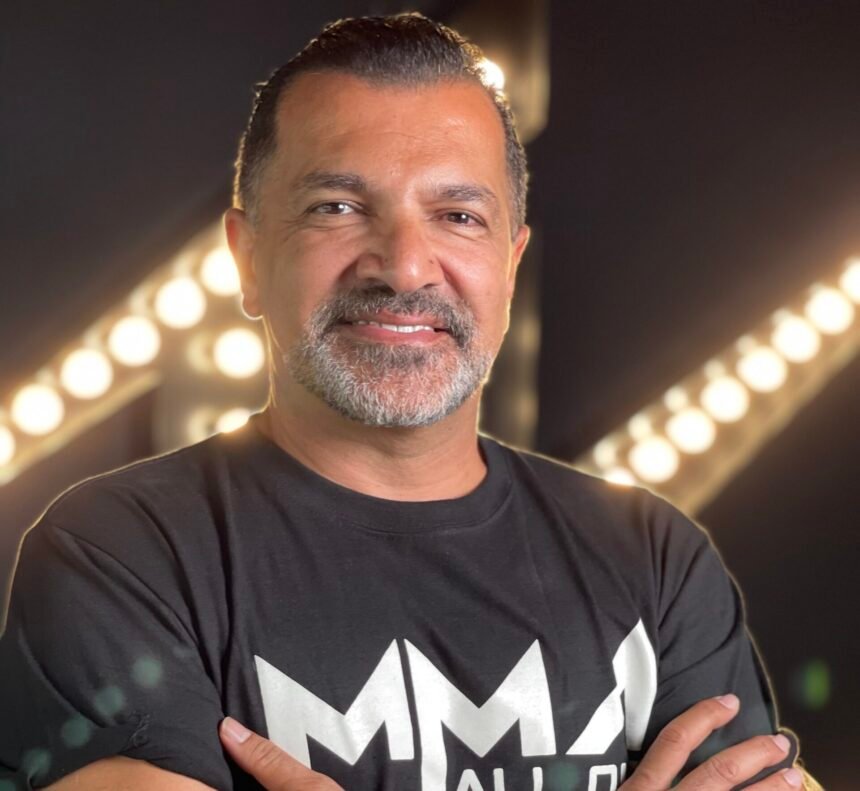
Most people do not choose their life’s direction at sixteen. Rio Altaie did, although the choice came from an experience he would probably rather forget.
At sixteen, Rio was attacked by a group of bullies. He was hurt physically, but the bigger impact was what the incident did to his confidence. Like many teenagers who go through something similar, he could have become more fearful or simply tried to put the experience behind him.
Instead, he walked into a martial arts academy.
At first, Rio wanted to learn how to defend himself. He wanted to feel strong enough that he would never again feel helpless in front of someone else. But the more he trained, the more he realised that martial arts were teaching him things that had very little to do with fighting.
He learned to be patient. He learned that improvement takes time. He learned to accept mistakes, keep showing up and stay calm when things did not go his way.
That first decision, made as a teenager, eventually became the foundation of a career that has taken Rio through martial arts instruction, business, broadcasting, education and mentoring.
More than three decades later, he is still learning.
It Started With a Need to Feel Stronger
Rio’s early experience with martial arts was personal.
He was not looking for fame or a career in combat sports. He simply wanted to make sure he would never again have to live with the feeling that he could not protect himself.
But training has a way of changing people when they stay with it long enough.
The hours of repetition, the physical exhaustion and the slow process of getting better taught Rio something that stayed with him: confidence does not come from believing you are unbeatable. It comes from knowing you have prepared yourself well enough to deal with whatever happens.
That idea still shapes how he looks at life.
“Life will always present challenges,” Rio says. “You can’t control every situation, but you can control how prepared you are to face it. Every challenge is an opportunity to become stronger, wiser, and more resilient.”
For Rio, that lesson has proved useful far beyond the training floor.
He Never Stopped Being a Student
One of the more interesting things about Rio’s career is that he never settled on one martial art and decided he had learned enough.
He wanted to understand how different systems worked and, more importantly, why they worked.
His training took him through Tang Soo Do, Hapkido, Brazilian Jiu-Jitsu, Modern Arnis, Kali and Taekwondo. Each discipline gave him another way of looking at movement, timing, strategy and self-defence.
Over the years, he earned senior black belt rankings in Tang Soo Do, Hapkido and Taekwondo, along with advanced qualifications in Brazilian Jiu-Jitsu and Modern Arnis.
He also had the opportunity to train under UFC pioneer Royce Gracie. That experience had a lasting effect on his understanding of Brazilian Jiu-Jitsu and the wider world of mixed martial arts.
But despite the years of training and the qualifications he has collected, Rio does not approach martial arts as someone who has all the answers.
That may be one of the reasons his career has continued to develop in different directions.
His interest in combining different approaches eventually led to the creation of Arab Reality Combat Art, or ARCA. The system brings together practical elements from several martial arts and applies them to situations people may realistically face outside a traditional training environment.
For Rio, the idea is not about replacing traditional martial arts. It is about recognising that the world changes, and self-defence has to make sense in the world people actually live in.
Building More Than a Martial Arts Academy
Rio’s influence can also be seen in the people he has taught.
When mixed martial arts and Brazilian Jiu-Jitsu were still finding their place in the UAE, he was among those helping introduce them to a larger audience through the World Black Belts Center in Dubai.
The academy became more than a place where people came to learn how to punch, kick or grapple.
For some students, it was where they first became comfortable with themselves. Children learned to stand with confidence. Adults found a new way to stay active. Others discovered that they had the ability to compete and eventually teach.
Thousands of students have passed through the academy over the years. Some went on to become instructors, competitors and mentors themselves.
That part of Rio’s career matters to him.
There is a difference between winning a title and watching someone you taught eventually become capable of teaching someone else. The first is personal achievement. The second continues after you are gone.
That has been an important part of Rio’s work in the UAE and his contribution to the region’s growing combat sports community.
From the Training Floor to the Broadcast Booth
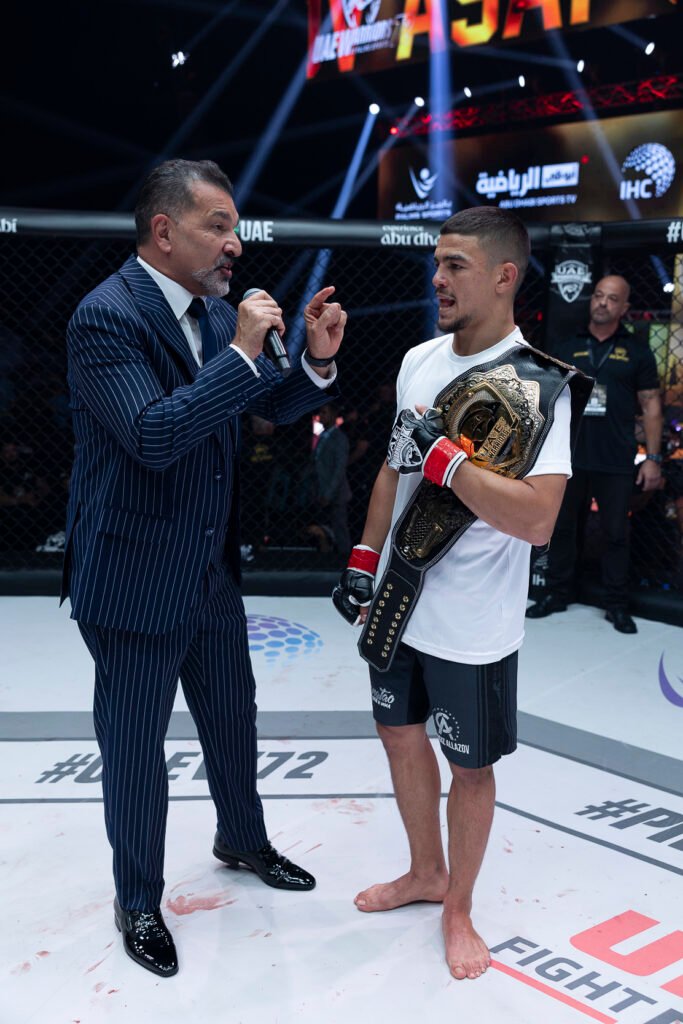
Rio eventually stepped away from active competition, but he did not step away from martial arts.
Instead, he moved behind the microphone.
Commentary gave him a different way to stay involved with the sport. But Rio understood that knowing martial arts and explaining martial arts are two different skills.
So he worked on his voice and presentation through professional voice coaching. He also became a certified MMA referee and judge under internationally respected official Marc Goddard.
That preparation opened another door.
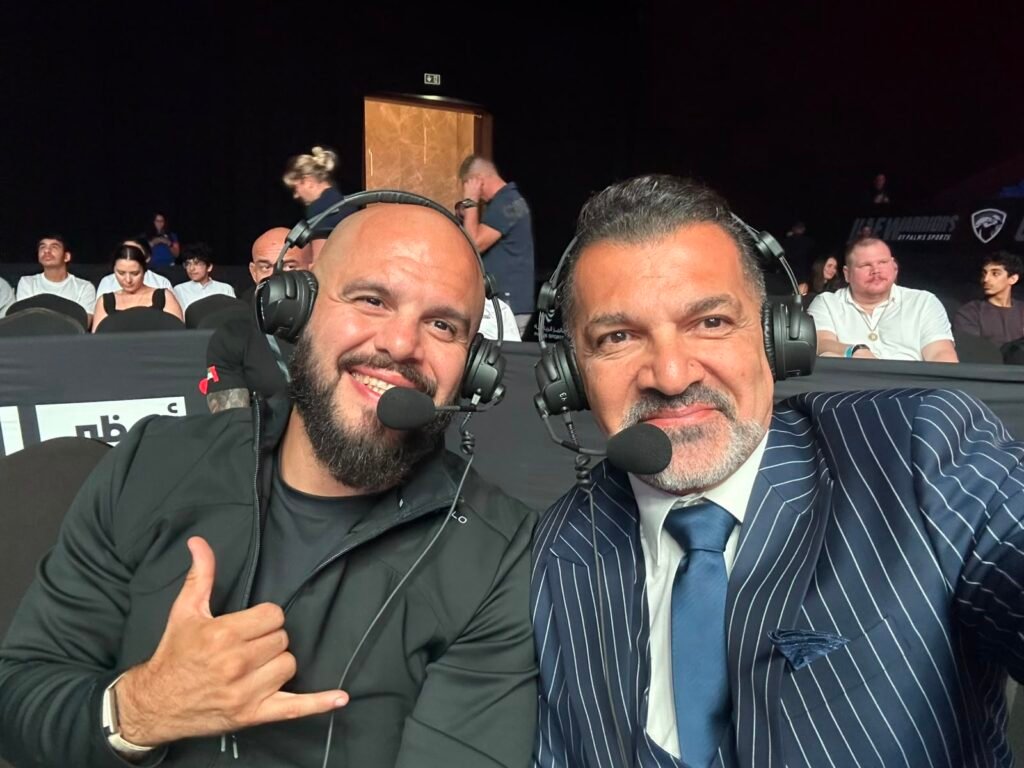
Rio now provides bilingual commentary in Arabic and English for major combat sports organisations, including the UFC, ONE Championship, Brave CF, UAE Warriors and Karate Combat.
His job is not simply to tell viewers what they can already see.
A fight can move quickly. A casual viewer might see two athletes exchanging strikes or fighting for position without understanding why one fighter is doing something or what the other is trying to set up.
Rio’s role is to make those details easier to understand. His experience as a martial artist allows him to talk about the technical side of a fight, while his background in education helps him explain it in a way that makes sense to a wider audience.
His work has been recognised with the Best Combat Sports Commentator Award in 2022, 2024 and 2025.
He also created MMA All Out, an educational platform focused on combat sports analysis. It followed the success of his television programme of the same name, which helped introduce international MMA to more Arabic-speaking viewers.
It is another example of Rio doing something he has done throughout his career: taking what he has learned and finding a way to pass it on.
His Education Goes Beyond Fighting
It would be easy to look at Rio’s career and assume that martial arts have been his only field of interest.
They have not.
Rio was originally trained as a computer engineer. Later, he earned a PhD in Marketing and Psychology. The combination might seem unusual at first, but it fits the wider pattern of his career.
Martial arts taught him about physical performance and discipline. Engineering gave him a technical foundation. Marketing and psychology added another layer: how people think, communicate and respond.
He also speaks five languages, something that has helped him work with athletes, students and audiences from different backgrounds.
That range of interests is important because Rio’s work has never stayed inside one box. He has taught, competed, built businesses, worked in broadcasting and mentored others.
Each role has required a different skill set.
And he has continued adding to it rather than deciding that, after a certain point, there was nothing left to learn.
At Home, the Lessons Continue
Away from martial arts academies, competitions and television studios, Rio is a husband and father of four.
His children have all been introduced to martial arts. But he does not expect them to follow the same professional path he did.
For him, the value of martial arts is much broader than becoming a fighter.
Discipline matters. So does respect. So does learning how to deal with failure, control emotions and keep going when something is difficult.
Those lessons can be useful whether someone eventually becomes a professional athlete or never competes at all.
That is also part of what Rio has tried to give the students who have trained under him.
A Career That Keeps Moving
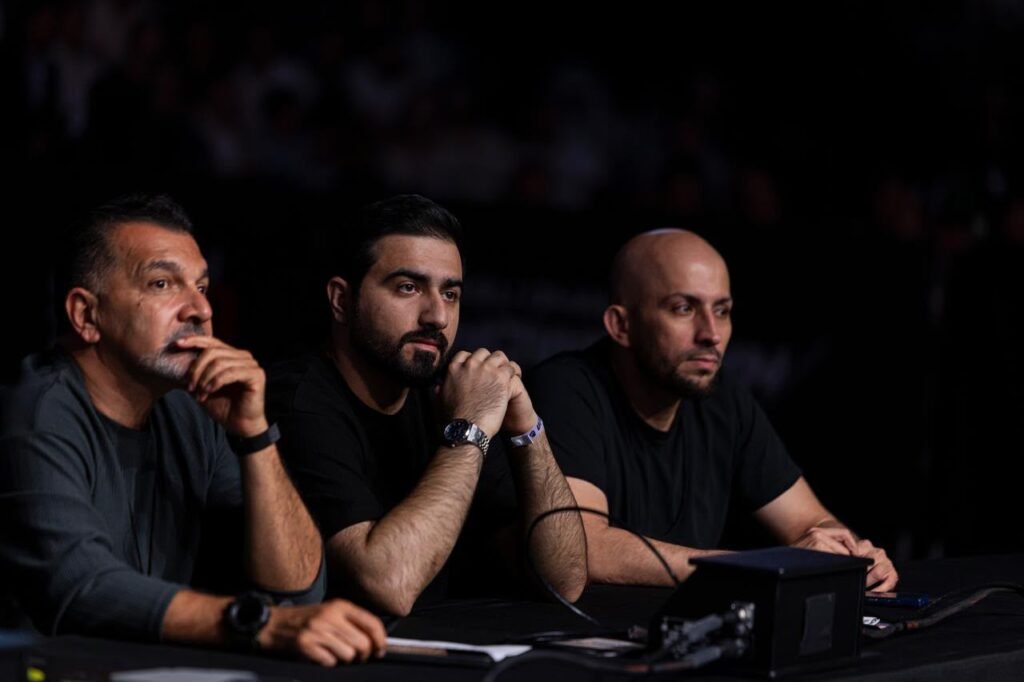
There are plenty of achievements that could be used to describe Rio Altaie: black belts, qualifications, awards, international broadcasting work, thousands of students and a role in the development of combat sports in Dubai and the wider Middle East.
But looking only at those achievements misses what makes his story interesting.
It started with a teenager who had been bullied and wanted to stop feeling afraid.
He entered a martial arts academy to learn how to protect himself. He stayed because he discovered that training could change much more than his ability to fight.
Over the years, that lesson followed him into teaching, competition, business, broadcasting and education.
And perhaps the most consistent part of Rio’s story is that he has never treated success as a reason to stop learning.
There is always another discipline to understand, another skill to develop, another student to help and another way to make the knowledge he has gained useful to someone else.
The sixteen-year-old who walked into that first academy could not have known where the decision would lead.
Today, Rio’s story is no longer just about what happened to him. It is about what he chose to do with it.
He took an experience that could have made him fearful and used it as the starting point for a life built around preparation, learning and helping others become stronger.
And after more than three decades, he is still moving forward.
Follow Rio Altaie on Instagram
Read More – UAE Joins Global Push to Restrict Social Media for Kids