How Scientists Are Uncovering the Secrets of the Empty Quarter
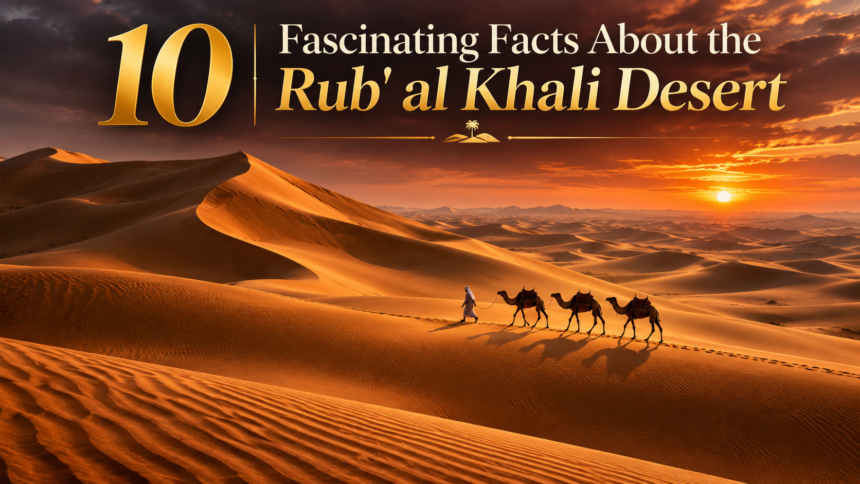
Imagine a landscape where enormous sand dunes stretch beyond the horizon, summer temperatures can become dangerously high, and entire valleys disappear beneath shifting sands. This is the Rub’ al Khali, one of the most extraordinary natural regions of the Arabian Peninsula.
- 1. The Rub’ al Khali Is the World’s Largest Continuous Sand Desert
- 2. Its Sand Dunes Can Rise Hundreds of Metres Above the Desert Floor
- 3. Extreme Heat and Limited Rainfall Make the Desert Difficult to Cross
- 4. Ancient Lakes and Rivers Once Existed Beneath Today’s Sand
- 5. Rare Animals and Desert Plants Can Survive Its Harsh Conditions
- 6. Explorers and Desert Communities Have Navigated the Empty Quarter for Centuries
- 7. Valuable Oil Resources Lie Beneath Parts of the Desert
- 8. Why the Rub’ al Khali Remains Important for Science and Environmental Research
- Conclusion
Also known as the Empty Quarter, this vast desert covers parts of Saudi Arabia, Oman, the United Arab Emirates and Yemen. Its remote location, dramatic landscapes and extreme climate have fascinated explorers, geologists and environmental researchers for generations.
At first glance, the region appears to be an endless sea of sand. However, beneath its quiet surface lies a much more complicated story involving ancient lakes, prehistoric climate changes, rare wildlife, geological formations and valuable natural resources.
The Rub’ al Khali Desert is recognised as the world’s largest continuous sand desert. NASA and UNESCO describe it as an enormous sand sea covering much of the southern Arabian Peninsula.
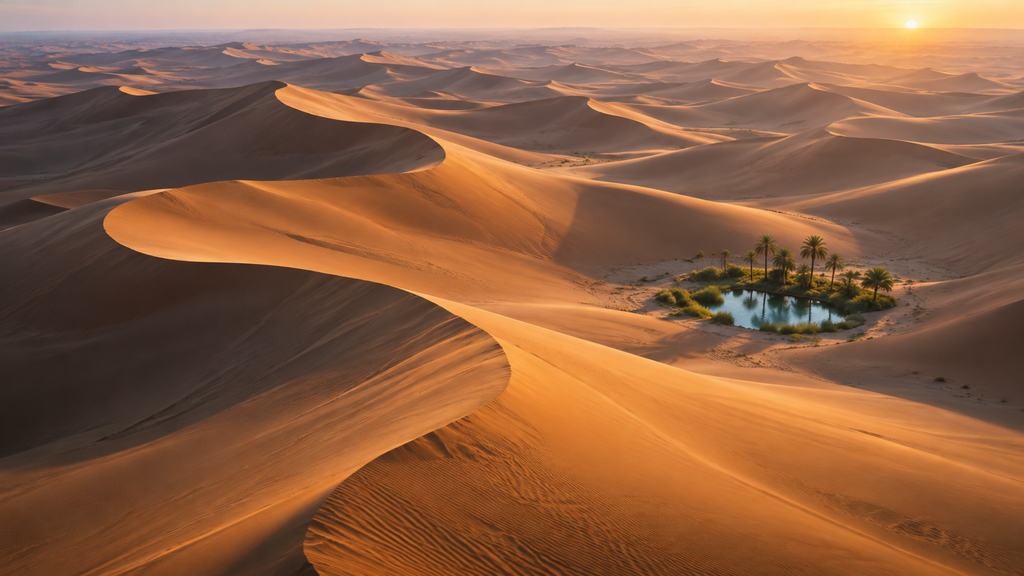
Despite its name, the Empty Quarter is not entirely empty. Small plants and specialised animals survive in suitable habitats, while archaeological research shows that parts of this landscape experienced much wetter conditions in the distant past.
The region also holds cultural significance. For centuries, people familiar with desert routes navigated its margins and selected interior areas, relying on detailed knowledge of water sources, terrain and seasonal conditions.
Today, scientific research and conservation programmes are revealing more about this remarkable environment.
Here are 10 fascinating facts about the Rub’ al Khali Desert, from its enormous dunes to the surprising evidence of ancient freshwater landscapes hidden beneath the sand.
1. The Rub’ al Khali Is the World’s Largest Continuous Sand Desert
Fact 1: It is the largest continuous sand sea on Earth.
One of the most remarkable features of the Empty Quarter is its enormous size.
The desert occupies much of the southern Arabian Peninsula and contains one of the most extensive uninterrupted landscapes of dunes anywhere in the world.
Its area is commonly estimated at around 600,000–650,000 square kilometres, although published figures differ because geographical boundaries are defined in different ways.
NASA has described the region as covering approximately 660,000 square kilometres, while other geographical references use smaller estimates. eol.jsc.nasa.gov
To understand its scale, the sand sea is comparable in area to a large European country.
A traveller crossing even a small part of it may encounter vast stretches of similar-looking terrain, with few permanent settlements or obvious landmarks.
The scale also creates challenges for scientific fieldwork.
Researchers must carefully plan transportation, fuel supplies, communication equipment and emergency arrangements before travelling into remote areas.
However, being the largest continuous sand desert is not the same as being the world’s largest desert overall.
Antarctica and the Arctic are larger deserts when the scientific definition of a desert is based on low precipitation. The Sahara is also much larger than the Empty Quarter and contains different types of terrain, including rocky surfaces and sandy regions.
The distinction makes the Arabian sand sea especially interesting.
It is not the biggest desert on Earth, but it is the largest continuous expanse dominated by wind-deposited sand.
Fact 2: The desert extends across four countries.
Although Saudi Arabia contains most of this vast landscape, it is not confined to one nation.
The Empty Quarter extends into Oman, the UAE and Yemen.
Its geography therefore forms part of the natural heritage of several Arabian countries.
| Country | Relationship with the desert |
|---|---|
| Saudi Arabia | Contains the largest portion |
| Oman | Includes eastern and southeastern desert areas |
| United Arab Emirates | Contains northern extensions of the sand sea |
| Yemen | Includes parts of its southern Arabian extent |
The desert’s different sections contain variations in dunes, sediment, landforms and surrounding geological features.
This geographical diversity makes it more complicated than a single uniform landscape.
It also means that research, conservation and development activities are influenced by different national policies and environmental conditions.
2. Its Sand Dunes Can Rise Hundreds of Metres Above the Desert Floor
Fact 3: Some dunes reach extraordinary heights.
The towering dunes are among the most striking characteristics of this Arabian landscape.
Their enormous shapes have developed through the movement and accumulation of sand over long periods.
The European Space Agency reports that dunes in some parts of the region reach approximately 250 metres in height.
NASA has also described particularly tall dunes exceeding 300 metres in certain locations. ESA+1
These figures should not be interpreted as the height of every dune.
The landscape contains a wide range of dune forms, including smaller ridges, long sandy slopes and large complex formations.
Wind plays a central role in shaping them.
When wind moves across a sandy surface, it carries loose grains through processes such as rolling, bouncing and suspension.
Where wind speed decreases or the terrain interrupts the movement of sand, grains begin to accumulate.
Over time, repeated deposition can create dunes of considerable size.
The form of a dune depends on wind direction, sand availability and the surrounding landscape.
Some areas contain long, nearly parallel ridges. Others display curved or star-shaped formations created by more complicated wind patterns.
Star dunes are particularly interesting because they can develop where winds approach from several directions.
Their intersecting arms create complex shapes that may grow upward as sand accumulates.
Satellite imagery has made it possible for scientists to study these formations across large areas.
The European Space Agency has published observations showing the desert’s distinctive dune structures and the contrast between sandy ridges and flatter surfaces. Rub’ al Khali desert
| Dune characteristic | Explanation |
|---|---|
| Linear dunes | Long ridges associated with prevailing wind patterns |
| Crescent-shaped dunes | Curved forms that can develop under suitable conditions |
| Star dunes | Complex formations influenced by winds from different directions |
| Interdune flats | Lower areas between dune systems |
| Changing dune surfaces | Sand movement alters ridges and slopes |
Although the dunes may appear motionless, their surfaces can change continually.
Some large formations are relatively stable over short periods, while smaller ridges may move more readily.
This combination of immense scale and gradual movement makes the sand sea an important natural laboratory for understanding desert landscapes.
3. Extreme Heat and Limited Rainfall Make the Desert Difficult to Cross
Fact 4: It is one of the most challenging environments in Arabia.
The Empty Quarter is famous for its harsh environmental conditions.
Much of the region receives very little rainfall, while intense sunlight and high temperatures contribute to severe aridity.
Summer temperatures can become extremely high.
NASA has reported daytime conditions reaching approximately 55°C in parts of the desert, although this should be understood as an extreme rather than a typical daily temperature everywhere. NASA Jet Propulsion Laboratory (JPL)
The combination of heat, limited water and remote terrain makes travel difficult.
For people without suitable experience or equipment, even a relatively short journey can become dangerous.
Water availability is one of the greatest challenges.
Unlike regions containing permanent rivers, the interior of the sand sea has few dependable natural sources of accessible freshwater.
Rainfall may occur during occasional weather events, but it is too irregular to sustain extensive vegetation or reliable flowing streams across most of the region.
Evaporation and infiltration also affect how long surface water remains available.
The desert experiences substantial differences between daytime and nighttime temperatures, particularly during cooler seasons.
As sunlight disappears, exposed surfaces can lose heat rapidly, creating conditions that differ markedly from the afternoon.
Wind presents another challenge.
Strong winds can move loose sand, reduce visibility and alter the appearance of tracks.
Navigating large dune fields requires an understanding of terrain as well as reliable equipment.
Historically, experienced desert travellers depended on local knowledge to identify routes and avoid areas where movement would be especially difficult.
Today, satellite navigation and specialist vehicles have improved access, but they have not removed the risks.
Why desert travel is difficult
| Environmental factor | Main challenge |
|---|---|
| High summer temperatures | Heat-related illness and dehydration |
| Limited rainfall | Scarce natural freshwater |
| Large dune fields | Difficult ground conditions |
| Strong winds | Blowing sand and reduced visibility |
| Remote locations | Limited access to assistance |
| Cold winter nights in some areas | Significant temperature changes |
The region’s demanding climate is one reason its interior remains sparsely populated.
However, describing the area as completely lifeless would overlook the remarkable adaptations of its plants and animals.
4. Ancient Lakes and Rivers Once Existed Beneath Today’s Sand
Fact 5: Parts of the Empty Quarter were once much wetter.
Perhaps the most surprising discovery about the region is that its modern arid conditions do not represent every period of its history.
Scientific evidence indicates that parts of the Arabian Peninsula experienced wetter climates during earlier intervals.
At certain times, greater rainfall supported lakes, rivers, wetlands and vegetation in places that are now extremely dry.
Researchers have identified ancient lake deposits and drainage features beneath or between the dunes.
These formations provide clues about how landscapes responded to changes in climate over thousands of years.
A 2025 study published in Communications Earth & Environment reconstructed a former lake-and-river landscape within the desert.
The researchers linked this environment to stronger seasonal rainfall associated with monsoon systems during a wetter phase of the Holocene. Nature
The findings challenge the assumption that the region has always looked the way it does today.
During wetter periods, water could accumulate in low-lying areas and support vegetation.
Some of these environments may have provided suitable habitats for animals and opportunities for human activity.
However, the wetter landscape did not necessarily cover every part of the desert at the same time.
Climate conditions varied between locations and historical periods.
As rainfall declined, lakes shrank or disappeared, vegetation became less extensive, and exposed sediments were gradually reshaped by wind.
Some former watercourses became buried beneath later sand deposits.
The region’s geological record therefore preserves evidence of environmental changes that are no longer obvious at the surface.
Fact 6: New archaeological research is changing our understanding of ancient human activity.
Scientists have long investigated whether wetter prehistoric environments allowed people to travel through parts of Arabia that are difficult to cross today.
The relationship between water and human settlement is particularly important.
Freshwater could support animals and vegetation, but water alone did not guarantee that an area was suitable for permanent or repeated occupation.
A 2026 study published in Nature examined this question through a large geoarchaeological survey of the central Empty Quarter.
Researchers investigated approximately 1,500 kilometres of desert terrain and examined 125 localities.
They identified ancient lake deposits at 55 of those locations.
However, despite finding evidence of former freshwater environments, the survey did not identify stone artefacts along the investigated transect.
The researchers suggested that access to suitable stone for manufacturing tools may have influenced where prehistoric people lived or travelled. Nature
This is an important distinction.
Ancient lakes show that freshwater existed in the landscape, but they do not automatically prove that people settled beside every one of them.
The research also demonstrates how archaeological discoveries can challenge earlier assumptions.
By combining geological observations, satellite imagery and field surveys, scientists are building a more detailed picture of Arabia’s environmental history.
| Scientific evidence | What it can reveal |
|---|---|
| Ancient lake sediments | Former freshwater conditions |
| Buried river channels | Earlier drainage networks |
| Fossil and biological remains | Past environmental conditions |
| Sediment dating | Approximate timing of wet periods |
| Stone artefacts | Evidence of human activities where found |
| Satellite observations | Large-scale landscape patterns |
The Empty Quarter is therefore more than a modern desert. It is also an archive of ancient environmental change.
5. Rare Animals and Desert Plants Can Survive Its Harsh Conditions
Fact 7: The desert supports specialised wildlife despite its name.
The name Empty Quarter suggests a place without life, but this description is misleading.
Although vegetation and animal populations are generally sparse across much of the interior, several species have adapted to dry conditions.
The most suitable habitats are often found near desert margins, protected areas and locations where limited moisture supports plant growth.
Animals living in such environments must cope with extreme heat, scarce water and unpredictable food availability.
Some avoid the hottest parts of the day by remaining in burrows or sheltered places.
Others obtain much of their water from food or use physiological adaptations to reduce water loss.
Certain reptiles, insects and small mammals are well suited to sandy environments.
Lizards may move quickly across loose surfaces, while some rodents spend much of the day underground.
Desert plants also display specialised characteristics.
Their roots, leaves and growth cycles can help them survive limited rainfall.
Some plants remain dormant for extended periods before responding to suitable moisture conditions.
Others have small leaves, protective surfaces or root systems that reduce water loss and improve access to scarce resources.
The Arabian oryx is one of the region’s best-known conservation species.
Its adaptations include the ability to survive in arid habitats and obtain moisture from available vegetation.
However, oryx populations are not distributed uniformly throughout the entire sand sea.
Their survival depends on habitat conditions, conservation efforts and protection from human pressures.
Similarly, Arabian sand gazelles and Arabian mountain gazelles occur in suitable parts of the wider desert region.
The UNESCO-listed ‘Uruq Bani Ma’arid protected area provides an important example of conservation at the western edge of the Empty Quarter.
UNESCO identifies it as a significant habitat for species including Arabian oryx and gazelles, with conservation programmes supporting wildlife restoration. UNESCO World Heritage Centre
Wildlife associated with the wider desert ecosystem
| Wildlife group | Survival characteristic |
|---|---|
| Arabian oryx | Adapted to dry landscapes and sparse vegetation |
| Arabian sand gazelle | Uses suitable desert habitats and plant resources |
| Desert rodents | Often shelter underground during hot conditions |
| Lizards | Adaptations for movement and survival in arid environments |
| Insects | Diverse behavioural and physiological responses to heat |
| Desert-adapted birds | Use available food and suitable nesting habitats |
The presence of these animals demonstrates that even very dry environments can contain functioning ecosystems.
However, such ecosystems may be sensitive to disturbance because biological productivity and available resources are limited.
Protected areas are therefore important for conserving habitats and supporting the recovery of threatened species.
6. Explorers and Desert Communities Have Navigated the Empty Quarter for Centuries
Fact 8: The desert has a remarkable history of exploration and traditional knowledge.
The immense scale of the Empty Quarter has made it one of the most challenging regions of Arabia to explore.
However, the idea that the desert was completely unknown until modern European explorers arrived is inaccurate.
People living around its boundaries possessed knowledge of routes, seasonal conditions, grazing areas and water sources long before modern geographical surveys.
Experienced travellers could identify important features of the landscape and make decisions based on weather, terrain and the condition of their animals.
Camels were essential to many historical journeys because of their ability to carry supplies and travel across arid environments.
Nevertheless, travelling through the central sand sea remained extremely difficult.
Limited freshwater, high temperatures and enormous dunes restricted movement and settlement.
During the twentieth century, several explorers became internationally known for documenting journeys across the region.
British explorer Bertram Thomas completed a crossing of the Empty Quarter in 1930–1931 with the support of Arabian companions and guides.
Harry St John Philby also undertook important expeditions in the Arabian Peninsula during the 1930s.
Later, Wilfred Thesiger travelled extensively through southern Arabia in the 1940s and documented his experiences in the book Arabian Sands.
These journeys became well known through published accounts, maps and photographs.
However, they depended heavily on the expertise of local guides and communities.
Recognising this contribution is essential to understanding the region’s exploration history.
Modern research expeditions now use satellite imagery, geological instruments, navigation systems and specialised vehicles to investigate remote areas.
Scientists study dune movement, ancient lake deposits, wildlife, groundwater and atmospheric conditions.
Such research helps explain both the desert’s present environment and its historical development.
The region remains challenging despite technological progress.
Remote travel requires careful preparation and should be undertaken only with appropriate local permissions, equipment and experienced support.
The history of exploration demonstrates how traditional geographical knowledge and modern scientific methods contribute to understanding one of Arabia’s most demanding landscapes.
7. Valuable Oil Resources Lie Beneath Parts of the Desert
Fact 9: The Empty Quarter contains important petroleum resources.
Beneath parts of the vast sand sea are geological formations containing valuable oil and gas deposits.
These resources have contributed to Saudi Arabia’s energy industry and wider economic development.
One of the most important examples is the Shaybah oil field.
Located in the southeastern Empty Quarter, Shaybah represents a remarkable example of petroleum production in an extremely remote environment.
Saudi Aramco reports that oil was discovered there in 1968.
However, the difficulty of developing infrastructure deep within the desert delayed large-scale production for several decades.
The field eventually began production in 1998. Aramco
Building industrial facilities in such an environment required extensive planning.
Equipment and supplies had to reach a location far from established urban centres.
Roads, communications systems, accommodation, industrial equipment and other services were essential to operations.
The surrounding terrain presented additional challenges.
Large dunes and exposed desert environments required specialist engineering approaches.
The field’s development demonstrates how modern technology can support industrial activity in locations that were previously difficult to access.
Petroleum production also brought environmental responsibilities.
Industrial infrastructure can affect natural habitats, while vehicle movement and construction may disturb sensitive desert surfaces.
Balancing energy development with environmental protection therefore requires careful planning and monitoring.
Fact 10: The desert has become a location for major wildlife conservation efforts.
The region is not only important for petroleum production and geological research.
It also contains protected landscapes that contribute to the preservation of Arabian biodiversity.
One prominent example is the Shaybah Wildlife Sanctuary.
Saudi Aramco established the sanctuary as part of its biodiversity initiatives.
Its conservation activities have included the reintroduction and protection of Arabian oryx and gazelle species.
Aramco describes the sanctuary as a project intended to restore wildlife populations and support ecological research in the Empty Quarter. Aramco
Another significant protected landscape is ‘Uruq Bani Ma’arid.
Located at the western edge of the desert, the reserve became Saudi Arabia’s first natural UNESCO World Heritage Site in 2023.
Its inscription recognised the site’s desert landscape, ecological processes and importance for biodiversity conservation. UNESCO World Heritage Centre
The reserve contains dune fields and habitats supporting desert-adapted species.
It is especially important for conservation programmes involving the Arabian oryx.
UNESCO notes that the area was among the last places where wild Arabian oryx were observed before the species disappeared from the wild.
Reintroduction programmes have since helped restore populations in protected habitats.
These conservation efforts challenge the perception that large sandy deserts have little ecological importance.
Even sparsely vegetated landscapes provide habitats for specialised organisms and contribute to regional biodiversity.
| Conservation area | Location | Main importance |
|---|---|---|
| Shaybah Wildlife Sanctuary | Southeastern Saudi Arabian Empty Quarter | Wildlife restoration and ecological research |
| ‘Uruq Bani Ma’arid | Western edge of the Empty Quarter | UNESCO-listed desert ecosystem and wildlife conservation |
Successful conservation requires habitat protection, monitoring and long-term management.
Wildlife reintroductions also need suitable environmental conditions and continued protection from threats.
The future of these ecosystems will depend on maintaining the ecological value of desert landscapes alongside other forms of land use.
8. Why the Rub’ al Khali Remains Important for Science and Environmental Research
Beyond its extraordinary landscapes, the Empty Quarter provides valuable opportunities to study geology, climate change, ecology and the history of the Arabian Peninsula.
Scientists can investigate how enormous dune systems develop, how desert plants and animals survive, and how climatic conditions have changed over thousands of years.
This research has significance beyond Saudi Arabia and neighbouring countries.
Many dry regions around the world face challenges involving limited rainfall, groundwater resources and environmental change.
Studying Arabian desert systems may contribute to a broader understanding of how arid landscapes respond to different pressures.
The region’s ancient lake deposits are particularly valuable.
They provide evidence that rainfall patterns and vegetation have changed significantly over time.
However, these prehistoric changes should not be interpreted as a direct prediction of future conditions.
Modern climate change involves different causes and processes, and understanding future outcomes requires contemporary climate observations and modelling.
Dune movement is another important research subject.
Satellite imagery allows scientists to observe large-scale sand patterns and compare changes over time.
These observations can support studies of sediment movement, atmospheric circulation and desert landforms.
Researchers also examine underground geological formations.
Sedimentary layers preserve evidence of earlier environments and help explain the geological processes responsible for the region’s natural resources.
Meanwhile, ecological research provides information about species that survive in extreme conditions.
Understanding how plants and animals use scarce water, tolerate heat and respond to disturbances can support conservation planning.
The protection of desert habitats also presents important questions for future development.
Road construction, industrial activity and recreational tourism can affect sensitive environments.
Vehicle tracks may damage vegetation or disturb surfaces that recover slowly.
Responsible management is therefore important, especially in protected and ecologically sensitive areas.
Important areas of desert research
| Research field | What scientists investigate |
|---|---|
| Geology | Sedimentary formations and landscape history |
| Paleoclimatology | Ancient rainfall and environmental changes |
| Archaeology | Evidence of prehistoric human activity |
| Ecology | Plants, animals and desert adaptation |
| Remote sensing | Dune patterns and land-cover changes |
| Groundwater science | Underground water systems |
| Conservation biology | Wildlife recovery and habitat protection |
The Empty Quarter may look like an unchanging landscape, but scientific discoveries continue to reveal new information about its history and natural systems.
Research published in 2025 and 2026 has been especially useful in demonstrating that former freshwater environments existed in parts of the desert and that human settlement patterns were influenced by more than the presence of water alone. Nature+1
These findings highlight how much remains to be discovered.
Conclusion
The Rub’ al Khali is one of the Arabian Peninsula’s most remarkable natural landscapes.
Its enormous size, towering dunes and harsh climate have made it famous around the world.
Yet the desert’s importance extends far beyond its dramatic scenery.
Its landscape contains evidence of ancient lakes, former river systems and major environmental changes.
Scientific discoveries reveal that parts of Arabia once experienced wetter conditions, supporting habitats that are difficult to imagine in the modern desert.
The region also supports specialised wildlife, including species protected through conservation programmes.
Historical travellers and local communities developed knowledge that helped them navigate its demanding terrain, while modern researchers continue investigating its geology and ecological history.
Petroleum resources beneath parts of the desert have contributed to industrial development, creating further reasons to balance economic activity with environmental protection.
The recognition of ‘Uruq Bani Ma’arid as a UNESCO World Heritage Site also demonstrates the international importance of preserving its biodiversity.
Ultimately, the Empty Quarter is not simply an empty landscape. It is a vast natural archive of Arabian history, climate, wildlife and geological change that continues to reveal fascinating discoveries about the desert environment.
Do follow us on Instagram
Read More – Why Does the Arabian Peninsula Have So Few Permanent Rivers?