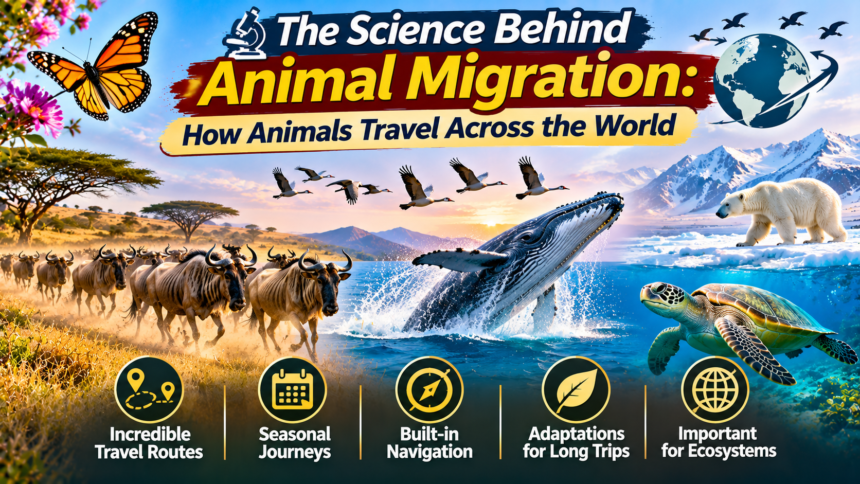
The Science Behind Animal Migration
1. What Is Animal Migration?
Animal migration is the regular and often seasonal movement of animals from one geographical area to another. These journeys may take place across land, through water or across the sky. Animals usually migrate to find better living conditions, reach breeding areas or access food that becomes available at different times of the year.
- 1. What Is Animal Migration?
- 2. Why Do Animals Migrate?
- 3. What Triggers Animal Migration?
- 4. How Do Animals Navigate During Migration?
- 5. How Animals Prepare Their Bodies for Long Journeys
- 6. Amazing Examples of Animal Migration Around the World
- 7. Different Types of Animal Migration
- 8. Why Animal Migration Is Important for Ecosystems
- 9. Threats That Affect Animal Migration
- 10. How Scientists Study Animal Migration
- 11. How Can We Protect Migrating Animals?
- Conclusion
- Frequently Asked Questions (FAQs)
Migration is different from ordinary daily movement. For example, a bird flying between its nest and a nearby feeding area is not necessarily migrating. Migration usually involves a longer, more organised journey between different seasonal habitats.
Many species follow similar routes every year, returning to the same feeding, breeding or resting locations. Others change their routes depending on weather conditions, rainfall and food availability.
Animal migration takes place in many groups of wildlife, including:
- Birds: Swallows, Arctic terns, geese and flamingos travel between seasonal habitats.
- Mammals: Wildebeest, caribou, elephants and whales make long-distance movements.
- Fish: Salmon travel from the ocean into freshwater rivers to reproduce.
- Insects: Monarch butterflies travel between North America and Mexico.
- Reptiles: Sea turtles travel between feeding areas and nesting beaches.
Each species has developed different ways to complete these journeys. Some travel alone, while others move in large groups.
2. Why Do Animals Migrate?
Migration is closely connected to survival. Animals move because environmental conditions are not equally suitable throughout the year.
A place that provides plenty of food during one season may become difficult to live in during another. Similarly, a suitable breeding area may only offer the right conditions for a few months.
There are several main reasons why animals migrate.
Finding Food
Food availability is one of the most important reasons behind animal migration.
Many animals travel to places where their preferred food is more abundant. For example, wildebeest move across the Serengeti-Mara ecosystem in East Africa as rainfall changes the availability of fresh grass.
When rain falls, new grass grows and provides valuable food for large grazing animals. As vegetation becomes less available, the herds continue moving in search of better feeding grounds.
Migratory birds also travel between regions depending on the availability of insects, fish and other food sources.
Finding Suitable Breeding Areas
Some animals migrate to locations that provide safer and more suitable conditions for reproduction.
Salmon are a well-known example. Many Pacific salmon begin their lives in freshwater streams, travel to the ocean as they grow and later return to freshwater to spawn.
Sea turtles also make long journeys between feeding grounds and nesting beaches. Female turtles return to suitable coastal locations to lay their eggs.
These journeys help animals reach environments where their offspring have a better chance of developing.
Escaping Unfavourable Weather
Temperature changes can make certain habitats unsuitable for wildlife.
Many birds leave colder regions during autumn and travel towards warmer areas where food remains available. They return when conditions improve and breeding opportunities become suitable.
Other animals move between high and low elevations depending on seasonal temperatures and food conditions.
However, not every migration is caused by cold weather. Some species move because of drought, extreme heat or seasonal changes in rainfall.
Finding Water and Suitable Habitat
In dry regions, rainfall can completely change the availability of water and vegetation. Animals may travel long distances to reach rivers, wetlands and areas with fresh plant growth.
This is particularly important for animals living in deserts, grasslands and other environments where resources change throughout the year.
3. What Triggers Animal Migration?
One of the most interesting questions in wildlife science is how animals know when it is time to migrate.
Scientists have discovered that migration is influenced by a combination of internal biological systems and external environmental signals.
Changes in Daylight
The length of daylight, known as photoperiod, is an important signal for many migratory species.
During different seasons, the number of daylight hours changes. Animals can detect these changes and use them to prepare for migration.
In birds, changes in daylight influence biological processes and hormonal activity linked to migration. Some species begin developing extra fat reserves and show increased activity before starting their journeys.
Daylight provides a useful seasonal signal because it changes in a predictable pattern every year.
Temperature Changes
Temperature also influences migration in many species.
As temperatures rise or fall, food sources may become less available, water conditions may change and suitable habitats may shift.
Some animals respond to these changes by moving towards areas with more favourable conditions.
However, temperature is not always the main trigger. Some animals begin migrating before major weather changes occur because their internal biological clocks help them anticipate seasonal conditions.
Rainfall and Food Availability
Rainfall is another important factor, especially for animals living in grasslands and dry environments.
When rain arrives, plants begin growing and fresh feeding areas become available. This can influence the movement of grazing animals and the predators that follow them.
The Great Migration of wildebeest in East Africa is closely connected to changing rainfall and grass growth across the Serengeti-Mara ecosystem.
Internal Biological Clocks
Many migratory animals have internal biological systems that help them recognise seasonal changes.
These systems are often known as circannual rhythms because they follow an approximately yearly cycle.
They work together with environmental signals to influence when animals prepare for migration, begin travelling and reach their destinations.
Research shows that hormones, body condition and the availability of energy reserves also play important roles in this process.
4. How Do Animals Navigate During Migration?
Finding the correct route is one of the greatest challenges of migration. Some animals travel across enormous distances without roads, maps or modern navigation equipment.
Instead, they use natural environmental signals to guide their movements.
Scientists have identified several navigation methods used by migratory animals.
Using the Sun as a Compass
Many animals use the sun to help maintain their travel direction.
However, the sun appears to move across the sky throughout the day. Animals that use it for navigation must account for this movement.
Some species have an internal body clock that helps them adjust their direction according to the sun’s position.
Monarch butterflies are a well-studied example. Research shows that migrating monarchs use a time-compensated sun compass to help them travel in the correct direction.
Using Earth’s Magnetic Field
One of the most fascinating discoveries in migration science is that some animals can sense Earth’s magnetic field.
The planet produces a natural magnetic field that provides directional information. Some migratory birds, sea turtles, fish and insects can use magnetic cues during their journeys.
Monarch butterflies, for example, can use an inclination-based magnetic compass when sunlight does not provide clear directional information.
Scientists are still investigating exactly how different species detect and process magnetic signals.
Using Stars and Night Sky Patterns
Some migratory birds travel during the night and use star patterns to maintain their direction.
By observing the position of stars and the rotation of the night sky, they can identify useful directional information.
Young birds may learn these patterns during early development, helping them navigate during their first migrations.
Using Smell and Familiar Landmarks
Not all animals depend on visual or magnetic signals.
Salmon use their strong sense of smell to find the rivers where they were born. During their early development, young salmon learn the chemical characteristics of their home streams. As adults, they use these remembered smells to guide their return journey.
Landmarks such as mountains, rivers, coastlines and valleys can also help animals recognise familiar routes.
Many species combine several navigation methods instead of depending on only one.
5. How Animals Prepare Their Bodies for Long Journeys
Migration requires a great deal of energy. Animals may spend days, weeks or even months travelling between different habitats.
To manage these demands, many species prepare their bodies before leaving.
Building Fat Reserves
Fat is an important source of energy for long-distance migrants.
Many birds increase their food intake before migration and store additional body fat. These reserves provide fuel during long flights, especially when feeding opportunities are limited.
Some migratory insects also build energy reserves before beginning their journeys.
Strengthening Muscles
Birds that travel long distances need strong flight muscles. Their bodies may undergo physical changes before migration to support extended flying.
The size and condition of flight muscles can change according to the demands of the journey.
Choosing Resting Places
Animals do not always travel continuously. Many species stop at suitable locations to rest, feed and regain energy.
These locations are called stopover sites.
For migratory birds, wetlands, coastal mudflats and forests can provide valuable food and shelter during long journeys.
Healthy stopover habitats are particularly important because a bird may depend on several locations before reaching its final destination.
Saving Energy During Travel
Some birds fly in formations that help reduce the energy needed to travel.
For example, geese often fly in a V-shaped arrangement. This formation can help birds benefit from the airflow created by the wings of birds flying ahead of them.
Other species adjust their flight routes to take advantage of favourable winds.
These behaviours help reduce the physical demands of migration.
6. Amazing Examples of Animal Migration Around the World
Animal migration happens in many different environments. Some journeys cover entire continents, while others involve remarkable movements across oceans and rivers.
Here are some of the most fascinating examples.
Arctic Terns: Travelling Between Two Ends of the Earth
Arctic terns are famous for their extraordinary migration journeys. These small seabirds travel between their northern breeding areas and feeding grounds near Antarctica.
Their annual journeys can exceed 80,000 kilometres in some individuals.
A scientific study published in 2010 tracked Arctic terns using lightweight tracking devices and confirmed the remarkable distances they travel.
Their migration allows them to experience long periods of daylight and access productive marine feeding areas in different seasons.
Monarch Butterflies: A Journey Across Generations
Monarch butterflies are among the best-known insect migrants.
Eastern North American monarchs travel south towards overwintering sites in the mountains of central Mexico when colder weather approaches.
What makes this migration especially interesting is that it takes place across multiple generations.
The butterflies that return north are not always the same individuals that travelled south. Several generations may be involved in completing the wider migration cycle.
Scientists are particularly interested in how these small insects navigate using sunlight and Earth’s magnetic field.
Wildebeest: Following Seasonal Rainfall
The Great Wildebeest Migration takes place across the Serengeti-Mara ecosystem in Tanzania and Kenya.
Around 1.3 million wildebeest belong to the main migratory population, alongside large numbers of other grazing animals.
The herds move in response to seasonal rainfall and the growth of fresh grass.
Their journey includes river crossings, open grasslands and areas where predators such as lions and crocodiles hunt.
This migration demonstrates how closely animal movements are connected to rainfall, vegetation and the search for food.
Salmon: Returning to Their Birthplace
Pacific salmon are famous for their ability to return from the ocean to the freshwater streams where they began life.
As young fish, they travel downstream towards the sea. After spending part of their lives in the ocean, many adults return upstream to reproduce.
Their sense of smell plays an important role in recognising the chemical signals of their original rivers.
This journey is physically demanding because salmon must often swim against strong currents and overcome natural obstacles.
Whales: Travelling Across Vast Oceans
Several whale species make long seasonal migrations between feeding and breeding areas.
For example, many humpback whale populations travel from colder, productive feeding waters towards warmer tropical or subtropical waters where they give birth and raise their calves.
These journeys help whales take advantage of different ocean conditions throughout the year.
Their migration routes also show how marine ecosystems are connected across enormous geographical distances.
7. Different Types of Animal Migration
Not all animal migrations follow the same pattern. Their routes and travel distances depend on their species, habitat and environmental conditions.
Some common types include:
Seasonal migration: Animals move between different habitats at particular times of the year. Many birds use this method to reach breeding or wintering areas.
Latitudinal migration: Animals travel north or south across different regions. Arctic terns are an example.
Altitudinal migration: Animals move between higher and lower elevations, often in response to temperature and food availability.
Long-distance migration: Some species travel across continents or oceans to reach their seasonal destinations.
Vertical migration: Many marine organisms move up and down through the water column. Some zooplankton rise towards the surface at night to feed and descend into deeper water during the day.
These different patterns show that migration is not limited to birds or large mammals. It is a widespread behaviour found throughout the animal kingdom.
8. Why Animal Migration Is Important for Ecosystems
Animal migration supports natural ecosystems in several ways. Migratory species connect habitats that may be separated by thousands of kilometres.
Animal migration plays an important role in keeping nature balanced.
As animals move from one place to another, they spread seeds, help pollinate plants, carry nutrients, and provide food for other animals.
These movements also connect different habitats and help keep ecosystems healthy.
Their movements help transfer nutrients, support food chains and maintain relationships between different environments.
Some of the important ecological benefits include:
- Nutrient movement: Migrating animals transport nutrients between feeding, breeding and resting areas.
- Pollination: Migrating insects can carry pollen between flowering plants.
- Seed dispersal: Some animals transport seeds to new locations through their movement and feeding activities.
- Food chain support: Migratory animals provide food for predators and scavengers along their routes.
- Ecosystem connections: Their movements help link marine, freshwater, forest and grassland environments.
For example, migratory salmon transport nutrients from the ocean into freshwater ecosystems when they return to their spawning rivers.
In this way, their migration benefits more than just the fish themselves.
9. Threats That Affect Animal Migration
Although migration is a natural behaviour, modern environmental changes are making many journeys more difficult.
Animals depend on suitable routes, food sources and resting places. When these areas are damaged or disappear, migration becomes more challenging.
Climate Change
Changing temperatures and rainfall patterns can affect the timing of migration.
Some birds may arrive at breeding areas when insect populations have already reached their peak or when food is less available.
Changes in ocean temperatures can also influence the distribution of marine food sources.
Habitat Loss
Forests, wetlands, grasslands and coastal areas are important habitats for migrating animals.
Agriculture, urban development, deforestation and construction can destroy these areas or divide them into smaller sections.
This makes it harder for animals to travel safely between different locations.
Roads, Dams and Other Barriers
Human-made structures can interrupt traditional migration routes.
Roads may create dangerous crossing points for land animals, while dams can block fish from reaching their breeding grounds.
Artificial barriers can therefore prevent animals from completing important stages of their life cycles.
Pollution and Human Disturbance
Light pollution can confuse some night-migrating birds, while plastic waste and water contamination can damage marine and freshwater habitats.
Noise, hunting and other human activities may also disturb animals at important feeding and resting locations.
These pressures can reduce the chances of successful migration and reproduction.
10. How Scientists Study Animal Migration
Modern technology has helped scientists understand animal migration in much greater detail.
Scientists study animal migration using small tracking devices, satellite images, and other modern tools.
They also collect biological samples and use AI to understand where animals travel and how they move across land, through the air, and across oceans.
These methods help researchers track animals without disturbing their natural behaviour.
In the past, researchers often depended on direct observations, bird ringing and reports from local communities.
Today, they can use several advanced tools to follow animals across large distances.
GPS tracking: Small tracking devices record an animal’s location and movement patterns.
Satellite tracking: Satellites help scientists monitor animals that travel through remote regions, including oceans and deserts.
Bird ringing and tagging: Researchers attach identification rings or tags to birds to collect information when they are observed again.
Camera traps: These cameras automatically record wildlife movements in forests, mountains and other natural habitats.
Acoustic monitoring: Underwater microphones and other recording equipment help researchers study the movements of marine animals.
Genetic research: DNA studies can provide information about animal populations, breeding connections and migration patterns.
These technologies help scientists understand where animals travel, which habitats they use and what environmental conditions influence their movements.
11. How Can We Protect Migrating Animals?
Protecting migratory animals requires cooperation between countries, conservation organisations, researchers and local communities.
Protecting migrating animals means keeping their habitats safe along their entire travel routes, building wildlife-friendly roads and structures, and reducing dangers caused by human activities.
Because many species cross international boundaries, their protection cannot depend on one country alone.
Some important conservation actions include:
- Protecting important breeding, feeding and resting habitats.
- Maintaining natural migration corridors.
- Building wildlife crossings where roads interrupt animal routes.
- Providing fish passages around suitable dams and barriers.
- Reducing plastic waste and water pollution.
- Limiting harmful artificial lighting near important bird migration routes.
- Monitoring wildlife populations through scientific research.
- Supporting international agreements that protect migratory species.
The Convention on the Conservation of Migratory Species of Wild Animals (CMS) is one international framework that encourages countries to work together to protect migratory wildlife.
Conservation projects are most effective when they protect the complete migration journey rather than focusing on only one habitat.
Conclusion
Animal migration is one of nature’s most impressive survival strategies. From Arctic terns flying between the Arctic and Antarctic to salmon returning to their birthplace, these journeys reveal the remarkable abilities animals have developed over time.
The science behind migration involves much more than movement. Seasonal daylight, temperature, rainfall, food availability, biological clocks and natural navigation systems all help determine when and where animals travel.
Scientists are still discovering new details about how animals use Earth’s magnetic field, sunlight, stars and chemical signals to find their way.
However, these natural journeys are becoming more difficult as climate change, habitat destruction, pollution and human-made barriers affect important migration routes.
Protecting migratory species requires safeguarding the habitats they depend on throughout the year. By supporting wildlife research, maintaining natural corridors and reducing environmental damage, we can help ensure that these remarkable journeys continue.
Animal migration reminds us that nature is deeply connected. The survival of one species can depend on healthy habitats located thousands of kilometres away, making wildlife conservation a shared responsibility across the world.
Frequently Asked Questions (FAQs)
1. What is animal migration?
Animal migration is the regular movement of animals from one geographical area to another, usually to find food, suitable weather or breeding grounds.
2. Why do animals migrate?
Animals migrate for several reasons, including food availability, seasonal temperature changes, reproduction and access to suitable habitats.
3. How do animals know when to migrate?
Many animals respond to environmental signals such as daylight length, temperature and rainfall. Internal biological clocks and hormonal changes also influence migration timing.
4. How do migratory animals find their way?
Different species use natural navigation systems, including the sun, stars, Earth’s magnetic field, familiar landmarks and their sense of smell.
5. Which animal has one of the longest migrations?
The Arctic tern is famous for having one of the longest known annual migrations. Some individuals travel more than 80,000 kilometres each year.
6. Do insects also migrate?
Yes. Monarch butterflies are a well-known example. They travel between northern parts of North America and overwintering locations in central Mexico.
7. How does climate change affect animal migration?
Climate change can alter migration timing, food availability, breeding conditions and the location of suitable habitats. It can also create mismatches between animal movements and seasonal resources.
Do follow us on Instagram
Read More – Why Falcons Hold a Special Place in Arabian Culture