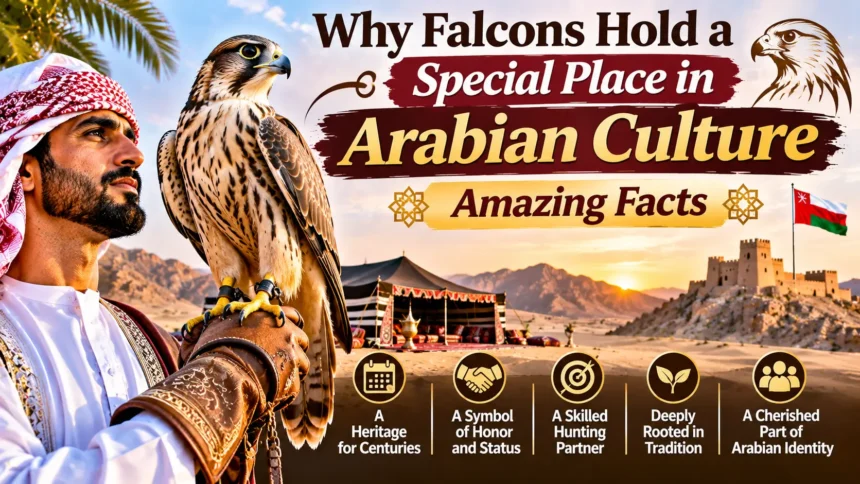
Why Falcons Hold a Special Place in Arabian Culture
1. The Historical Connection Between Falcons and Arabian Communities
The relationship between falcons and people in the Arabian Peninsula goes back many generations. Before modern technology, vehicles and advanced hunting equipment became common, desert communities depended heavily on their knowledge of nature to survive.
- 1. The Historical Connection Between Falcons and Arabian Communities
- 2. Falconry: A Traditional Art of the Arabian Desert
- 3. Falcons Represent Courage, Strength and Freedom
- 4. The Special Relationship Between a Falcon and Its Falconer
- 5. The Role of Falcons in Bedouin Life
- 6. Falcons in Arabian Art, Poetry and Literature
- 7. Why Falcons Are Important National Symbols in the Gulf
- 8. Falconry and Its Recognition as UNESCO Cultural Heritage
- 9. Modern Falconry: From Traditional Hunting to Cultural Sport
- 10. The Importance of Falcon Hospitals and Conservation
- 11. Falconry Festivals and Cultural Events in the Arabian Peninsula
- Interesting Facts About Falcons and Arabian Culture
- Conclusion
- Frequently Asked Questions (FAQs)
For Bedouin communities, hunting was one way to find food in an environment where resources were limited. Falcons became valuable hunting companions because of their natural ability to spot and catch prey. Their sharp eyesight, powerful wings and fast flight made them well suited to hunting in open desert landscapes.
People learned how to catch, train and care for these birds. Over time, this knowledge became a traditional skill passed down within families and communities.
Falconry gradually developed from a practical hunting activity into a respected cultural tradition. It became associated with important values such as patience, courage, discipline and responsibility.
The tradition also encouraged people to understand seasonal changes, bird migration and the natural behaviour of wildlife. Falconers needed to know when certain birds arrived, where prey could be found and how to care for their falcons in different weather conditions.
These skills helped create a lasting connection between people and the natural environment.
2. Falconry: A Traditional Art of the Arabian Desert
Falconry is the practice of training and flying falcons to hunt wild prey. It is one of the most recognised traditional activities in the Arabian Peninsula.
In earlier times, falconers travelled across deserts with their birds, searching for suitable hunting grounds. They often moved on foot, horseback or camels, depending on the location and local customs.
The hunting process required patience and a good understanding of the bird’s behaviour. A falconer had to train the bird to respond to signals, return when called and recognise the hunting process.
Some of the falcons commonly associated with Arabian falconry include:
- Saker Falcon: Known for its strength and ability to hunt in open landscapes.
- Peregrine Falcon: Famous for its extraordinary diving speed and powerful hunting ability.
- Lanner Falcon: Another bird of prey traditionally used in parts of the region.
In Qatar, the Saker Falcon, locally known as Hur, and the Peregrine Falcon, known as Shaheen, are among the most commonly used types in falconry.
Falconry requires much more than simply owning a bird. It involves regular training, careful feeding, veterinary attention and an understanding of the animal’s individual behaviour.
Today, the tradition continues through organised events, competitions and training programmes. However, its meaning has changed. It is no longer mainly a way to obtain food but has become a cultural activity that brings together people who share an interest in birds and traditional heritage.
3. Falcons Represent Courage, Strength and Freedom
One of the main reasons falcons hold a special place in Arabian culture is the meaning people associate with them. Falcons are symbols of strength, courage, independence, and pride in Gulf culture.
Their ability to fly at great heights, move quickly through the air and hunt with accuracy has made them symbols of strength and courage.
In traditional Arabian communities, these qualities were admired and connected with the values expected of skilled hunters and respected members of society.
Falcons are often associated with:
- Courage: Their bold hunting behaviour represents confidence and bravery.
- Freedom: Their ability to fly across open landscapes represents independence and freedom.
- Patience: Training a falcon requires time, attention and commitment.
- Strength: Their hunting skills and physical abilities represent power and determination.
- Discipline: Successful falconry depends on regular care and consistent training.
These associations help explain why falcons appear in traditional artwork, cultural displays and national symbols.
However, their cultural importance is not based only on symbolic meaning. The relationship between a falcon and its handler is also an important part of the tradition. It involves trust, familiarity and regular care.
4. The Special Relationship Between a Falcon and Its Falconer
One of the most fascinating parts of falconry is the relationship between the bird and the person who trains it.
Falcons are naturally independent predators. Training them requires patience and a good understanding of their behaviour. A falconer needs to learn how the bird reacts to different situations, when it feels comfortable and how it responds during training.
The process involves regular feeding, handling, exercise and controlled flying sessions.
Traditional falconry also uses several specialised tools:
- Burqa: A small leather hood placed over the falcon’s head to cover its eyes and help keep it calm when appropriate.
- Manqala: A thick leather glove that protects the falconer’s hand from the bird’s sharp claws.
- Jesses: Small leather straps attached to the bird’s legs to help the falconer hold and manage it safely.
- Perch: A specially designed stand where the falcon can rest.
- Lure: A feathered training object used to practise the bird’s hunting and flying skills.
Each item has a particular purpose and reflects the practical knowledge developed by falconers over generations.
The relationship also requires responsibility. Falcons need suitable food, clean surroundings, exercise and proper medical care. Experienced falconers understand that the health and well-being of the bird must always come first.
This close relationship is one reason falconry continues to be respected as more than just a traditional sport.
5. The Role of Falcons in Bedouin Life
For traditional Bedouin communities, the desert was not simply an empty landscape. It was a place where people developed detailed knowledge of weather, animals, plants and seasonal changes.
For thousands of years, falcons have helped people in the Arabian Peninsula hunt for food and survive in the desert.
Over time, falconry became more than just a hunting activity. It grew into an important part of Arabian culture, representing pride, nobility, and heritage. It also shaped traditional ways of life and continues to be an important part of Gulf traditions today.
Falconers travelled through desert areas, observed wildlife and shared their experiences with other hunters. These journeys helped develop a strong sense of community.
The tradition was also an opportunity for older generations to teach younger family members about desert life.
Children could learn how to recognise different falcon species, prepare traditional equipment and understand the importance of caring for animals.
Falconry also created opportunities for people to meet, exchange knowledge and strengthen social relationships.
Even today, many families continue to introduce younger generations to falconry through outdoor activities, training and cultural events.
This connection between traditional knowledge and family life helps explain why falconry remains important in Arabian culture.
6. Falcons in Arabian Art, Poetry and Literature
Falcons have inspired artists, writers and poets across the Arabian Peninsula.
Their importance can be seen in local poetry, family names, and national symbols across the region
Their speed, strength and graceful flight have made them popular subjects in traditional stories, poetry and artwork. They are often used to express ideas about bravery, pride, freedom and the beauty of nature.
Traditional Arabic poetry has long celebrated the desert environment, hunting journeys and the relationship between people and animals. Falcons form part of this wider cultural world.
Their images can also be found in paintings, decorative objects, traditional crafts and modern designs.
In some communities, admiration for falcons is reflected in personal names and traditional expressions. Names associated with falcons are valued because of the qualities people connect with these birds.
Today, falcon imagery is also used in exhibitions, cultural festivals, museums and educational programmes.
UNESCO’s description of falconry recognises that the tradition is connected to a wider heritage of traditional dress, food, songs, music, poetry and dance.
This shows that falconry is not simply about hunting. It is connected to the wider cultural experiences and shared memories of the communities that practise it.
7. Why Falcons Are Important National Symbols in the Gulf
Falcons have become important symbols of identity in several Gulf countries.
Their place in traditional life, connection with the desert and association with admired cultural values have made them powerful national symbols.
United Arab Emirates
In the UAE, the falcon is closely connected with national identity and traditional heritage. Falconry is one of the country’s most recognised cultural practices.
The late Sheikh Zayed bin Sultan Al Nahyan, the founding father of the UAE, was a passionate supporter of falconry. He supported initiatives to protect falcons and promote their care.
Today, the tradition continues through cultural organisations, falcon hospitals, competitions and conservation programmes.
Saudi Arabia
Saudi Arabia has a long history of falconry. The Saker Falcon and Peregrine Falcon are among the birds traditionally used by Saudi falconers.
The Saudi Falcons Club supports the preservation of falconry through auctions, festivals, exhibitions, competitions and educational activities.
Qatar
Falcons hold a particularly visible position in Qatari culture. The falcon is recognised as the national bird of Qatar.
Doha’s famous Falcon Souq, located within Souq Waqif, allows visitors to learn about these birds and discover traditional falconry equipment. The market also includes facilities for falcon care and medical treatment.
Although each country has its own customs and traditions, falconry provides a shared cultural connection across much of the Arabian Peninsula.
8. Falconry and Its Recognition as UNESCO Cultural Heritage
Falconry is not only an important regional tradition. It is also recognised internationally as a cultural practice worth protecting.
UNESCO included falconry on its Representative List of the Intangible Cultural Heritage of Humanity in 2010. The multinational nomination was later expanded in 2021 to include 24 countries.
The listing recognises falconry as a living human heritage because it continues to be practised and passed between generations.
UNESCO highlights several important parts of the tradition:
- Traditional methods of training and caring for birds.
- Knowledge passed down through families and communities.
- The relationship between falconers and their birds.
- Traditional equipment and crafts.
- Social gatherings and shared cultural experiences.
- Respect for wildlife and the natural environment.
This international recognition has helped increase awareness of falconry and its importance in different cultures.
It also encourages communities to protect the knowledge, skills and traditional practices connected with this activity.
For Arabian communities, the recognition provides an opportunity to share their cultural heritage with people around the world.
9. Modern Falconry: From Traditional Hunting to Cultural Sport
Although the lifestyle of the Arabian Peninsula has changed significantly, falconry has remained popular.
Modern transportation, improved veterinary care and specialised training facilities have changed the way people practise the tradition.
Today, many falconers participate in organised competitions, exhibitions and cultural festivals. These events give people an opportunity to display their birds, exchange knowledge and celebrate traditional skills.
Falconry is also attracting younger people who want to learn about their cultural heritage.
Some important modern developments include:
- Organised falconry competitions and tournaments.
- International falcon exhibitions and auctions.
- Specialised breeding and veterinary facilities.
- Training centres for young falconers.
- Educational programmes about wildlife and traditional hunting.
- Digital platforms for sharing falconry knowledge.
The Saudi Falcons Club is one example of an organisation working to maintain this tradition. It brings together falconers through festivals, auctions, exhibitions and other activities.
In Qatar, Souq Waqif’s Falcon Souq continues to connect visitors with the traditional culture of falconry.
These developments show how a traditional activity can continue to grow while maintaining its cultural meaning.
10. The Importance of Falcon Hospitals and Conservation
Falconry also creates an important responsibility to protect the birds themselves and the environments they depend on.
Falcons face several natural and human-related challenges, including habitat loss, illegal trapping, pollution and diseases. Migratory birds can also be affected by changes along their seasonal routes.
As falconry has developed, veterinary care and conservation programmes have become important parts of the wider tradition.
One well-known example is the Abu Dhabi Falcon Hospital, established in 1999. It provides veterinary care for falcons and supports research, training and wildlife conservation.
The hospital also oversees the Sheikh Zayed Falcon Release Programme, which helps rehabilitate wild falcons and release them into suitable habitats along their natural migration routes.
Conservation efforts also need to consider the birds that falcons hunt. The Houbara Bustard, for example, has a long cultural connection with traditional Arabian falconry.
Because hunting and habitat pressures can affect Houbara populations, conservation programmes work to protect these birds and support sustainable wildlife management.
Protecting falcons and their natural environments is essential for ensuring that future generations can continue to appreciate this heritage.
11. Falconry Festivals and Cultural Events in the Arabian Peninsula
Falconry festivals are an important way to celebrate and preserve traditional knowledge.
These gatherings bring together falconers, breeders, researchers, photographers and visitors who share an interest in birds of prey.
During such events, people can watch competitions, learn about different falcon species and discover traditional equipment.
Some events also include cultural exhibitions, educational activities and opportunities for younger generations to learn from experienced falconers.
In Saudi Arabia, the Saudi Falcons Club organises events that include auctions, exhibitions, festivals and competitions.
In the UAE, cultural programmes and falconry events help promote the country’s heritage and wildlife conservation efforts.
These gatherings also create opportunities for international visitors to understand the importance of falconry in Arabian society.
For many families, attending such events is a way to keep traditional customs alive and share their interest with younger generations.
Interesting Facts About Falcons and Arabian Culture
Falcons have several fascinating characteristics and cultural connections that make them special in the Arabian Peninsula.
Here are some interesting facts:
- A long history: Falconry has been practised for thousands of years and is connected with traditional hunting in many regions.
- UNESCO recognition: Falconry is recognised as a living human heritage by UNESCO.
- A national bird: The falcon is recognised as the national bird of Qatar.
- Traditional hunting companions: Falcons helped desert communities hunt for food before modern hunting methods became common.
- Different falcon species: Saker and Peregrine Falcons are among the most commonly used species in Gulf falconry.
- Special equipment: Traditional falconry uses leather hoods, protective gloves, jesses and training lures.
- A family tradition: Knowledge and skills are often passed from older falconers to younger generations.
- A conservation connection: Modern falconry communities support veterinary care, breeding programmes and wildlife protection.
These facts show why falcons continue to attract attention and remain connected to the cultural identity of many Arabian communities.
Conclusion
Falcons hold a special place in Arabian culture because their story is closely connected with the history, lifestyle and traditions of the Arabian Peninsula. What once began as a practical way to find food in challenging desert conditions gradually developed into a respected cultural activity.
Over generations, falconry became associated with courage, patience, discipline and a strong connection with nature. It also created opportunities for families and communities to share knowledge and maintain traditional skills.
Today, countries such as the UAE, Saudi Arabia and Qatar continue to celebrate this heritage through cultural festivals, competitions, training programmes and conservation initiatives. UNESCO recognition has also helped bring international attention to the importance of falconry as a living cultural tradition.
However, preserving this heritage involves more than keeping the sport alive. It also requires protecting the birds, their natural prey and the environments they depend on.
Falcons represent an important connection between the past and present of Arabian society. Their place in traditional life reminds us of the knowledge, values and customs that have been passed down through generations.
As modern life continues to change the region, protecting falconry and its natural environment will help ensure that this remarkable heritage remains meaningful for future generations.
Frequently Asked Questions (FAQs)
1. Why are falcons important in Arabian culture?
Falcons are important because they represent courage, freedom, strength and patience. They also have a long connection with traditional desert hunting and Bedouin life.
2. What is falconry in Arabian culture?
Falconry is the traditional practice of training and flying falcons to hunt wild prey. It began as a practical hunting activity and later developed into a respected cultural sport.
3. Which falcons are commonly used in Arabian falconry?
The Saker Falcon and Peregrine Falcon are among the most commonly used species. The Lanner Falcon is also associated with traditional falconry in parts of the region.
4. Which Arab countries are famous for falconry?
The United Arab Emirates, Saudi Arabia and Qatar are particularly well known for their falconry traditions. The practice is also found in other parts of the Arabian Peninsula.
5. Why do falconers cover a falcon’s eyes?
Falconers use a soft leather hood called a burqa to cover the bird’s eyes when appropriate. This helps limit visual stimulation and keep the bird calm during handling and transport.
6. Is falconry recognised by UNESCO?
Yes. Falconry is included on UNESCO’s Representative List of the Intangible Cultural Heritage of Humanity. Its multinational inscription was expanded in 2021 to include 24 countries.
7. What is the national bird of Qatar?
The falcon is recognised as the national bird of Qatar and is an important symbol of the country’s cultural heritage.
8. How is falconry preserved today?
Falconry is preserved through training programmes, cultural festivals, competitions, veterinary hospitals, breeding initiatives and conservation projects that protect falcons and their natural habitats.
Do follow us on Instagram
Read More – How Flamingos Survive in Kuwait Coastal Habitats