Why Preserving Arabian Commercial Heritage Matters Today
Long before the Arabian Peninsula became known for modern shopping malls, luxury retail destinations and international business centres, its towns and cities were connected through busy trading networks. Merchants crossed deserts, sailed across seas and gathered in commercial centres to exchange spices, perfumes, textiles, jewellery and essential household goods.
- 1. How Ancient Trade Routes Shaped the First Arabian Markets
- 2. Why the Frankincense Trade Was Important to Ancient Arabian Commerce
- 3. How Maritime Trade Helped Arabian Coastal Cities Grow
- 4. How Traditional Trading Places Became Centres of Social Life
- 5. Why Arabian Souk Architecture Was Different From Modern Shopping Centres
- 6. Famous Traditional Markets That Preserve Arabian Trading Heritage
- 7. How Arabian Marketplaces Helped Preserve Traditional Crafts and Products
- 8. Why Preserving Traditional Arabian Markets Matters Today
These early marketplaces played an important role in shaping the economic and cultural history of Arabia.
Known in Arabic as souks or aswaq, traditional trading places were more than locations for buying and selling products. They brought together merchants, craftspeople, travellers and local communities, creating opportunities for communication, cultural exchange and business relationships.
The history of traditional Arabian markets is closely connected to ancient caravan routes, maritime commerce, the frankincense trade and the growth of important settlements throughout the Middle East.
From the ancient trading ports of Oman to the historic commercial districts of Saudi Arabia, merchants helped connect the Arabian Peninsula with India, East Africa, Persia and the Mediterranean world.
As these trading relationships expanded, permanent shopping streets and specialised commercial areas became familiar features of urban life. Some were known for fabrics, spices and precious metals, while others supplied agricultural products, handmade goods and everyday necessities.
Their architecture also reflected local conditions. Narrow passageways, shaded shopping areas and traditional construction materials helped create practical commercial environments in the region’s demanding climate.
Today, historic destinations such as Souq Al Arsah in Sharjah, Souq Waqif in Qatar, Muttrah Souq in Oman and Al-Qaisariya in Saudi Arabia continue to represent different aspects of this trading heritage.
UNESCO recognises the wider importance of Arabian commercial history through World Heritage properties such as Oman’s Land of Frankincense and Historic Jeddah in Saudi Arabia. These sites illustrate how trade influenced settlement patterns, architecture and cultural exchange across centuries. UNESCO World Heritage Centre+1
Exploring the evolution of these marketplaces reveals how trade helped shape Arabian communities and why their heritage remains relevant today.
1. How Ancient Trade Routes Shaped the First Arabian Markets
The earliest trading activities in the Arabian Peninsula developed around the need to exchange resources between communities.
Different environments produced different goods. Agricultural settlements supplied food, coastal communities obtained marine products, and desert populations contributed livestock and other resources.
Trading allowed these communities to obtain products that were difficult to produce locally.
As commercial activity became more organised, certain settlements developed into regular meeting points for merchants and customers.
Geography was one of the most important influences on this process.
The Arabian Peninsula occupies a strategic position between Africa and Asia, with coastlines along the Arabian Gulf, Arabian Sea and Red Sea.
This location encouraged connections between inland communities and maritime trading networks.
Caravan routes also became important because they allowed goods to travel between distant settlements. Camels were especially valuable for transporting merchandise across dry landscapes where water and suitable travelling conditions could be limited.
Merchants sometimes travelled for considerable distances, stopping at oases and settlements where supplies, shelter and opportunities for exchange were available.
Oases became important commercial locations because they provided access to water and supported permanent communities.
Agricultural production also encouraged local trade. Dates, grains and other products could be exchanged for textiles, tools and imported merchandise.
Over time, these activities contributed to the growth of towns with more established commercial areas.
However, Arabian commerce did not develop through a single route or historical period. Different regions followed distinct patterns influenced by political conditions, available resources and changing relationships with neighbouring societies.
| Historical factor | Contribution to early commerce |
|---|---|
| Geographic location | Connected regional and international trading networks |
| Caravan transportation | Moved goods through desert environments |
| Oases | Provided water and permanent trading settlements |
| Coastal ports | Supported maritime imports and exports |
| Agriculture | Supplied food and locally produced goods |
| Craftsmanship | Created products for commercial exchange |
The development of Arabian marketplaces therefore reflected practical economic needs as well as the peninsula’s position within wider trading networks.
2. Why the Frankincense Trade Was Important to Ancient Arabian Commerce
One of the most fascinating chapters in Arabian commercial history is the trade in frankincense.
Frankincense is an aromatic resin obtained from certain trees belonging to the Boswellia genus.
For centuries, it was valued in different societies for its fragrance and use in religious ceremonies, perfumery and cultural traditions.
Southern Arabia became an important centre for producing and distributing this valuable commodity.
The Dhofar region of present-day Oman developed particularly strong associations with frankincense production.
Merchants transported the resin through land and maritime routes, connecting producing areas with buyers in distant regions.
This activity encouraged the development of caravan settlements, trading posts and ports.
One of the strongest examples of this history is Oman’s Land of Frankincense, which was inscribed on the UNESCO World Heritage List in 2000.
The property includes Wadi Dawkah, the caravan oasis of Shisr/Wubar, and the historic ports of Khor Rori and Al-Baleed.
Together, these locations illustrate the production and distribution of frankincense through commercial networks operating over many centuries. UNESCO World Heritage Centre
Khor Rori, associated with the ancient settlement of Sumhuram, served as an important port in southern Arabia.
Al-Baleed later developed as another significant commercial centre.
Archaeological evidence from these sites helps historians understand how valuable goods moved between inland production areas and coastal trading locations.
The importance of frankincense was not limited to its economic value.
Trading relationships created connections between different cultures, introducing merchants to foreign languages, customs and commercial practices.
Goods could move through several intermediaries before reaching their final buyers.
This demonstrates how ancient Arabian commerce formed part of wider networks rather than operating in isolation.
| Historic location | Main historical importance |
|---|---|
| Wadi Dawkah, Oman | Frankincense-producing landscape |
| Shisr/Wubar, Oman | Caravan-route settlement |
| Khor Rori, Oman | Ancient trading port |
| Al-Baleed, Oman | Historic maritime commercial centre |
| Inland caravan routes | Connected producers, merchants and buyers |
The frankincense trade remains one of the clearest examples of how Arabian natural resources contributed to international commerce long before the modern oil economy.
3. How Maritime Trade Helped Arabian Coastal Cities Grow
Although desert caravans played an important role in early commerce, sailing vessels were equally important in connecting Arabian communities with distant markets.
The peninsula’s extensive coastline provided access to established maritime routes.
Merchants travelled across the Indian Ocean, Arabian Gulf and Red Sea, transporting goods between regional ports.
These connections encouraged the development of coastal settlements that depended on commerce, fishing and other maritime activities.
Imported products included textiles, spices, metals and household goods. Local merchants distributed these items to customers in coastal towns and inland settlements.
Meanwhile, locally produced goods could be exported to other regions.
The development of ports also created work for boat builders, sailors, warehouse operators, merchants and other workers involved in transporting goods.
In the Arabian Gulf, the maritime economy was historically associated with trade, fishing and pearling.
Pearls were particularly important in several coastal communities before the industry’s decline during the twentieth century.
Dubai Creek provides an example of how maritime activity influenced urban development.
The waterway supported merchants and trading vessels, while commercial districts expanded around its banks.
Over time, areas of Dubai became associated with specialist products, including textiles, spices and gold.
These trading traditions contributed to the city’s later commercial identity.
On the Red Sea coast, Jeddah developed into an important port connecting Arabia with wider international networks.
The city also played a major role in receiving pilgrims travelling to Makkah by sea.
UNESCO describes Historic Jeddah as a commercial and cultural centre shaped by Indian Ocean trade, pilgrimage and interaction between communities from different parts of the world. UNESCO World Heritage Centre
These activities influenced the city’s architecture, commercial streets and social life.
Maritime trade also encouraged the movement of ideas.
Different languages, fabrics, building techniques and cultural practices became familiar in commercial communities.
This helps explain why historic Arabian coastal cities often display influences from several regions.
| Maritime connection | Historical contribution |
|---|---|
| Arabian Gulf | Commerce, fishing and pearling |
| Indian Ocean | Exchange with Asian and African ports |
| Red Sea | Trade and pilgrimage connections |
| Omani ports | Movement of frankincense and other goods |
| Inland trade routes | Distribution between coastal and desert communities |
Coastal commerce was therefore an important force in the development of Arabian towns and their commercial traditions.
4. How Traditional Trading Places Became Centres of Social Life
Historic commercial districts were not simply locations where customers purchased goods.
They also provided opportunities for social interaction, communication and community relationships.
Residents visited trading areas to obtain everyday necessities, but these visits could also involve conversations with neighbours and familiar merchants.
In smaller towns, the marketplace often formed an important part of public life.
People might exchange information about local events, discuss business arrangements or learn about developments in neighbouring communities.
Travelling merchants sometimes carried news alongside their merchandise, creating connections between settlements.
These interactions helped make commercial places important centres of communication.
Personal relationships also influenced trading practices.
Customers frequently returned to merchants they knew, particularly when purchasing specialised products or goods requiring careful selection.
A reputation for reliable products and fair dealing could encourage repeat business.
Bargaining became another familiar feature of many traditional shopping environments.
Rather than purchasing every item at a fixed price, buyers and sellers sometimes negotiated according to the type of product, its quality and prevailing commercial conditions.
However, negotiation practices varied, and not every transaction required bargaining.
Some commodities were sold through established pricing arrangements.
The relationship between commerce and social life also influenced the physical arrangement of towns.
Trading streets were often situated near residential areas, religious buildings and other important public spaces.
Historic Jeddah provides an example of how commercial activity developed alongside religious and residential life.
UNESCO’s documentation identifies traditional trading streets as important features of the city’s historical urban structure. UNESCO World Heritage Centre
Merchants also helped sustain connections between communities with different cultural backgrounds.
The movement of people and products created opportunities to encounter unfamiliar customs, languages and traditions.
This did not mean that every commercial relationship was peaceful or equal. Competition, differences in wealth and disputes were also part of economic life.
Nevertheless, the marketplace provided a shared setting where different groups could interact.
| Social role | Importance to everyday life |
|---|---|
| Meeting neighbours | Maintained community relationships |
| Sharing news | Supported communication |
| Negotiating purchases | Encouraged direct interaction |
| Building customer relationships | Supported commercial trust |
| Meeting travellers | Encouraged cultural exchange |
| Supporting local craftspeople | Connected producers with customers |
These social functions explain why traditional shopping areas remain important symbols of Arabian community life.
5. Why Arabian Souk Architecture Was Different From Modern Shopping Centres
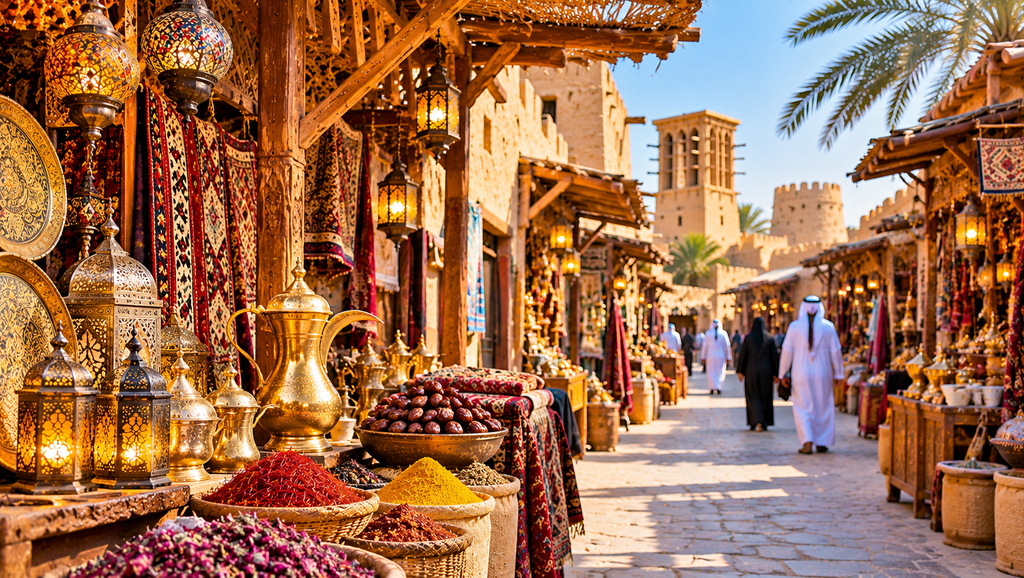
One of the most distinctive features of traditional Arabian commercial districts is their architecture.
Unlike large modern shopping centres with air-conditioned interiors, historic trading areas developed around local building materials, settlement patterns and environmental conditions.
Many included narrow passageways, closely arranged shops and partially covered streets.
These features helped organise commercial activities while influencing the experience of shoppers.
In hot environments, shaded streets could reduce direct exposure to sunlight.
The height and arrangement of buildings sometimes created cooler areas during parts of the day.
Traditional roofs, awnings and covered sections provided additional shelter.
However, historic architecture developed for multiple reasons. Narrow commercial streets also reflected land availability, urban growth and the practical need to bring shops close together.
Building materials varied between regions.
Coastal settlements sometimes used coral stone and other locally available materials, while inland towns could rely on earth-based construction.
Wooden doors, shutters and decorative elements reflected local craft traditions and commercial needs.
In some trading districts, merchants operated small shops that opened directly onto public passageways.
This arrangement made products visible and allowed customers to move easily between different sellers.
Specialist businesses could also develop close to one another.
For example, jewellery sellers, textile merchants or spice traders might occupy identifiable sections of a larger commercial area.
One important example is Al-Qaisariya in Al-Hofuf, Saudi Arabia.
Located within the historic landscape of Al-Ahsa Oasis, this marketplace reflects the relationship between commercial activity, traditional architecture and settlement development.
Al-Ahsa Oasis was inscribed on the UNESCO World Heritage List in 2018, recognising a cultural landscape that includes historic buildings, agricultural features and urban heritage.
Traditional commercial areas form part of this wider historical environment.
The architectural identity of older trading places is therefore closely connected to both economic activity and local ways of life.
| Architectural feature | Practical or cultural importance |
|---|---|
| Narrow passageways | Organised pedestrian movement and offered partial shade |
| Covered sections | Reduced direct sunlight |
| Small adjoining shops | Supported concentrated commercial activity |
| Wooden doors and shutters | Provided security and traditional character |
| Locally available materials | Reflected regional construction practices |
| Traditional decorative details | Preserved craftsmanship and identity |
Although many historic sites have been restored, their architectural characteristics provide valuable evidence of how Arabian trading communities organised public space.
6. Famous Traditional Markets That Preserve Arabian Trading Heritage
Several historic trading destinations across the Arabian Peninsula continue to attract residents, researchers and visitors.
Each represents a different aspect of the region’s commercial development.
Some have preserved important architectural features, while others have been restored or reconstructed to maintain their traditional character.
In Sharjah, Souq Al Arsah is one of the emirate’s best-known heritage attractions.
Located in the Heart of Sharjah district, it has historical associations with traders from nearby Arabian communities, Persia and India.
Its covered shopping passages and traditional shops reflect the emirate’s commercial past.
Visit Sharjah identifies it as one of the oldest traditional marketplaces in the UAE. Visit Sharjah
In Qatar, Souq Waqif provides another important example.
The area is associated with Doha’s historic trading culture and remains a popular destination for residents and visitors.
Its present appearance reflects restoration and heritage preservation efforts, rather than a completely unchanged ancient settlement.
The shopping district includes businesses associated with clothing, spices, perfumes, handicrafts and other products.
In Saudi Arabia, Al-Qaisariya Souq represents the commercial heritage of an important oasis settlement.
The area has long-standing associations with regional trade and traditional crafts.
Its historical significance also reflects the wider role of Al-Ahsa as a centre of agriculture, settlement and economic activity.
Along the Red Sea coast, the commercial streets of Historic Jeddah, commonly called Al-Balad, preserve another chapter of Arabian history.
The district’s architecture and trading traditions reflect the city’s role in maritime commerce and pilgrimage.
Its UNESCO World Heritage inscription recognises this distinctive urban heritage. UNESCO World Heritage Centre
In Oman, Muttrah Souq remains associated with Muscat’s historic maritime trading environment.
Its traditional shopping passages and businesses selling perfumes, clothing, jewellery and handicrafts reflect the city’s commercial connections.
Meanwhile, Dubai’s Dubai Spice Souk and Dubai Gold Souk continue to represent the city’s historic specialist retail traditions.
These districts demonstrate how maritime commerce influenced the development of modern Dubai.
| Historic market or district | Location | Heritage significance |
|---|---|---|
| Souq Al Arsah | Sharjah, UAE | Traditional merchant exchange |
| Souq Waqif | Doha, Qatar | Historic Qatari commercial culture |
| Al-Qaisariya | Al-Hofuf, Saudi Arabia | Oasis trade and craftsmanship |
| Historic Jeddah | Jeddah, Saudi Arabia | Red Sea trade and pilgrimage |
| Muttrah Souq | Muscat, Oman | Maritime trading heritage |
| Gold and Spice Souks | Dubai, UAE | Specialist commerce associated with Dubai Creek |
These destinations illustrate the diversity of Arabian trading traditions rather than one identical commercial history across the entire region.
7. How Arabian Marketplaces Helped Preserve Traditional Crafts and Products
Throughout Arabian history, commercial centres provided an important connection between local craftspeople and customers.
Before modern industrial manufacturing became widespread, many everyday products were created by skilled workers using techniques developed through practical experience.
These crafts included jewellery making, textile production, pottery, metalwork and the preparation of perfumes.
Trading streets gave artisans opportunities to display products, build customer relationships and earn income from specialised skills.
Gold and silver jewellery were important in many communities.
Different regions developed distinctive decorative preferences influenced by local traditions and international exchange.
Jewellery could be purchased for weddings, family celebrations and personal use.
The demand for precious metals also encouraged specialist merchants to establish businesses in commercial centres.
Textiles were another important part of Arabian trade.
Merchants imported cotton, silk and other fabrics from different regions, including parts of South Asia.
These materials influenced local clothing traditions and expanded the range of products available to tailors and customers.
Traditional garments reflected both Arabian craftsmanship and connections with wider textile networks.
Perfumes and aromatic materials were also associated with regional commerce.
Frankincense, oud and other fragrances were valued in different cultural settings.
Specialist sellers helped distribute these products and maintained knowledge about their origins, preparation and uses.
Food trading formed another essential part of commercial activity.
Markets provided places to purchase dates, grains, spices, fish and other necessities.
In agricultural settlements, locally produced food could be exchanged for imported goods.
Coastal communities often depended on commercial relationships between fishing activities and urban customers.
Traditional trading areas also supported craftspeople who made practical household items.
Pottery, metal utensils, baskets and other goods were used in everyday life.
Although many of these products are now manufactured industrially, handmade versions remain important expressions of cultural heritage.
| Traditional product | Historical importance |
|---|---|
| Dates | Agricultural trade and everyday food |
| Spices | Cooking and international commerce |
| Textiles | Clothing and cultural exchange |
| Gold and silver jewellery | Personal adornment and ceremonies |
| Frankincense and perfumes | Fragrance and cultural traditions |
| Pottery and metalwork | Household and practical uses |
| Handicrafts | Local employment and inherited skills |
The historical significance of these goods extends beyond their commercial value.
They reveal how knowledge moved between generations and how artisans adapted techniques to changing customer needs.
Today, preserving traditional craftsmanship can help keep these cultural connections visible.
However, genuine heritage conservation requires more than selling mass-produced souvenirs that imitate older products.
Supporting skilled artisans and documenting traditional techniques are important ways to preserve the knowledge associated with Arabian commercial history.
8. Why Preserving Traditional Arabian Markets Matters Today
The growth of shopping malls, supermarkets and online retail has transformed the way people purchase goods across the Arabian Peninsula.
Modern commercial centres provide convenience, extensive product choices and new shopping experiences.
However, historic trading districts remain valuable because they preserve aspects of the region’s cultural and architectural identity.
Their importance extends beyond tourism.
Traditional marketplaces can provide evidence of earlier economic systems, social relationships and building techniques.
They may also support local businesses and cultural activities.
Conservation projects have helped protect several historic commercial areas.
In Sharjah, heritage initiatives have supported the restoration of traditional shopping streets within the older parts of the city.
Local reporting describes how reconstructed and restored trading places have retained elements of their historic identity while continuing to welcome customers. sharjah24.ae
In Historic Jeddah, conservation activities are connected with the protection of traditional buildings and the wider urban landscape.
UNESCO’s listing highlights the significance of the city’s architecture, commercial history and relationship with pilgrimage. UNESCO World Heritage Centre
However, restoration presents important challenges.
Historic buildings may require structural repairs, improvements to electrical systems and measures to protect them from environmental damage.
Such work should preserve original features wherever possible.
Reconstruction should also be documented clearly so that visitors can distinguish original historic structures from later additions.
Another challenge is maintaining genuine commercial activity.
A restored marketplace may attract tourists, but heritage conservation can become less meaningful if traditional businesses and local communities are entirely displaced.
Supporting existing merchants and craftspeople can help preserve the social character of these places.
Educational programmes also have an important role.
Schools and cultural organisations can use historic trading areas to explain the development of commerce, traditional architecture and relationships between Arabian communities.
Visitors may gain a better understanding of how goods once travelled through maritime and desert networks.
Preservation can also support responsible cultural tourism.
However, visitor growth should be managed carefully to avoid damage to fragile buildings and disruption to local activities.
A sustainable approach requires balancing commercial opportunities, heritage protection and community needs.
Practical steps for protecting commercial heritage include:
- Document historic buildings: Record architecture, materials and earlier commercial uses.
- Preserve original structures: Use appropriate conservation methods instead of unnecessary replacement.
- Support local merchants: Encourage viable businesses within historic districts.
- Protect traditional skills: Create opportunities for craftspeople to teach and practise their trades.
- Improve accessibility: Make heritage areas easier to use while respecting their architectural character.
- Promote cultural education: Explain the history of trade routes and regional commerce.
- Manage tourism responsibly: Consider the needs of local communities alongside visitor activity.
- Monitor long-term preservation: Evaluate building conditions and the continued use of historic spaces.
These measures can help ensure that traditional commercial districts remain active parts of Arabian society rather than becoming disconnected historical displays.
Conclusion
The ancient history of Arabian commerce reveals how trade helped shape the cultural and economic development of the peninsula.
From frankincense caravans crossing southern Arabia to trading vessels arriving at coastal ports, merchants connected communities through the movement of goods, knowledge and ideas.
These commercial relationships encouraged the growth of settlements, established trading streets and supported traditional craftsmanship.
Over time, marketplaces became important locations for social interaction, bringing together residents, travellers and business communities.
Their architecture reflected the environment and available building materials, while their products demonstrated connections between Arabia and the wider world.
Today, historic destinations in Sharjah, Doha, Muscat, Dubai and Saudi Arabia preserve different chapters of this heritage.
Although many have changed through restoration and modern development, they continue to provide valuable insight into earlier ways of life.
Protecting these places means preserving more than historic shops. It involves maintaining the cultural knowledge, craftsmanship and social traditions that developed around them.
Ultimately, traditional Arabian markets and souks remain important links between the region’s ancient trading networks and its modern cultural identity, preserving the history of commerce that helped connect Arabia with the world.
Do follow us on Instagram
Read More – Why the Majlis Is an Important Part of Arabian Culture