



From An Immigrant Family To Beverly Hills
Some careers are built according to a carefully planned path. Others emerge from a mixture of curiosity, ambition, talent and a willingness to take an unconventional route.
- Where Science Meets The Eye Of An Artist
- Building A Beverly Hills Practice From Almost Nothing
- Developing A Distinctive Vision Of Facial Aesthetics
- The Inventor Behind The Surgeon
- The Television Chapter That Expanded His Reach
- The Next Chapter Is About Creating More
- Success, For Randal, Is More Than A Career
- A Philosophy Built Around Curiosity
- Leaving Something Better Behind
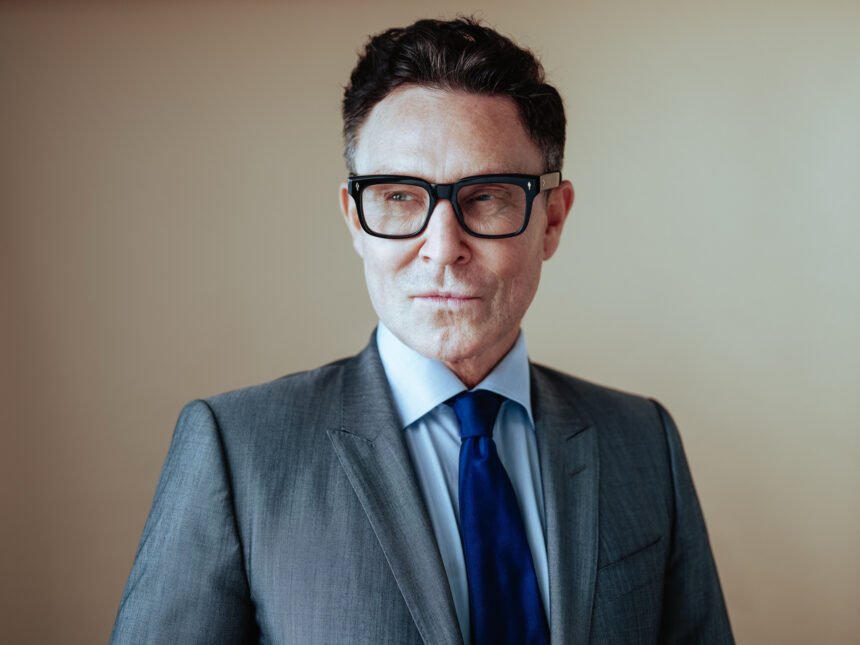
For Randal Haworth, MD, FACS, the journey toward becoming a renowned Beverly Hills plastic surgeon began with an upbringing that brought together different cultures, disciplines and ways of seeing the world.
Born in Inglewood, California, to immigrant parents, Randal grew up as an only child in a family where education was treated as a priority. His mother was German Dutch, while his father was English Colombian and born in Colombia. Although his parents were not wealthy, they made significant sacrifices to give their son opportunities they believed would shape his future.
That commitment eventually took Randal to The King’s School in Canterbury, England, where he studied biology, chemistry and art.
Looking back, those subjects seem almost like a blueprint for the career he would eventually create.
Science gave him an understanding of structure and function. Art taught him to observe proportion, balance and beauty. Surgery would ultimately become the place where those worlds could meet.
Where Science Meets The Eye Of An Artist
Randal’s career cannot be understood simply through medicine.
Long before aesthetic surgery became his profession, art was already an important part of his life. He paints, sculpts, photographs, designs and invents. He has also studied art history, played in a band and exhibited artwork.
That creative mindset became particularly important as he developed his approach to aesthetic plastic surgery.
For Randal, successful aesthetic surgery is not simply about changing an individual feature. It is about understanding how that feature relates to everything around it.
The face, in his view, is a composition.
Proportion matters. Balance matters. Negative space matters. Harmony matters.
After decades spent operating, drawing, painting and studying the human form, Randal says he now sees the world through what could almost be described as an aesthetic grid. Architecture, furniture, typography and even the way objects sit inside a room can trigger the same visual instincts he uses in surgery.
It is an unusual perspective, but it has become one of his greatest professional strengths.
His philosophy is simple. A surgeon can have exceptional technical ability, but the hands can only create what the eyes are capable of seeing.
Building A Beverly Hills Practice From Almost Nothing
After completing his plastic surgery fellowship at UCLA in 1995, Randal faced an important decision about where to establish his career.
New York initially attracted him. He admired its energy, history and cultural intensity. But ultimately, he stayed in Los Angeles.
Then came Beverly Hills.
Today, Beverly Hills is synonymous with luxury, beauty and high level aesthetic medicine. But Randal’s beginning there was anything but glamorous.
He had very few assets and significant credit card debt. Instead of waiting for perfect circumstances, he decided to start with what he had.
He rented space from plastic surgeon Dr. Francis Shang on Bedford Drive. His first office was essentially a small kitchen with a pocket door.
There was a desk.
That was about it.
On the days when the other surgeon was not using the space, Randal would put up his own diplomas and operate his practice. At the end of the day, the diplomas went back down.
It may sound humorous now, but behind the story is an important lesson. His Beverly Hills career was not handed to him through wealth, inheritance or an established practice.
It began with training, determination, debt and an enormous belief in what he could build.
That foundation would eventually become The Haworth Institute.
Developing A Distinctive Vision Of Facial Aesthetics
Over more than three decades, Randal has developed an international reputation for aesthetic plastic surgery, with a particular focus on facial procedures, rhinoplasty, revision surgery and lip reshaping.
His work has included techniques involving upper lip lifting and corner lip reshaping, while his broader practice has continued to explore ways of creating facial balance rather than simply producing dramatic change.
His approach has often been described through the idea of hyperaesthetic surgery, a philosophy centered on detailed visual analysis and refined proportions.
The Haworth Institute today offers a wide range of facial and body procedures, while Randal’s professional profile remains strongly associated with facial aesthetics and challenging revision work. His career has also included teaching, international lectures, publications and contributions to surgical education.
His work has taken him beyond Beverly Hills as well, with international professional engagements across Europe, the Middle East and other regions.
For Randal, however, innovation is not about creating something new simply for the sake of being different.
It is about asking whether something can be done better.
The Inventor Behind The Surgeon
That mindset has also taken Randal beyond the operating room.
He has developed and patented products and devices, including NightLift and JawThruster. His interest in invention comes from the same curiosity that drives his surgical work.
He is fascinated by problems that people become so accustomed to that they stop questioning them.
Why is a particular process still done this way?
Can an instrument be improved?
Can the operating experience become safer or more efficient?
Can a problem that surgeons have accepted for years actually be solved differently?
Those questions continue to shape his work.
His JawThruster project reflects that interest in improving aspects of airway protection during procedures involving sedation, while NightLift emerged from his interest in breast support and design.
For Randal, medicine and invention are not separate worlds. Both begin with observation and the willingness to challenge assumptions.
The Television Chapter That Expanded His Reach
Randal also became widely recognized outside the medical community through Fox’s reality television series The Swan.
The program placed plastic surgeons at the center of dramatic personal transformations and introduced Randal to a much larger audience.
Television brought visibility, but his professional identity ultimately rests on a career that extends well beyond the screen.
The Swan became one chapter in a much longer story that includes decades of surgical practice, international teaching, research, innovation and artistic exploration.
The experience also reflected something important about Randal’s personality. He has never been particularly interested in staying inside one professional box.
The Next Chapter Is About Creating More
At this stage of his life, Randal’s ambitions have not become smaller.
They have become broader.
One of his personal goals is to finally create the art studio he has wanted for years. Painting and sculpture remain deeply connected to the way he thinks about surgery, and he sees the two disciplines as capable of influencing each other.
Professionally, he wants to publish more of the techniques and ideas he has developed throughout his career, including work involving lip lifting, facial procedures and endoscopic techniques.
He is also continuing to pursue inventions and improvements related to surgery.
There is a clear theme running through all of these ambitions.
Randal does not want to simply repeat what has already been done.
He wants to create.
Success, For Randal, Is More Than A Career
Perhaps the most revealing part of Randal’s story is that he does not define his greatest achievement purely through professional accomplishments.
He is proud of the techniques he has developed, the international work he has undertaken, the inventions he has created and the practice he built from humble beginnings.
But with age, his definition of achievement has changed.
He believes becoming a better person may be more meaningful than simply becoming a more successful professional.
Years of achievement and adversity have taught him empathy, patience and the importance of understanding perspectives beyond his own.
That evolution matters because it reveals another side of a surgeon whose career is often discussed through technical excellence.
Behind the precision is someone still trying to understand people, beauty, creativity and life itself.
A Philosophy Built Around Curiosity
If there is one idea that connects Randal’s career, it is curiosity.
He encourages people to remain interested in the world, learn things outside their professions, travel, create, listen to people with different opinions and occasionally become beginners again.
His message is especially relevant in an age where visibility can sometimes be mistaken for achievement.
For Randal, craftsmanship still matters. Character matters. Kindness matters.
And time matters most of all.
As life moves forward, he believes people begin to understand that time is the one currency that cannot be recovered. The challenge is therefore not simply to become successful, but to decide what deserves that limited resource.
Leaving Something Better Behind
Randal Haworth’s story ultimately extends beyond plastic surgery.
It is the story of an immigrant family’s son who was given the gift of education, an artist who found a language for creativity inside medicine, a surgeon who built a Beverly Hills practice from a desk in a borrowed kitchen and an inventor who continues to question established ways of doing things.
His journey also carries a quieter lesson.
Success does not necessarily mean reaching a final destination.
Sometimes it means continuing to learn.
Continuing to create.
Continuing to question.
And continuing to become a better version of yourself.
For Randal, the future still seems deliberately unfinished. There is more art to create, more surgical knowledge to share, more ideas to develop and more problems to solve.
His philosophy can be summed up through a simple principle: remain curious, create something that did not exist before and try to leave the world a little more beautiful than you found it.
That may be the most fitting description of a career built where science, surgery and art meet.
Follow Randal Haworth on Instagram
Read More – UAE Public Holidays Guide: Complete Calendar, Rules and Planning Tips