
Traditional Kuwaiti Foods Everyone Should Try on a First Visit
Traditional Kuwaiti Foods reflect the country’s long connection with the Gulf, maritime trade, family hospitality and the movement of spices and ingredients across Arabia, Persia and South Asia. Rice, fish, meat, wheat, dates, cardamom, saffron and dried lime all appear frequently in Kuwaiti cooking, but the way they are combined gives the cuisine its own identity.
- Traditional Kuwaiti Foods Everyone Should Know at a Glance
- Machboos Is One of the Most Famous Traditional Kuwaiti Foods
- Mutabbaq Samak Reflects Kuwait’s Deep Connection With the Sea
- Murabyan Combines Shrimp With Spiced Rice
- Jareesh Is a Classic Kuwaiti Comfort Food
- Harees Is Closely Linked With Traditional Gulf Cooking
- Tashreeb Turns Bread and Stew Into a Filling Traditional Meal
- Marag Shows the Simpler Side of Kuwaiti Cuisine
- Bread Is an Important Part of Traditional Kuwaiti Food
- Dates and Arabic Coffee Are Central to Kuwaiti Hospitality
- Diwaniya Culture Helps Explain Kuwaiti Hospitality
- Khanfaroosh and Luqaimat Are Traditional Sweets Worth Trying
- Kuwaiti Desserts Often Use Dates, Saffron and Cardamom
- Souq Al-Mubarakiya Is a Good Place to Explore Kuwaiti Food Culture
- How to Eat Traditional Kuwaiti Foods Respectfully
- Common Mistakes Visitors Make When Trying Kuwaiti Food
- Traditional Kuwaiti Foods Everyone Should Try on a First Visit
For visitors, Kuwaiti food is worth exploring because it goes far beyond one famous rice dish. There are hearty family meals, fish-based dishes, wheat porridges, breads, sweet snacks and strong traditions around coffee and dates. Many dishes are closely linked with family gatherings, Ramadan, diwaniya culture and everyday hospitality.
UNESCO has been working in Kuwait through its International Food Atlas and Digital Platform project to help safeguard traditional foodways as living heritage. Kuwait also has a recognised intangible cultural heritage inventory that includes traditional foods such as Jareesh, fried fish, breads, sweets and date-based traditions.
That makes Kuwaiti cuisine especially interesting for travellers who want to understand the country beyond malls and modern architecture. The best approach is to try a mix of rice, fish, wheat dishes, bread, desserts and traditional hospitality rather than ordering only one main course.
Traditional Kuwaiti Foods Everyone Should Know at a Glance
Kuwaiti cuisine includes both large communal dishes and smaller everyday foods. Some are strongly associated with family kitchens, while others are easier to find in traditional restaurants and markets.
| Dish | What It Is | Why Try It |
|---|---|---|
| Machboos | Spiced rice with meat, chicken or fish | One of Kuwait’s best-known main dishes |
| Mutabbaq Samak | Fish served with seasoned rice | Reflects Kuwait’s coastal food heritage |
| Murabyan | Shrimp and rice dish | Popular Gulf seafood combination |
| Jareesh | Crushed wheat cooked until soft | Traditional comfort food |
| Harees | Wheat and meat cooked together | Common during family occasions and Ramadan |
| Tashreeb | Bread soaked in stew | Hearty home-style dish |
| Marag | Meat or vegetable stew | Everyday traditional cooking |
| Khubz | Local bread | Essential accompaniment |
| Khanfaroosh | Spiced fried sweet | Good with tea or coffee |
| Luqaimat | Fried sweet dumplings | Popular dessert |
| Dates | Traditional hospitality food | Closely linked with Gulf culture |
| Arabic coffee | Cardamom-flavoured coffee | Central to hosting guests |
Trying several of these foods gives visitors a much better idea of Kuwaiti cuisine than focusing on one famous dish.
Machboos Is One of the Most Famous Traditional Kuwaiti Foods
Machboos is one of the dishes most closely associated with Kuwait and the wider Gulf.
It combines long-grain rice with chicken, lamb, meat or fish and is cooked with aromatic spices that may include cardamom, cinnamon, cloves, black pepper and dried lime. The meat or fish flavours the rice during cooking, creating a rich and deeply savoury dish.
What makes Machboos especially useful for first-time visitors is that it represents several important elements of Kuwaiti cooking at once: rice, spice, slow cooking and family-style serving.
The dish may also be served with daqoos, a tomato-based sauce that adds acidity and a little extra flavour.
What to look for when ordering Machboos
A good plate should have fragrant rice with separate grains rather than a wet texture. The meat should be tender, and the spices should feel aromatic rather than overpowering.
Chicken Machboos is usually the easiest version for beginners, while lamb provides a richer flavour. Fish versions can be especially interesting for visitors who want to explore Kuwait’s coastal heritage.
Mutabbaq Samak Reflects Kuwait’s Deep Connection With the Sea
Kuwait’s history is closely linked with the Gulf, fishing and maritime trade, so seafood naturally plays a major role in local cuisine.
Mutabbaq Samak is one of the best dishes for understanding that connection.
The dish generally combines fish with seasoned rice. Depending on the recipe, the fish may be fried, grilled or cooked with spices before being served alongside rice flavoured with onions and other seasonings.
The appeal comes from the contrast between delicate fish and strongly flavoured rice.
Fish has historically been an important part of life in coastal Gulf communities, and traditional Kuwaiti food inventories include several fish preparations, including fried fish and other local seafood dishes.
Why visitors should try it
Many travellers arrive in Kuwait expecting mainly meat and rice, but seafood gives a more complete picture of traditional local food.
If a restaurant offers different local fish varieties, ask which one is commonly used for Mutabbaq Samak that day.
Murabyan Combines Shrimp With Spiced Rice
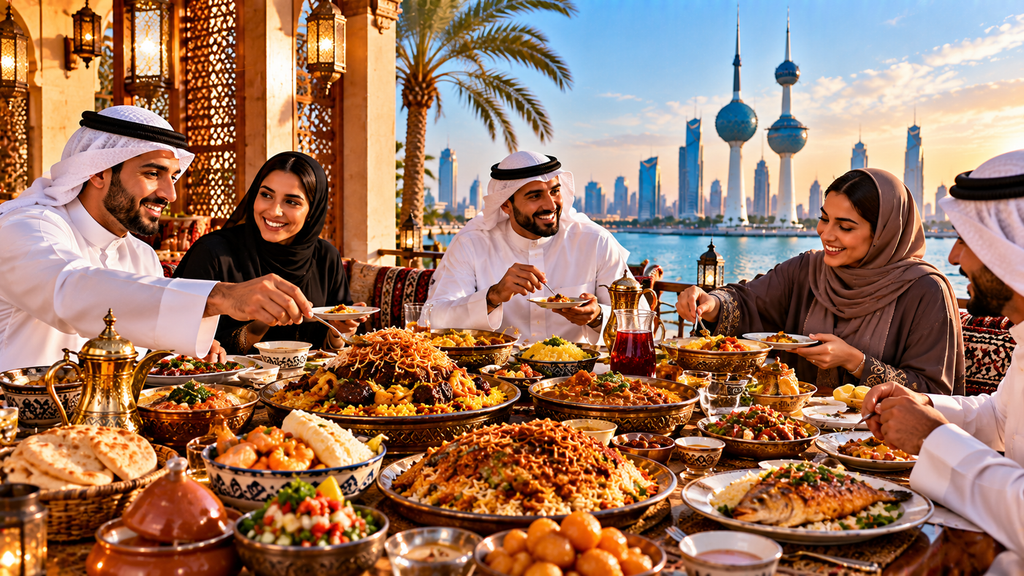
Murabyan is another important seafood dish.
It combines shrimp with rice and spices, producing a flavour that is richer than a simple grilled seafood plate.
Shrimp has long been part of Gulf coastal food culture, and Kuwait’s location made seafood naturally available to generations of local families.
Depending on the recipe, Murabyan may include:
- Shrimp
- Rice
- Onion
- Tomato
- Spices
- Dried lime
The dish is a strong choice for visitors who enjoy seafood but want something distinctly regional rather than an international-style preparation.
Machboos vs Murabyan
| Dish | Main Ingredient | Flavour Profile |
|---|---|---|
| Machboos | Chicken, lamb, meat or fish | Deeply spiced and savoury |
| Murabyan | Shrimp | Coastal, aromatic and slightly lighter |
| Mutabbaq Samak | Fish | Savoury with stronger seafood character |
Trying two of these dishes during a trip helps visitors appreciate how differently rice is used across Kuwaiti cuisine.
Jareesh Is a Classic Kuwaiti Comfort Food
Jareesh is made from crushed wheat cooked slowly until it becomes soft and creamy.
It is one of the traditional foods documented in Kuwait’s cultural heritage inventory.
The texture is very different from rice dishes such as Machboos. Instead of individual grains, Jareesh becomes thick and almost porridge-like.
Depending on the household or restaurant, it may be cooked with meat, chicken, onion and spices.
Jareesh is especially important because it represents the home-style side of Kuwaiti cuisine.
Visitors often encounter polished restaurant dishes first, but foods like Jareesh show how families traditionally used simple ingredients to create filling and comforting meals.
Why try Jareesh
It is useful for understanding how wheat has been used in Gulf cooking alongside rice.
The dish also works well for travellers who want something softer and less heavily spiced than some meat-and-rice preparations.
Harees Is Closely Linked With Traditional Gulf Cooking
Harees is another wheat-based dish that appears across the Gulf, including Kuwait.
It is made by slowly cooking wheat with meat until both ingredients break down into a smooth, dense mixture.
The result is simple in appearance but requires time and careful cooking.
Harees is commonly associated with:
- Ramadan
- Family gatherings
- Traditional celebrations
- Large communal meals
Its texture can surprise first-time visitors because it does not resemble ordinary rice or stew.
The flavour is usually mild, allowing the wheat and meat to remain the main focus.
Jareesh vs Harees
Although both are wheat-based, they are not exactly the same.
Jareesh generally uses cracked or crushed wheat and may retain slightly more texture, while Harees is cooked for longer until the mixture becomes especially smooth.
Trying both gives visitors a better understanding of traditional grain-based Gulf food.
Tashreeb Turns Bread and Stew Into a Filling Traditional Meal
Tashreeb is one of the most comforting dishes in Kuwaiti home cooking.
It involves pieces of bread soaked in a rich stew so they absorb the flavour of the sauce.
The stew may contain:
- Meat
- Chicken
- Vegetables
- Tomato
- Spices
Instead of bread being served separately, it becomes part of the dish.
This creates a soft, substantial texture that is very different from grilled or rice-based meals.
Tashreeb is especially associated with practical family cooking because it uses bread to absorb every part of the stew.
For visitors, this makes it a good dish to try if they want something that feels closer to home cooking than restaurant presentation.
Marag Shows the Simpler Side of Kuwaiti Cuisine
Marag refers broadly to a stew or broth-based dish and can appear in many different forms.
It may be prepared with meat, chicken or vegetables and flavoured with tomato, spices and local seasonings.
A typical Marag may include:
- Lamb
- Potato
- Carrot
- Tomato
- Onion
- Spices
It can be eaten with rice or bread.
Marag is not always the first dish promoted to tourists, but it is important because it represents everyday Kuwaiti food.
Not every traditional meal is elaborate.
Some of the most authentic dishes are based on simple combinations of vegetables, meat and broth prepared for family meals.
Visitors looking for a more everyday dining experience should not overlook stew-based dishes.
Bread Is an Important Part of Traditional Kuwaiti Food
Bread plays a major role in Gulf food culture and is used alongside stews, breakfast dishes and grilled food.
Kuwait’s heritage inventory includes several traditional bread varieties, showing how important bread-making has been historically.
Fresh bread may be used to:
- Scoop up sauces
- Accompany stews
- Serve with breakfast
- Eat with cheese or eggs
- Absorb Tashreeb
Different bread types can vary in thickness and texture.
Visitors should try bread while it is fresh because texture changes quickly once it cools.
Why bread matters
Rice dishes often receive most of the attention, but bread is more closely connected with everyday meals.
A breakfast or simple dinner with fresh bread, tea and small dishes can sometimes provide a more authentic local experience than a large formal lunch.
Dates and Arabic Coffee Are Central to Kuwaiti Hospitality
Dates have a deep cultural role throughout the Gulf, including Kuwait.
UNESCO lists date-palm knowledge, skills, traditions and practices as recognised intangible cultural heritage involving Kuwait and several other Arab countries.
Kuwait’s heritage inventory also notes that dates are offered to guests and sold in traditional markets, including Souq Al-Mubarakiya.
Dates are commonly paired with Arabic coffee.
The coffee is usually lightly roasted and flavoured with ingredients such as cardamom.
This combination works because the bitterness and spice of the coffee balance the sweetness of the dates.
Hospitality etiquette
In traditional settings, coffee may be served in small cups and refilled several times.
Guests should generally accept hospitality politely and follow the host’s lead.
The exact customs can vary, but using the right hand when receiving coffee or food is considered respectful.
Diwaniya Culture Helps Explain Kuwaiti Hospitality
Food and drink in Kuwait are closely linked with social life.
One of the most important cultural spaces is the diwaniya, where people gather to talk, receive guests and maintain social connections.
UNESCO inscribed the Diwaniya as a Kuwaiti element on the Representative List of the Intangible Cultural Heritage of Humanity in 2025. It describes the Diwaniya as a place where people gather to discuss family, community and public matters while passing social customs between generations.
Hospitality plays an important role in this setting.
Coffee, tea, dates and snacks may accompany conversation.
This helps visitors understand that Kuwaiti food is not only about recipes.
It is also about how food and drink are used to welcome people and create social connection.
That is one reason coffee and dates deserve a place alongside major dishes when exploring traditional Kuwaiti cuisine.
Khanfaroosh and Luqaimat Are Traditional Sweets Worth Trying
Visitors should leave room for dessert.
Kuwaiti traditional-food inventories include Khanfaroosh, a spiced fried sweet associated with Gulf cooking.
Khanfaroosh can include flavours such as:
- Cardamom
- Saffron
- Rosewater
Its texture sits somewhere between a small cake and fried pastry.
It is especially good with tea or Arabic coffee.
Luqaimat
Luqaimat are small fried dumplings with a crisp outer layer and soft centre.
They are often finished with date syrup or another sweet topping.
Luqaimat are popular across the Gulf and are especially associated with Ramadan and traditional gatherings.
Which one should you try?
Try Khanfaroosh if you enjoy aromatic, cake-like sweets.
Choose Luqaimat if you prefer something crisp, sticky and sweeter.
Ideally, order both and share them.
Kuwaiti Desserts Often Use Dates, Saffron and Cardamom
Sweet flavours in Kuwait are closely connected with ingredients that appear throughout Gulf cuisine.
These can include:
- Dates
- Date molasses
- Saffron
- Cardamom
- Rosewater
- Nuts
Dates are especially important.
UNESCO’s Kuwait heritage inventory describes dates and date molasses as part of local markets and traditional food use, including modern sweets and gift products.
This means visitors may encounter dates in several forms.
They can be served whole with coffee, used in sweets or incorporated into newer desserts.
The combination of saffron, cardamom and rosewater also gives many Gulf desserts a recognisable aroma.
If you usually choose chocolate-based desserts, trying one of these local flavour combinations can make the meal feel much more distinctive.
Souq Al-Mubarakiya Is a Good Place to Explore Kuwaiti Food Culture
For visitors interested in local food, Souq Al-Mubarakiya is one of the most useful places to explore.
The market has long been associated with traditional food products, dates, spices and everyday Kuwaiti shopping.
Kuwait’s heritage inventory specifically identifies dates sellers in Souq Al-Mubarakiya as part of traditional food culture.
A visit can combine:
- Traditional restaurants
- Dates
- Spices
- Sweets
- Tea and coffee
- Local ingredients
This makes the area useful for travellers who want food and cultural context together.
Instead of treating every dish as an isolated restaurant experience, visitors can see the ingredients and market culture connected with traditional cooking.
The atmosphere also helps explain how food remains part of everyday social life rather than only a tourism product.
How to Eat Traditional Kuwaiti Foods Respectfully
Kuwait is accustomed to international visitors, so travellers do not need to worry about complicated dining rules.
Normal respect and awareness are usually enough.
Use the right hand in traditional settings
When eating by hand or receiving coffee, the right hand is traditionally preferred.
Expect sharing
Large rice dishes may be served for several people.
Follow your host’s lead if eating in a traditional setting.
Ask about portion sizes
Machboos, fish and rice dishes can be generous.
Ordering one large main per person can create unnecessary waste.
Try more than one style
Do not order three different rice dishes and assume you have experienced Kuwaiti cuisine.
Mix rice, fish, wheat dishes, bread and sweets.
Respect hospitality
Coffee, tea or dates may be offered even when you are not particularly hungry.
Accepting a small amount politely is often part of the social experience.
Common Mistakes Visitors Make When Trying Kuwaiti Food
One common mistake is assuming Kuwaiti food is identical to all other Gulf cuisine.
There are overlaps with Saudi, Bahraini, Emirati and Qatari food, but local cooking traditions and favourite combinations still matter.
Another mistake is ordering only Machboos.
Machboos is important, but Jareesh, Harees, fish dishes, Murabyan and Tashreeb reveal very different parts of Kuwaiti cooking.
Visitors should also avoid ignoring seafood.
Kuwait’s coastal history makes fish and shrimp an important part of the local food story.
Another mistake is skipping traditional sweets and coffee.
Dates, Khanfaroosh, Luqaimat and Arabic coffee help explain hospitality just as much as the main meal.
Finally, do not assume the most expensive restaurant will automatically provide the most traditional experience.
Local restaurants, family-style venues and heritage areas can often provide a stronger introduction to Kuwaiti food.
Traditional Kuwaiti Foods Everyone Should Try on a First Visit
If you have limited time, build a tasting plan that covers different categories.
| Food Experience | What to Try |
|---|---|
| Main rice dish | Machboos |
| Fish dish | Mutabbaq Samak |
| Shrimp dish | Murabyan |
| Wheat dish | Jareesh |
| Comfort food | Harees |
| Bread-based dish | Tashreeb |
| Everyday stew | Marag |
| Bread | Fresh Kuwaiti bread |
| Traditional sweet | Khanfaroosh |
| Fried dessert | Luqaimat |
| Hospitality food | Dates |
| Traditional drink | Arabic coffee |
This gives visitors a much broader experience than ordering several similar meals.
The best Traditional Kuwaiti Foods tell the story of a society shaped by the Gulf, trading routes, family life and hospitality. Machboos represents the importance of rice and spice, while Mutabbaq Samak and Murabyan reflect the country’s maritime heritage.
Jareesh, Harees and Tashreeb show the home-style side of the cuisine, while bread, dates and coffee connect everyday food with social traditions.
UNESCO’s work in Kuwait on safeguarding foodways also reflects growing recognition that traditional cooking is part of living cultural heritage rather than simply a list of recipes.
For a first visit, the strongest approach is to mix different experiences.
Try Machboos for a main meal, fish or shrimp another day, Jareesh or Harees for something more traditional, and finish with dates, Khanfaroosh or Luqaimat alongside coffee.
That combination gives a much richer introduction to Kuwaiti cuisine and the culture surrounding it.
Do follow us on Instagram
Read More – World’s Most Beautiful Cities: 15 Stunning Places Worth Seeing