



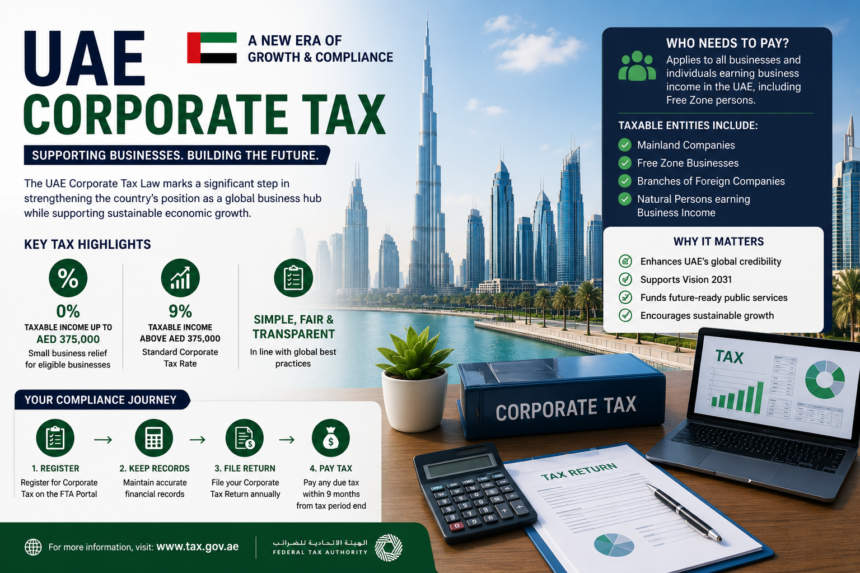
UAE Corporate Tax Guide 2026 Everything Businesses Need to Know
The United Arab Emirates (UAE) has long been recognised as one of the world’s most business-friendly destinations. With its strategic location, world-class infrastructure, investor-friendly regulations, and diversified economy, the UAE continues to attract entrepreneurs, multinational corporations, startups, and investors from around the globe.
- What Is UAE Corporate Tax?
- Objectives of UAE Corporate Tax
- Who Is Required to Pay Corporate Tax?
- Businesses That May Be Exempt
- UAE Corporate Tax Rates
- UAE Corporate Tax Registration
- Taxable Income
- Financial Records and Bookkeeping
- Filing UAE Corporate Tax Returns
- Free Zone Businesses
- Small Business Considerations
- Transfer Pricing
- International Businesses
- Corporate Tax Planning
- Digital Tax Services
- Common Compliance Mistakes
- Benefits of Compliance
- Penalties for Non-Compliance
- Best Practices for Businesses
- Future of Corporate Tax in the UAE
- Frequently Asked Questions
As part of its commitment to aligning with international tax standards and supporting long-term economic growth, the UAE introduced Corporate Tax. The corporate tax framework is designed to strengthen the country’s financial sustainability while maintaining its competitiveness as a global business hub.
Whether you operate a small business, a multinational company, a free zone entity, or you’re planning to establish a business in the UAE, understanding the country’s corporate tax rules is essential. This comprehensive guide explains how UAE Corporate Tax works, who it applies to, registration requirements, tax rates, exemptions, compliance obligations, and best practices for businesses.
What Is UAE Corporate Tax?
UAE Corporate Tax is a federal tax imposed on the taxable profits of eligible businesses operating in the UAE. It forms part of the country’s broader economic strategy to support sustainable growth, increase transparency, and align with internationally recognised tax practices.
The framework is intended to:
- Strengthen the UAE’s economic resilience
- Promote international tax compliance
- Encourage responsible business practices
- Maintain the UAE’s attractiveness for investment
- Support long-term government development initiatives
Objectives of UAE Corporate Tax
The introduction of UAE corporate tax serves several important purposes:
- Diversify government revenue sources
- Enhance fiscal sustainability
- Support public services and infrastructure
- Meet international tax standards
- Improve transparency in business operations
- Encourage responsible corporate governance
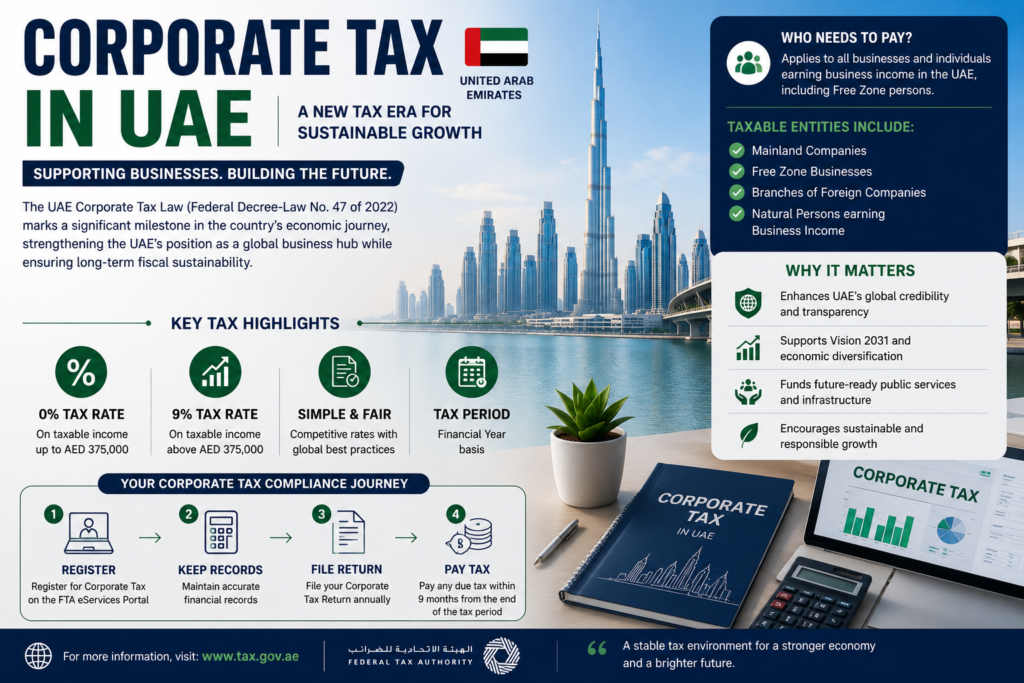
Who Is Required to Pay Corporate Tax?
Corporate Tax generally applies to businesses and legal entities conducting taxable business activities in the UAE, subject to the applicable laws and regulations.
Depending on the circumstances, this may include:
- Mainland companies
- Certain free zone entities
- Foreign companies with taxable presence in the UAE
- Individuals conducting qualifying business activities
- Partnerships in specified situations
Eligibility depends on the nature of the business, applicable legislation, and other relevant factors.
Businesses That May Be Exempt
Some entities may qualify for exemptions or special tax treatment under UAE tax law.
Examples can include certain government entities, qualifying public benefit organisations, and other eligible entities where provided for under applicable legislation.
Businesses should carefully review the latest official guidance before determining their tax status.
UAE Corporate Tax Rates
The UAE has adopted a competitive corporate tax framework designed to support businesses while maintaining international standards.
Applicable tax rates depend on factors such as taxable income and the nature of the business. Companies should refer to the latest guidance issued by the relevant authorities to determine the correct rate applicable to their circumstances.
UAE Corporate Tax Registration
Businesses that meet the registration requirements must complete the registration process through the appropriate government channels.
The process generally involves:
- Creating an online account
- Providing business information
- Submitting supporting documentation
- Completing identity verification where required
- Receiving confirmation of registration
Businesses should register within the required deadlines to remain compliant.
Taxable Income
Corporate Tax is generally calculated based on taxable profits after applying the relevant adjustments provided under UAE tax legislation.
Taxable income may be influenced by:
- Business revenue
- Allowable expenses
- Accounting adjustments
- Reliefs and exemptions
- Loss utilisation rules
- Other applicable tax provisions
Maintaining accurate accounting records is essential.
Financial Records and Bookkeeping
Proper bookkeeping plays a vital role in corporate tax compliance.
Businesses should maintain:
- Financial statements
- Sales records
- Purchase invoices
- Payroll documentation
- Bank statements
- Contracts
- Asset registers
- Expense records
Accurate record-keeping supports both compliance and effective financial management.
Filing UAE Corporate Tax Returns
Businesses that are required to file corporate tax returns should ensure that submissions are completed accurately and within the prescribed deadlines.
The filing process generally includes:
- Preparing financial statements
- Calculating taxable income
- Completing the tax return
- Reviewing supporting information
- Submitting the return electronically
- Paying any tax due within the applicable timeframes
Late filing or inaccurate submissions may result in penalties.
Free Zone Businesses
Free zones continue to play an important role in the UAE economy.
Depending on their activities and compliance with applicable requirements, some free zone entities may be eligible for specific tax treatment under the corporate tax framework.
Businesses operating in free zones should review the latest official rules carefully, as eligibility depends on meeting prescribed conditions.
Small Business Considerations
Small businesses may benefit from specific relief measures where available under UAE tax legislation.
Business owners should assess:
- Registration obligations
- Eligibility for available reliefs
- Record-keeping requirements
- Filing responsibilities
- Long-term tax planning
Professional advice may be beneficial for businesses with complex operations.
Transfer Pricing
Businesses engaged in transactions with related parties may need to comply with transfer pricing requirements.
These rules are designed to ensure that transactions between related entities are conducted on an arm’s length basis.
Documentation requirements may apply depending on the size and nature of the business.
International Businesses
Multinational companies operating in the UAE should consider:
- Cross-border transactions
- Permanent establishment rules
- Double taxation agreements
- Transfer pricing
- International reporting obligations
Understanding international tax considerations helps businesses manage compliance effectively.
Corporate Tax Planning
Effective tax planning supports sustainable business growth.
Good practices include:
- Maintaining accurate accounting systems
- Reviewing business structures
- Monitoring tax obligations
- Preparing for filing deadlines
- Keeping documentation organised
- Seeking professional advice when appropriate
Planning should always comply with applicable laws and regulations.
Digital Tax Services
Many corporate tax services are available through official online platforms, allowing businesses to:
- Register for corporate tax
- Update business information
- Submit tax returns
- Make payments
- Access notifications
- Manage tax accounts
Digital services improve efficiency and accessibility.
Common Compliance Mistakes
Businesses should avoid:
- Missing registration deadlines
- Inaccurate bookkeeping
- Incomplete documentation
- Late filing of returns
- Incorrect tax calculations
- Poor record retention
Implementing robust internal processes can reduce compliance risks.
Benefits of Compliance
Maintaining corporate tax compliance offers several advantages:
- Reduced regulatory risk
- Improved financial transparency
- Greater investor confidence
- Stronger business reputation
- Better financial planning
- Support for long-term growth
Compliance also contributes to the UAE’s broader business environment.
Penalties for Non-Compliance
Businesses that fail to comply with applicable tax obligations may be subject to administrative penalties or other consequences under UAE law.
Examples may include:
- Failure to register where required
- Late submission of returns
- Late payment of tax
- Inaccurate reporting
- Failure to maintain required records
Businesses should always consult the latest official guidance regarding compliance obligations and potential penalties.
Best Practices for Businesses
To remain compliant and organised:
- Keep accounting records up to date.
- Monitor important filing deadlines.
- Use reliable accounting software.
- Conduct regular financial reviews.
- Train finance teams on compliance requirements.
- Retain supporting documents securely.
- Review official updates regularly.
- Seek qualified professional advice for complex matters.
Future of Corporate Tax in the UAE
The UAE continues to strengthen its tax framework while maintaining an attractive environment for investment and entrepreneurship.
Future developments may include:
- Enhanced digital tax services
- Greater automation
- Improved taxpayer support
- Continued alignment with international standards
- Ongoing updates to guidance and compliance processes
Businesses should stay informed about regulatory changes that may affect their operations.
Frequently Asked Questions
Q1. Is every business required to pay UAE Corporate Tax?
Ans: Not necessarily. Whether a business is subject to corporate tax depends on its legal status, activities, taxable income, and any applicable exemptions or special provisions under UAE law.
Q2. Do free zone companies pay UAE corporate tax?
Ans: Some free zone businesses may qualify for specific tax treatment if they meet the required conditions. Businesses should review the latest official guidance to determine their eligibility.
Q3. What records should businesses maintain?
Ans: Businesses should keep complete and accurate financial records, invoices, contracts, accounting documents, and other supporting information as required by applicable regulations.
Q4. Can businesses register online?
Ans: Yes. Corporate tax registration and many related services are available through official digital government platforms.
Q5. Why is UAE corporate tax important?
Ans: UAE corporate tax supports sustainable public finances, strengthens international confidence in the UAE economy, and encourages transparent business practices while maintaining a competitive investment environment.
Conclusion
The UAE Corporate Tax framework represents an important milestone in the country’s continued economic development. While introducing new compliance responsibilities for many businesses, it also reinforces the UAE’s position as a transparent, internationally aligned, and investor-friendly business destination.
By understanding registration requirements, maintaining accurate financial records, filing tax returns on time, and following official guidance, businesses can meet their obligations with confidence. Good corporate governance, effective financial management, and proactive tax planning will not only support compliance but also contribute to long-term business success.
Whether you are a startup founder, SME owner, multinational company, or investor, staying informed about UAE Corporate Tax rules is essential. As the UAE’s business landscape continues to evolve, keeping up to date with official guidance and seeking professional advice when needed will help ensure your organisation remains compliant and well positioned for future growth.
Do follow us on Instagram
Read More – Ultimate UAE Tax Guide