



Building a New Future for Rehabilitation
For many families, rehabilitation begins at a difficult moment. It may follow an injury, a neurological condition, a developmental challenge, or a sudden change in a person’s ability to live independently. In those moments, therapy is not simply about exercises or clinical treatment. It becomes a journey built on patience, courage, persistence, and hope.
- A Career Built Around the Human Side of Therapy
- From Professional Experience to a Bigger Vision
- Wesam Fawzi Albaradie Creating Individual Paths Toward Progress
- The Challenge of Building Something Different
- Bringing International Approaches Closer to Patients
- Education Beyond the Therapy Room
- The Moments That Make the Journey Worthwhile
- A Vision That Extends Beyond One Center
- Building a Legacy Through Possibility
For Wesam Fawzi Albaradie, this understanding has shaped more than a professional career. It has become the foundation of a wider mission to make rehabilitation more advanced, individualized, and meaningful for patients and their families.
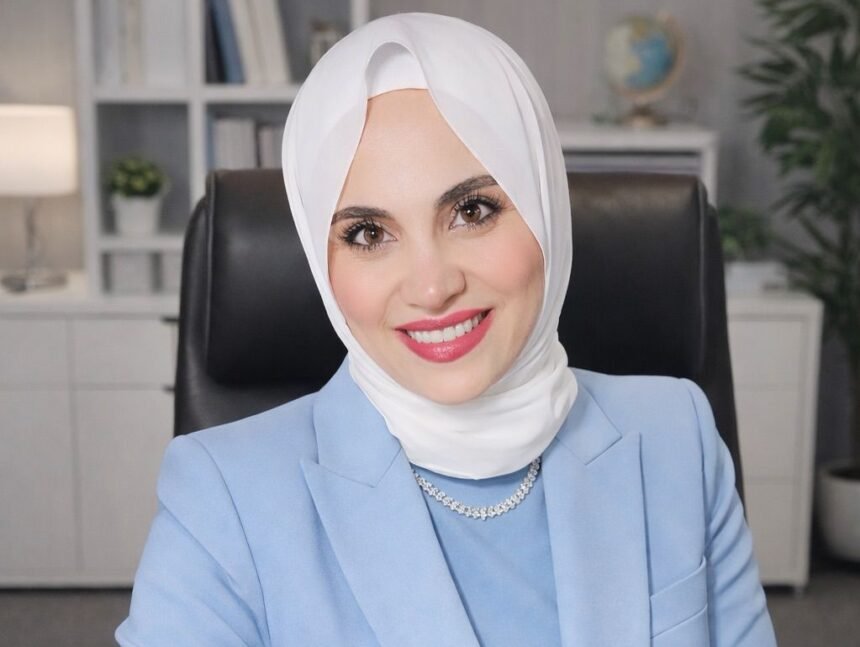
As an occupational therapist, rehabilitation specialist, and Founder and Director of Al Awael Advanced Therapy Center in Jordan, Wesam has spent more than 11 years working in rehabilitation. Her journey reflects a strong belief that every patient deserves to be understood as an individual, not defined only by a diagnosis.
A Career Built Around the Human Side of Therapy
Wesam’s professional journey began with her Bachelor’s degree in Occupational Therapy from the University of Jordan. Her desire to understand rehabilitation from a wider perspective later led her to complete a Master’s degree in Mental Health at Lancaster University in the United Kingdom.
Those academic experiences helped shape the way she approached her profession. Occupational therapy is closely connected to everyday life. The ultimate goal is not simply to improve a clinical measurement, but to help people participate more fully in the activities that matter to them.
Over the years, Wesam became increasingly interested in rehabilitation approaches that could respond to complex and individual needs. She saw that patients could require different combinations of therapies, different levels of intensity, and different strategies depending on their abilities and goals.
That realization became an important turning point in her career.
From Professional Experience to a Bigger Vision
Creating Al Awael Advanced Therapy Center was not simply a business decision. It was the result of a growing professional vision.
Wesam wanted to create an environment where rehabilitation could move beyond traditional approaches and bring together different areas of expertise. Her goal was to make treatment more comprehensive while keeping the patient at the center of every decision.
Today, the center has provided rehabilitation and therapeutic services to more than 10,000 patients. Its reach includes children and adults from Jordan as well as patients from several countries around the world.
Behind that number are thousands of individual stories.
Every patient arrives with different abilities, challenges, expectations, and family circumstances. For Wesam, this is precisely why rehabilitation cannot follow a single formula.
Wesam Fawzi Albaradie Creating Individual Paths Toward Progress
The work at Al Awael covers a broad range of neurological, physical, developmental, sensory, cognitive, behavioral, and communication challenges.
Its multidisciplinary approach brings together occupational therapy, physical therapy, speech and language therapy, sensory integration, psychological rehabilitation, aquatic therapy, and intensive rehabilitation programs.
This approach reflects one of Wesam’s strongest professional beliefs. Progress becomes more meaningful when therapy is connected to the real needs of the person.
A child may be working toward an important developmental milestone. An adult may be trying to regain mobility after a neurological injury. Another patient may be working toward greater independence in everyday activities.
The goals may be different, but the principle remains the same. Rehabilitation should be designed around the individual.
For families, this can also change the emotional experience of therapy. Instead of seeing rehabilitation as an endless series of sessions, they can begin to recognize progress through the small improvements that gradually become part of daily life.
The Challenge of Building Something Different
Building an advanced rehabilitation center also comes with challenges that are not always visible from the outside.
Healthcare leadership requires continuous learning, difficult decisions, teamwork, and the ability to adapt when expectations do not match reality. Wesam’s journey has involved developing clinical expertise while also taking responsibility for building a larger professional environment.
Her commitment to continued education has been an important part of that process.
She has pursued international training and certifications in several specialized rehabilitation approaches, including PediaSuit, DMI, Oral Placement Therapy, NDTA, Mulligan techniques, aquatic occupational therapy, and TalkTools.
For Wesam, professional development is not something that ends with a degree or certification. Rehabilitation continues to evolve, and therapists must continue evolving with it.
That mindset has helped shape her approach to advanced and intensive rehabilitation.
Bringing International Approaches Closer to Patients
One of the defining elements of Wesam’s work has been her interest in advanced rehabilitation techniques and international therapeutic protocols.
Her goal is not simply to introduce new methods because they are new. Instead, she focuses on understanding how different approaches can be incorporated into individualized programs according to each patient’s functional needs.
This balance between innovation and personalization is central to her philosophy.
Advanced rehabilitation can offer new possibilities, but technology, techniques, and protocols only become meaningful when they are applied thoughtfully and appropriately to the person receiving care.
That is where Wesam sees the role of the therapist becoming especially important.
Education Beyond the Therapy Room
Wesam’s influence extends beyond her direct clinical work.
She has participated as a speaker and lecturer at universities, professional events, media interviews, and awareness initiatives. Through these opportunities, she has discussed neurological and developmental conditions, rehabilitation approaches, and the importance of early and intensive intervention.
For her, education is another way to create change.
Families need access to understandable information. Young professionals need opportunities to learn. Communities need greater awareness of rehabilitation and the possibilities that therapy can create.
By speaking publicly and sharing professional knowledge, Wesam contributes to a larger conversation about the future of rehabilitation in Jordan and the region.
The Moments That Make the Journey Worthwhile
Despite the professional achievements, the most meaningful part of Wesam’s journey remains deeply personal.
It is found in the moments when a patient achieves something that once seemed difficult.
It could be a child reaching a developmental milestone. It could be an adult regaining mobility after a neurological injury. It could be a patient becoming more independent in an everyday activity.
For someone outside the rehabilitation environment, these moments may appear small.
For a patient and family, they can represent months or years of effort.
These experiences continue to motivate Wesam because they remind her why she chose rehabilitation in the first place. Progress does not always arrive quickly, and it does not always follow a predictable path. Sometimes it comes through small steps that eventually create a major change.
A Vision That Extends Beyond One Center
Wesam’s ambitions now reach beyond the growth of Al Awael Advanced Therapy Center.
Her broader vision is to contribute to the development of rehabilitation in Jordan and across the region by combining clinical experience, evidence informed practice, innovation, education, and compassionate care.
It is a vision that places people at the center of healthcare.
For Wesam, the future of rehabilitation is not only about more advanced techniques. It is also about creating stronger professional standards, improving awareness, encouraging continuous education, and helping families understand what meaningful rehabilitation can achieve.
Her journey demonstrates that leadership in healthcare can begin with one professional asking a simple question: How can this be done better for the patient?
Building a Legacy Through Possibility
Wesam Fawzi Albaradie’s story is ultimately about more than occupational therapy or the growth of a rehabilitation center.
It is about choosing to believe in possibility.
Over more than a decade in the profession, she has transformed her clinical experience into a wider vision for patient care. Through Al Awael Advanced Therapy Center, she has helped create a multidisciplinary environment serving thousands of patients while continuing to learn, educate, and explore better approaches to rehabilitation.
Her journey also offers an important lesson for anyone facing a difficult path. Progress does not have to happen all at once. Sometimes, it begins with one movement, one achievement, one new skill, or one moment of renewed confidence.
For Wesam, those moments are the real measure of success.
As she looks toward the future, her ambition remains clear. She wants to help advance rehabilitation in Jordan and the wider region while keeping compassion, innovation, and individual patient needs at the heart of the process.
In a field where every patient has a different story, Wesam’s greatest contribution may be her belief that every story deserves the opportunity to move forward.
Follow Wesam Fawzi Albaradie on Instagram
Read More – Sally Nehme Inspires Thousands to Reclaim Their Inner Strength