The Business of Women-Only Wellness: Memberships, Costs and Revenue
A fitness class can offer more than exercise. For some women, it becomes a place to make friends, exchange experiences, build confidence and find time for themselves. Across the Gulf, this understanding of wellness is contributing to a growing interest in spaces designed specifically around women’s physical, emotional and social needs.
- What Are Women-Only Wellness Communities and Why Are They Growing?
- Why Women Across the UAE and Saudi Arabia Want Dedicated Wellness Spaces
- Women-Only Fitness Clubs and Wellness Communities Across the Gulf
- 7 Reasons Women-Only Wellness Communities Are Becoming a Gulf Lifestyle Trend
- The Business of Women-Only Wellness: Memberships, Costs and Revenue
- Challenges of Building Inclusive, Affordable and Sustainable Wellness Spaces
- The Future of Women-Only Wellness Communities Across the GCC
From boutique Pilates studios in Dubai to female-only fitness clubs in Riyadh and community-focused wellness gatherings in Abu Dhabi, the concept is expanding beyond traditional gym memberships.
Women-Only Wellness Communities are increasingly combining fitness, relaxation, personal development and meaningful social interaction under one experience. Their appeal is not simply the opportunity to exercise in a female-only environment, but also the sense of comfort, privacy and belonging that such spaces can offer.
The trend reflects changing consumer expectations. Many women want wellness experiences that accommodate their schedules, preferences and individual goals rather than asking them to adapt to conventional fitness environments.
Some prefer strength training and high-energy group classes, while others are attracted to yoga, mindfulness, reformer Pilates or activities that encourage social connection.
Recent industry research highlights the relevance of these preferences. GymNation’s 2026 UAE and Saudi Arabia Health & Fitness Report, based on 15,322 survey respondents across the two countries, found that 53% of surveyed women preferred or considered women-only training spaces essential.
The same report showed that 43% of respondents had increased their fitness spending during the previous year, suggesting a broader willingness among some consumers to invest in physical wellbeing.
These findings describe the survey’s respondents rather than every woman living in the GCC, but they help explain why businesses are developing more specialised wellness environments.
In Saudi Arabia, the expansion of female-only fitness facilities has been particularly visible. Industry research indicates that the country’s major fitness operators have been increasing their dedicated women’s locations, reflecting wider changes in access to organised exercise.
Meanwhile, businesses in the UAE are introducing formats that combine physical training with community events, social activities and lifestyle experiences.
The result is an evolving wellness category that raises important questions about accessibility, entrepreneurship, affordability and the future of community-based health services.
What Are Women-Only Wellness Communities and Why Are They Growing?
Women-only wellness communities are organised spaces or networks designed to provide health, fitness, relaxation and personal development opportunities primarily or exclusively for women.
They can operate as commercial fitness centres, boutique studios, membership communities, informal activity groups or structured wellness programmes.
Although some focus entirely on physical exercise, others bring together several aspects of wellbeing, including movement, education, social connection and emotional support.
Beyond the Traditional Gym
A conventional fitness centre generally provides exercise equipment, classes and training facilities. A women-only wellness community may offer these services alongside events, workshops and opportunities to meet like-minded people.
For example, a member might attend a Pilates session, participate in a group discussion and join a weekend wellness gathering through the same organisation.
This creates a relationship between the individual and the community rather than limiting participation to equipment usage.
Different Community Formats
| Community Type | Main Activities | Potential Appeal |
|---|---|---|
| Women-Only Fitness Clubs | Strength training and group exercise | Privacy and dedicated facilities |
| Boutique Pilates Studios | Reformer Pilates and movement classes | Small-group instruction |
| Wellness Social Clubs | Gatherings and lifestyle workshops | Friendships and community |
| Outdoor Activity Groups | Walking, hiking and group fitness | Social recreation |
| Mindfulness Communities | Relaxation and guided practices | Emotional wellbeing |
| Hybrid Wellness Memberships | In-person events and online support | Flexibility and continuity |
Why Community Is Becoming Important
Some people find it easier to maintain regular activity when they participate alongside supportive peers. A familiar instructor, shared goals and regular group sessions can make the experience feel more approachable.
However, participation is personal. Not every woman wants the same environment, and a women-only space should be understood as an additional choice rather than the preferred option for everyone.
The growing variety of formats suggests that wellness businesses are responding to different preferences within a diverse customer base.
Why Women Across the UAE and Saudi Arabia Want Dedicated Wellness Spaces
The demand for women-focused wellness environments is connected to several factors, including privacy, personal comfort, social preferences and accessibility.
These considerations differ according to individual circumstances and local cultures, making it important to avoid treating Gulf women as a single consumer group.
Privacy and Personal Comfort
For some women, a dedicated female-only facility provides greater comfort during physical activity. This may involve cultural preferences, clothing choices or simply the desire to exercise in an environment designed around their needs.
Facilities may also offer female instructors, private changing areas and programmes developed for different fitness levels.
These features can make participation more accessible to women who might otherwise feel uncomfortable in certain mixed-gender settings.
Confidence in Fitness Environments
GymNation’s 2026 survey found that 50% of surveyed women reported experiencing gym-related intimidation, compared with 35% of men.
The same report indicated that a significant proportion of women preferred female-only training environments.
These figures do not establish that separate facilities are necessary for every woman, but they suggest that confidence and comfort are relevant considerations when designing fitness spaces.
The Importance of Social Connection
Wellness communities can also provide opportunities to build friendships outside work and family routines. This may be especially relevant in cities with highly international populations, where some residents are establishing social networks after relocating.
A regular walking group or weekend wellness event can offer a structured reason to meet people with shared interests.
The value of such communities may therefore extend beyond physical exercise into everyday social wellbeing.
Preferences and Business Responses
| Consumer Preference | Possible Business Response |
|---|---|
| Privacy | Dedicated women-only facilities |
| Female Instruction | Qualified female coaching teams |
| Small Groups | Boutique class formats |
| Flexibility | Varied schedules and memberships |
| Social Interaction | Community events and gatherings |
| Accessible Pricing | Tiered memberships or individual classes |
| Personal Development | Educational workshops |
Different Needs at Different Life Stages
Students, working professionals, mothers and older adults may have different scheduling requirements and wellness interests.
Successful businesses need to consider these differences while maintaining inclusive, respectful environments.
Offering varied class times, suitable facilities and clear service information can help more women participate without assuming their needs are identical.
Women-Only Fitness Clubs and Wellness Communities Across the Gulf
The growth of women-focused wellness can be seen through established fitness companies and smaller community-led organisations.
These examples demonstrate different business approaches, from premium fitness facilities to social networks that organise gatherings around wellbeing.
FitnGlam: Premium Women’s Fitness in the UAE
FitnGlam operates women-focused fitness clubs across Dubai and Abu Dhabi, offering training facilities, group classes and additional wellness services.
The company positions its clubs around physical training, personal development and community participation.
Its model demonstrates how an operator can combine premium facilities with a brand identity built around women’s fitness.
However, the cost and inclusions of memberships vary, and a premium setting does not necessarily produce better outcomes for every participant.
BODIFY: Boutique Fitness With a Community Focus
Dubai-based BODIFY describes itself as a ladies-only fitness studio offering classes across Pilates, yoga, dance and cardio.
The company’s published information identifies two Dubai studios, 13 certified female trainers and more than 240 weekly classes.
Its approach emphasises small groups, supportive instruction and regular participation rather than simply access to exercise equipment.
This illustrates how boutique operators can build a commercial identity around the atmosphere and experience of their classes.
Fitness First: Expanding Women-Only Facilities
In April 2025, Fitness First announced the opening of a ladies-only club at Forsan Central Mall in Abu Dhabi.
The facility was developed with women’s fitness and wellness preferences in mind, including reformer Pilates and other training programmes.
The launch demonstrates continued investment in dedicated female fitness infrastructure within established regional gym networks.
The Shero Life: Fitness and Community
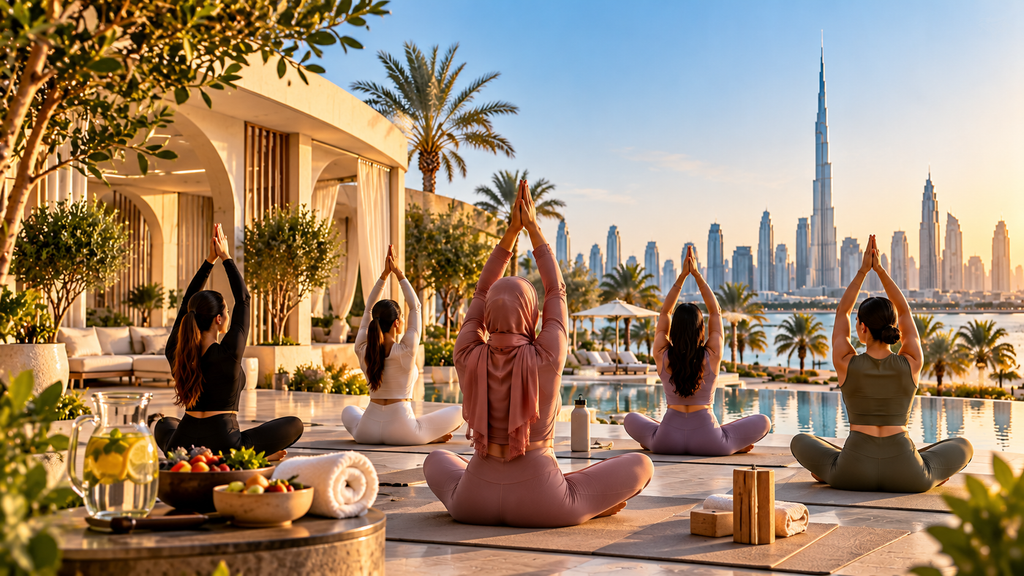
The Shero Life describes itself as a women’s holistic fitness community in Dubai.
Its approach combines group training with a broader emphasis on mind-body wellbeing and social support.
The initiative shows how fitness businesses may develop identities centred on community participation rather than treating every class as an isolated transaction.
Women-Focused Communities in Riyadh
Saudi Arabia’s wellness landscape includes women-only yoga, Pilates and fitness environments.
An April 2025 Arab News report highlighted several female-only wellness spaces in Riyadh, including Sunsets Yoga, describing their role in providing privacy, comfort and opportunities for social connection.
Such businesses demonstrate that the appeal of women-only wellness is not limited to conventional gym training.
Community Models Compared
| Organisation | Market | Main Focus |
|---|---|---|
| FitnGlam | UAE | Women’s fitness and premium wellness |
| BODIFY | Dubai | Boutique classes and supportive community |
| Fitness First Ladies-Only | Abu Dhabi | Dedicated fitness facilities |
| The Shero Life | Dubai | Holistic training and community |
| Sunsets Yoga | Riyadh | Female-focused yoga and relaxation |
These are selected examples, not a ranking of the best providers or evidence that every listed location offers identical services. Availability, memberships and schedules should be checked directly with each operator.
7 Reasons Women-Only Wellness Communities Are Becoming a Gulf Lifestyle Trend
The appeal of women-only wellness is connected to wider lifestyle changes as well as the increasing variety of services available.
For businesses, understanding these motivations can be more useful than simply following popular fitness trends.
1. Greater Choice in Fitness Environments
Dedicated facilities give women another option when deciding where and how to exercise. Some prefer mixed-gender environments, while others value female-only classes or private training areas.
Providing different formats can make the wider fitness market more responsive to individual preferences.
2. Growing Interest in Strength and Functional Fitness
Women’s fitness offerings increasingly extend beyond traditional cardio-based classes.
Strength training, resistance exercises and functional movement programmes are now prominent features of many wellness businesses.
Appropriate training can support strength and mobility, but programmes should reflect each participant’s experience and health circumstances.
3. Popularity of Pilates and Mind-Body Activities
Boutique Pilates, yoga and related movement classes have become visible parts of the premium wellness market.
GymNation’s 2026 survey found that 48% of surveyed women expressed interest in yoga, Pilates and mindfulness, compared with 13% of surveyed men.
These figures suggest meaningful interest among the survey participants, although they do not measure actual attendance at every type of studio.
4. Demand for Social Experiences
Wellness activities provide opportunities to meet people outside traditional social settings.
Group walks, workshops and fitness gatherings can encourage interaction through shared activities.
Businesses that create a welcoming environment may benefit from referrals and continued participation.
5. Flexible Membership Options
Not everyone can attend the same class at the same time each week.
Operators can respond through morning sessions, evening classes, limited packages and digital booking systems.
Flexibility may be especially important for people balancing professional, family and personal commitments.
6. Wellness Beyond Physical Appearance
A growing number of programmes discuss exercise alongside general wellbeing, relaxation and healthy routines.
This wider perspective can make wellness more meaningful to participants interested in energy, mobility, confidence and everyday functioning.
However, businesses should avoid making unsupported claims about treating medical or mental health conditions.
7. Opportunities for Female Entrepreneurship
Women-only communities can create business opportunities for fitness instructors, wellness educators, studio owners and event organisers.
Smaller organisations may begin with regular group activities before expanding into dedicated premises or broader memberships.
Seven Growth Drivers
| Driver | Customer Value | Business Opportunity |
|---|---|---|
| More Fitness Choice | Personal comfort | Dedicated facilities |
| Strength Training | Functional fitness | Specialist coaching |
| Pilates and Yoga | Varied movement options | Boutique classes |
| Social Connection | Shared experiences | Community events |
| Flexible Scheduling | Convenience | Adaptable packages |
| Broader Wellbeing | More lifestyle options | Complementary services |
| Female Entrepreneurship | Specialist offerings | New local businesses |
These factors support the possibility of further growth, but they do not guarantee commercial success for every new wellness venture.
The Business of Women-Only Wellness: Memberships, Costs and Revenue
Women-only wellness communities operate through several business models, ranging from small group events to substantial fitness facilities.
Their financial structure depends on the services offered, customer demand, staffing requirements and premises costs.
Membership-Based Fitness Clubs
Conventional fitness clubs may charge recurring membership fees for access to facilities and selected classes.
Premium facilities may include additional services such as specialised studios, recovery areas or personal training.
A recurring membership model can provide predictable revenue, but it also requires operators to maintain facilities and deliver consistent value.
Boutique Class Packages
Smaller studios may sell individual classes, multi-session packages or monthly subscriptions.
These arrangements can appeal to customers who prefer structured instruction rather than unrestricted gym access.
However, the business must manage instructor costs and class occupancy carefully.
Community Event Memberships
Some organisations provide a calendar of group activities through a membership model.
Dubai’s Endless Club, for example, advertises a women’s membership community involving wellness, social experiences, personal development and other activities.
This model demonstrates how a business can build recurring relationships without operating a conventional gym.
Corporate Wellness Partnerships
Employers may purchase group fitness sessions, workshops or access arrangements for employees.
These partnerships can create additional revenue opportunities for established operators.
However, workplace wellness services should be designed around clear objectives, voluntary participation and appropriate professional qualifications.
Illustrative Boutique Studio Financial Model
Consider a hypothetical women-only wellness studio generating AED 120,000 in monthly revenue.
| Monthly Item | Hypothetical Amount |
|---|---|
| Membership Revenue | AED 85,000 |
| Personal Training | AED 20,000 |
| Workshops and Events | AED 15,000 |
| Total Revenue | AED 120,000 |
| Rent and Utilities | AED 28,000 |
| Trainers and Staff | AED 48,000 |
| Marketing | AED 9,000 |
| Equipment and Maintenance | AED 7,000 |
| Administration and Other Expenses | AED 12,000 |
| Operating Surplus | AED 16,000 |
These figures are illustrative, not verified UAE or Saudi market prices. They exclude certain potential expenses, including financing, taxes and depreciation.
A studio with the same facilities but lower attendance could produce a significantly different financial result.
Why Community Retention Matters
Attracting new customers can require advertising, introductory offers and promotional events. Retaining satisfied members may help businesses reduce repeated acquisition expenses.
However, community loyalty cannot replace sound operational management.
Businesses still need to monitor class demand, staffing efficiency, membership cancellations and overall service quality.
Challenges of Building Inclusive, Affordable and Sustainable Wellness Spaces
Despite the growing interest in dedicated facilities, operating a women-only wellness business involves important commercial and social responsibilities.
Privacy, accessibility and customer satisfaction must be balanced with staffing, pricing and appropriate health-related standards.
The Affordability Challenge
Premium studios may appeal to customers who value exclusive facilities and specialised instruction, but higher membership fees can limit access.
GymNation’s 2026 survey identified affordability as a major fitness barrier among respondents. It also reported that 46% of surveyed women believed they paid more than men for equivalent fitness products or services.
This reflects consumer perceptions rather than proof of a universal pricing difference.
Businesses can respond with transparent pricing, flexible memberships and clearly explained service inclusions.
Avoiding Unrealistic Wellness Expectations
Fitness and wellness marketing sometimes uses dramatic transformation photographs or promises of rapid results.
Such messages can create unrealistic expectations and undermine the wider goal of supporting healthy habits.
Responsible businesses should prioritise qualified instruction, accurate descriptions and achievable goals.
Maintaining Professional Standards
Coaches and wellness practitioners should have appropriate qualifications for the activities they provide.
General fitness instruction is not equivalent to medical diagnosis, physiotherapy or psychological treatment.
Businesses offering clinical services must comply with the relevant healthcare licensing requirements.
Privacy and Customer Protection
Dedicated facilities should establish clear rules about photography, video recording, changing areas and customer information.
Digital booking systems may collect personal details, making appropriate data protection important.
A welcoming environment depends on respecting participants’ privacy rather than relying solely on attractive interiors.
Common Challenges and Responses
| Challenge | Possible Consequence | Practical Response |
|---|---|---|
| High Membership Costs | Limited accessibility | Flexible pricing options |
| Instructor Shortages | Inconsistent classes | Qualified recruitment |
| Unrealistic Claims | Customer dissatisfaction | Evidence-based communication |
| Privacy Concerns | Reduced confidence | Clear facility policies |
| Weak Community Engagement | Membership cancellations | Meaningful member activities |
| Overexpansion | Financial pressure | Test demand before opening |
| Limited Scheduling | Excluded customers | Varied class times |
Why Inclusion Still Matters
A women-only setting should not be assumed to meet every participant’s accessibility or cultural needs.
Operators may need to consider age, disability access, language preferences and varying levels of fitness experience.
The most effective communities will be those that listen to members rather than assume that all women want identical experiences.
The Future of Women-Only Wellness Communities Across the GCC
The future of women-only wellness is likely to involve a combination of fitness, social experiences and increasingly specialised services.
Saudi Arabia’s expanding female fitness infrastructure and the UAE’s established boutique wellness market provide examples of different approaches to this developing category.
Saudi Arabia’s Expanding Female Fitness Market
Research published in 2026 on Saudi Arabia’s fitness market reported that Fitness Time’s female-only club count increased from 47 in 2024 to 67 in 2025.
The same analysis reported that iN2 Fitness increased its female-only locations from 19 to 29 during that period.
These figures refer to specific operators, not the entire Saudi fitness industry, but they demonstrate investment in dedicated facilities.
A separate 2026 industry report estimated that female gym memberships in Saudi Arabia increased from approximately 430,000 in 2020 to 610,000 in 2024.
Together, these indicators suggest that organised women’s fitness is becoming a more substantial commercial segment.
Smaller Community-Led Businesses
Not every wellness organisation needs to operate a large gym.
Entrepreneurs may establish communities around outdoor activities, group classes, educational events or lifestyle gatherings.
Digital platforms can support communication and scheduling, while in-person experiences provide opportunities for genuine connection.
More Integrated Wellness Experiences
Some operators may combine physical activity with relaxation facilities, nutrition education and social events.
However, expansion into additional services requires appropriate expertise and clear commercial planning.
Adding more activities does not automatically improve member satisfaction or profitability.
Frequently Asked Questions
What are women-only wellness communities?
They are spaces or organised networks offering fitness, relaxation, social activities and other wellbeing experiences designed primarily or exclusively for women.
Why are women-only gyms growing in Saudi Arabia?
Industry research identifies increasing female fitness participation and investment in dedicated facilities. Preferences for privacy, comfort and appropriate training environments also influence demand.
Are women-only wellness communities available in Dubai?
Yes. Dubai has dedicated fitness clubs, boutique studios and community-led organisations offering women-focused wellness activities.
Are women-only fitness clubs expensive?
Prices vary significantly by location, facilities and membership type. Premium studios may cost more than basic gyms, while smaller community groups may offer different pricing arrangements.
Do wellness communities improve mental health?
Physical activity and supportive social relationships can contribute to wellbeing, but participation in a wellness community does not guarantee improved mental health or replace appropriate clinical care.
Can entrepreneurs start small women-only wellness communities?
Yes. Some models begin with group activities or events before developing permanent facilities. Applicable licensing, professional and safety requirements should be verified.
Final Thoughts on Women-Only Wellness Communities
The growing visibility of women-only wellness communities reflects a broader transformation in the Gulf’s health and lifestyle industries.
Fitness is increasingly being presented not merely as an individual activity but as an experience that can involve confidence, social connection, personal development and a sense of belonging.
Across the UAE and Saudi Arabia, dedicated facilities and community-led initiatives are creating additional options for women with different interests and expectations.
For businesses, this creates opportunities in fitness, education, events and lifestyle services. Yet sustainable growth depends on more than premium interiors or fashionable workout formats.
Customers need qualified professionals, transparent pricing, respectful environments and experiences that provide genuine value.
As the sector develops, affordability and accessibility will be just as important as exclusivity and innovation.
Ultimately, Women-Only Wellness Communities are becoming an important part of the Gulf’s evolving wellness landscape because they offer something beyond exercise equipment and scheduled classes: the opportunity to build healthier routines while connecting with people who share similar interests.
Their long-term value will depend on how successfully they combine professional standards, personal choice and meaningful community experiences.
Do follow us on Instagram
Read More – Digital Detox Holidays: Can Travellers Really Disconnect in the UAE?