Can Digital Detox Holidays Really Improve Mental Wellbeing?
Imagine spending an entire morning without checking your phone. There are no emails demanding immediate attention, no social media notifications interrupting conversations, and no pressure to photograph every experience. Instead, the day begins with quiet surroundings, fresh air, a leisurely breakfast and the freedom to enjoy the moment without constantly looking at a screen.
- What Are Digital Detox Holidays UAE and Why Are They Gaining Attention?
- Why the UAE Could Become a Destination for Digital Detox Travel
- 7 Ways Travellers Can Enjoy a Digital Detox Holiday in the UAE
- Can Digital Detox Holidays Really Improve Mental Wellbeing?
- The Business of Digital Detox Tourism: How UAE Hotels Could Benefit
- Challenges of Planning a Screen-Free Holiday in a Highly Connected Country
- The Future of Digital Detox Holidays UAE and Frequently Asked Questions
For travellers accustomed to connected lifestyles, this simple experience can feel surprisingly unfamiliar. Smartphones have become essential companions for navigation, bookings, payments, communication and entertainment. Even during holidays, many people remain connected to work messages, news updates and social media platforms.
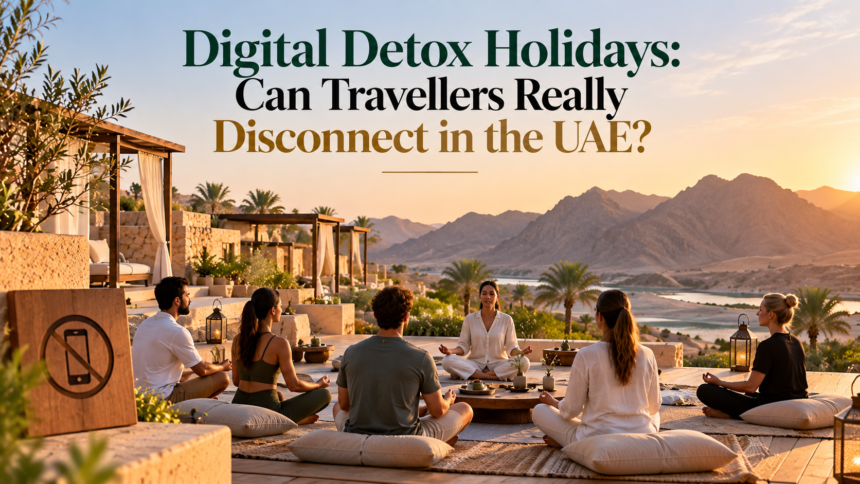
This is why Digital Detox Holidays UAE is becoming an interesting concept within the wider wellness travel conversation. Rather than focusing exclusively on luxury accommodation or packed sightseeing schedules, digital detox travel encourages people to reduce unnecessary technology use and spend more time engaging with their surroundings.
The United Arab Emirates offers several environments suited to this type of experience. Dubai’s desert resorts, Hatta’s mountain accommodation, Abu Dhabi’s remote desert landscapes and quieter coastal destinations can provide opportunities to spend time outdoors and develop less screen-dependent routines.
However, the UAE is also one of the world’s highly connected destinations. Digital bookings, smart hotel services, mobile payments and constant internet access are part of everyday convenience. Travellers who want to disconnect must therefore make deliberate choices about how they use technology.
Scientific research also suggests that digital detox is more complicated than simply switching off a phone. A 2024 review published in Pediatrics found that reducing smartphone and social media use may be more beneficial than demanding complete abstinence, although research findings remain inconsistent.
For the hospitality industry, the trend raises an interesting business question: could hotels and retreat operators turn the desire for uninterrupted time into a meaningful travel experience?
For travellers, the more important question is whether a short holiday can help establish a healthier relationship with technology after returning home.
What Are Digital Detox Holidays UAE and Why Are They Gaining Attention?
A digital detox holiday is a travel experience in which participants intentionally reduce or temporarily stop using selected digital technologies. The objective is generally to spend more attention on real-world experiences, personal relationships, outdoor activities and rest.
A digital detox does not necessarily require abandoning every electronic device. Some travellers choose to avoid social media while continuing to use their phones for navigation and emergencies. Others prefer structured programmes that limit device use during meals, wellness activities or designated quiet periods.
Digital Detox vs Traditional Holidays
Conventional holidays frequently involve using technology throughout the day. Travellers photograph attractions, search for restaurants, check transport routes and share experiences online. These activities can be useful, but they may also make it difficult to stop thinking about notifications, messages and digital engagement.
Digital detox travel changes the purpose of the holiday. Instead of attempting to document every moment, visitors focus on experiencing their surroundings with fewer interruptions. The aim is to create personal boundaries around technology rather than automatically treating every screen as harmful.
| Feature | Conventional Holiday | Digital Detox Holiday |
|---|---|---|
| Smartphone Use | Frequent throughout the day | Deliberately limited |
| Social Media | Regular posting and browsing | Reduced or temporarily paused |
| Activities | Digital and offline experiences | Greater emphasis on offline experiences |
| Work Communication | May remain active | Boundaries established in advance |
| Photography | Frequent digital documentation | More selective photography |
| Main Objective | Recreation and sightseeing | Rest, awareness and recreation |
Why the Idea Appeals to Modern Travellers
Digital devices often combine professional responsibilities, entertainment and social communication within one screen. This convenience can make it difficult to distinguish genuine leisure from everyday obligations, especially for professionals who are expected to remain reachable outside normal working hours.
A digital detox holiday creates an opportunity to establish clearer boundaries. Travellers can decide which communications genuinely require attention and which activities can be postponed until the trip ends. For some, this may involve spending time in nature, reading, practising mindfulness or simply enjoying uninterrupted conversations.
The appeal is also connected to changing travel preferences. Not every visitor wants an itinerary filled with shopping, attractions and constant activity. Some travellers increasingly value privacy, calm environments and the freedom to follow a slower schedule.
Why the UAE Could Become a Destination for Digital Detox Travel
The UAE is internationally recognised for modern infrastructure, luxury hospitality and advanced digital services. At first glance, these characteristics might seem incompatible with the idea of disconnecting from technology. Yet the country’s varied natural landscapes create opportunities for a different style of travel.
Within relatively manageable travel distances, visitors can move from busy urban districts to deserts, mountains and coastal environments. This contrast offers an opportunity to experience quieter surroundings without necessarily travelling to another country.
Dubai’s Desert Retreat Experience
Desert accommodation provides an alternative to the city’s shopping centres, entertainment venues and commercial districts. Guests can spend time observing changing landscapes, enjoying outdoor dining or participating in guided nature experiences rather than remaining indoors with electronic devices.
Dubai’s official tourism website lists desert accommodation options including Bab Al Shams, Al Maha Desert Resort and The Nest by Nara. These properties offer different forms of desert hospitality, although they should not automatically be described as certified digital detox resorts.
The important distinction is between a peaceful setting and a structured technology-free programme. Travellers must still decide how much they want to use their phones during the stay.
Hatta and Mountain-Based Travel
Hatta provides a different atmosphere through its mountainous landscape and outdoor accommodation. The area is associated with hiking, outdoor recreation and nature-oriented stays, making it suitable for visitors interested in reducing screen time.
Accommodation options promoted through Dubai’s tourism channels include mountain lodges, trailers and dome-style experiences. Such settings can encourage slower travel when visitors build their schedules around outdoor activities and relaxation.
However, remote surroundings do not guarantee complete disconnection. Guests should check accommodation facilities, connectivity and safety requirements rather than assuming internet access will be unavailable.
Abu Dhabi’s Desert and Nature Tourism
Abu Dhabi also offers landscapes that can support quieter travel. Its official tourism platform highlights Qasr Al Sarab Desert Resort by Anantara as a remote desert retreat within the Empty Quarter, where visitors can experience expansive dunes and a relatively secluded setting.
These environments may appeal to people seeking distance from crowded urban routines. Nevertheless, a luxury desert stay is not necessarily a formal digital detox programme, and travellers should verify whether specific activities or screen-free experiences are offered.
Comparing UAE Digital Detox Settings
| Environment | Potential Experience | Important Consideration |
|---|---|---|
| Dubai Desert | Quiet surroundings and nature experiences | Luxury amenities may remain highly connected |
| Hatta Mountains | Hiking and outdoor recreation | Weather and activity safety |
| Abu Dhabi Desert | Remote landscapes and relaxation | Transport planning |
| Coastal Retreats | Walking, swimming and quiet leisure | Beach access and seasonality |
| Urban Wellness Hotels | Spa services and structured relaxation | City noise and digital distractions |
The UAE’s opportunity lies in combining accessible tourism infrastructure with experiences that allow guests to temporarily move away from digitally demanding routines.
7 Ways Travellers Can Enjoy a Digital Detox Holiday in the UAE
A successful digital detox does not necessarily require expensive accommodation or several days without internet access. The experience can begin with practical decisions about communication, activities and daily routines.
Travellers who establish realistic boundaries may find the experience easier to maintain than those attempting to eliminate all technology immediately.
1. Establish Screen-Free Periods
Instead of switching off every device for an entire holiday, travellers can designate particular periods for offline activities. For example, the first hour after waking and the time spent eating may be reserved for enjoying the surroundings without checking messages.
This approach allows visitors to remain reachable when necessary while reducing habitual browsing. It is particularly suitable for people who have professional or family responsibilities that make complete disconnection impractical.
2. Spend More Time Outdoors
Nature-based activities can provide alternative sources of enjoyment and engagement. Walking through suitable mountain trails, observing desert scenery or spending time near the coast creates experiences that do not inherently require digital entertainment.
Visitors should still carry essential navigation tools and communication devices when travelling in remote areas. Safety is more important than maintaining a completely technology-free appearance.
3. Limit Social Media Posting
Some travellers feel pressure to document every meal, attraction and scenic view. Taking photographs can be enjoyable, but continuously editing and publishing content may interrupt the experience itself.
A practical alternative is to take occasional photographs and share them after returning home. This allows visitors to preserve memories without remaining focused on audience reactions throughout the holiday.
4. Replace Scrolling With Meaningful Activities
Reading, drawing, journaling, cooking and participating in guided cultural experiences can provide alternatives to habitual phone use. These activities may help visitors spend their leisure time more intentionally and discover interests that receive less attention during working weeks.
The objective is not to fill every moment with scheduled tasks. Allowing unstructured time can also be valuable, particularly for travellers accustomed to demanding routines.
5. Create Boundaries Around Work
For professionals, work communication may be the most difficult part of a digital detox. An out-of-office message, delegated responsibilities and a designated emergency contact can help establish expectations before the trip begins.
These arrangements reduce the temptation to repeatedly check email. However, travellers should choose boundaries appropriate to their employment responsibilities rather than assuming every professional can become completely unavailable.
6. Practise Mindful Travel
Mindful travel involves paying greater attention to the immediate experience. During a meal, this might mean noticing the flavours and enjoying conversation rather than browsing social media. During a nature walk, it may involve observing the landscape without constantly searching for the next photograph.
Such practices do not require a specific hotel package. They can be incorporated into ordinary staycations and short breaks with little additional expense.
7. Introduce Technology Gradually After the Holiday
A digital detox may feel successful during a weekend, but its longer-term value depends partly on what happens afterwards. Travellers who immediately return to unrestricted scrolling may find that their previous habits resume.
Maintaining selected boundaries, such as notification-free meals or an evening without social media, may help extend the experience into everyday life.
Seven Practical Approaches
| Strategy | Main Objective | Practical Example |
|---|---|---|
| Screen-Free Hours | Reduce interruptions | No phone during breakfast |
| Outdoor Activities | Engage with surroundings | Guided nature walk |
| Limited Social Media | Reduce posting pressure | Share photographs after the trip |
| Offline Hobbies | Encourage alternative activities | Reading or journaling |
| Work Boundaries | Protect personal time | Out-of-office message |
| Mindful Travel | Improve present-moment attention | Uninterrupted conversations |
| Gradual Reconnection | Develop lasting routines | Scheduled notification checks |
The most useful strategy is one that travellers can maintain without creating unnecessary anxiety or compromising important responsibilities.
Can Digital Detox Holidays Really Improve Mental Wellbeing?
The health and wellbeing claims surrounding digital detox travel deserve careful attention. While reducing distracting technology use may be helpful for some people, scientific evidence does not support the idea that every screen-free holiday guarantees improved mental health.
Researchers have examined different forms of digital reduction, including temporary social media breaks, smartphone restrictions and structured periods of disconnection. Their findings vary according to the participants, duration and outcomes measured.
What Scientific Research Suggests
A 2024 systematic review and meta-analysis published in Cyberpsychology, Behavior, and Social Networking examined studies involving more than 8,000 participants. It reported small positive effects on subjective and psychological wellbeing, although the results varied between studies.
A separate 2024 review published in Pediatrics found that reducing digital media use sometimes produced more favourable outcomes than complete abstinence. The researchers also highlighted the lack of consistent definitions and the need for stronger evidence.
In contrast, a 2025 systematic review in Scientific Reports, involving 10 studies and 4,674 participants, found no statistically significant overall effect of temporary social media abstinence on life satisfaction or positive and negative mood.
Together, these findings suggest that digital detox interventions may help in certain circumstances, but their benefits should not be treated as universal.
Digital Detox and Attention Restoration
An emerging area of tourism research examines whether spending time in restorative environments can support attention and perceived wellbeing. A 2026 study of 500 participants explored how digital detox tourism might influence attention restoration through mindfulness and perceptions of the surrounding environment.
Its findings support further investigation into these relationships, but the study does not establish that all forms of digital detox travel produce lasting psychological benefits.
The setting, individual preferences and quality of the experience may matter as much as the reduction in screen time.
Why Complete Disconnection Is Not Always Necessary
Digital devices can support valuable relationships, work, accessibility and personal safety. Removing them completely may create difficulties for some travellers, particularly those responsible for children or dependent family members.
A balanced approach may involve reducing unnecessary browsing while retaining access to essential communication. The aim should be to improve a person’s relationship with technology rather than treating all digital activity as harmful.
Evidence and Expectations Compared
| Common Claim | What the Evidence Suggests |
|---|---|
| A phone-free holiday guarantees happiness | Not established |
| Reducing excessive use may help some people | Supported by some studies |
| Total abstinence is always better | Not established |
| Nature-oriented holidays may feel restorative | Promising but context-dependent evidence |
| Short breaks permanently change habits | Long-term evidence remains limited |
| Everyone needs the same detox programme | Individual needs differ |
Hotels and wellness operators should communicate these distinctions clearly. General relaxation packages must not be marketed as treatments for anxiety, depression, sleep disorders or other medical conditions without appropriate clinical evidence and authorisation.
The Business of Digital Detox Tourism: How UAE Hotels Could Benefit
Digital detox holidays present a potential opportunity for hospitality businesses seeking to differentiate their services. Rather than focusing exclusively on accommodation, hotels can introduce experiences built around relaxation, outdoor activities and more intentional use of personal time.
However, not every hotel needs a specialised digital detox programme. Some may provide greater value by improving existing guest experiences, reducing unnecessary interruptions and offering optional screen-free activities.
Wellness-Focused Accommodation Packages
Hotels could create packages combining accommodation, suitable relaxation activities and designated offline periods. A guest might choose a two-night stay with guided nature experiences, a wellness session and flexible time for reading or resting.
The commercial appeal would depend on whether these activities provide something meaningfully different from an ordinary hotel booking. Simply asking guests to switch off their phones is unlikely to justify substantial additional fees.
Guided Experiences and Activities
Businesses may generate additional revenue through suitable guided nature activities, workshops or cultural experiences. These can provide alternatives to screen-based entertainment and encourage guests to engage with their surroundings.
Partnerships with experienced activity providers may allow hotels to introduce programmes without developing every service internally. Operators must still ensure appropriate qualifications, safety procedures and contractual arrangements.
Corporate Digital Wellbeing Retreats
Companies may consider retreats designed to encourage team interaction and reflection away from routine digital interruptions. Such programmes might include workshops, collaborative activities and opportunities for informal conversation.
Corporate clients may be interested in improving meeting quality or creating time for strategic discussion. However, retreats should not promise measurable productivity gains or mental health improvements without supporting evidence.
Illustrative Digital Detox Package Economics
Consider a hypothetical UAE resort offering a two-night digital wellness package for AED 2,400.
| Revenue or Expense | Hypothetical Amount |
|---|---|
| Package Selling Price | AED 2,400 |
| Room Servicing and Allocated Operating Costs | AED 600 |
| Meals and Refreshments | AED 250 |
| Guided Activities | AED 220 |
| Wellness Session | AED 180 |
| Marketing and Booking Expenses | AED 200 |
| Contribution Before Remaining Fixed Costs | AED 950 |
These figures are hypothetical planning examples, not actual UAE hotel quotations or industry-average margins. Additional expenses may include administration, financing, taxes and fixed property costs.
Hotels must also consider whether guests buying a digital detox package would otherwise have booked regular accommodation. A package that generates additional revenue does not automatically generate an equivalent increase in profit.
Potential Business Models
| Business Model | Revenue Opportunity | Main Challenge |
|---|---|---|
| Weekend Detox Stay | Package bookings | Demonstrating genuine value |
| Nature Retreat | Accommodation and activities | Weather and safety |
| Corporate Retreat | Group contracts | Programme quality |
| Wellness Workshops | Session fees | Qualified facilitators |
| Slow-Travel Packages | Longer stays | Customer demand |
| Premium Quiet Rooms | Room-category upgrades | Soundproofing and operating costs |
The strongest commercial approach is likely to combine credible experiences, clear pricing and guest choice rather than make exaggerated promises about the benefits of avoiding technology.
Challenges of Planning a Screen-Free Holiday in a Highly Connected Country

The UAE’s advanced digital infrastructure creates an unusual challenge for digital detox tourism. Hotels, transport providers, restaurants and attractions frequently use mobile applications, digital confirmations and electronic payments to make services more convenient.
Travellers who attempt to avoid every form of technology may therefore encounter unnecessary complications. A successful detox requires planning that respects both the desire to disconnect and the practical realities of modern travel.
Digital Bookings and Navigation
Visitors often receive hotel confirmations, transport information and activity reservations electronically. Some attractions use digital tickets, while navigation applications help travellers move between unfamiliar locations.
Instead of eliminating these tools completely, visitors can use technology at designated times. Essential documents can be organised before departure, and relevant information can be saved for offline access where practical.
Safety During Remote Travel
Desert and mountain environments require particular attention to safety. Travellers should maintain access to emergency communication, reliable navigation and appropriate weather information.
Disconnecting should never mean deliberately becoming unreachable in situations where assistance may be needed. Remote activities should follow local safety guidance and use qualified operators where appropriate.
Managing Expectations With Family and Colleagues
A person who suddenly stops responding to messages may create concern among friends or relatives. Informing important contacts about the travel schedule and providing an emergency communication method can prevent misunderstandings.
For professionals, clear work boundaries established before departure can make the holiday more enjoyable. The objective is to reduce unnecessary communication without creating avoidable problems.
Avoiding Digital Detox Pressure
Some travellers may feel frustrated if they check their phones during a supposedly screen-free holiday. This can turn an experience intended to encourage relaxation into another personal performance target.
A more flexible approach recognises that occasional device use does not invalidate the entire experience. Digital detox should support personal wellbeing rather than become a strict competition over who can remain offline longest.
Common Challenges and Practical Solutions
| Challenge | Possible Problem | Practical Solution |
|---|---|---|
| Digital Reservations | Difficulty accessing bookings | Save essential details in advance |
| Navigation | Getting lost in unfamiliar areas | Retain essential navigation access |
| Family Responsibilities | Important calls may be missed | Arrange emergency contact options |
| Work Communication | Pressure to respond | Set expectations beforehand |
| Social Media Habits | Repeated checking | Disable non-essential notifications |
| Remote Travel | Safety concerns | Keep emergency communication available |
| Unrealistic Expectations | Frustration or guilt | Choose flexible boundaries |
Travellers should also consider accessibility requirements. Digital tools may be essential for communication, mobility, translation or health-related needs, and these uses should not be discouraged simply to satisfy a particular holiday concept.
The Future of Digital Detox Holidays UAE and Frequently Asked Questions
Digital detox tourism could become a more visible category within the UAE’s wider wellness and nature-based travel industry. The country’s desert landscapes, mountain destinations and established hospitality infrastructure provide suitable environments for experiences built around reduced screen use.
However, there is not yet sufficient UAE-specific booking data to establish the commercial size of dedicated digital detox holidays. The concept remains an emerging travel opportunity rather than a clearly measured mainstream tourism segment.
More Flexible Wellness Packages
Hotels may introduce optional screen-free experiences rather than enforce strict technology bans. Guests could select quiet accommodation, guided outdoor activities or designated periods without social media.
This would allow travellers with different professional and personal responsibilities to participate without abandoning essential communication.
The Potential of Slow Tourism
Digital detox travel also connects with slow tourism, which encourages visitors to spend more time exploring fewer places. Instead of moving rapidly between attractions, travellers may focus on a smaller number of experiences and develop a deeper appreciation of their surroundings.
The UAE’s natural destinations could support this approach through walking, wildlife observation, cultural activities and longer stays in quieter environments.
A More Realistic Approach to Digital Wellbeing
The future of digital detox may depend less on total disconnection and more on helping people make deliberate decisions about technology. Hotels could provide thoughtful experiences while leaving guests in control of their own devices.
A successful retreat should allow visitors to enjoy their holiday without making them feel guilty about using a smartphone when necessary.
Practical Checklist Before Booking a Digital Detox Holiday
- Decide whether to limit social media, work communication or overall screen time.
- Choose accommodation that supports the type of quiet experience desired.
- Check whether digital detox activities are included in the package.
- Inform essential contacts about communication arrangements.
- Save travel confirmations and important information in advance.
- Maintain access to emergency communication and navigation.
- Plan suitable offline activities without overscheduling the holiday.
- Review weather and safety guidance for outdoor destinations.
- Avoid unrealistic expectations about health benefits.
- Decide which digital boundaries to continue after returning home.
Frequently Asked Questions
What are digital detox holidays in the UAE?
Digital detox holidays are travel experiences in which visitors intentionally reduce unnecessary smartphone, social media or other digital technology use while focusing on rest, nature and offline activities.
Where can travellers enjoy a digital detox in the UAE?
Dubai’s desert environments, Hatta’s mountainous areas and Abu Dhabi’s quieter nature destinations offer settings suited to a self-directed digital break. Travellers should verify whether accommodation providers offer dedicated programmes.
Are there completely phone-free resorts in Dubai?
Some properties promote wellness and relaxation, but a quiet resort should not automatically be described as having a mandatory phone-free programme. Specific rules must be confirmed with the operator.
Can digital detox holidays improve mental health?
Some research reports modest wellbeing benefits from reducing technology use, while other studies find mixed or insignificant effects. A digital detox holiday is not a substitute for professional mental healthcare.
How long should a digital detox holiday last?
There is no universally established ideal duration. Travellers can experiment with a weekend or selected screen-free periods based on their circumstances and preferences.
Are digital detox holidays expensive?
Costs depend on accommodation, transport and included activities. Visitors can also reduce screen time during an ordinary staycation without purchasing a specialised package.
Can families participate in digital detox travel?
Yes. Families may choose shared offline activities and agreed limits on recreational screen use while preserving access to essential communication and accessibility tools.
Do travellers need to surrender their phones?
Not necessarily. Many self-directed digital detox experiences allow guests to retain their devices and choose when to use them.
Final Thoughts on Digital Detox Holidays in the UAE
The idea of disconnecting from technology may seem unusual in a destination associated with digital innovation, advanced infrastructure and highly connected lifestyles. Yet this contrast is precisely what makes digital detox travel an interesting opportunity for the UAE’s hospitality industry.
From the desert landscapes surrounding Dubai to the mountains of Hatta and the quieter environments of Abu Dhabi, the country offers opportunities for travellers to move away from demanding routines and enjoy more intentional leisure time.
The value of these experiences does not necessarily depend on expensive wellness packages or strict restrictions. Often, the most meaningful change may come from creating space for uninterrupted conversations, outdoor exploration and genuinely restful moments.
For hotel operators, digital detox tourism offers possibilities for differentiated experiences, provided that services are transparent, responsibly designed and supported by realistic claims.
For travellers, the challenge is more personal. A short holiday may provide an opportunity to reconsider when and why digital devices demand attention, but lasting changes require practical habits beyond the trip itself.
Ultimately, Digital Detox Holidays UAE represents a different way of thinking about modern travel. The goal is not to reject technology completely, but to rediscover the freedom to choose when to connect and when to enjoy the world without a screen.
In a destination where almost everything can be accessed digitally, that freedom may become an increasingly meaningful part of the travel experience.
Do follow us on Instagram
Read More – The Longevity Lifestyle: Why Preventive Wellness Is Attracting Attention in the Gulf