

Fastest-Growing Wealth Cities to Watch Over the Next Decade
The world’s richest cities are more than places filled with luxury apartments, expensive hotels and designer shopping districts. They are major centres of finance, technology, business creation, investment and private wealth. Cities such as New York, Singapore, Tokyo, London and Dubai attract entrepreneurs, investors and highly skilled professionals because they combine economic opportunity with global connections and sophisticated infrastructure.
- World’s Richest Cities and How Their Wealth Is Measured
- New York Remains the World’s Biggest Private Wealth Centre
- The Bay Area Has Become the Global Capital of Technology Wealth
- Tokyo, Singapore and Hong Kong Keep Asia at the Centre of Global Wealth
- London, Paris and Europe’s Traditional Wealth Centres
- Los Angeles, Chicago and Other American Wealth Centres
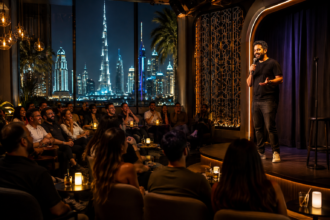
- Dubai Is One of the Fastest-Growing Wealth Cities in the World
- Monaco, Sydney and Other Cities Show Different Forms of Wealth
- What Makes a City Become One of the World’s Richest?
But deciding which cities are truly the world’s richest cities is not as simple as comparing one number. A city can be wealthy because it has a huge economy, a large population of millionaires, a high concentration of billionaires or extremely valuable real estate. Monaco, for example, has an extraordinary concentration of wealthy residents, while New York has far more millionaires in absolute numbers. The San Francisco Bay Area stands out for technology-generated wealth, while Singapore has become one of the strongest private-wealth and family-office centres in Asia.
According to the latest dedicated World’s Wealthiest Cities Report currently available from Henley & Partners and New World Wealth, New York led the global ranking in 2025 with 384,500 resident millionaires. The Bay Area followed with 342,400, while Tokyo, Singapore and Los Angeles completed the top five.
The same report also shows how quickly the geography of wealth is changing. Dubai reached 81,200 resident millionaires after its millionaire population increased by 102% over the previous decade, making it one of the world’s fastest-growing major wealth centres.
This guide looks at the leading global wealth cities, what makes them rich, how different forms of wealth should be measured and which emerging cities are becoming increasingly important.
World’s Richest Cities and How Their Wealth Is Measured
There is no single universally accepted definition of the world’s richest city.
Different rankings may produce different results because they measure different things.
One study may focus on metropolitan GDP. Another may count billionaires. A private-wealth study may examine the number of residents with liquid investable assets worth at least USD 1 million.
For this article, the main comparison uses resident millionaire populations from the World’s Wealthiest Cities Report produced by Henley & Partners with New World Wealth.
The report defines its millionaire figures around people with liquid investable wealth of USD 1 million or more and focuses on residents rather than simply people who own property or conduct business in a city.
Different ways to define a rich city
A city’s wealth can be measured through:
- Number of millionaires
- Number of centi-millionaires
- Number of billionaires
- Total private wealth
- Metropolitan GDP
- Income per resident
- Property values
- Financial-market importance
- Business creation
- Investment flows
These measures tell different stories.
For example, New York dominates by sheer volume of private wealth. Henley and New World Wealth reported that its residents collectively held more than USD 5 trillion in wealth in the 2025 USA Wealth Report.
Monaco is completely different. It has a tiny population but more than 40% of its residents are millionaires, while average resident wealth exceeds USD 20 million.
Top cities by resident millionaire population
| City/Area | Resident Millionaires, 2025 |
|---|---|
| New York City | 384,500 |
| Bay Area | 342,400 |
| Tokyo | 292,300 |
| Singapore | 242,400 |
| Los Angeles | 220,600 |
| London | 215,700 |
| Paris & Île-de-France | 160,100 |
| Hong Kong | 154,900 |
| Sydney | 152,900 |
| Chicago | 127,100 |
The 2025 report also shows that Chicago moved into the top 10, while Los Angeles moved ahead of London.
This table should therefore be understood as a ranking by resident high-net-worth population, not as a ranking by GDP, average salary or cost of living.
New York Remains the World’s Biggest Private Wealth Centre
New York continues to occupy a unique position in the global wealth system.
In the 2025 ranking, the city had approximately 384,500 resident millionaires, including 818 centi-millionaires with investable wealth of at least USD 100 million and 66 billionaires.
Few cities combine financial markets, corporate headquarters, real estate, media, technology, professional services and international investment on the same scale.
Wall Street remains central
New York is home to the New York Stock Exchange and Nasdaq, two of the world’s largest stock exchanges by market capitalisation.
This concentration of financial infrastructure creates employment and wealth across:
- Investment banking
- Asset management
- Private equity
- Hedge funds
- Insurance
- Legal services
- Consulting
- Financial technology
Wealth generated in these industries also supports premium property, hospitality, art, retail and professional services.
Private wealth is extraordinary
The USA Wealth Report 2025 estimates that total wealth held by New York residents exceeds USD 5 trillion.
That helps explain why Manhattan continues to contain some of the world’s most expensive neighbourhoods.
Prime New York residential property averaged around USD 27,500 per square metre in the 2025 wealth report’s high-end real-estate comparison, making the city second only to Monaco among the places highlighted.
Why wealthy people continue choosing New York
Major attractions include:
- Deep capital markets
- World-class universities
- Access to investors
- Global corporate headquarters
- International connectivity
- Luxury real estate
- Cultural institutions
- Large professional networks
New York is expensive and highly competitive, but its ability to connect capital, talent and opportunity continues to make it one of the strongest wealth-creation centres in the world.
The Bay Area Has Become the Global Capital of Technology Wealth
If New York represents traditional financial power, the San Francisco Bay Area represents technology-driven wealth.
The 2025 World’s Wealthiest Cities Report places the Bay Area second globally with 342,400 millionaires. More strikingly, it had 82 resident billionaires, more than New York’s 66.
The report’s Bay Area definition includes San Francisco and Silicon Valley communities such as Palo Alto, Atherton, Los Altos Hills and Mountain View.
Technology created enormous fortunes
The Bay Area is associated with companies and industries including:
- Artificial intelligence
- Semiconductors
- Cloud computing
- Software
- Social media
- Online retail
- Venture capital
- Search
- Consumer technology
Many of the world’s largest technology companies were founded or developed in this region.
This creates a different wealth profile from traditional financial centres. Founders, early employees, investors and venture-capital professionals can accumulate substantial wealth when startups grow rapidly or become publicly listed.
Wealth has grown extremely quickly
Between 2014 and 2024, the Bay Area’s millionaire population increased by 98%, according to Henley and New World Wealth.
That is extraordinary growth for an already wealthy region.
The Bay Area also had 756 centi-millionaires in the 2025 data, making it second only to New York among the world’s largest concentrations of people with USD 100 million or more in liquid investable assets.
Why the Bay Area remains important
Its biggest advantages include:
- Venture capital
- Technology talent
- Major universities
- Startup culture
- Global technology companies
- Research institutions
- Access to experienced founders
High housing costs and living expenses remain major challenges, but few places can match the region’s record of turning innovation into enormous private fortunes.
Tokyo, Singapore and Hong Kong Keep Asia at the Centre of Global Wealth
Asia contains several of the world’s most important wealth centres.
Tokyo, Singapore and Hong Kong all rank among the global top 10 by millionaire population.
Yet they represent very different economic models.
Tokyo
Tokyo ranked third globally in the 2025 Henley/New World Wealth report with 292,300 resident millionaires.
Japan’s capital is home to major corporations across:
- Automotive industries
- Electronics
- Finance
- Telecommunications
- Manufacturing
- Consumer goods
Tokyo is interesting because its number of billionaires is relatively modest compared with its enormous millionaire population.
This suggests a broader distribution of high private wealth rather than wealth being concentrated only among a small billionaire class.
Tokyo’s combination of corporate strength, infrastructure, safety and large domestic markets has helped it remain one of Asia’s richest cities for decades.
Singapore
Singapore ranked fourth globally with 242,400 resident millionaires in the 2025 report. Its millionaire population had increased by 62% over the preceding decade.
The city-state has become especially important for:
- Private banking
- Asset management
- Family offices
- International trade
- Technology
- Shipping
- Regional corporate headquarters
Singapore’s relatively small population makes its concentration of private wealth particularly impressive.
Henley’s report also counted 333 centi-millionaires in Singapore, putting it among the world’s largest centres for people with more than USD 100 million in investable wealth.
Its advantages include political stability, strong infrastructure, access to Asian markets and a highly developed financial system.
Hong Kong
Hong Kong ranked eighth in the 2025 list with 154,900 resident millionaires.
It remains a major gateway between mainland China and global financial markets.
Hong Kong’s wealth has historically been supported by:
- Banking
- Property
- Trade
- Finance
- Family businesses
- Capital markets
The city also had 346 centi-millionaires in the latest report, ranking among the strongest global concentrations of ultra-wealth.
Its prime property market remains one of the world’s most expensive, with the 2025 report putting prime residential prices around USD 26,300 per square metre.
London, Paris and Europe’s Traditional Wealth Centres
Europe remains home to some of the world’s most recognisable centres of wealth, even as the geography of global capital shifts.
London remains Europe’s largest millionaire hub in absolute terms, although its position has weakened.
The 2025 report recorded 215,700 resident millionaires in London, placing it sixth globally after Los Angeles. The city’s millionaire population had fallen by 12% over the previous decade.
London remains globally important
Its strengths include:
- Banking
- Insurance
- Asset management
- Legal services
- Technology
- Creative industries
- International property
- Education
London also remained home to 352 centi-millionaires in the 2025 data, demonstrating that it continues to attract and retain significant ultra-wealth despite the decline in its broader millionaire population.
Prime residential property remained extremely expensive at around USD 24,000 per square metre in the 2025 wealth report.
Paris remains continental Europe’s leading wealth city
Paris and the surrounding Île-de-France region ranked seventh globally with 160,100 resident millionaires.
The French capital benefits from a strong combination of:
- Luxury goods
- Banking
- Fashion
- Professional services
- Tourism
- Technology
- Large multinational companies
It also had 277 centi-millionaires in the 2025 report.
The presence of major companies such as LVMH helps illustrate how luxury and consumer brands contribute significantly to Parisian wealth.
Milan is becoming more prominent
Milan reached 11th place in the 2025 millionaire ranking with approximately 115,000 resident millionaires.
Its strength comes from:
- Fashion
- Finance
- Design
- Manufacturing
- Luxury goods
This demonstrates that European private wealth is not concentrated only in London, Paris and Switzerland.
Los Angeles, Chicago and Other American Wealth Centres
The United States dominates the global private-wealth map.
The 2025 World’s Wealthiest Cities Report contained 11 US cities in its global top 50, more than any other country.
New York and the Bay Area lead, but they are only part of the story.
Los Angeles
Los Angeles ranked fifth globally in 2025 with 220,600 millionaires, including 516 centi-millionaires and 45 billionaires.
Its wealth comes from a diverse range of sectors:
- Entertainment
- Technology
- Media
- Real estate
- Aerospace
- Consumer products
Henley’s definition of the Los Angeles wealth area includes wealthy communities such as Beverly Hills, Malibu, Newport Beach and Laguna Beach.
Chicago
Chicago entered the global top 10 in 2025 with 127,100 resident millionaires.
The city remains an important centre for:
- Finance
- Commodities
- Professional services
- Manufacturing
- Transportation
- Corporate headquarters
It also had 295 centi-millionaires, placing it among the largest ultra-wealth hubs outside the three major US coastal centres.
Houston and Dallas
Texas has become increasingly important.
Houston ranked 17th globally with 81,800 millionaires and had recorded 75% millionaire growth over the preceding decade. Dallas grew even faster, with its millionaire population increasing by 85%.
Houston benefits heavily from energy, healthcare and industrial wealth, while Dallas combines finance, technology, real estate and corporate headquarters.
Miami and Austin
Miami and Austin have also attracted new wealth.
The USA Wealth Report recorded decade-long millionaire-population growth of 94% in Miami and 90% in Austin.
This reflects a broader redistribution of American private wealth toward technology centres and lower-tax Sun Belt destinations.
Dubai Is One of the Fastest-Growing Wealth Cities in the World
Dubai has become one of the most important stories in the global wealth landscape.
The city ranked 18th in the 2025 World’s Wealthiest Cities Report with 81,200 resident millionaires, including 237 centi-millionaires and 20 billionaires.
More importantly, its millionaire population had grown by 102% between 2014 and 2024.
Among major cities in the report, only Shenzhen and Hangzhou had grown faster over that period.
Why Dubai attracts wealth
Several factors contribute to its growth:
- International connectivity
- Business-friendly environment
- Luxury property
- High-quality infrastructure
- Safety
- Global schools
- High-end healthcare
- Entrepreneurial ecosystem
- Residency options for investors and professionals
Dubai has also developed strong industries beyond its traditional strengths in trade and tourism.
These include:
- Financial services
- Technology
- Family offices
- Wealth management
- Real estate
- Aviation
- Logistics
- E-commerce
Private wealth migration matters
Dubai’s position is strengthened by international wealth migration.
High-net-worth individuals increasingly choose where they live based not only on tax considerations but also on lifestyle, safety, education, healthcare and business opportunities.
Henley’s 2025 analysis identified Dubai as one of the cities expected to see its population of centi-millionaires more than double by 2035.
That would further strengthen the city’s position among global private-wealth centres.
Dubai is not yet New York or Singapore by total millionaire count
It is important to keep the scale in perspective.
Dubai’s 81,200 resident millionaires remain well below:
- New York’s 384,500
- Bay Area’s 342,400
- Tokyo’s 292,300
- Singapore’s 242,400
However, Dubai’s rapid growth makes it one of the most important cities to watch.
Its story is less about current absolute size and more about the speed at which private capital and wealthy residents are relocating there.
Monaco, Sydney and Other Cities Show Different Forms of Wealth
Not every wealthy city needs a huge financial market or technology industry.
Some destinations become rich because they are particularly attractive to wealthy residents.
Monaco
Monaco is probably the clearest example.
Although too small to compete with New York in absolute millionaire numbers, more than 40% of Monaco’s residents are millionaires.
The 2025 report estimated average resident wealth at more than USD 20 million.
This makes Monaco exceptional on a wealth-per-capita basis.
Prime apartments regularly exceeded approximately USD 38,800 per square metre in the 2025 comparison, making Monaco the world’s most expensive residential market in that dataset.
Its attractions include:
- Mediterranean lifestyle
- Security
- Luxury services
- Yachting
- Wealth management
- Tax environment
Monaco demonstrates why “richest city” depends heavily on the metric.
Sydney
Sydney ranked ninth globally in 2025 with 152,900 resident millionaires.
Australia’s largest wealth centre benefits from:
- Finance
- Property
- Professional services
- International migration
- High living standards
Its millionaire population had grown strongly over the previous decade, reinforcing Sydney’s position as one of Asia-Pacific’s most important private-wealth centres.
Beijing and Shanghai
China remains central to the global wealth story despite some movement in city rankings.
Beijing had 114,300 resident millionaires in the 2025 report, while Shanghai had 110,500.
Both remain major centres of:
- Finance
- Technology
- Property
- Industry
- Entrepreneurship
However, faster-growing Chinese technology centres are changing the country’s wealth map.
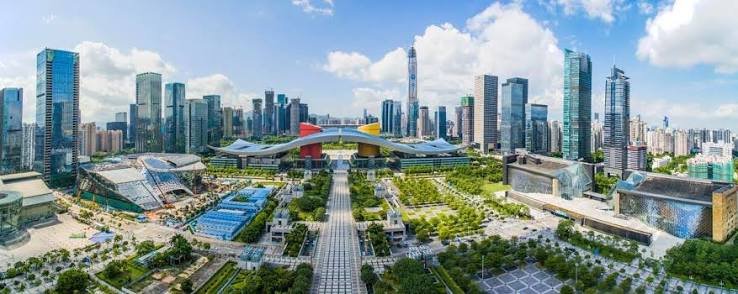
Shenzhen saw its millionaire population rise by 142% over the decade to reach 50,800, while Hangzhou grew 108% to 32,200.
These cities show how technology entrepreneurship can create new centres of wealth surprisingly quickly.
What Makes a City Become One of the World’s Richest?
The world’s richest cities are very different, but they tend to share several characteristics.
Strong business ecosystems
Wealthy cities usually make it possible to start, finance and expand businesses.
This requires:
- Capital
- Skilled employees
- Professional services
- Customers
- Reliable infrastructure
When all of these factors exist in one place, companies and entrepreneurs are more likely to create wealth.
Financial markets
Cities such as New York, London, Singapore and Hong Kong benefit from sophisticated financial systems.
Access to:
- Banking
- Investment funds
- Stock markets
- Private equity
- Wealth management
allows capital to move efficiently.
Innovation
Technology has become one of the most important drivers of new wealth.
The extraordinary growth of the Bay Area, Shenzhen and Hangzhou demonstrates how technology businesses can produce large numbers of wealthy founders and investors.
Global connectivity
Rich cities tend to be internationally connected.
Major airports, ports, telecommunications infrastructure and global business links make it easier for companies and investors to operate across borders.
Dubai and Singapore are particularly strong examples.
Quality of life
Private wealth is increasingly mobile.
High-net-worth individuals can often choose where to live.
Factors influencing those decisions may include:
- Safety
- Healthcare
- Education
- Political stability
- Clean environment
- Property
- Lifestyle
- International connectivity
This helps explain why smaller cities can sometimes attract disproportionately large wealthy populations.
A comparison of major wealth models
| City | Major Wealth Driver |
|---|---|
| New York | Finance and global business |
| Bay Area | Technology and venture capital |
| Tokyo | Corporate and industrial wealth |
| Singapore | Finance, trade and wealth management |
| Los Angeles | Entertainment, technology and property |
| London | Finance and professional services |
| Paris | Luxury, finance and global business |
| Hong Kong | Finance, property and trade |
| Dubai | Trade, property, finance and wealth migration |
| Monaco | Private wealth and luxury lifestyle |
The cities at the top of global wealth rankings therefore do not all follow the same economic model.
Some create wealth internally.
Others attract wealth generated elsewhere.
The most successful often do both.
The world’s richest cities reveal how global wealth is being redistributed across finance, technology, entrepreneurship and international migration. New York remains the largest private-wealth centre in the latest available dedicated ranking, with 384,500 resident millionaires, while the Bay Area follows closely and leads in billionaire population. Tokyo and Singapore demonstrate Asia’s enormous importance, while London and Paris continue to represent Europe’s established wealth centres.
At the same time, the most interesting story may be happening below the traditional leaders. Dubai’s millionaire population increased by 102% over a decade, Shenzhen grew by 142% and Hangzhou by 108%. These figures show that the global wealth map is not fixed.
Technology, investment migration and changing lifestyle preferences are allowing newer wealth centres to gain ground on cities that dominated for decades.
The meaning of “richest” also needs context. Monaco leads in millionaire density and wealth per resident. New York leads by absolute private-wealth scale. The Bay Area is exceptionally strong in technology-generated fortunes. Singapore combines a comparatively small population with an extraordinary concentration of global capital.
For businesses, investors and professionals, these cities matter because wealth creates ecosystems around it. Financial institutions expand, luxury industries grow, property markets develop and companies compete for increasingly international pools of talent and capital.
Future rankings will almost certainly change as technology, migration, economic policy and investment patterns evolve. What is already clear is that the world’s richest cities are no longer concentrated in one part of the world. North America, Europe, Asia and the Middle East all contain major wealth centres, and competition between them is becoming increasingly global.
Do follow us on Instagram
Read More – How to Start an Online Business in the UAE