


12 Surprising Hidden Places Across the GCC Worth Exploring
The Gulf is famous for places that need almost no introduction. Dubai has Burj Khalifa, Saudi Arabia has AlUla, Qatar has Doha’s skyline, and Oman has become increasingly recognised for its mountains and wadis.
- Why Hidden Gems in Gulf Are Worth Finding
- 1. Al Barari, Dubai, UAE
- 2. Dubai’s Local Food Neighbourhoods
- 3. Wadi Dima Wa’ttayeen, Oman
- 4. Al Wusta, Oman
- 5. Wadi Darbat, Dhofar, Oman
- 6. Shaat Viewpoint and Western Dhofar
- 7. Al Thakira Mangroves, Qatar
- 8. Qatar’s Lesser-Known Local Spots
- 9. Al Dhahirah, Oman
- 10. Wadi Bani Khalid Beyond the Main Pools
- 11. Dubai’s Best-Kept-Secrets Itinerary
- 12. Oman’s Quiet Coastal Coves
- What About Saudi Arabia?
- What About Bahrain?
- What About Kuwait?
- Hidden Gems in Gulf at a Glance
- Why Oman Dominates Hidden-Gem Travel
- Hidden Gulf Nature Is More Diverse Than People Expect
- Hidden Gems for Nature Lovers
- Hidden Gems for Couples
- Hidden Gems for Families
- Hidden Gems for Photographers
- The Best Hidden Gems Are Often Seasonal
- Hidden Does Not Mean Undiscovered
- Do Not Geotag Fragile Places Carelessly
- Respect Village Communities
- Check Weather Before Visiting Wadis
- Remote Beaches Need Preparation
- A Seven-Day Hidden Gulf Itinerary
- Common Hidden-Gem Travel Mistakes
- FAQs About Hidden Gems in Gulf
- Conclusion
Yet some of the most memorable experiences are found away from those headline attractions.
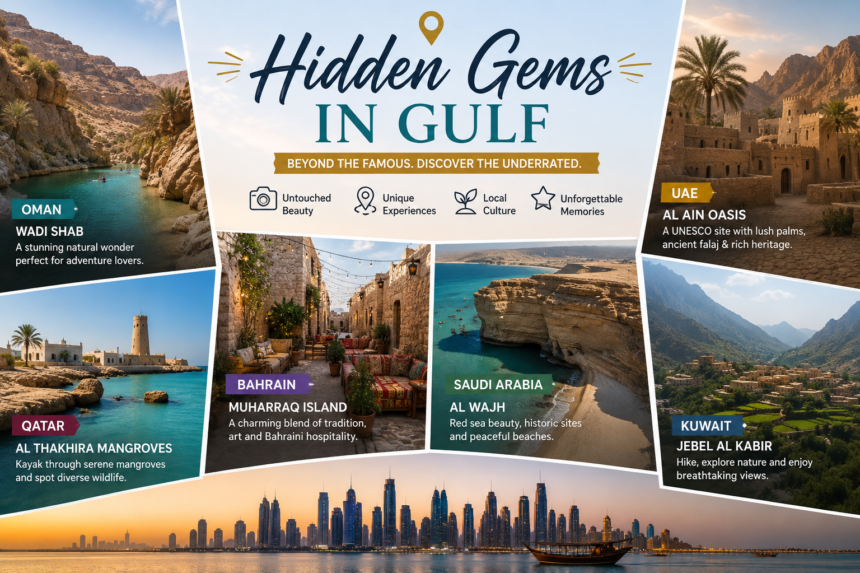
The best Hidden Gems in Gulf include quiet mountain valleys, remote beaches, mangrove forests, heritage settlements and overlooked neighbourhoods that reveal a very different side of the GCC.
Official tourism organisations themselves are increasingly promoting this style of travel. Visit Dubai now maintains itineraries around the city’s “best-kept secrets” and resident recommendations, while Experience Oman describes entire regions such as Al Wusta as hidden gems filled with wildlife, remote coastlines and unusual landscapes.
For travellers who have already seen the major landmarks, or simply prefer less obvious experiences, these places can make a Gulf trip feel far more personal.
Why Hidden Gems in Gulf Are Worth Finding
Popular attractions are popular for good reasons.
There is nothing wrong with seeing the Burj Khalifa or spending an evening at Souq Waqif.
But visiting only famous landmarks can produce a very narrow picture of a country.
Hidden places often reveal:
- quieter landscapes,
- local neighbourhoods,
- village life,
- wildlife,
- traditional architecture,
- small restaurants,
- natural swimming areas,
- lesser-known heritage.
They also encourage slower travel.
Instead of moving from one ticketed attraction to another, you begin paying more attention to the environment around you.
1. Al Barari, Dubai, UAE
Dubai is not usually associated with lush greenery.
That is what makes Al Barari surprising.
Visit Dubai describes it as a leafy neighbourhood on the city’s outskirts with extensive green spaces and restaurants, calling it an area many visitors may never have heard of.
The atmosphere is very different from Downtown Dubai.
Visitors come for:
- landscaped surroundings,
- relaxed dining,
- walking,
- quieter residential scenery.
It works especially well for travellers who want a slower break from Dubai’s malls and high-rise districts.
Best for: Couples, relaxed afternoons and greenery.
Why it feels hidden: It does not sit on the typical first-time Dubai tourist route.
2. Dubai’s Local Food Neighbourhoods
Sometimes a hidden gem is not a landmark.
It is an area where residents eat.
Visit Dubai maintains an entire three-day itinerary dedicated to affordable and unconventional food spots, covering 17 places and presenting the city’s multicultural food scene beyond luxury dining.
This side of Dubai can include:
- South Asian restaurants,
- Arab cafeterias,
- bakeries,
- independent cafés,
- small international restaurants.
The experience can tell you more about Dubai’s real population than a fine-dining restaurant inside a luxury hotel.
Best for: Food lovers and repeat visitors.
3. Wadi Dima Wa’ttayeen, Oman
Oman contains many famous wadis, but Wadi Dima Wa’ttayeen remains less internationally recognised than some better-known locations.
Experience Oman describes the area as a mountain valley containing palm groves, fertile hills, natural springs, blue pools, villages and unusual geological formations.
The route can include:
- Mehlah village,
- natural springs,
- date palms,
- mountain scenery,
- camping areas.
The appeal is not only the water.
It is the combination of rural life and landscape.
Best for: Road trips, nature and photography.
4. Al Wusta, Oman
If you want a part of Oman that still feels genuinely remote, Al Wusta deserves attention.
Experience Oman describes the central governorate as a hidden gem combining desert, Arabian Sea coastline, wildlife and quiet coastal areas. Visitors may encounter Arabian oryx, gazelles and ibex in protected environments, while locations around Duqm and Al Jazir add unusual rock formations and coastal landscapes.
The region includes:
- remote beaches,
- desert,
- wildlife,
- limestone landscapes,
- pink lagoons,
- migratory birds.
This is not a destination for someone who wants shopping malls and nightlife.
That is exactly the point.
Best for: Eco-tourism and adventurous road trips.
5. Wadi Darbat, Dhofar, Oman
Wadi Darbat becomes particularly striking during Dhofar’s khareef season.
Experience Oman describes it as a hidden mountain wadi above Khor Rori, with lakes, rolling hills and grasslands that become especially lush during the seasonal rains.
During favourable conditions, visitors can see:
- green landscapes,
- water,
- grazing animals,
- picnic areas,
- mountain scenery.
This can look nothing like the stereotypical image of the Arabian Peninsula.
That contrast is what makes it memorable.
Best for: Families, nature lovers and photographers.
6. Shaat Viewpoint and Western Dhofar
Many visitors to Salalah concentrate on the city, Wadi Darbat and Al Mughsail.
Western Dhofar contains quieter viewpoints and dramatic coastal scenery.
Experience Oman’s Dhofar guide highlights Shaat Viewpoint among the governorate’s natural attractions and panoramic locations.
The road toward western Dhofar can offer:
- cliffs,
- mountain views,
- empty stretches of coast,
- seasonal greenery.
This is the kind of destination where the drive becomes part of the experience.
Best for: Road trips and landscape photography.
7. Al Thakira Mangroves, Qatar
Qatar is usually imagined as desert.
Al Thakira shows another environment entirely.
The mangrove ecosystem near Al Khor creates an area of shallow water, greenery and birdlife where kayaking is one of the best ways to explore.
Visit Qatar promotes Al Thakira’s mangroves as one of the country’s notable natural experiences.
Visitors may come for:
- kayaking,
- birdwatching,
- quiet water,
- photography,
- nature.
The contrast between mangroves and nearby desert landscapes makes this one of Qatar’s most interesting natural escapes.
Best for: Kayaking, couples and families.
Suggested image placement: Kayaker moving between green mangroves and calm blue water.
8. Qatar’s Lesser-Known Local Spots
Qatar’s tourism materials have long highlighted places that sit outside normal guidebook itineraries.
One official Qatar Now guide even included a dedicated selection of 12 “hidden gems,” describing them as local secrets that are less touristy and slightly off-track.
This is a useful reminder that hidden-gem travel does not always require driving into the desert.
It may involve:
- independent restaurants,
- local cafés,
- neighbourhood businesses,
- small cultural spaces.
In a compact country such as Qatar, the difference between tourist Doha and local Doha can sometimes be only a few streets.
9. Al Dhahirah, Oman
Al Dhahirah in northwestern Oman combines archaeological heritage with mountains, wadis and desert.
Experience Oman describes the region as a mix of cultural history and varied landscapes, including Ibri Fort, the UNESCO-listed archaeological areas of Bat, Al-Khutm and Al-Ayn, Wadi Damm and access toward the Empty Quarter.
It is particularly attractive for travellers who have already experienced Muscat, Nizwa and the more popular eastern routes.
The region offers:
- archaeology,
- forts,
- mountain scenery,
- wadis,
- desert.
Best for: History lovers and overland travellers.
10. Wadi Bani Khalid Beyond the Main Pools
Wadi Bani Khalid is not exactly unknown.
But many visitors stop at the most accessible pools and leave.
Experience Oman notes that the valley continues toward Muqal, where visitors with appropriate equipment can explore cave areas and additional flowing water systems.
The broader valley includes:
- waterfalls,
- natural pools,
- irrigation channels,
- villages,
- rocky paths.
Travellers willing to explore carefully beyond the first viewpoint can experience a much richer landscape.
Best for: Active travellers.
11. Dubai’s Best-Kept-Secrets Itinerary
Dubai itself has become more active in promoting neighbourhoods and experiences away from its classic attractions.
Visit Dubai currently offers a three-day “best-kept secrets” itinerary containing 12 places and explicitly describes Dubai as a city that continues to reveal new experiences even to repeat visitors.
It also runs a broader resident-led campaign encouraging visitors to explore hidden gems through recommendations from people who live in the city.
That means hidden Dubai is often less about one secret landmark and more about approaching the city differently.
Try:
- neighbourhood cafés,
- art spaces,
- local food,
- community parks,
- residential districts.
12. Oman’s Quiet Coastal Coves
Some of Oman’s greatest hidden treasures lie along its coastline.
Beyond the famous beaches, the coast contains coves framed by rugged cliffs and clear turquoise water.
These places can feel remarkably isolated.
But secluded coastal areas require more planning than city beaches.
Travellers should consider:
- road conditions,
- tide,
- mobile coverage,
- water,
- vehicle suitability,
- safe access.
Never treat “hidden” as a synonym for automatically safe.
Remote places deserve more preparation, not less.
What About Saudi Arabia?
Saudi Arabia has become much better known internationally, but its size means there are still countless landscapes outside the usual Riyadh-Jeddah-AlUla itinerary.
The strongest hidden-gem opportunities are often found in:
- southern mountain regions,
- small heritage villages,
- lesser-known desert formations,
- rural agricultural areas,
- Red Sea coastal landscapes.
For travellers who have already visited the major destinations, Saudi Arabia rewards slower regional exploration.
The key is allowing enough time.
Distances are far greater than they appear on a map.
What About Bahrain?
Bahrain’s compact size means “hidden” often means local rather than remote.
Travellers can explore quieter areas around:
- Muharraq,
- village communities,
- coastal spaces,
- independent cafés,
- traditional markets.
Because Bahrain is small, a visitor can leave modern Manama and quickly encounter completely different environments.
The strongest hidden-gem experience often comes from walking rather than chasing another major attraction.
What About Kuwait?
Kuwait also rewards visitors willing to look beyond major malls and modern towers.
Potentially interesting experiences can include:
- older commercial districts,
- local markets,
- quieter waterfront areas,
- desert environments,
- traditional food neighbourhoods.
Kuwait is particularly well suited to travellers who enjoy everyday urban culture.
It is less about dramatic mountain landscapes and more about understanding how residents use the city.
Hidden Gems in Gulf at a Glance
| Hidden Gem | Country | Best For |
|---|---|---|
| Al Barari | UAE | Green urban escape |
| Local food neighbourhoods | UAE | Affordable multicultural dining |
| Wadi Dima Wa’ttayeen | Oman | Springs and mountain villages |
| Al Wusta | Oman | Remote nature and wildlife |
| Wadi Darbat | Oman | Seasonal greenery |
| Shaat Viewpoint | Oman | Coastal landscapes |
| Al Thakira Mangroves | Qatar | Kayaking and wildlife |
| Local Doha spots | Qatar | Neighbourhood culture |
| Al Dhahirah | Oman | Archaeology and wilderness |
| Wadi Bani Khalid trails | Oman | Active exploration |
| Resident-led hidden Dubai | UAE | Local urban experiences |
| Remote coastal coves | Oman | Beaches and solitude |
Why Oman Dominates Hidden-Gem Travel
You may notice Oman appears frequently in this guide.
There is a reason.
Its geography makes it particularly suited to hidden travel.
Experience Oman’s destination material covers enormous variety, including mountains, wadis, desert, secluded coastal regions, archaeological sites and areas where wildlife remains central to the experience.
Oman’s development is also more geographically spread than the highly urban experience many travellers associate with Dubai or Doha.
That allows visitors to move quickly from city life into remote landscapes.
For road-trip travellers, this is a major advantage.
Hidden Gulf Nature Is More Diverse Than People Expect
The phrase “Gulf landscape” often creates one mental image:
sand.
Reality is far more complicated.
Travellers can find:
- mangroves in Qatar,
- mountains in Oman and the UAE,
- green khareef landscapes in Dhofar,
- wadis,
- desert dunes,
- rocky coastlines,
- wildlife reserves.
Wadi Darbat’s seasonal grasslands and lakes are a strong example of this diversity, while Al Thakira’s mangroves challenge the idea that Qatar is entirely dry desert.
Hidden Gems for Nature Lovers
Prioritise:
Al Wusta
For remote wildlife and desert coastline.
Al Thakira
For mangroves and kayaking.
Wadi Darbat
For green seasonal landscapes.
Al Dhahirah
For wadis, mountains and Empty Quarter access.
These destinations show how dramatically GCC environments can differ.
Hidden Gems for Couples
Couples may prefer quieter locations where the experience is more about atmosphere than activities.
Good choices include:
- Al Barari,
- remote Omani beaches,
- Shaat Viewpoint,
- Al Thakira mangroves.
These destinations work well for:
- sunset,
- photography,
- slow walks,
- road trips.
Not every romantic Gulf experience needs to involve a luxury rooftop restaurant.
Hidden Gems for Families
Families need slightly easier access.
Strong options include:
- Al Barari,
- Wadi Darbat,
- accessible parts of Wadi Bani Khalid,
- Al Thakira.
Experience Oman identifies Wadi Darbat’s grasslands as spacious picnic areas during the khareef landscape period, while Wadi Bani Khalid is known for accessible natural pools and greenery.
Parents should still check current weather and water conditions before wadi trips.
Hidden Gems for Photographers
The Gulf provides extraordinary opportunities for landscape photography.
Consider:
- Shaat Viewpoint,
- Al Wusta coastline,
- Al Thakira mangroves,
- Wadi Darbat,
- Al Dhahirah,
- remote Omani coves.
The best time is usually:
early morning
or
late afternoon
Midday light can become harsh, particularly around desert and rocky landscapes.
The Best Hidden Gems Are Often Seasonal
Some places change completely depending on the month.
Dhofar is the clearest example.
During khareef, seasonal moisture can transform hillsides and wadis into lush green landscapes.
Experience Oman specifically notes that Wadi Darbat’s water and grasslands are replenished during the khareef period.
Visit the same place outside the season and the experience can look very different.
Always research seasonality before travelling.
Hidden Does Not Mean Undiscovered
This distinction matters.
Many so-called hidden gems are well known locally.
They may simply receive less international tourism.
Calling a community’s everyday location “undiscovered” can be misleading.
A better way to think about hidden-gem travel is:
places outside the mainstream tourist circuit.
That keeps expectations realistic.
Do Not Geotag Fragile Places Carelessly
Social media can transform a quiet natural location quickly.
A secluded beach can become crowded.
A small village can suddenly receive large numbers of visitors.
Responsible travellers should think carefully before sharing exact coordinates for environmentally sensitive places.
Tourism can help communities.
It can also create:
- litter,
- traffic,
- erosion,
- wildlife disturbance.
Hidden-gem travel should not destroy the qualities that made the place attractive.
Respect Village Communities
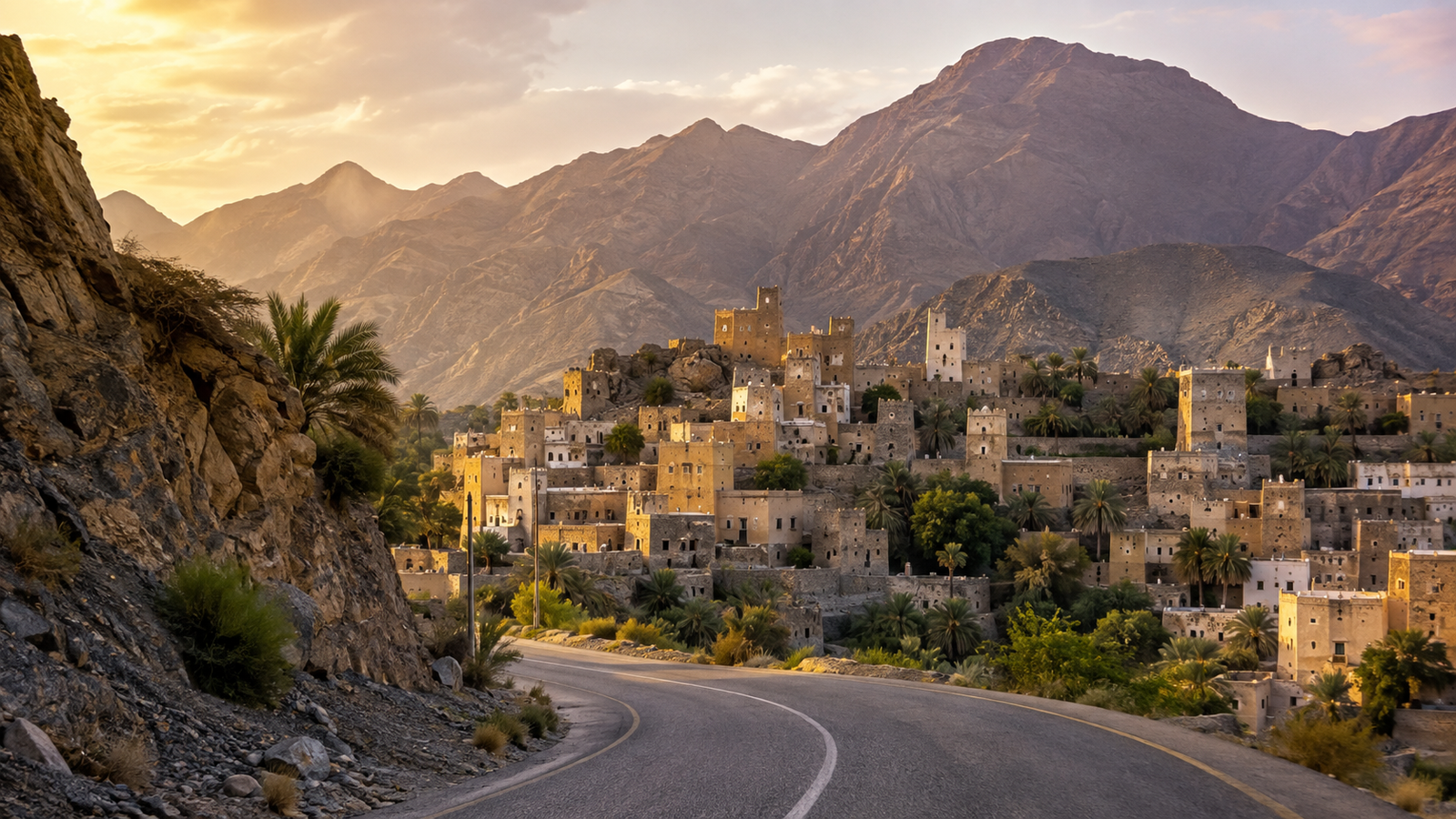
Some lesser-known Gulf destinations are living communities, not tourism attractions.
When visiting:
- dress respectfully,
- avoid photographing residents without permission,
- do not block roads,
- do not enter private property,
- keep noise down.
A village is someone’s home.
That does not change because it looks beautiful on Instagram.
Check Weather Before Visiting Wadis
This is critical.
Wadis can become dangerous during heavy rainfall.
Flash floods can develop quickly even when conditions at your exact location initially appear manageable.
Do not enter a wadi when weather warnings are active.
If authorities close an area, stay out.
A hidden gem is never worth taking unnecessary risks.
Remote Beaches Need Preparation
For secluded coastal areas, carry:
- water,
- phone,
- power bank,
- offline maps,
- sun protection.
Tell someone where you are going if the area is particularly remote.
Check the route before leaving.
A location may appear only a short distance from a highway but require an unsuitable off-road track.
A Seven-Day Hidden Gulf Itinerary
A realistic regional itinerary could look like:
Day 1: Dubai
Explore Al Barari and a local food neighbourhood.
Day 2: Dubai
Resident-led hidden-gem areas and cultural districts.
Day 3: Fly or drive to Oman
Begin Muscat-area exploration.
Day 4: Wadi Dima Wa’ttayeen
Explore mountain villages and natural springs.
Day 5: Al Dhahirah or eastern Oman
Nature and heritage.
Day 6: Coastal Oman
Quiet beaches and scenic drive.
Day 7: Return
This itinerary prioritises depth over trying to visit all six GCC countries in one week.
Common Hidden-Gem Travel Mistakes
Avoid these:
- Assuming remote means safe
- Entering wadis during unstable weather
- Driving off-road without a suitable vehicle
- Photographing residents without permission
- Leaving rubbish
- Overplanning Instagram locations
- Ignoring seasonal conditions
- Visiting every destination only at midday
- Expecting zero tourists
- Treating local communities as attractions
The best hidden-gem travel is curious but respectful.
FAQs About Hidden Gems in Gulf
What are the best Hidden Gems in Gulf?
Strong choices include Al Barari in Dubai, Al Thakira mangroves in Qatar, Wadi Dima Wa’ttayeen, Al Wusta, Al Dhahirah and Wadi Darbat in Oman, along with lesser-known local neighbourhoods and coastal areas across the GCC.
Which Gulf country has the most hidden natural places?
Oman is particularly strong because of its mountains, wadis, deserts and long coastline. Official tourism material highlights remote regions such as Al Wusta and Al Dhahirah alongside better-known destinations.
Are there hidden gems in Dubai?
Yes. Visit Dubai actively promotes local recommendations, best-kept-secret itineraries, independent food spots and lesser-known neighbourhoods such as Al Barari.
What is a hidden nature spot in Qatar?
Al Thakira’s mangrove ecosystem near Al Khor provides a very different experience from Doha and the country’s desert landscapes, particularly for kayaking and wildlife observation.
Is Wadi Darbat worth visiting?
Yes, particularly during Dhofar’s khareef period when the landscape can become greener and water replenishes parts of the wadi.
Are hidden Gulf destinations suitable for families?
Some are. Wadi Darbat, Al Barari and accessible mangrove experiences can work well. More remote beaches, caves and desert tracks require greater planning.
When is the best time to explore hidden Gulf places?
October to April is generally more comfortable for many outdoor destinations, while Dhofar has its own seasonal khareef attraction. Always check conditions for the specific region.
Do I need a 4×4 for hidden Gulf destinations?
Not always. Many are accessible on paved roads. Remote beaches, mountain tracks and desert locations may require a suitable vehicle, so check the route in advance.
Conclusion
The best Hidden Gems in Gulf prove that the GCC has far more to offer than famous skylines and luxury attractions.
Dubai itself now encourages visitors to look beyond the obvious through resident-led recommendations and best-kept-secret itineraries.
Qatar’s Al Thakira mangroves reveal an unexpected green ecosystem away from central Doha.
Oman offers perhaps the greatest variety. Al Wusta combines wildlife, desert and isolated coastline, Wadi Dima Wa’ttayeen brings mountain villages and natural springs, while Dhofar’s Wadi Darbat transforms seasonally into one of Arabia’s most surprising green landscapes.
And across Saudi Arabia, Bahrain and Kuwait, the same principle applies: leave the most obvious route and the character of the destination begins to change.
That is what makes hidden-gem travel rewarding.
It is not about claiming to find places nobody knows.
It is about slowing down enough to notice the beaches, villages, neighbourhoods, ecosystems and everyday places that most rushed visitors never reach.
The famous Gulf shows you what the region has built.
Its hidden places often show you what the region actually feels like.
follow us on Instagram
Read More – Cultural Attractions in Gulf: 12 Amazing Places