



What to Wear in Dubai During Ramadan and Religious Occasions
Dubai is one of the world’s most international tourist destinations, welcoming visitors from a huge range of cultures, climates and backgrounds. That diversity is reflected in what people wear across the city. Tourists will see everything from traditional Emirati clothing and business suits to casual summer outfits, beachwear and designer fashion. Understanding how to dress in Dubai as a tourist is therefore less about following one strict dress code and more about choosing clothes that suit the place, activity and cultural setting.
- What Tourists Should Know About Dubai Dress Expectations
- How to Dress in Dubai as a Tourist at Malls and Public Places
- What to Wear at Dubai Beaches, Pools and Waterparks
- What to Wear When Visiting Mosques and Heritage Areas
- How to Dress for Restaurants, Hotels and Dubai Nightlife
- What to Wear on a Dubai Desert Safari and Outdoor Activities
- What to Pack for Dubai in Summer and Winter
- Common Clothing Mistakes Tourists Should Avoid in Dubai
- A Simple Dubai Tourist Clothing Checklist
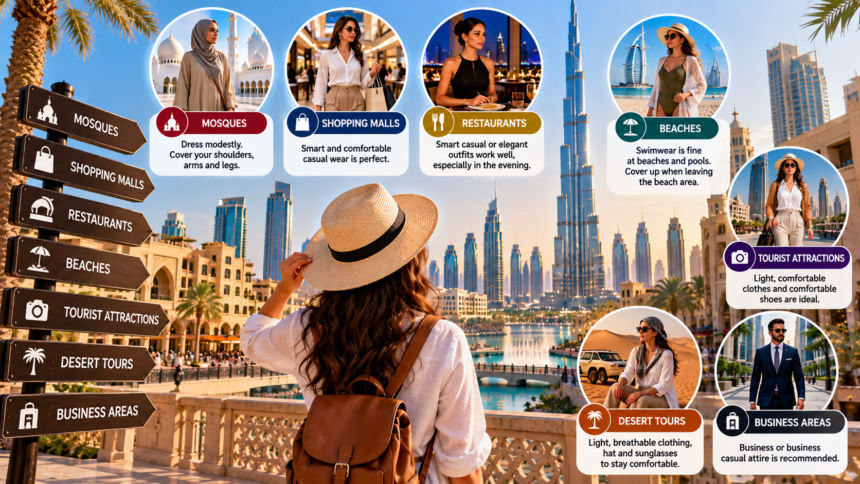
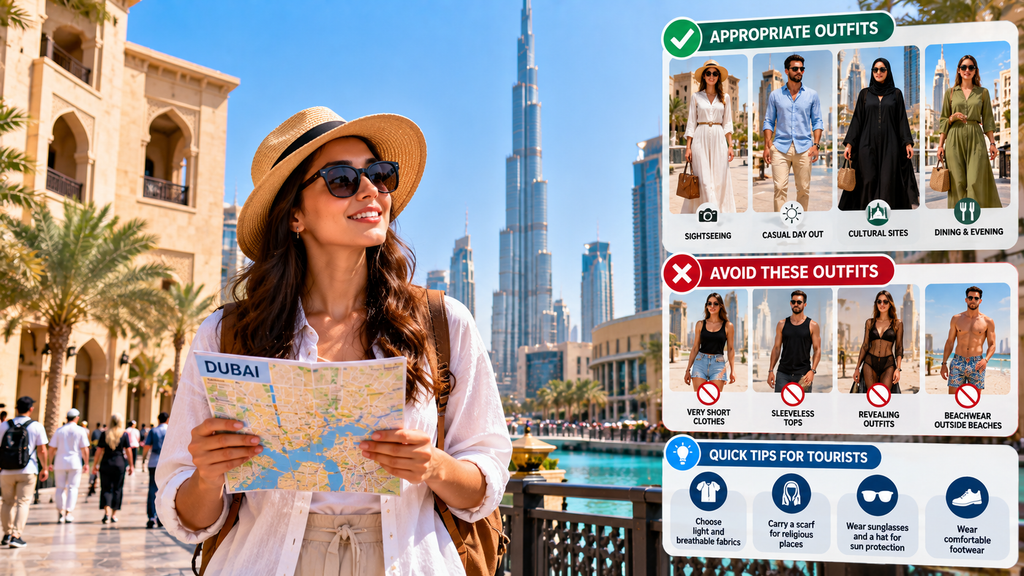
Dubai’s official tourism guidance says almost all types of attire are generally accepted because the city is highly multicultural. However, visitors are encouraged to dress more conservatively in historical areas, cultural attractions and places of worship. Swimwear is appropriate at beaches, pools, waterparks and spa areas, but it is not considered suitable in places such as shopping malls or business districts.
The weather is another major factor. Dubai can be extremely hot during summer, so lightweight and breathable clothing is usually the most comfortable choice outdoors. At the same time, malls, hotels, restaurants and other indoor venues can be strongly air-conditioned, making a light jacket, cardigan or shawl surprisingly useful.
This guide explains what tourists can wear in different parts of Dubai, including malls, beaches, mosques, restaurants, desert safaris and heritage areas. It also covers practical packing advice for both men and women so you can stay comfortable while respecting local customs.
What Tourists Should Know About Dubai Dress Expectations
Dubai does not require tourists to dress in traditional Emirati clothing.
Visitors are generally free to wear normal holiday clothes, and Dubai’s official tourism guidance describes the city as a cosmopolitan destination where a wide variety of clothing is accepted.
However, the setting matters.
A swimsuit that is completely normal beside a hotel pool would not be suitable for walking through a shopping mall. Similarly, casual shorts may be fine for many tourist attractions but may not be appropriate when entering a mosque.
A simple rule is to think about three things:
- Where you are going
- What activity you are doing
- Whether the place has a cultural or religious significance
Modesty is mainly about context
Tourists do not need to wear long sleeves and trousers everywhere.
However, more modest clothing is appreciated in places such as:
- Mosques
- Heritage districts
- Museums
- Government buildings
- Traditional neighbourhoods
- Religious attractions
Visit Dubai advises covering the shoulders and knees, or choosing loose-fitting clothing, when visiting cultural and heritage areas.
Avoid offensive clothing
Official tourism guidance also advises visitors not to wear clothing containing offensive slogans, images or material that could insult religions, faiths or cultures.
This is a sensible rule anywhere, but it is particularly important in a multicultural city.
You do not need to copy local dress
Visitors will frequently see Emirati men wearing the kandora and Emirati women wearing the abaya. These are important expressions of local identity and culture, but tourists are not expected to dress the same way.
Normal tourist clothing is appropriate when worn with awareness of the setting.
How to Dress in Dubai as a Tourist at Malls and Public Places
Dubai’s shopping malls are major tourist attractions in their own right.
Visitors may spend several hours in places such as Dubai Mall, Mall of the Emirates or other large shopping and entertainment destinations.
For malls and everyday public areas, smart casual or relaxed holiday clothing usually works well.
Good options include:
- T-shirts
- Polo shirts
- Blouses
- Casual dresses
- Jumpsuits
- Jeans
- Trousers
- Knee-length shorts
- Skirts
- Comfortable shoes
Visit Dubai recommends bringing clothing that covers the shoulders and midriff for public areas and notes that modest dress is appreciated in malls and other public spaces.
What women can wear
Women can normally wear:
- Dresses
- Skirts
- Jeans
- Trousers
- T-shirts
- Blouses
- Jumpsuits
- Shorts
There is no requirement for female tourists to wear an abaya or headscarf while moving around normal tourist areas. Visit Dubai specifically notes that women are not required to follow a special general dress code and can choose comfortable clothing suitable for the activity and season.
However, extremely revealing beachwear is better kept for beaches and pools.
What men can wear
Men can comfortably wear:
- T-shirts
- Polo shirts
- Shirts
- Jeans
- Chinos
- Trousers
- Knee-length shorts
- Sneakers
- Sandals
Very casual beach clothing should generally stay at the beach or resort.
Air-conditioning can feel cold
One of the most useful packing tips for Dubai is to carry a light layer.
Indoor attractions and malls are heavily air-conditioned, and visitors who dress only for the outdoor heat can become uncomfortable inside.
Consider carrying:
- Light cardigan
- Thin jacket
- Shawl
- Overshirt
This is especially useful if you plan to spend several hours indoors.
What to Wear at Dubai Beaches, Pools and Waterparks
Beachwear is one area where tourists generally have considerable freedom.
Visit Dubai confirms that swimwear is acceptable at beaches, hotel pools, public pools, waterparks and spa areas.
Typical options include:
- Swimsuits
- Bikinis
- Swim shorts
- Rash guards
- Beach dresses
- Cover-ups
- Flip-flops
Wear a cover-up when leaving the beach
Once you leave the immediate beach, pool or waterpark environment, it is a good idea to cover up.
For example, if you are walking from the beach into:
- A shopping centre
- Hotel lobby
- Restaurant
- Public street
- Taxi area
put on a dress, T-shirt, shirt, shorts or other normal clothing.
Swimwear is specifically described as inappropriate in areas such as malls and business districts.
Public beach versus hotel beach
The basic principle is similar.
Beachwear is generally acceptable while using the beach.
At family-oriented public beaches, visitors may prefer slightly more conservative swimwear, while hotel pools and private beach clubs can sometimes have a more resort-style environment.
The important point is not to treat the entire city as a beach zone.
Sun protection matters
Dubai’s summer temperatures can rise above 40°C, so sun protection is just as important as dress etiquette. Visit Dubai recommends high-SPF sunscreen, hats and sunglasses for outdoor activities.
Useful items include:
- Wide-brimmed hat
- Sunglasses
- High-SPF sunscreen
- Lightweight cover-up
- Breathable shirt
If you spend long periods outdoors, covering your skin can sometimes be more comfortable than exposing it directly to intense sunlight.
What to Wear When Visiting Mosques and Heritage Areas
Religious and heritage sites require more careful clothing choices.
Visit Dubai recommends modest clothing for mosques and cultural attractions, including garments that cover the arms and legs. Women may also need to cover their hair when entering a mosque.
Mosque clothing for women
A practical outfit may include:
- Long trousers or full-length skirt
- Long-sleeved loose top
- Maxi dress with long sleeves
- Headscarf
- Closed or modest footwear
Some mosques provide abayas or other covering garments for female visitors. Bur Dubai Grand Mosque, for example, notes that abayas are provided to female guests on its visitor programme.
Still, bringing your own scarf is useful.
Mosque clothing for men
Men should generally choose:
- Long trousers
- Shirt or T-shirt covering shoulders
- Clothing covering the legs appropriately
- Modest, loose-fitting clothing
Visit Dubai recommends avoiding shorts and keeping ankles covered when entering mosques.
Heritage areas
Historic areas such as Al Fahidi Historical Neighbourhood and the old souks have a more traditional environment.
Official guidance recommends clothing such as:
- Sleeved tops
- Trousers
- Skirts past the knee
- Shorts past the knee
- Loose-fitting garments
This does not mean visitors need formal clothing.
Comfortable modest casualwear is normally enough.
Why carrying a shawl helps
A lightweight shawl is one of the most useful travel items in Dubai.
It can be used to:
- Cover shoulders
- Cover hair at a mosque
- Stay warm indoors
- Add modesty in heritage areas
It takes little space and makes it easier to adapt your outfit during the day.
How to Dress for Restaurants, Hotels and Dubai Nightlife
Dubai’s dining and nightlife scene ranges from casual beachfront restaurants to luxury rooftop venues and fine-dining destinations.
Your clothing should therefore match the venue.
Visit Dubai notes that stylish nightlife venues and high-end restaurants may expect guests to dress more fashionably, while laid-back beachfront places are generally more casual.
Casual restaurants
For casual restaurants, typical tourist clothing is usually fine.
Examples include:
- T-shirt and jeans
- Polo and chinos
- Casual dress
- Blouse and trousers
- Smart shorts
Fine dining
Luxury restaurants may prefer:
For men:
- Smart shirt
- Trousers
- Smart shoes
- Optional blazer
For women:
- Dress
- Elegant trousers and top
- Jumpsuit
- Smart footwear
Some venues may have their own dress rules, so it is worth checking before booking.
Nightlife
Dubai nightlife can be fashionable.
Popular clubs, rooftop lounges and luxury hotels may have requirements such as:
- Smart casual
- No sportswear
- No beachwear
- Closed shoes for men
- Dressier outfits
Visit Dubai notes that nightlife dress standards vary by venue, with upscale locations generally encouraging more stylish clothing.
Do not assume nightlife rules are the same everywhere
A beach bar may allow sandals and casual clothing.
A luxury lounge in DIFC or a five-star hotel may expect a much more polished appearance.
Always check the venue’s own policy.
What to Wear on a Dubai Desert Safari and Outdoor Activities
A desert safari requires very different clothing from a luxury restaurant or shopping mall.
Comfort should be the priority.
Visit Dubai recommends lightweight clothing and practical footwear for desert activities, while also noting that winter desert evenings can become considerably cooler.
Best clothing for a desert safari
Consider:
- Lightweight trousers
- Comfortable shorts
- Breathable T-shirt
- Loose shirt
- Jumpsuit
- Sportswear suitable for heat
- Sneakers or secure sandals
If you plan to ride a camel, dune buggy or quad bike, trousers or shorts may be more practical than a long loose skirt.
Avoid difficult footwear
Flip-flops may be comfortable in the city but can be inconvenient in deep sand.
Better options include:
- Sneakers
- Secure sandals
- Lightweight walking shoes
Visit Dubai specifically notes that sandals or sneakers can be more practical because loose slippers may get caught in soft sand.
Winter desert trips
Dubai winter is mild in the city, but the desert can feel much colder after sunset.
Carry:
- Jacket
- Hoodie
- Light sweater
- Long trousers
This is particularly useful for evening safaris, overnight camps and early-morning balloon trips.
Other outdoor activities
For activities such as:
- Hatta hiking
- Cycling
- Walking tours
- Outdoor markets
choose breathable, practical clothing.
Sun protection should remain part of your outfit.
What to Pack for Dubai in Summer and Winter
Dubai’s seasons should influence what goes into your suitcase.
Summer packing
Dubai summers are extremely hot.
Lightweight fabrics such as cotton and linen can be more comfortable outdoors.
Useful summer items include:
- Light T-shirts
- Loose shirts
- Breathable dresses
- Shorts
- Lightweight trousers
- Swimwear
- Sandals
- Sneakers
- Hat
- Sunglasses
- Light cardigan for indoors
Visit Dubai notes that temperatures can exceed 40°C during summer, making lightweight clothes and sun protection particularly important.
Winter packing
Dubai’s cooler period generally runs from around November to April.
Visit Dubai notes average daytime highs around 25°C in this period, while some evenings can fall to around 14°C.
You may want:
- T-shirts
- Dresses
- Shorts
- Jeans
- Lightweight trousers
- Sweater
- Light jacket
- Closed shoes
Beachwear is still useful because winter days can remain warm enough for swimming.
Simple packing table
| Activity | Recommended Clothing |
|---|---|
| Shopping mall | Casual modest clothing + light layer |
| Beach | Swimwear + cover-up |
| Mosque | Arms and legs covered, headscarf for women |
| Heritage district | Shoulders and knees covered |
| Desert safari | Breathable practical clothing |
| Fine dining | Smart casual or formal depending on venue |
| Nightlife | Stylish outfit based on venue rules |
| Winter evening | Light jacket or sweater |
Packing versatile clothing makes it easier to move between different activities in one day.
Common Clothing Mistakes Tourists Should Avoid in Dubai
Most visitors have no difficulty with Dubai’s dress expectations.
Problems usually occur when clothing is inappropriate for the setting rather than because tourists wear ordinary Western clothing.
Mistake 1: Wearing swimwear away from the beach
Bikinis, swimming costumes and swimming shorts belong at:
- Beaches
- Pools
- Waterparks
- Spa areas
Put on normal clothing when leaving those areas.
Mistake 2: Dressing for the heat but forgetting indoor temperatures
Outdoor Dubai can be extremely hot while indoor spaces can feel cold.
Carry a light layer.
Mistake 3: Arriving at a mosque in shorts
Mosques generally require more conservative clothing.
Men and women should expect to cover arms and legs appropriately, and women may need a headscarf.
Mistake 4: Assuming every restaurant is casual
Many Dubai restaurants are relaxed, but luxury restaurants and nightlife venues can have their own dress codes.
Check before visiting.
Mistake 5: Wearing offensive slogans
Avoid clothing that includes insulting language, offensive imagery or material disrespectful to religions or cultures.
Mistake 6: Overpacking formal clothes
Dubai can be glamorous, but tourists do not need luxury fashion every day.
Comfortable casual clothing works for most sightseeing.
Mistake 7: Thinking women must wear traditional clothing
Women visiting Dubai are not generally required to wear an abaya or headscarf for normal sightseeing. A head covering may be required at certain mosques or religious sites.
A Simple Dubai Tourist Clothing Checklist
The easiest way to prepare is to pack clothing that can be adapted to several settings.
For women
Consider packing:
- T-shirts
- Blouses
- Lightweight dresses
- Maxi dress
- Jeans
- Loose trousers
- Knee-length shorts
- Swimwear
- Beach cover-up
- Comfortable sandals
- Sneakers
- Smart outfit
- Light cardigan
- Shawl or scarf
For men
Consider:
- T-shirts
- Polo shirts
- Casual shirts
- Lightweight trousers
- Jeans
- Knee-length shorts
- Swim shorts
- Sneakers
- Sandals
- Smart trousers
- Smart shirt
- Light jacket
Useful accessories
- Sunglasses
- Hat
- Sunscreen
- Light scarf
- Comfortable walking shoes
Before leaving your hotel, ask:
- Am I going to a mosque?
- Am I visiting a heritage area?
- Will I spend time at the beach?
- Does my restaurant have a dress code?
- Will I be indoors for several hours?
- Am I going to the desert?
- Do I need a light jacket?
- Is my clothing suitable for the activity?
Learning how to dress in Dubai as a tourist is much simpler than many first-time visitors expect. Dubai is highly international, and tourists can wear most of the clothing they would normally choose for a warm-weather holiday. The most important principle is to dress according to the setting.
Casual clothes are suitable for most sightseeing and shopping. Swimwear is appropriate at beaches and pools but should be covered when moving into normal public spaces. Heritage areas call for slightly more modest outfits, while mosque visitors should cover arms and legs, with women also prepared to cover their hair.
Comfort also matters. Dubai’s heat makes lightweight clothing useful, while strong indoor air-conditioning means a cardigan or shawl can be surprisingly valuable. During winter evenings and desert trips, a light jacket may also be necessary.
There is no need to overcomplicate your packing. Bring comfortable clothes, one or two modest options, suitable swimwear, a smart outfit for evenings and a lightweight layer for cooler indoor spaces.
By matching your clothing to the occasion and showing basic respect for local cultural and religious settings, you can explore Dubai comfortably without worrying unnecessarily about what to wear.
Do follow us on Instagram
Read More – How to Build a Personal Brand in the Gulf