




Common Mistakes to Avoid When Choosing a Dubai Neighborhood
Choosing where to live can shape almost every part of your experience in Dubai. Your neighborhood affects how long you spend commuting, how much you pay in rent, whether you need a car, how easy it is to reach supermarkets and schools and even how much time you have left at the end of the day.
- What to Look for When Choosing a Dubai Neighborhood for Your Lifestyle
- Compare the Commute Before Comparing Apartment Interiors
- Compare Rent With the Total Cost of Living in the Area
- Check Metro, Bus and Road Access
- Look at Supermarkets, Healthcare and Everyday Services
- Families Should Check Schools, Parks and Community Facilities
- Visit the Neighborhood During the Day and at Night
- Research the Building as Carefully as the Neighborhood
- Consider Future Construction and Development Around the Area
- Match the Neighborhood to Your Preferred Dubai Lifestyle
- A Practical Dubai Neighborhood Checklist
Understanding what to look for when choosing a Dubai neighborhood is therefore more important than simply finding an attractive apartment. A property can have a beautiful view, modern gym and large balcony but still become frustrating if the commute is long, parking is difficult or basic services are far away.
Dubai offers very different types of residential areas. Some neighborhoods are built around towers and public transport. Others offer villas, community parks and more space. Some are close to major business districts, while others may provide lower rents but require more daily travel.
Rent should also be considered carefully. Dubai Land Department’s Rental Index allows tenants to review average market rent and potential rental increases using details such as the area, property type, bedrooms and current annual rent. The service is available through DLD channels including Dubai REST.
Transport is equally important. The Roads and Transport Authority provides a Journey Planner that allows residents to compare Metro, bus, tram and marine routes and even choose options such as less walking or fewer interchanges.
The best neighborhood is therefore not automatically the most famous or expensive one. It is the area that fits your work, family, transport needs, budget and preferred lifestyle.
What to Look for When Choosing a Dubai Neighborhood for Your Lifestyle
The first step is defining how you actually live.
Two people earning the same salary may need completely different neighborhoods.
A single professional working in DIFC may value:
- Short commute
- Metro access
- Restaurants
- Gym
- Apartment living
A family with children may prioritise:
- Schools
- Larger home
- Parks
- Quiet streets
- Parking
Start with your normal week
Ask yourself:
- Where do I work?
- How often do I commute?
- Do I drive?
- Do I use Metro?
- Do I have children?
- How often do I go out?
- Do I prefer busy or quiet areas?
Your answers should guide the search.
Separate needs from preferences
Needs may include:
- Affordable rent
- Reasonable commute
- School access
- Parking
- Supermarket
Preferences may include:
- Marina view
- New building
- Large balcony
- Rooftop pool
Preferences are important, but they should not push essential requirements outside your budget.
Think about the full year
A neighborhood may look excellent during a short viewing.
Ask whether it still works:
- During summer
- During rush hour
- At weekends
- When visitors arrive
- When you need groceries late at night
The neighborhood needs to work as a place to live, not just as a property-listing photo.
Compare the Commute Before Comparing Apartment Interiors
The daily commute can have a bigger effect on quality of life than an extra bedroom or nicer building lobby.
A long commute can mean:
- More fuel
- More tolls
- More taxis
- More time in traffic
- Less free time
Measure door-to-door travel
Do not simply check the distance in kilometres.
Ten kilometres in one part of Dubai may take less time than five kilometres in another during busy periods.
Test:
Home
to workplace entrance
rather than:
Neighborhood
to business district.
Use RTA journey planning
RTA’s Journey Planner allows users to compare travel using:
- Metro
- Bus
- Tram
- Marine services
and includes options such as less walking and fewer interchanges.
This can be useful before committing to an area.
Test the journey during working hours
If possible, visit the neighborhood around the time you normally commute.
A road that appears empty at midday may become heavily congested at 8 AM.
Calculate time annually
Suppose Neighborhood A gives you a:
25-minute commute
Neighborhood B gives you:
60 minutes
Difference each way:
35 minutes
Round trip difference:
70 minutes per day
Over 20 working days:
More than 23 extra hours each month.
That is nearly one full day every month spent commuting.
Time should therefore be part of the housing calculation.
Compare Rent With the Total Cost of Living in the Area
Rent is often the largest household expense, but the cheapest apartment does not always create the cheapest lifestyle.
A lower-rent neighborhood may require:
- Car
- Fuel
- Parking
- Tolls
- Longer commute
A higher-rent neighborhood near work or public transport may reduce some of those expenses.
Example
Home A:
Annual rent: AED 70,000
Metro nearby
No car required
Home B:
Annual rent: AED 58,000
Car required
Home B saves:
AED 12,000 per year on rent.
But car-related costs could include:
- Finance
- Insurance
- Fuel
- Registration
- Parking
- Maintenance
The rent saving can disappear quickly.
Use the Rental Index
Dubai Land Department’s Rental Index lets users enter information such as:
- Contract end date
- Property type
- Area
- Bedrooms
- Current annual rent
to view rental-market information and potential rental increases.
Use this when comparing areas and later when reviewing a tenancy renewal.
Include moving and setup costs
A neighborhood change may also affect:
- Agency fee
- Deposit
- Furniture
- DEWA setup
- Internet installation
Do not compare only annual rent.
Set a comfortable maximum
Avoid searching at the absolute maximum amount you could technically afford.
Leave room in the budget for:
- Savings
- Travel
- Emergencies
- Lifestyle
A beautiful apartment becomes much less comfortable when it creates constant financial pressure.
Check Metro, Bus and Road Access
Transport access can transform a neighborhood.
Even residents who own a car may benefit from nearby public transport when traffic is heavy or parking is difficult.
Metro access
If Metro is important, check the actual walking route.
Do not rely only on:
“Near Metro”
in the listing.
Walk from the building entrance to the station.
Check:
- Walking time
- Pavement
- Road crossings
- Shade
- Construction
Dubai’s climate makes these details important.
Bus connections
Some communities without direct Metro access still have useful bus connections.
Use the RTA Journey Planner to see whether a route works for your daily schedule.
Road access
Drivers should check how quickly they can reach major roads.
Depending on the neighborhood, relevant routes may include:
- Sheikh Zayed Road
- Al Khail Road
- Sheikh Mohammed bin Zayed Road
A community may appear geographically close to your destination but require a complicated route to enter or exit.
Parking
Ask:
- Is parking included?
- Is it allocated?
- Is visitor parking available?
- Is street parking practical?
Parking can become a major daily frustration in busy neighborhoods.
Look at Supermarkets, Healthcare and Everyday Services
Convenience is one of the most overlooked factors when choosing an area.
People often focus heavily on:
- Pool
- Gym
- Building lobby
- View
but use the supermarket far more often.
Check walking distance to essentials
Look for:
- Supermarket
- Pharmacy
- Clinic
- Laundry
- Cafe
- ATM
A neighborhood becomes easier to live in when daily tasks do not require a car.
Do not confuse mall access with daily convenience
Living close to a major mall can be useful.
But you may still want:
- Small supermarket
- Pharmacy
- Local restaurant
within a few minutes.
Healthcare
Families and people with regular healthcare needs should check:
- Nearby clinic
- Hospital
- Pharmacy
Travel time becomes particularly important during urgent situations.
Food options
Look at whether the area has restaurants that fit your normal budget.
A neighborhood dominated by premium dining can make regular eating out more expensive.
Families Should Check Schools, Parks and Community Facilities
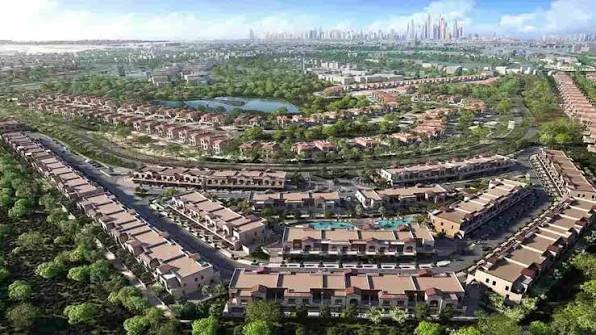
For families, choosing a Dubai neighborhood often involves more than the apartment itself.
School access can become one of the biggest practical considerations.
Calculate the school commute
A long school commute can affect both children and parents.
Consider:
- Morning traffic
- School bus availability
- Pickup time
- After-school activities
Try to avoid choosing a home and school that require crossing large parts of Dubai every day if possible.
Look for outdoor areas
Families may value:
- Parks
- Playgrounds
- Walking tracks
- Cycling paths
These can improve everyday quality of life without requiring paid entertainment.
Check nursery access
Families with younger children should also check:
- Nurseries
- Childcare
- After-school facilities
Think about future needs
If you plan to remain in the same neighborhood for several years, consider whether it will still work if:
- Children start school
- Family size grows
- You need another bedroom
Moving every year can become expensive and inconvenient.
Visit the Neighborhood During the Day and at Night
One visit is not enough to understand an area.
A neighborhood can feel completely different at:
- 10 AM
- 6 PM
- Midnight
Daytime visit
Check:
- Construction
- Traffic
- Sun exposure
- Shops
- Walking conditions
Evening visit
Check:
- Noise
- Parking
- Restaurants
- Crowds
- Lighting
Weekend visit
Some areas become extremely busy on weekends.
Others become very quiet.
Decide which environment you prefer.
Listen carefully
Check for noise from:
- Roads
- Construction
- Restaurants
- Nightlife
- Schools
- Mosques
- Aircraft
Noise tolerance is personal.
What feels lively to one tenant may feel exhausting to another.
Check the view realistically
If you are paying extra for:
- Sea view
- Skyline view
- Park view
visit the actual apartment rather than relying on promotional photographs.
Research the Building as Carefully as the Neighborhood
A good area does not guarantee a good building.
Two towers on the same street can offer very different living experiences.
Check maintenance
Look at:
- Lobby
- Corridors
- Lifts
- Parking
- Pool
- Gym
Poorly maintained common areas may indicate wider management problems.
Ask about air conditioning
Find out whether the property uses:
- Chiller-free arrangement
- Separate cooling charges
- Another district cooling setup
Cooling costs can materially affect the monthly budget.
Check the lifts
In high-rise buildings, lift reliability matters.
Visit during a busy period if possible.
Look at online reviews carefully
Reviews can reveal recurring complaints about:
- Maintenance
- Security
- Noise
- Lifts
Do not treat every individual review as fact, but repeated complaints can be useful signals.
Ask current residents
If possible, speak briefly with someone already living in the building.
Simple questions can be useful:
“How is maintenance?”
“Are the lifts reliable?”
“Is the building noisy?”
Real residents often reveal practical issues that do not appear in listings.
Consider Future Construction and Development Around the Area
Dubai develops quickly.
A quiet open plot beside your building may not remain empty.
Future construction can affect:
- Noise
- Dust
- Traffic
- Views
Look around the building
Check for:
- Empty plots
- Construction fencing
- Cranes
- Road projects
Ask the agent or landlord whether they know about nearby development, but verify important information independently where possible.
Do not pay permanently for a temporary view
An apartment may advertise:
“Open skyline view”
because the plot in front is undeveloped.
Future construction could change that.
This does not mean you should avoid the property.
It means the premium you pay for the view should be considered carefully.
Future transport can help
New transport infrastructure can improve an area over time.
However, choose a neighborhood based mainly on today’s reality.
An agent saying:
“Metro coming soon”
should not be your main reason for signing a lease unless the project is officially confirmed and the timing suits your plans.
Match the Neighborhood to Your Preferred Dubai Lifestyle
Dubai neighborhoods can feel very different from one another.
Some offer dense urban living.
Others feel more suburban.
There is no single correct lifestyle.
Urban tower lifestyle
May suit people who prefer:
- Restaurants nearby
- High-rise apartment
- Public transport
- Short commute
Areas such as Business Bay, Dubai Marina and JLT can fit versions of this lifestyle.
Established city neighborhoods
Areas such as Bur Dubai and Al Barsha can offer:
- Supermarkets
- Restaurants
- Services
- Established transport links
These can be practical for residents who value everyday convenience.
Community lifestyle
Newer master-planned areas can offer:
- Parks
- Schools
- Larger homes
- Family facilities
but may create greater car dependence.
Do not choose based on social media
A neighborhood can look attractive online but be completely wrong for your routine.
Choose based on:
- Daily needs
- Budget
- Commute
- Personality
rather than status.
A Practical Dubai Neighborhood Checklist
Use the same checklist for every area you consider.
Commute
- Workplace journey tested
- Peak traffic checked
- Metro or bus route reviewed
- Total travel time calculated
Housing cost
- Annual rent checked
- Rental Index reviewed
- Deposit included
- Agency fee considered
- Cooling/utilities estimated
Transport
- Metro walking distance checked
- Bus access checked
- Road access checked
- Parking checked
Everyday needs
- Supermarket nearby
- Pharmacy nearby
- Clinic/hospital accessible
- Restaurants available
Families
- Schools checked
- Nursery checked
- Parks available
- School commute tested
Building
- Maintenance checked
- Lift condition checked
- Security checked
- AC/cooling arrangement understood
Environment
- Daytime visit completed
- Evening visit completed
- Traffic noise checked
- Construction checked
- Future development considered
Simple neighborhood comparison
| Factor | Area A | Area B | Area C |
|---|---|---|---|
| Annual rent | Check | Check | Check |
| Work commute | Check | Check | Check |
| Metro access | Check | Check | Check |
| Parking | Check | Check | Check |
| Supermarkets | Check | Check | Check |
| Schools | Check | Check | Check |
| Noise | Check | Check | Check |
| Building quality | Check | Check | Check |
Understanding what to look for when choosing a Dubai neighborhood helps you focus on the factors that will affect everyday life long after the excitement of viewing apartments disappears.
Start with the commute.
RTA’s official Journey Planner makes it possible to compare Metro, bus, tram and other public transport options before you choose a home.
Then consider the total housing cost rather than rent alone. Dubai Land Department’s Rental Index can help tenants review market rent and potential rental increases based on the property and location.
Look carefully at everyday convenience.
A supermarket, pharmacy and practical transport connection may improve your quality of life more than an impressive lobby or rooftop pool.
Families should consider schools and parks, while professionals should pay particular attention to commute time and transport reliability.
Visit the neighborhood more than once.
See it during rush hour.
See it at night.
Check noise, parking, construction and traffic.
Finally, remember that there is no universally perfect Dubai neighborhood.
The most popular area may not be the most practical one for you.
The best neighborhood is the place where your rent, commute, daily needs and preferred lifestyle fit together comfortably enough that living in Dubai becomes easier rather than more complicated.
Do follow us on Instagram
Read More – How to Inspect an Apartment Before Moving In