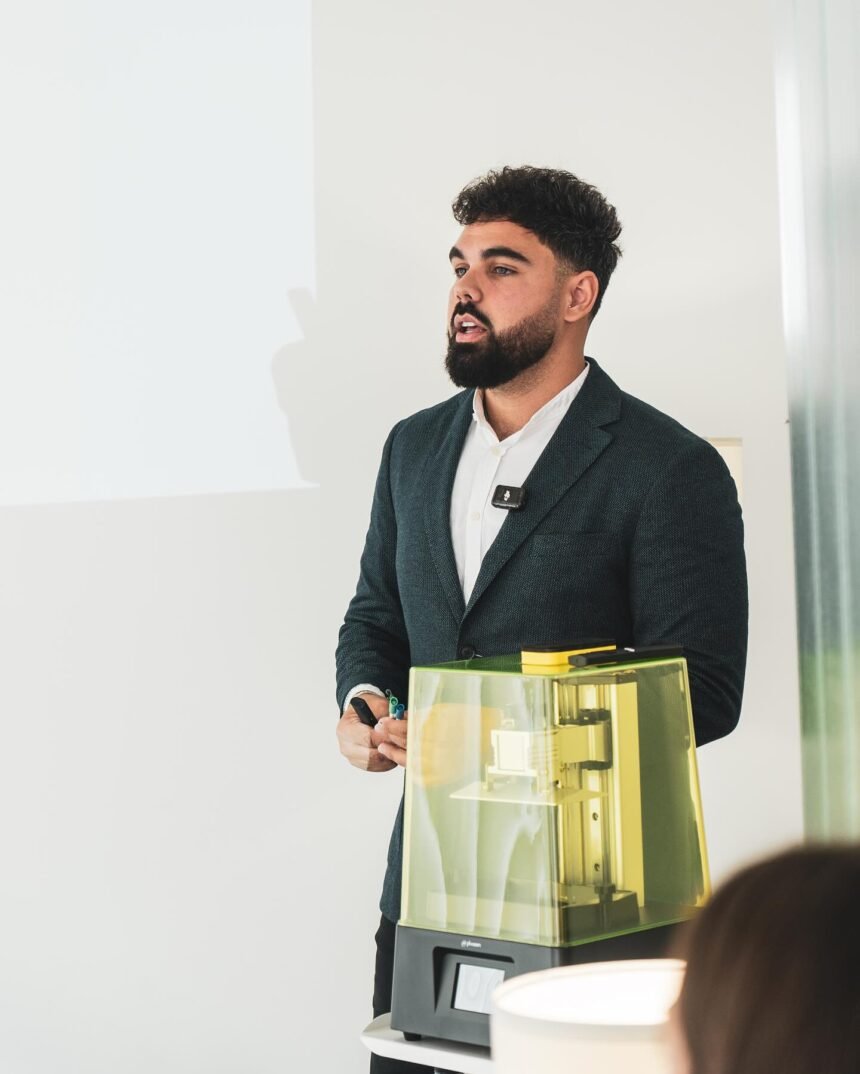
Reveals the Technology Transforming Modern Dental Clinics
The future of dentistry is changing, and technology is becoming an important part of that transformation. From digital treatment planning to customized dental solutions, modern tools are helping dental professionals rethink how they work and serve their patients.
- Building a Professional Identity Around Dental Innovation
- Making 3D Printing Accessible to Dentists
- Understanding the Challenges Behind Digital Transformation
- Helping Clinics Explore New Clinical Possibilities
- Growing an Audience Through Educational Content
- The Importance of Learning Before Investing
- Mikel Ruiz Torres Connecting Technology With Professional Confidence
- Creating Opportunities for Modern Dental Practices
- Looking Toward the Future of Digital Dentistry
- An Inspiring Message for the Next Generation
Among those contributing to this shift is Mikel Ruiz Torres, a professional focused on helping dentists understand and implement 3D printing technology in their dental clinics.
Through his digital presence, Mikel introduces dental professionals to the possibilities of 3D printing, encouraging them to explore practical ways of bringing innovation into their daily clinical routines.
His work reflects an important message for modern dentistry. Technology becomes truly valuable when professionals understand how to use it with confidence.
Building a Professional Identity Around Dental Innovation
Every professional journey begins with an interest that gradually develops into a meaningful direction.
For Mikel, that direction is closely connected to dental technology and the opportunities created by digital manufacturing.
Rather than presenting 3D printing as a complicated concept reserved for technology specialists, he focuses on making it more approachable for practicing dentists.
His professional message is clear. Dental clinics can benefit from understanding how modern printing systems fit into their existing workflows.
This educational approach helps position Mikel within a growing community of professionals who believe that the future of dentistry depends on both technical knowledge and practical implementation.
Making 3D Printing Accessible to Dentists
Introducing new technology into a dental clinic is not always simple.
Dentists often have to consider equipment costs, staff training, available space, software compatibility and the time required to learn unfamiliar processes.
For professionals already managing busy patient schedules, these decisions can feel overwhelming.
Mikel addresses this challenge by focusing on the implementation of 3D printing within dental practices.
His work encourages dentists to move beyond simply hearing about new technologies and begin understanding how they can be applied.
The objective is not technology for its own sake. It is helping professionals identify tools that support their clinical needs and business goals.
Understanding the Challenges Behind Digital Transformation
Innovation often looks exciting from the outside, but implementing it requires patience, preparation and continuous learning.
A dentist interested in 3D printing may initially struggle to understand which printer to choose, what materials are appropriate and how different digital systems work together.
There are also questions about maintenance, accuracy, clinical indications and the reliability of printed dental products.
These are important considerations because dental technology must meet professional standards while supporting patient safety.
Mikel’s educational focus speaks to these real challenges.
By concentrating on practical adoption, he contributes to a conversation about making dental innovation more understandable and manageable for everyday practitioners.
Helping Clinics Explore New Clinical Possibilities
Dental 3D printing has introduced new possibilities across several areas of dentistry.
Depending on the equipment, materials and approved clinical applications, practices may use the technology to manufacture dental models, surgical guides, custom trays and certain temporary or definitive dental appliances.
These applications can help clinics develop more controlled digital workflows and reduce dependence on some traditional manufacturing processes.
However, successful implementation requires more than purchasing a printer.
Dentists must understand digital scanning, design software, printing procedures, cleaning, curing and quality control.
Mikel’s professional niche is connected to this broader process of turning digital possibilities into practical clinical knowledge.
Growing an Audience Through Educational Content
Social media has become an important platform for professionals who want to share specialized knowledge with a wider audience.
Through his Instagram presence under the name Mikelconekta, Mikel has developed a community of approximately 13,400 followers.
His profile communicates a specific professional mission: helping dentists implement 3D printing in their clinics.
This focused positioning distinguishes his online identity from general lifestyle or business content.
Instead of speaking to everyone, Mikel addresses a particular professional audience with a shared interest in improving dental workflows.
His digital presence demonstrates how specialized educational content can connect people around practical industry challenges and emerging opportunities.
The Importance of Learning Before Investing
One of the biggest mistakes professionals can make when adopting technology is assuming that expensive equipment automatically produces better results.
In reality, the success of dental 3D printing depends heavily on knowledge, workflow planning and appropriate training.
Understanding the differences between printers, resins and post-processing requirements is essential before making an investment.
Clinics also need to evaluate whether their patient demand and treatment services justify the technology.
Mikel’s emphasis on learning is especially relevant in this environment.
His professional message encourages dentists to develop understanding before making decisions that could influence their clinical operations and long-term financial commitments.
Mikel Ruiz Torres Connecting Technology With Professional Confidence
Confidence plays an important role in professional development.
Even experienced dentists may feel uncertain when entering unfamiliar areas of digital technology.
Learning new software, understanding manufacturing procedures and adapting established routines can require significant effort.
Educational guidance can make that transition less intimidating by breaking complicated processes into understandable steps.
Mikel’s work represents the value of helping professionals approach innovation with greater clarity.
A useful principle behind this approach can be expressed through a simple message.
“Technology does not transform a dental clinic by itself. Real transformation begins when knowledge gives professionals the confidence to use it.”
For dentists exploring digital manufacturing, this idea highlights the importance of education alongside technological investment.
Creating Opportunities for Modern Dental Practices
The growing interest in digital dentistry is creating opportunities for clinics to reconsider how they deliver certain services.
In-house production may offer advantages in selected workflows, including greater control over scheduling, design adjustments and manufacturing processes.
However, the benefits vary according to each clinic’s equipment, experience, case volume and clinical requirements.
This makes informed decision-making especially important.
Mikel’s focus on dental 3D printing places him within an evolving professional field where technical education and responsible implementation are increasingly valuable.
His work reflects the broader movement toward more digitally connected dental practices.
Looking Toward the Future of Digital Dentistry
As dental technology continues to develop, professionals will need to keep updating their knowledge and adapting to new methods.
Advances in printing materials, digital design and manufacturing systems are likely to create further opportunities for dental clinics.
For Mikel, the central theme of his professional identity remains helping dentists learn how to implement these technologies.
His educational positioning offers a foundation for continued engagement with professionals interested in modernizing their practices.
The future of dentistry will depend not only on technological progress but also on the people who make that progress accessible.
An Inspiring Message for the Next Generation
Mikel’s professional journey illustrates how focusing on a specific industry challenge can create a meaningful identity.
By concentrating on 3D printing education for dentists, he demonstrates the value of specialized knowledge in an increasingly digital world.
His story also offers encouragement to professionals who want to explore unfamiliar technologies but hesitate because of the learning process.
Progress often begins with curiosity, followed by the willingness to develop new skills.
For Mikel, helping dental professionals understand digital manufacturing represents an opportunity to contribute to the evolution of modern dentistry.
His growing professional presence reinforces a simple idea: meaningful innovation begins when knowledge becomes practical action.
Follow Mikel Ruiz Torres on Instagram
Read More – FinTech Growth Across GCC Countries: How Digital Finance Is Transforming the Gulf