



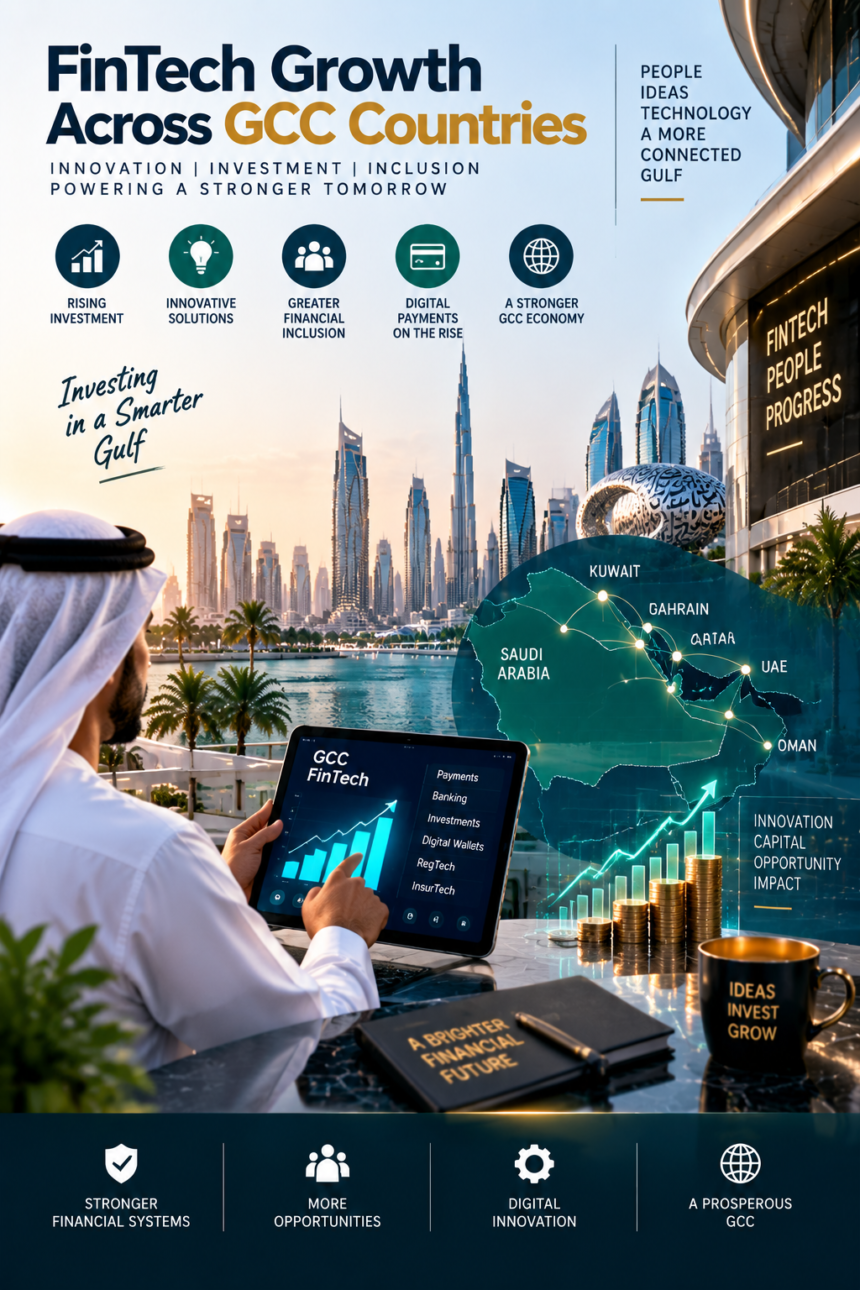
How GCC Countries Compare in FinTech Development
FinTech growth across GCC countries is changing the way people save, spend, borrow, invest and manage money. What was once a traditional banking region is now becoming one of the fastest-growing digital finance markets, driven by government innovation strategies, smartphone adoption, instant payments and rising demand for convenient financial services.
- Why FinTech Growth Across GCC Countries Is Accelerating
- GCC FinTech Market Is Expanding Beyond Payments
- The UAE Is Building One of the Region’s Strongest FinTech Ecosystems
- Dubai Is Becoming a FinTech Startup Destination
- Saudi Arabia Is Becoming a Major GCC FinTech Market
- Saudi Arabia’s FinTech Strategy Focuses on Financial Innovation
- Qatar Is Developing a Digital Finance Ecosystem
- Bahrain Has One of the Gulf’s Most Established FinTech Environments
- Oman Is Expanding Digital Finance Opportunities
- Kuwait Is Modernising Financial Services Through Technology
- Digital Banking Is Changing Traditional Finance
- Artificial Intelligence Is Becoming a Major FinTech Tool
- Open Banking Could Create More Financial Competition
- Buy Now, Pay Later Is Changing Consumer Finance
- Blockchain and Digital Assets Are Creating New Possibilities
- FinTech Is Supporting Small Businesses Across the GCC
- Challenges Facing GCC FinTech Growth
- How GCC Countries Compare in FinTech Development
- What the Future of GCC FinTech Could Look Like
- FinTech Growth Across GCC Countries Is Reshaping Finance
From digital banks in Saudi Arabia and the UAE to payment platforms in Bahrain, Qatar, Oman and Kuwait, financial technology is becoming a central part of the Gulf’s economic transformation.
The growth of fintech is also connected with wider diversification plans. GCC governments are investing in technology, entrepreneurship and digital infrastructure to reduce dependence on traditional economic models and create new industries.
Industry research has highlighted rapid expansion in GCC digital payments and fintech services, supported by government-led digital transformation programmes and changing consumer behaviour.
The future of Gulf finance is no longer limited to physical bank branches. It is moving toward mobile applications, artificial intelligence, automated investment tools, embedded finance and real-time financial services.
Why FinTech Growth Across GCC Countries Is Accelerating
Several factors are supporting the rapid rise of fintech across the Gulf.
The region already has strong banking systems, high internet penetration and digitally connected consumers. This gives fintech companies a strong foundation to introduce new financial products.
Unlike markets where fintech developed because traditional banking access was limited, GCC fintech is often growing alongside established banks.
The focus is not replacing banking completely. It is making financial services faster, simpler and more personalised.
Main Drivers Behind GCC FinTech Growth
| Growth Factor | Impact on Financial Services |
|---|---|
| Smartphone adoption | More customers using mobile banking |
| Digital payments | Faster and easier transactions |
| Government support | New regulations and innovation programmes |
| Young population | Higher demand for digital services |
| E-commerce growth | More online payment solutions |
| AI technology | Automated financial decisions |
| Open banking | Better connection between financial platforms |
| Startup investment | More fintech innovation |
This combination has created an environment where fintech companies can experiment, scale and partner with traditional financial institutions.
GCC FinTech Market Is Expanding Beyond Payments
Many people associate fintech only with digital payments, but the sector is much broader.
Payments were the first major growth area because consumers immediately saw the convenience of mobile wallets and instant transfers.
However, fintech across the GCC is now expanding into:
- Digital banking
- Personal finance management
- Wealth technology
- Insurance technology
- Lending platforms
- Buy now, pay later services
- Blockchain solutions
- Artificial intelligence-based financial tools
- Business payment solutions
Research from McKinsey highlights that MENA fintech companies are increasingly operating across areas including payments, lending, mortgages, wealth management, digital banking and buy-now-pay-later services.
This expansion means fintech is becoming part of the entire financial journey rather than only the final payment step.
The UAE Is Building One of the Region’s Strongest FinTech Ecosystems
The UAE has positioned itself as a major fintech hub in the Middle East.
Dubai and Abu Dhabi have developed specialised ecosystems connecting startups, investors, banks, regulators and technology companies.
The country’s approach combines innovation with regulation.
Instead of allowing fintech companies to grow without oversight, authorities have created frameworks where companies can test new financial products while maintaining consumer protection.
UAE FinTech Growth Areas
| Sector | Examples of Innovation |
|---|---|
| Payments | Instant transfers and digital wallets |
| Banking | Digital-first banking services |
| Investment | Automated wealth platforms |
| Insurance | Digital insurance solutions |
| Business finance | SME payment and lending tools |
| Blockchain | Digital assets and financial infrastructure |
The UAE’s fintech ecosystem is supported by initiatives such as regulatory sandboxes, financial innovation centres and digital payment infrastructure.
Dubai Is Becoming a FinTech Startup Destination
Dubai has become one of the region’s most recognised fintech locations.
The city attracts startups because of its international business environment, access to investors, global connectivity and large technology ecosystem.
The Dubai International Financial Centre (DIFC) has played an important role in developing fintech innovation through programmes supporting startups and financial technology companies.
Dubai’s fintech environment benefits from a combination of:
- Global investors
- International banks
- Technology companies
- Startup accelerators
- Financial regulators
- Skilled professionals
This ecosystem allows fintech companies to test products locally before expanding across the wider region.
Saudi Arabia Is Becoming a Major GCC FinTech Market

Saudi Arabia’s large population and rapid digital transformation have made it one of the most important fintech markets in the GCC.
The Kingdom has focused on increasing digital payments, encouraging fintech startups and modernising financial services under Vision 2030.
Saudi Arabia’s payment transformation has been particularly significant. Electronic payments accounted for 85 percent of retail payment transactions in 2025, according to Saudi Central Bank data.
Saudi FinTech Growth Areas
| Area | Development |
|---|---|
| Payments | Digital transactions replacing cash |
| Banking | Growth of digital banking services |
| Lending | New financing platforms |
| Investment | Digital wealth solutions |
| SMEs | Easier access to financial tools |
| Open banking | More connected financial services |
The Kingdom is also supporting fintech through licensing frameworks, innovation programmes and partnerships between banks and technology companies.
Saudi Arabia’s FinTech Strategy Focuses on Financial Innovation
The Saudi approach is not only about creating startups.
It also focuses on improving the entire financial ecosystem.
This includes:
Better consumer services:
Mobile banking, faster payments and easier financial management tools.
Support for businesses:
Digital solutions helping small companies manage payments, accounting and financing.
More competition:
New fintech companies encouraging traditional banks to improve services.
Financial inclusion:
Technology making financial products accessible to more people.
The result is a financial sector where traditional banks and fintech companies increasingly work together.
Qatar Is Developing a Digital Finance Ecosystem
Qatar has also been investing in fintech as part of its broader digital transformation.
The country has focused on improving payment infrastructure, encouraging innovation and supporting financial technology businesses.
Qatar’s financial sector benefits from strong banking institutions and government-backed technology initiatives.
Qatar FinTech Development Areas
| Focus Area | Growth Direction |
|---|---|
| Digital payments | Faster electronic transactions |
| Mobile banking | More app-based services |
| Financial innovation | Startup support |
| Security | Stronger digital protection |
| Business solutions | Better SME finance tools |
Qatar’s fintech development is closely linked with its goal of building a more digital economy.
Bahrain Has One of the Gulf’s Most Established FinTech Environments
Bahrain has built a strong reputation as an early fintech adopter in the GCC.
Its smaller size has allowed it to create a flexible environment where regulators and companies can work closely together.
The country has supported fintech through initiatives connected with the Central Bank of Bahrain and Bahrain FinTech Bay.
Bahrain’s FinTech Strengths
| Strength | Why It Matters |
|---|---|
| Regulatory flexibility | Easier testing of new ideas |
| Banking experience | Strong financial foundation |
| Startup support | Encourages innovation |
| Digital payments | Wider cashless adoption |
| Regional access | Gateway to GCC markets |
Bahrain’s strategy shows that a smaller market can still play an important role in regional fintech development.
Oman Is Expanding Digital Finance Opportunities
Oman is gradually strengthening its fintech ecosystem through digital banking, payment innovation and financial technology programmes.
The country’s fintech development is connected with wider economic diversification goals.
Key growth areas include:
- Digital payments
- Mobile banking
- SME financial tools
- Electronic commerce solutions
- Financial inclusion
Oman’s growing technology ecosystem creates opportunities for startups focused on solving regional financial challenges.
Kuwait Is Modernising Financial Services Through Technology
Kuwait has a strong banking sector and is increasingly integrating technology into financial services.
Digital payments, mobile banking and instant transfer systems are becoming more common.
The country’s fintech development is focused on improving customer experience while creating a more efficient financial system.
Kuwait FinTech Priorities
| Priority | Expected Impact |
|---|---|
| Digital banking | Easier customer access |
| Payment technology | Faster transactions |
| Financial regulation | Safer innovation |
| Business solutions | Better SME support |
| Data technology | More personalised services |
As regulations continue evolving, Kuwait is expected to see greater fintech participation.
Digital Banking Is Changing Traditional Finance
One of the biggest fintech developments across the GCC is the rise of digital banking.
Traditional banks are no longer competing only with other banks.
They are competing with technology companies that offer faster, simpler financial experiences.
Digital banks can provide:
- Mobile account opening
- Instant notifications
- Automated savings tools
- Digital customer support
- Personalised financial recommendations
- Paperless services
Research on GCC banking transformation highlights increasing customer preference for digital channels and mobile-first financial services.
The future bank may not be a building people visit regularly.
It may become an intelligent application that manages financial needs continuously.
Artificial Intelligence Is Becoming a Major FinTech Tool
AI is becoming one of the most important technologies shaping fintech.
Banks and fintech companies are using artificial intelligence for:
- Fraud detection
- Customer support
- Credit analysis
- Investment recommendations
- Risk management
- Personalised financial products
Instead of applying the same financial approach to every customer, AI can analyse patterns and create more customised experiences.
For example, an AI system could identify unusual spending behaviour, suggest saving opportunities or detect possible fraud before damage occurs.
The challenge will be ensuring that AI systems remain transparent, secure and fair.
Open Banking Could Create More Financial Competition
Open banking allows customers to securely share financial information between approved services.
This can help create new products because fintech companies can build services using banking data with customer permission.
Possible benefits include:
- Better budgeting apps
- More personalised loans
- Easier financial comparisons
- Improved business accounting tools
- Faster payment services
Across the GCC, regulators are increasingly exploring frameworks that encourage innovation while protecting customer data.
Open banking could become one of the next major stages of fintech development.
Buy Now, Pay Later Is Changing Consumer Finance
Buy now, pay later services have become increasingly popular because they allow customers to divide payments into smaller amounts.
These services are especially connected with:
- Online shopping
- Electronics purchases
- Fashion retail
- Travel bookings
For businesses, BNPL can increase customer flexibility.
For consumers, it can make expensive purchases easier to manage.
However, responsible usage remains important because easier access to payment options should not encourage unnecessary debt.
Blockchain and Digital Assets Are Creating New Possibilities
Blockchain technology is another area attracting attention across the Gulf.
Possible applications include:
- Faster settlements
- Digital identity
- Trade finance
- Smart contracts
- Asset tokenisation
GCC financial centres are exploring how blockchain can improve efficiency while maintaining regulatory standards.
The focus is increasingly on practical financial applications rather than technology experimentation alone.
FinTech Is Supporting Small Businesses Across the GCC
Small businesses often face challenges accessing traditional financial services.
Fintech platforms are helping solve some of these problems through:
- Digital payment systems
- Online accounting tools
- Automated financing solutions
- Business banking applications
- Invoice management platforms
For entrepreneurs, these tools can reduce administrative work and improve access to financial information.
How SMEs Benefit From FinTech
| Challenge | FinTech Solution |
|---|---|
| Slow payments | Instant digital transfers |
| Limited financing | Alternative lending platforms |
| Manual accounting | Automated financial software |
| High banking complexity | Simple digital business accounts |
| Limited customer reach | Online payment acceptance |
This makes fintech an important part of entrepreneurship growth in the GCC.
Challenges Facing GCC FinTech Growth
Despite strong progress, fintech development still faces challenges.
Key Challenges
Cybersecurity risks:
More digital finance means greater responsibility for protecting customer data.
Regulatory balance:
Governments must encourage innovation while maintaining financial stability.
Talent shortage:
Fintech requires specialists in technology, finance and cybersecurity.
Consumer trust:
Users need confidence before adopting new financial products.
Market competition:
Startups must compete with large established banks.
Addressing these challenges will determine how quickly the sector matures.
How GCC Countries Compare in FinTech Development
| Country | Main FinTech Strength |
|---|---|
| UAE | Startup ecosystem, fintech hubs, digital banking innovation |
| Saudi Arabia | Large market, payment transformation, Vision 2030 support |
| Bahrain | Regulatory flexibility and fintech experimentation |
| Qatar | Digital finance infrastructure and innovation |
| Oman | Emerging fintech ecosystem and digital transformation |
| Kuwait | Banking strength and technology adoption |
Each country has developed a different fintech identity.
Together, they are creating a connected regional financial technology ecosystem.
What the Future of GCC FinTech Could Look Like
The next phase of fintech growth will likely focus on deeper integration between finance and technology.
Future developments may include:
- AI-powered financial assistants
- Fully digital banking experiences
- Instant regional payments
- More personalised financial products
- Automated investment services
- Blockchain-based financial infrastructure
- Greater financial access for businesses and consumers
The Gulf’s advantage is that many countries are building new systems while upgrading existing ones at the same time.
This allows them to combine traditional financial stability with modern technology.
FinTech Growth Across GCC Countries Is Reshaping Finance
FinTech growth across GCC countries is creating a new financial landscape where speed, convenience and technology are becoming central to everyday money management.
The UAE is building a global fintech ecosystem. Saudi Arabia is transforming payments and financial services through Vision 2030. Bahrain continues to support innovation through flexible regulation, while Qatar, Oman and Kuwait are strengthening digital finance infrastructure.
The region’s fintech journey is not only about creating new apps.
It is about changing how people interact with money.
From instant payments and digital banking to AI-powered financial tools and smarter business solutions, fintech is becoming one of the most important drivers of the Gulf’s digital economy.
The next generation of financial services in the GCC will likely be faster, more connected and increasingly personalised, creating a financial ecosystem designed around technology and customer experience.
Do follow us on Instagram
Read More – Digital Payments in the Gulf: How Cashless Living Is Changing Everyday Life