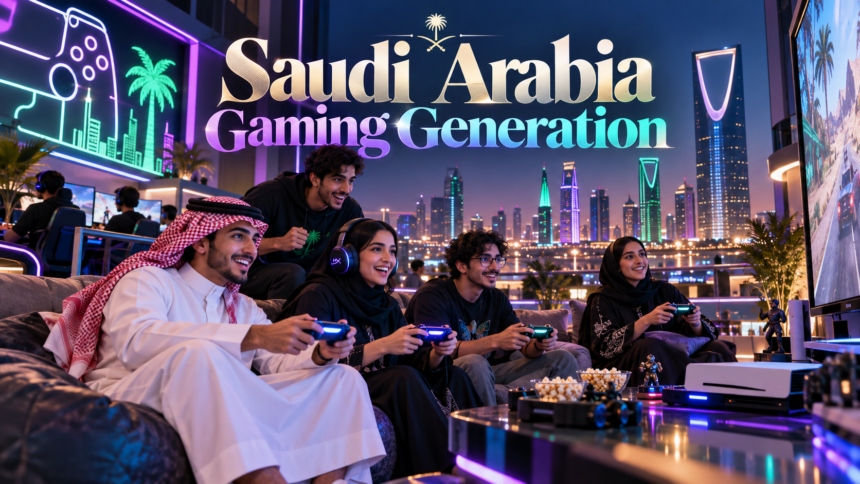
Mobile Games, Streaming and Esports: How Young Saudis Play and Watch
For many young people in Saudi Arabia, entertainment is no longer limited to watching television, visiting cinemas or spending time at shopping malls. A typical evening might involve playing an online game with friends, watching a livestream, following a favourite esports team or discussing gaming moments across social media platforms.
- Saudi Arabia Gaming Generation: Why Gen Z Is Leading the Shift
- 7 Ways Gen Z Is Transforming Gaming and Entertainment Culture in Saudi Arabia
- Mobile Games, Streaming and Esports: How Young Saudis Play and Watch
- Esports World Cup and Vision 2030: Saudi Arabia’s Gaming Ambitions
- The Business of Gaming: New Opportunities for Saudi Creators and Brands
- Challenges Facing Saudi Arabia’s Gaming Generation
- The Future of Saudi Arabia’s Gaming Generation and Frequently Asked Questions
What was once considered a hobby enjoyed mainly at home has developed into a much broader cultural experience. Gaming now connects communities, influences digital content, creates professional opportunities and attracts investment from major international businesses.
This transformation is helping define Saudi Arabia Gaming Generation, with Generation Z playing an important role in changing how entertainment is experienced, shared and monetised.
Born approximately between 1997 and 2012, Gen Z has grown up during a period of rapid technological development. Smartphones, online multiplayer games, video platforms and digital communities have been familiar parts of daily life for much of this generation.
In Saudi Arabia, high levels of internet access and a youthful population have created favourable conditions for gaming to become a major form of entertainment.
Research published by the Saudi Communications, Space and Technology Commission in 2026, covering internet use in 2025, demonstrates the popularity of gaming across different age groups. Its figures show especially strong participation in smartphone and console gaming among younger users.
Meanwhile, research cited by Saudi Awwal Bank in August 2026 estimated that Saudi Arabia had approximately 23.5 million active gamers in 2024, based on earlier industry data.
The figure includes players across different generations and should not be interpreted as the number of Gen Z gamers alone.
Beyond consumer behaviour, Saudi Arabia is also pursuing an ambitious gaming industry strategy.
The National Gaming and Esports Strategy aims to develop the Kingdom into a global industry centre by 2030, with targets involving economic growth, employment, professional players and domestic game development.
Major esports competitions, investment through Savvy Games Group and the expansion of local gaming organisations are helping establish a more visible industry.
Yet the cultural importance of gaming extends beyond tournament prize money or corporate investment. For young Saudis, games can provide spaces for friendship, competition, creativity, entertainment and self-expression.
Understanding this change reveals how the next generation is influencing the future of Saudi Arabia’s digital entertainment economy.
Saudi Arabia Gaming Generation: Why Gen Z Is Leading the Shift
Generation Z represents an important audience for modern gaming because its members have grown up with widespread access to connected devices and online entertainment.
For many young players, the distinction between digital entertainment and social interaction is less pronounced than it was for previous generations.
A multiplayer game may also function as a meeting place, while a livestream provides entertainment and opportunities to interact with an online community.
A Young and Connected Population
Saudi Arabia’s demographic structure provides an important foundation for the gaming market. A 2025 Deloitte report highlighted that approximately 63% of the country’s population was under 30, creating a substantial audience for digital entertainment and esports.
However, gaming is not exclusively a youth activity.
The Saudi Internet Report 2025 shows participation across several adult age groups, with smartphones remaining an important platform. Younger players nevertheless demonstrate particularly strong interest in consoles and competitive experiences.
Gaming as a Social Activity
Online multiplayer games allow participants to collaborate or compete with friends without being physically together.
Players can organise teams, develop strategies and participate in communities built around particular games. These interactions can continue through messaging applications, livestreams and social media.
This makes gaming different from entertainment formats that primarily involve passive viewing.
From Watching Entertainment to Participating in It
Traditional television programmes usually provide a completed experience for audiences. Games invite participants to make decisions, compete, communicate and influence what happens.
This interactive quality can make gaming appealing to people who want to feel actively involved in their entertainment.
The same principle is influencing broader digital culture, where audiences increasingly expect opportunities to interact with creators and communities.
Traditional vs Gaming-Led Entertainment
| Feature | Traditional Entertainment | Gaming-Led Entertainment |
|---|---|---|
| Audience Role | Mainly watching or listening | Playing, interacting and watching |
| Social Interaction | Often separate from the content | Frequently part of the experience |
| Content Schedule | Fixed programmes or events | Often available on demand |
| Community | Fan groups and social gatherings | Multiplayer groups and online communities |
| Revenue Sources | Advertising, tickets and subscriptions | Game sales, purchases, subscriptions and esports |
| Creator Opportunities | Presenters and performers | Streamers, players, commentators and developers |
The shift does not mean young Saudis are abandoning cinema, music or traditional entertainment. Gaming is becoming an additional cultural space that overlaps with many existing interests.
7 Ways Gen Z Is Transforming Gaming and Entertainment Culture in Saudi Arabia
The influence of Gen Z extends beyond the amount of time young people spend playing games. Their preferences can affect the technologies businesses develop, the events companies organise and the kinds of content creators produce.
Several overlapping trends help explain the changing entertainment landscape.
1. Gaming Is Becoming a Social Meeting Place
Multiplayer games allow friends to stay connected through shared activities. Instead of simply exchanging messages, players can participate in competitions, cooperative challenges and virtual events.
These experiences can strengthen existing friendships and introduce people to wider gaming communities.
However, online interaction should complement rather than automatically replace offline relationships and activities.
2. Mobile Gaming Is Expanding Access
Smartphones provide a relatively accessible entry point into gaming because many consumers already own suitable devices.
Games such as PUBG Mobile, Roblox and other mobile titles can reach audiences who do not own expensive gaming computers.
The popularity of mobile gaming also creates opportunities for developers working on shorter, accessible experiences.
3. Esports Is Becoming a Spectator Experience
Competitive gaming has developed into an organised entertainment format with professional teams, commentators, sponsors and large audiences.
Some fans follow esports in ways similar to conventional sports, supporting particular players and watching tournaments.
This creates new forms of entertainment that combine competition, personalities and digital broadcasting.
4. Gaming Creators Are Influencing Online Culture
Streamers and gaming content creators can attract audiences through gameplay, commentary, humour and personal interaction.
Their influence extends beyond game promotion. They can shape online conversations, introduce new titles and create communities around shared interests.
For brands, these creators offer access to audiences that may be less responsive to conventional advertising.
5. Gaming Careers Are Becoming More Visible
Professional esports players are only one part of the industry.
Young people may also pursue opportunities involving game development, graphic design, broadcasting, event management, marketing, animation and content creation.
However, interest in gaming does not automatically translate into a sustainable career. Training, professional skills and realistic employment expectations remain essential.
6. Local Culture Is Becoming Part of Game Development
Saudi developers have opportunities to create characters, stories and environments reflecting regional culture.
Arabic-language content and locally relevant storytelling may appeal to audiences who have historically encountered limited regional representation in major games.
The commercial challenge is to develop experiences that succeed through gameplay quality as well as cultural relevance.
7. Live Events Are Connecting Online and Offline Entertainment
Large gaming competitions bring digital communities into physical venues where fans can watch matches, meet other enthusiasts and participate in activities.
These events create opportunities for tourism, hospitality, merchandise and other services.
Seven Cultural Shifts Compared
| Trend | Gen Z Experience | Industry Opportunity |
|---|---|---|
| Social Gaming | Playing with friends | Community platforms |
| Mobile Gaming | Convenient access | Mobile game development |
| Esports | Following competitions | Events and sponsorship |
| Gaming Creators | Interactive entertainment | Digital content partnerships |
| Gaming Careers | New professional interests | Education and training |
| Local Storytelling | Cultural representation | Arabic-language games |
| Gaming Festivals | Shared live experiences | Tourism and hospitality |
These changes suggest that gaming is becoming a connected entertainment ecosystem rather than remaining a single product category.
Mobile Games, Streaming and Esports: How Young Saudis Play and Watch
Not all gamers participate in the same way. Some enjoy occasional mobile games, others prefer console-based competition, and a smaller group may invest considerable time in professional training or content production.
Understanding these differences is important for businesses seeking to reach younger Saudi audiences.
What Saudi Internet Research Reveals
The Communications, Space and Technology Commission’s Saudi Internet Report 2025, published in 2026, provides insight into gaming devices and usage patterns.
Its figures show that smart-device gaming and PlayStation gaming had broadly similar overall usage rates, at 22.1% and 21.8% respectively, under the report’s measurement categories.
Among the 20–29 age group, the report recorded 27.8% for smart devices and 28.9% for PlayStation. For users aged 10–19, the figures were 38.2% and 47.2% respectively.
These are age-group-specific platform measurements, not percentages of the entire Saudi population. They also should not be treated as an exact Gen Z breakdown because conventional generational boundaries do not align perfectly with survey age categories.
Gaming Platforms Compared
| Platform | Typical Appeal | Business Consideration |
|---|---|---|
| Smartphones | Convenience and accessibility | Mobile optimisation |
| Consoles | Dedicated gaming experiences | Game and hardware spending |
| Gaming PCs | Performance and customisation | Equipment costs |
| Livestreaming Platforms | Watching and interacting | Creator partnerships |
| Esports Venues | Shared competitive experiences | Events and ticketing |
The Growing Role of Streaming
Livestreaming allows audiences to watch gameplay while participating in online discussions.
Unlike conventional recorded entertainment, streams can create immediate interaction between creators and viewers.
This gives gaming creators an opportunity to establish ongoing relationships with their audiences, although commercial success varies widely.
Why Infrastructure Matters
Online multiplayer experiences depend on reliable connectivity and low latency.
Saudi Arabia’s Communications, Space and Technology Commission publishes Game Mode reports comparing online gaming performance across telecommunications providers.
Its third-quarter 2026 dashboard covers 19 online games and highlights improvements in gaming connectivity.
For players, better technical performance can make competitive experiences more responsive. For developers and event organisers, infrastructure can influence service quality and commercial opportunities.
Esports World Cup and Vision 2030: Saudi Arabia’s Gaming Ambitions
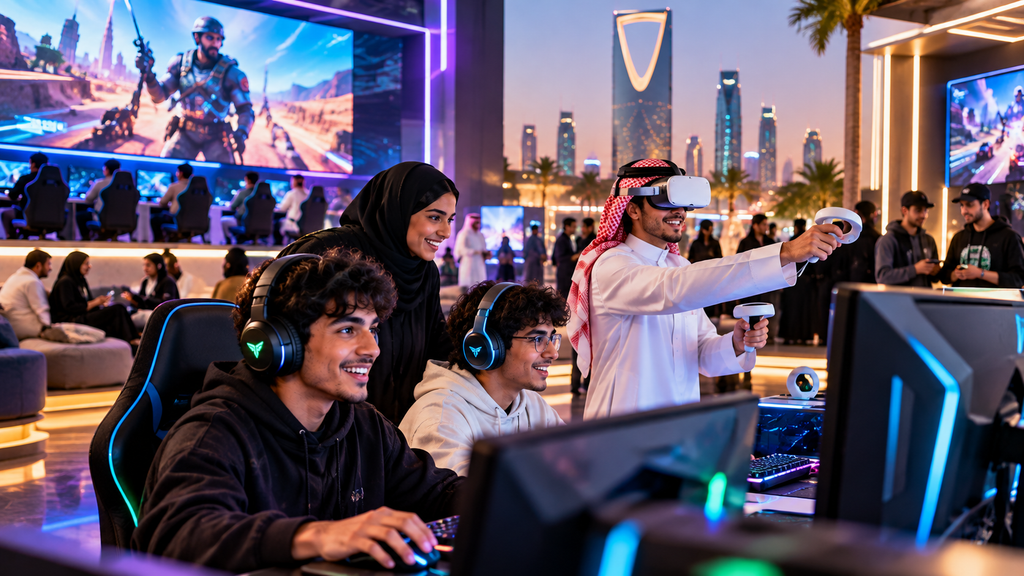
Saudi Arabia’s gaming transformation is not driven exclusively by consumer enthusiasm. Government-backed strategies and major industry investments are helping create an organised commercial ecosystem.
The National Gaming and Esports Strategy connects gaming with economic diversification, employment and new entertainment opportunities.
The National Gaming and Esports Strategy
Saudi Arabia’s strategy sets several targets for 2030, including an approximately SAR 50 billion contribution to GDP and more than 39,000 jobs.
It also includes ambitions to develop internationally competitive games through domestic studios and strengthen the country’s position in professional esports.
These figures are strategic targets rather than verified achievements.
The strategy identifies multiple initiatives involving investment, education, competitions and business development.
Savvy Games Group and International Investment
Savvy Games Group, established under the Public Investment Fund, operates through gaming investments, acquisitions and commercial ventures.
Its portfolio includes ESL FACEIT Group and Scopely, connecting Saudi-backed investment with established international gaming businesses.
The purpose extends beyond owning gaming companies. The broader ambition is to develop skills, commercial opportunities and a functioning industry ecosystem within Saudi Arabia.
However, international acquisitions do not automatically guarantee domestic job creation or a successful local development industry.
The Esports World Cup
Riyadh has become strongly associated with major international esports events.
Saudi authorities reported that the 2025 Esports World Cup attracted approximately three million visitors to Riyadh, including 300,000 international tourists, while recording substantial digital viewership.
The 2026 tournament programme has also featured international expansion, demonstrating the ambition to connect the Saudi esports ecosystem with audiences beyond the Kingdom.
For entertainment businesses, these competitions create opportunities involving broadcasting, sponsorship, ticketing, hospitality and tourism.
Saudi Gaming Strategy at a Glance
| Initiative | Intended Role |
|---|---|
| National Gaming and Esports Strategy | Develop the industry by 2030 |
| Savvy Games Group | Investment and industry development |
| Saudi Esports Federation | Competitive ecosystem and talent |
| Saudi Esports League | Domestic competitive opportunities |
| Esports World Cup | International events and audiences |
| Gaming Education Initiatives | Skills and workforce development |
Saudi Esports League 2026
In March 2026, the Saudi Esports Federation announced its 2026 league season with SAR 4 million in prize money.
The programme covered 23 esports games across four competitive formats and included a women’s league partnership.
Such competitions can provide development opportunities for players and teams, although only a limited number of participants will reach professional levels.
The Business of Gaming: New Opportunities for Saudi Creators and Brands
Saudi Arabia’s expanding gaming culture creates opportunities across entertainment, technology, advertising and related services.
However, the commercial potential of gaming should not be confused with guaranteed profitability.
Developers, creators and tournament organisers face competition, production expenses and changing audience preferences.
Game Development
Saudi studios can develop mobile, console and computer games for domestic and international markets.
Revenue may come from game purchases, subscriptions, in-game transactions or licensed content.
Successful development requires skilled teams, testing, marketing and ongoing technical support.
Content Creation and Streaming
Gaming creators may earn revenue through advertising, sponsorships, subscriptions or platform monetisation programmes.
However, most creators do not receive the same earnings as highly visible personalities.
Building a sustainable business requires audience engagement, consistent production and transparent commercial relationships.
Esports Events and Sponsorship
Tournament operators can generate revenue through partnerships, broadcasting agreements, ticketing and related activities.
Brands may value esports audiences because gaming communities often demonstrate strong interest in particular games and personalities.
Nevertheless, sponsors need to evaluate genuine reach and engagement rather than rely exclusively on headline viewing figures.
Illustrative Gaming Content Business Model
Consider a hypothetical Saudi gaming media business operating a video channel and organising small community events.
| Monthly Revenue or Expense | Hypothetical Amount |
|---|---|
| Platform and Advertising Revenue | SAR 12,000 |
| Brand Sponsorships | SAR 18,000 |
| Events and Community Activities | SAR 8,000 |
| Total Revenue | SAR 38,000 |
| Production and Editing | SAR 12,000 |
| Presenters and Freelancers | SAR 8,000 |
| Equipment and Software | SAR 3,000 |
| Marketing and Administration | SAR 6,000 |
| Operating Surplus Before Other Costs | SAR 9,000 |
These figures are hypothetical, not reported earnings for a Saudi company or typical creator income. Taxes, licensing obligations, financing and other costs could change the result.
Opportunities Beyond Playing Games
| Career Area | Skills Required |
|---|---|
| Game Development | Programming and design |
| Animation and Art | Visual storytelling and production |
| Esports Broadcasting | Presentation and live production |
| Gaming Journalism | Research, reporting and writing |
| Community Management | Communication and moderation |
| Tournament Operations | Event planning and logistics |
| Gaming Marketing | Audience analysis and advertising |
Saudi Arabia’s opportunity is therefore broader than producing professional gamers. The sector can potentially support employment across several creative and technical disciplines.
Challenges Facing Saudi Arabia’s Gaming Generation
The growth of gaming presents opportunities, but it also raises questions about healthy participation, digital safety, career expectations and the influence of commercial entertainment platforms.
A sustainable gaming culture needs to balance creativity and enjoyment with appropriate consumer protection.
Screen Time and Healthy Routines
Gaming can provide entertainment and social interaction, but excessive or poorly managed use may interfere with sleep, physical activity or other responsibilities.
The World Health Organization recognises gaming disorder as a condition involving impaired control, increasing priority given to gaming and continuation despite significant harm.
However, enjoying games regularly or spending several hours playing does not automatically mean someone has a disorder.
Online Safety and Privacy
Multiplayer games can expose participants to unwanted contact, harassment, scams and inappropriate content.
Younger users may need age-appropriate privacy settings, reporting tools and guidance about online communication.
Game companies and community organisers also have responsibilities to promote safer environments.
In-Game Spending
Many games offer optional purchases, subscriptions and digital rewards.
These systems can create financial pressure when spending is poorly understood or encouraged through aggressive marketing.
Clear pricing and appropriate parental controls can help families make informed decisions.
Career Expectations
Professional esports can appear attractive, particularly when major tournaments offer large prize pools.
However, competition is intense, and professional careers may be short or financially uncertain.
Young people interested in the industry should consider broader skills in development, production, design and business.
Industry Challenges Compared
| Challenge | Potential Concern | Practical Response |
|---|---|---|
| Excessive Play | Disrupted routines | Balanced schedules |
| Online Harassment | Negative experiences | Reporting and moderation |
| In-Game Spending | Unexpected expenses | Spending controls |
| Career Uncertainty | Unrealistic expectations | Skills development |
| Market Competition | Business failures | Sustainable planning |
| Limited Local Content | Underrepresentation | Support quality regional production |
The Future of Saudi Arabia’s Gaming Generation and Frequently Asked Questions
Saudi Arabia’s gaming industry is likely to remain an important area of investment and cultural development as the country pursues its 2030 objectives.
The combination of youthful audiences, digital infrastructure and major competitions creates opportunities for domestic businesses and international partnerships.
However, future growth will depend on commercial performance, skilled workers, consumer trust and the ability to develop games that audiences genuinely enjoy.
More Saudi-Developed Games
Domestic studios may increasingly explore stories, characters and settings connected to Saudi and wider Arab culture.
This could help broaden representation in an international industry historically dominated by other markets.
Commercial success will still require strong gameplay, creative quality and effective distribution.
Gaming as Mainstream Entertainment
Esports competitions, gaming creators and interactive experiences may become more integrated with tourism, advertising and live entertainment.
The distinction between watching games and participating in them could continue to evolve as platforms introduce new community features.
Frequently Asked Questions
Why is gaming popular among Saudi Gen Z?
Gaming combines entertainment, competition, social interaction and digital creativity. High connectivity and access to mobile and console platforms support participation.
How many gamers are there in Saudi Arabia?
Industry research cited in 2026 estimated approximately 23.5 million active gamers in 2024. The figure covers different age groups, not Gen Z alone.
What is Saudi Arabia’s gaming strategy?
The National Gaming and Esports Strategy aims to develop the industry through investment, employment, local game development and international competition by 2030.
Is esports a career option in Saudi Arabia?
Yes, but opportunities extend beyond professional playing to broadcasting, coaching, game development, marketing and event management.
What is the role of Savvy Games Group?
Savvy Games Group supports gaming industry development through investments, acquisitions and commercial initiatives under Saudi Arabia’s Public Investment Fund.
Does gaming replace traditional entertainment?
No. Gaming is expanding the available entertainment choices and overlapping with existing interests in sports, music, cinema and social events.
Can gaming have negative effects?
Gaming can create problems when it interferes significantly with health, responsibilities or wellbeing. Balanced participation and appropriate online safeguards are important.
Final Thoughts on Saudi Arabia’s Gaming Generation
Gaming has become an increasingly visible part of Saudi Arabia’s entertainment culture, especially among younger audiences who are accustomed to digital interaction and online communities.
For Gen Z, games are not simply products to purchase. They can be places to socialise, compete, create content and explore professional interests.
The industry’s development is also connected to Saudi Arabia’s wider economic ambitions, including investment, entertainment diversification and skills development.
Yet successful growth will require more than major tournaments and international acquisitions. Local creative talent, responsible business practices and sustainable career opportunities will remain essential.
Ultimately, Saudi Arabia’s Gaming Generation represents a cultural shift in which entertainment is becoming more interactive, connected and participatory.
The lasting impact may be measured not only by gaming revenue or esports audiences, but also by how effectively the Kingdom turns young people’s enthusiasm into creativity, innovation and meaningful opportunities.
Do follow us on Instagram
Read More – Functional Drinks and Low-Sugar Alternatives: What Is Changing in the UAE Beverage Market?