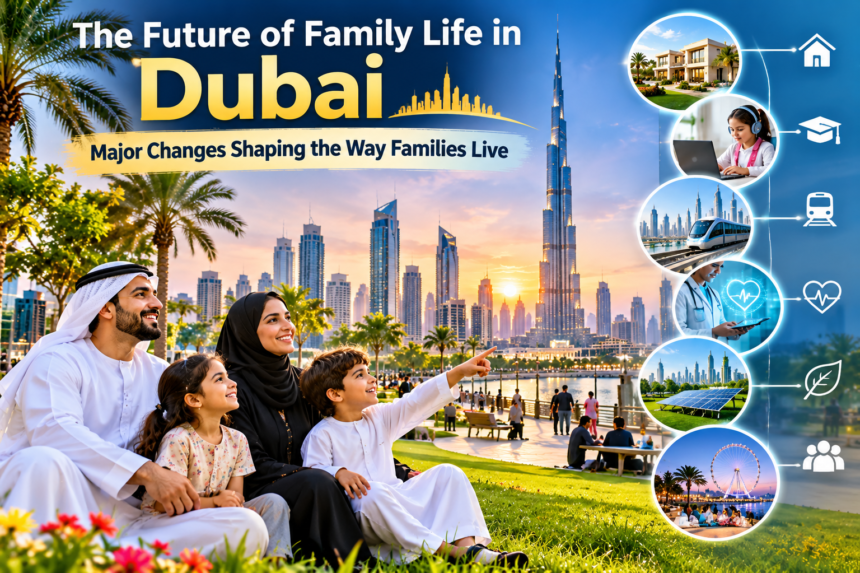
Changes Shaping the Future of Family Life in Dubai
Dubai has become one of the world’s most recognised cities for modern living, international business, education, tourism, and innovation. Its impressive skyline, modern residential communities, shopping destinations, and growing infrastructure attract families from different parts of the world. For many people, the city offers opportunities to build a career, provide children with an international education, and enjoy a comfortable lifestyle.
- 1. Family-Friendly Residential Communities Will Become More Important
- 2. Affordable Housing Will Remain a Major Family Priority
- 3. Education Will Shape the Next Generation of Dubai Families
- 4. Healthcare and Family Wellbeing Will Receive More Attention
- 5. Flexible Working Could Change How Families Spend Time Together
- 6. Parks, Beaches, and Outdoor Spaces Will Become Important Family Destinations
- 7. Community Connections Will Play a Bigger Role in Family Life
- 8. Technology Will Become a Bigger Part of Everyday Family Life
- 9. Multicultural Living Will Continue to Shape Family Experiences
- 10. Transport and Mobility Will Influence Family Convenience
- 11. Five Challenges That Could Influence the Future of Family Life
- 12. The Role of Dubai’s Family-Focused Development Plans
- Conclusion: The Future of Family Life in Dubai Is About More Than Modern Homes
- Frequently Asked Questions (FAQs)
However, family life in Dubai is changing beyond luxury homes and modern shopping malls. Today’s families are looking for more than attractive buildings. They want affordable housing, good schools, reliable healthcare, safe neighbourhoods, accessible parks, convenient transport, and enough time to spend together.
These expectations are influencing how the city plans its future. New residential communities, digital services, family support programmes, educational developments, and public spaces are becoming important parts of Dubai’s long-term growth.
The Dubai 2040 Urban Master Plan, Dubai Social Agenda 33, Education 33 Strategy, and Dubai Quality of Life Strategy 2033 all reflect different aspects of this development. Together, these initiatives show how the city is giving greater attention to housing, education, healthcare, family wellbeing, mobility, and community life.
The future will not look exactly the same for every household. Emirati families, expatriate families, young couples, single parents, and families with older members have different needs and priorities. Their experiences will also depend on income, employment, housing choices, and personal circumstances.
In this article, we explore 10 major changes that could shape the future of family life in Dubai, including housing, education, healthcare, technology, transport, community spaces, and the challenges families may face.
1. Family-Friendly Residential Communities Will Become More Important
One of the biggest changes shaping family life in Dubai is the growing importance of well-planned residential communities.
In the past, some families selected their homes mainly by considering the size of the property, monthly rent, and distance from work. Today, many households also consider the quality of the surrounding neighbourhood.
Parents may want a school nearby, children may need safe play areas, and older family members may prefer easy access to healthcare facilities. Working parents may also appreciate supermarkets, pharmacies, parks, and restaurants within a short distance.
Future residential communities are likely to place greater emphasis on these everyday needs.
A family-friendly neighbourhood may include:
- Schools and early learning centres.
- Children’s playgrounds and open spaces.
- Walking and cycling paths.
- Nearby supermarkets and pharmacies.
- Healthcare clinics and medical centres.
- Sports and fitness facilities.
- Community centres and social spaces.
- Reliable transport connections.
Dubai’s 2040 Urban Master Plan identifies vibrant, healthy communities with a range of housing and essential facilities as an important planning goal. It also aims to improve access to parks, open spaces, and public services.
This approach could make everyday life more convenient for families. Instead of travelling across the city for every activity, residents may have more opportunities to access essential services close to home.
However, successful family-friendly communities need more than attractive buildings. They also require maintenance, affordable services, safe roads, and facilities that are accessible to different age groups.
2. Affordable Housing Will Remain a Major Family Priority
Housing is one of the biggest expenses for many households in Dubai. Families need to balance accommodation costs with school fees, food, healthcare, transport, savings, and other daily expenses.
For expatriate families, housing decisions may also be affected by employment arrangements, contract length, and the possibility of relocating to another country.
As Dubai continues to grow, the availability of different housing options will remain important.
Future residential development may include:
- Smaller apartments for young couples and small families.
- Larger apartments with family-friendly layouts.
- Townhouses with shared outdoor facilities.
- Villas for households that need more space.
- Residential communities with nearby schools and shops.
- Rental properties with different budget levels.
The aim should be to provide suitable choices for different household sizes and income groups.
The importance of housing support
Dubai Social Agenda 33 includes housing and family stability among its priorities. The agenda has an announced budget of AED 208 billion and focuses specifically on protecting and empowering Emirati families in Dubai through initiatives connected with housing, healthcare, education, social cohesion, and future skills.
Its housing and family support measures should be understood in their intended context: many benefits under the agenda are designed for eligible Emirati families, not automatically for every expatriate household.
For the wider resident population, affordable private rentals, suitable housing supply, and access to essential services will continue to influence family decisions.
The future of family housing should therefore focus not only on building more homes but also on creating communities where different types of families can manage their living expenses comfortably.
Social Stability and Family Formation:
- Milestone for Citizens: Homeownership in Gulf societies is closely tied to social mobility, marriage, and starting a family.
- Mitigating Discontent: State-backed grants, interest-free loans, and free residential land allocations act as a social contract that alleviates public financial pressures and prevents social discontent.
3. Education Will Shape the Next Generation of Dubai Families
Education is one of the most important considerations for families choosing to live in Dubai.
The city has a diverse education sector, with private schools offering different curricula, teaching styles, languages, and extracurricular activities. Families can explore British, American, Indian, International Baccalaureate, and other educational pathways.
As the city develops, education is expected to focus increasingly on future skills, individual learning needs, creativity, and technology.
Education 33 Strategy
Dubai’s Education 33 (E33) Strategy is designed to transform the education system over the coming decade.
It focuses on five main areas:
- High-quality education for Emirati students.
- Accessible and equitable learning opportunities.
- Stronger involvement of parents and educators.
- Developing Dubai as a world-class education destination.
- Encouraging innovation and research.
The strategy also includes a series of initiatives aimed at improving learning experiences and helping students develop skills for the future.
For families, this direction could mean greater attention to personalised learning, student wellbeing, critical thinking, creativity, and the responsible use of technology.
Parents are also likely to remain important partners in children’s education. Schools may increasingly use digital platforms to share updates, monitor learning, communicate with families, and support students who need additional attention.
What may matter most to parents?
In the coming years, parents may look beyond examination results when choosing a school.
Other important factors may include:
- Student safety and wellbeing.
- Quality of teaching.
- Inclusive education and learning support.
- Technology and practical learning.
- Sports, arts, and extracurricular activities.
- Communication between parents and teachers.
- School location and transport arrangements.
- Overall tuition and additional costs.
Education will therefore remain a major part of family life, not just because children attend school but because it influences where families choose to live and how they plan their finances.
4. Healthcare and Family Wellbeing Will Receive More Attention
A comfortable family life depends on good health. Parents want reliable medical care for their children, while older family members may need regular check-ups and specialist services.
Dubai’s healthcare system includes hospitals, clinics, pharmacies, diagnostic centres, and specialist medical facilities. As the population grows, maintaining access to suitable healthcare will remain an important part of city planning.
Future family wellbeing may involve more focus on preventive healthcare rather than waiting until someone becomes ill.
This could include:
- Regular health screenings.
- Child healthcare and vaccination services.
- Maternal and family health support.
- Mental health awareness.
- Fitness and healthy lifestyle programmes.
- Digital medical appointments and health records.
- Greater awareness of nutrition and physical activity.
Dubai Social Agenda 33 identifies affordable healthcare, preventive care, physical health, and mental wellbeing as important areas for family development. Its broader aim is to strengthen family stability and improve quality of life.
The Dubai Quality of Life Strategy 2033 also places health and wellbeing among its major development areas.
For families, this means that the quality of a neighbourhood may increasingly be judged by how easily residents can reach suitable healthcare services.
Mental wellbeing is also important. Children may experience pressure from studies, while working parents can face stress from professional and family responsibilities. Supportive workplaces, community activities, and access to appropriate health services can all contribute to a healthier family environment.
5. Flexible Working Could Change How Families Spend Time Together
Work patterns have changed in recent years. Some professionals work from offices every day, while others follow hybrid or remote arrangements.
Flexible working can influence family routines because parents may have more control over when and where they complete certain tasks.
For example, a parent working from home may be able to manage school-related responsibilities more easily. A flexible schedule may also make it simpler to attend a medical appointment, participate in a school event, or spend time with children.
However, working remotely does not automatically create a better work-life balance. Families still need clear boundaries between working hours and personal time.
How working patterns may influence family life
- Parents may have more opportunities to organise school drop-offs and pick-ups.
- Some households may spend less time commuting.
- Families may be able to coordinate meals and daily activities more easily.
- Remote workers may look for homes with suitable office space.
- Employers may place greater attention on employee wellbeing and flexibility.
Dubai’s Quality of Life Strategy 2033 includes employment and work conditions among its focus areas. Its wider approach recognises that individual wellbeing is connected to work, health, relationships, education, and the surrounding urban environment.
The future of family life may therefore depend partly on how employers, employees, and institutions support reasonable working arrangements.
6. Parks, Beaches, and Outdoor Spaces Will Become Important Family Destinations
A good family lifestyle does not depend only on homes, schools, and workplaces. People also need spaces where they can relax and spend time together.
Parks, beaches, walking routes, cycling paths, and sports facilities help residents enjoy recreational activities without having to visit commercial entertainment venues every time.
Dubai’s 2040 Urban Master Plan aims to double the size of green and recreational areas. It also includes plans for green corridors that connect residential areas, workplaces, and service centres. These are long-term planning targets, rather than facilities that are already completed everywhere.
Why outdoor spaces matter to families
Public parks and open spaces offer opportunities for:
- Children to play and explore.
- Parents to walk and exercise.
- Families to have picnics.
- Teenagers to participate in sports.
- Older adults to enjoy outdoor activities.
- Neighbours to meet and socialise.
The Dubai Quality of Life Strategy 2033 includes plans to expand parks, improve public beaches, increase cycling tracks, and encourage walking. It also includes a focus on developing more accessible neighbourhood facilities.
Dubai’s hot climate makes outdoor planning particularly important. Shade, suitable seating, safe walking routes, drinking-water access, and good maintenance can make public spaces more comfortable.
For families, the availability of well-designed outdoor areas could become an important factor when choosing where to live.
7. Community Connections Will Play a Bigger Role in Family Life
Dubai is home to people from many nationalities, cultures, and professional backgrounds. This diversity creates a lively social environment, but families may sometimes find it difficult to build lasting relationships when relatives live in other countries or residents move frequently.
Community spaces and local activities can help people feel more connected to their neighbourhoods.
For Emirati families, traditional majalis have an important social role. These gathering places provide opportunities for conversation, hospitality, and community engagement.
Dubai has also introduced initiatives designed to strengthen neighbourhood connections.
In March 2026, Dubai announced further phases of its Community Majalis Project and launched Barzat Dubai, which aims to create community spaces for interaction among residents in neighbourhoods. The announcements were part of wider initiatives aligned with Dubai Social Agenda 33.
For the wider community, similar opportunities may come through:
- School events and parent groups.
- Sports clubs and fitness activities.
- Community festivals.
- Cultural exhibitions.
- Children’s workshops.
- Neighbourhood gatherings.
- Volunteering programmes.
These activities can help children develop friendships and allow parents to build supportive relationships.
The future of family life is not only about having a comfortable home. It is also about feeling connected to the people and places around you.
8. Technology Will Become a Bigger Part of Everyday Family Life
Digital technology is already a major part of life in Dubai. Families use mobile applications for shopping, food delivery, transport, banking, education, entertainment, and communication.
Over time, technology may become even more connected to household management and family routines.
Smart homes can help residents control selected household functions, while digital school platforms allow parents to communicate with teachers and follow children’s educational progress.
Technology may support family life through:
Smart home systems: Residents can manage lighting, cooling, security, and selected appliances through connected devices.
Digital education: Children may use online learning platforms, educational applications, and digital resources to support classroom learning.
Healthcare technology: Digital appointment services and health platforms can make selected healthcare tasks more convenient.
Online government services: Digital platforms may reduce the need for physical visits to complete certain administrative tasks.
Connected transport: Travel applications can help families check journeys, access transport information, and plan routes.
Dubai’s wider digital development plans aim to make public services and business activities more efficient through technology.
However, a more digital family environment also brings challenges. Parents need to guide children on online safety, screen time, privacy, and responsible technology use.
Technology should support family life, not replace personal communication, outdoor play, and time spent together.
9. Multicultural Living Will Continue to Shape Family Experiences
One of Dubai’s most distinctive features is its multicultural population.
Families from different countries bring their languages, food, traditions, celebrations, and lifestyles. This creates a social environment where children can grow up learning about different cultures.
For expatriate families, this can be a valuable experience. Children may make friends from different backgrounds and become familiar with international perspectives from an early age.
Everyday multicultural life can be seen in:
- International schools and diverse classrooms.
- Restaurants offering food from different countries.
- Cultural festivals and community celebrations.
- Multilingual workplaces.
- International entertainment and events.
- Religious and cultural centres.
- Neighbourhoods with residents from many countries.
This diversity also creates responsibilities. Families need to respect local laws, cultural values, and social customs while maintaining their own traditions.
Schools can play an important role by encouraging mutual respect, inclusion, and cultural understanding.
The future of family life in Dubai will likely continue to involve a balance between local identity and international diversity.
For children, growing up in such an environment can provide opportunities to understand different perspectives and communicate with people from many backgrounds.
10. Transport and Mobility Will Influence Family Convenience
Transport is an important part of family life because it affects how easily people can reach schools, workplaces, hospitals, parks, and shopping areas.
Families with young children may need convenient access to schools and nurseries. Older residents may prefer shorter walking distances and accessible transport. Working parents may want reliable connections that reduce daily commuting time.
Dubai is developing transport infrastructure under its wider urban and quality-of-life plans.
The Dubai Quality of Life Strategy 2033 aims to improve public transport, pedestrian movement, cycling infrastructure, and sustainable mobility. It also supports the idea of creating a more pedestrian-friendly city.
One concept included in the strategy is the 20-minute city, which focuses on making important services and daily facilities more accessible within a convenient travel distance.
If implemented effectively, this approach could change how families use their neighbourhoods.
Potential benefits may include:
- Less dependence on private vehicles for short journeys.
- Better access to local services.
- More convenient school and work travel.
- Safer walking and cycling opportunities.
- More accessible public spaces.
Dubai has also introduced family-focused transport initiatives. In April 2026, the Ministry of Family and the Roads and Transport Authority signed a partnership agreement to support the Family First Programme, with attention to public transport, amenities, infrastructure, and family-friendly urban spaces.
Transport improvements could therefore become an important part of making Dubai more convenient for families.
11. Five Challenges That Could Influence the Future of Family Life
Although Dubai offers many opportunities, family life also comes with challenges. Future development needs to address these issues so that growth improves everyday living conditions.
1. The cost of raising a family
Housing, school fees, childcare, healthcare, transport, and daily expenses can place pressure on household budgets.
Families need to plan their finances carefully and compare the total cost of living in different neighbourhoods.
2. Work-life balance
Long working hours and commuting can reduce the time parents spend with children. Flexible work arrangements may help some households, but they are not available in every profession.
3. Schooling choices and education costs
Dubai offers different education systems and school options. However, parents may need to compare tuition fees, transport costs, curriculum, and additional expenses before making a decision.
4. Climate and outdoor comfort
High temperatures can make outdoor activities difficult during parts of the year. Families need suitable indoor facilities as well as shaded outdoor spaces and accessible recreational areas.
5. Building long-term stability
Some expatriate families may face uncertainty related to employment, residency, or future relocation. Planning housing, education, savings, and healthcare arrangements can therefore require additional attention.
Addressing these challenges requires cooperation between government authorities, schools, employers, property developers, healthcare providers, and communities.
12. The Role of Dubai’s Family-Focused Development Plans
Dubai’s future family environment is supported by several plans and programmes that focus on different aspects of social and urban development.
Dubai Social Agenda 33
The agenda focuses on strengthening Emirati families through areas such as housing, healthcare, education, social cohesion, and future skills. It is an important part of the city’s long-term social development direction.
Dubai Family-Friendly Strategy
In March 2026, Dubai’s leadership approved a Family-Friendly Strategy designed to build an integrated system that supports families at different stages of life. The announcement highlighted family stability, quality of life, and social support as important priorities.
Dubai Quality of Life Strategy 2033
This strategy covers family and society, health, education, employment, mobility, the urban environment, and public spaces. It is designed to improve quality of life for nationals, residents, and visitors.
Dubai 2040 Urban Master Plan
This plan guides the city’s long-term physical development, including housing, neighbourhood facilities, parks, green corridors, transport, and heritage protection.
Together, these programmes show that the future of family life is being considered through social policy as well as urban planning.
It is important to recognise that individual programmes may have different eligibility requirements. Some initiatives are specifically intended for Emirati citizens, while wider urban and quality-of-life plans address the needs of the broader community.
Conclusion: The Future of Family Life in Dubai Is About More Than Modern Homes
The future of family life in Dubai will be shaped by more than new residential towers, luxury villas, and large shopping centres. Families increasingly need neighbourhoods where they can live comfortably, access good schools, receive suitable healthcare, travel conveniently, and spend meaningful time together.
Housing choices, education, healthcare, flexible working, public transport, technology, and community spaces will all influence how families experience the city.
Dubai’s Social Agenda 33, Education 33 Strategy, Quality of Life Strategy 2033, and 2040 Urban Master Plan provide important directions for this transformation. Recent family-focused programmes also show greater attention to family stability, community connections, and everyday wellbeing.
However, future success will depend on how effectively these plans address real household needs, including affordability, education costs, work-life balance, environmental comfort, and long-term stability.
For families already living in Dubai, these changes may create new opportunities to enjoy a more connected and convenient lifestyle. For those considering moving to the city, understanding its housing, education, healthcare, and community environment will remain essential.
The future of family life in Dubai is not simply about living in a modern city. It is about creating a place where children can grow, parents can build meaningful careers, older family members can feel included, and people from different backgrounds can feel connected to the community.
Frequently Asked Questions (FAQs)
1. What will family life in Dubai look like in the future?
Family life in Dubai is likely to involve more integrated residential communities, improved public spaces, digital services, flexible working options, and greater attention to education, healthcare, and wellbeing. The exact experience will depend on household needs and financial circumstances.
2. Is Dubai a suitable city for families?
Dubai offers international schools, healthcare facilities, residential communities, shopping centres, parks, entertainment options, and a multicultural environment. Families should also consider housing expenses, education costs, transport, and employment arrangements when deciding whether the city suits them.
3. What is Dubai Social Agenda 33?
Dubai Social Agenda 33 is a long-term government programme focused on supporting Emirati families through housing, healthcare, education, social cohesion, quality of life, and future skills. It was launched with an announced budget of AED 208 billion.
4. How is Dubai improving education for future generations?
Dubai’s Education 33 Strategy focuses on high-quality education, accessible learning, student wellbeing, parent involvement, innovation, and future skills. It aims to strengthen the emirate’s position as an international education destination.
5. Will affordable housing become more important in Dubai?
Yes. Housing affordability is an important consideration as the city grows. Different residential options, suitable housing supply, and access to essential services will influence how families choose where to live.
6. How will technology affect family life in Dubai?
Smart homes, digital education, online healthcare services, transport applications, and electronic government services may make selected daily activities more convenient. Families will also need to manage screen time, privacy, and children’s online safety.
7. What role will parks and green spaces play in Dubai’s future?
Parks and green areas provide places for children to play, families to exercise, and neighbours to meet. Dubai’s 2040 Urban Master Plan aims to double green and recreational areas and establish green corridors across the emirate.
8. Are future family support programmes available to expatriates?
Eligibility depends on the particular programme. Dubai’s Social Agenda 33 includes initiatives specifically aimed at Emirati families, while broader quality-of-life and urban planning strategies address nationals, residents, and visitors.
9. How will transport improvements help Dubai families?
Better public transport, walking routes, cycling facilities, and local services can make journeys to schools, workplaces, healthcare facilities, and recreational areas more convenient. Family-friendly transport planning may also help reduce dependence on private cars.
10. What should families consider before moving to Dubai?
Families should consider housing costs, school fees, healthcare coverage, employment opportunities, visa and residency arrangements, transport, neighbourhood facilities, and long-term financial planning.
Do follow us on Instagram
Read More – The Changing Face of Kuwait City