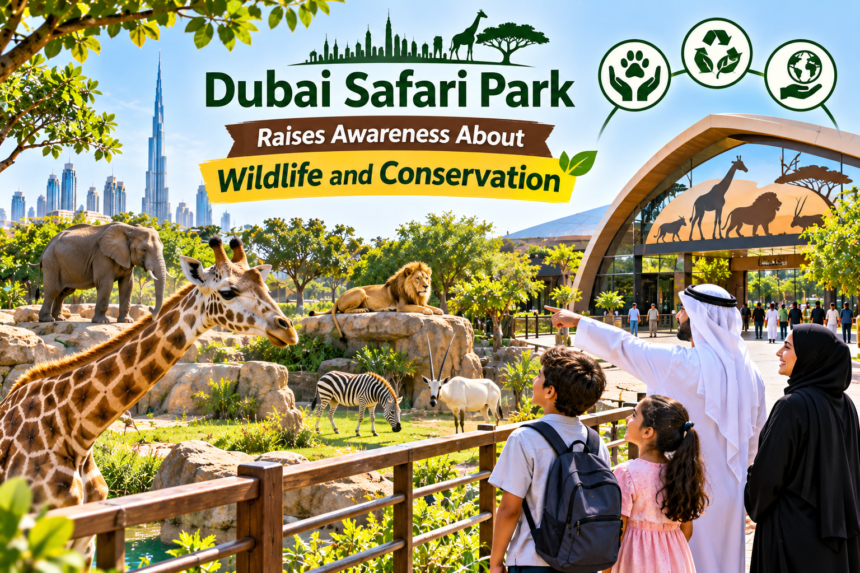
The Role of Dubai Safari Park in Raising Awareness About Wildlife
Wildlife is an important part of our planet. Every animal, bird, insect, and marine species plays a role in maintaining the balance of nature. However, habitat destruction, climate change, pollution, illegal hunting, and human activities continue to threaten many species around the world. Protecting wildlife is not only the responsibility of governments and environmental organisations. It also requires public awareness, education, and participation.
- 1. Introducing Visitors to Wildlife from Different Parts of the World
- 2. Making Wildlife Education Interesting for Children
- 3. Organising School Visits and Educational Programmes
- 4. Explaining the Importance of Protecting Endangered Species
- 5. Using Live Wildlife Presentations to Build Understanding
- 6. Connecting Wildlife Protection with Natural Habitats
- 7. Encouraging Families to Learn About Wildlife Together
- 8. Supporting Wildlife Research and Scientific Knowledge
- 9. Inspiring Responsible Behaviour Among Visitors
- 10. Helping Young People Develop Future Conservation Careers
- 11. The Importance of Measuring the Park’s Educational Impact
- 12. How Visitors Can Make Their Dubai Safari Park Experience More Educational
- 13. The Future of Wildlife Awareness at Dubai Safari Park
- Conclusion: Creating a More Wildlife-Aware Community
- Frequently Asked Questions (FAQs)
In a modern city such as Dubai, where buildings, roads, shopping centres, and urban communities are part of everyday life, people may have limited opportunities to observe animals in natural environments. This makes wildlife education especially valuable. Places where visitors can learn about different species, understand their behaviour, and discover conservation challenges can help create a stronger connection between people and nature.
Dubai Safari Park plays an important role in bringing wildlife education and conservation awareness closer to the public. Located in Al Warqa, the park provides opportunities to explore animals from different parts of the world through themed habitats, educational activities, wildlife presentations, and supervised animal encounters. It also highlights animal care, veterinary work, breeding programmes, and conservation initiatives.
The park covers approximately 119 hectares and features six themed zones, with more than 3,000 animals representing over 300 species. Its official website also identifies 42 endangered species within its collection. These experiences allow visitors to learn about wildlife while enjoying a family-friendly outdoor attraction.
In this article, we explore the role of Dubai Safari Park in raising awareness about wildlife, including its educational programmes, animal presentations, conservation activities, school visits, and contribution to a more environmentally responsible community.
1. Introducing Visitors to Wildlife from Different Parts of the World
One of the most important ways Dubai Safari Park raises wildlife awareness is by introducing visitors to animals from different geographical regions.
Many people recognise animals such as lions, elephants, giraffes, tigers, and monkeys from books, television programmes, and online videos. However, seeing these animals in person can make the learning experience more meaningful. Visitors have an opportunity to notice their physical features, movements, feeding habits, and behaviour.
The park’s six themed zones help visitors understand the diversity of wildlife and the different environments in which animals live.
These zones include:
- African Village: Introduces visitors to African wildlife, including elephants, gorillas, and other animals associated with African habitats.
- Asian Village: Features species connected with Asian environments, including moon bears, Komodo dragons, and gibbons.
- Explorer Village: Offers safari experiences where visitors can observe animals such as tigers, cheetahs, and hippopotamuses.
- Arabian Desert Safari: Highlights wildlife associated with the Arabian Peninsula, including Arabian oryx, Arabian wolves, and sand gazelles.
- Kids Farm: Provides a more familiar introduction to domestic and farm animals, including ponies and goats.
- Al Wadi: Offers a green outdoor area where visitors can enjoy water birds and other nature-related surroundings.
Each zone creates an opportunity to discuss the relationship between animals and their natural environments. For example, visitors exploring the Arabian Desert Safari can learn why desert animals need particular adaptations to survive in hot and dry conditions.
This exposure helps people understand that wildlife is not limited to a few well-known animals. The natural world contains a wide range of species, each with its own characteristics and ecological importance.
2. Making Wildlife Education Interesting for Children
Children are naturally curious about animals. They often enjoy learning about how elephants use their trunks, why giraffes have long necks, how birds fly, and how different animals find food.
Dubai Safari Park uses this curiosity as an opportunity to introduce environmental education in an enjoyable way. Instead of relying only on textbooks or classroom explanations, children can observe animals, listen to educational talks, and participate in activities.
The park’s education programmes include interactive wildlife talks, Young Explorers workshops, and learning opportunities at its Education Centre.
These activities help children explore subjects such as:
- Animal diets and feeding habits.
- Different types of animal habitats.
- Biodiversity and the importance of different species.
- Conservation and environmental protection.
- Animal behaviour and natural adaptations.
- The relationship between wildlife and ecosystems.
The Education Centre, located in the African Village, features interactive exhibits about animal diets, habitats, and biodiversity. Informational signs across the animal exhibits also provide facts about species and conservation.
This approach can make complex environmental subjects easier for young visitors to understand. For example, a child who learns that some animals depend on forests for food and shelter may begin to understand why deforestation is a serious environmental problem.
Children travel through distinct zones—including the African Village, Asian Village, and Arabian Desert Safari—to see how different species adapt to specific climates and terrains
Early wildlife education can influence how children think about animals as they grow older. It can also encourage them to develop responsible habits, such as avoiding littering, respecting animals, and protecting natural spaces.
3. Organising School Visits and Educational Programmes
Schools play an important role in building environmental awareness among students. Classroom learning provides essential knowledge, but outdoor educational visits can help students connect that knowledge with real-life examples.
Dubai Safari Park offers educational school visits designed around wildlife, conservation, and hands-on learning. Its programmes are intended to complement curriculum-based education and encourage curiosity about the natural world.
During a school visit, students can explore different wildlife zones, attend educational talks, observe animal habitats, and take part in selected workshops.
The experience can help students understand subjects such as biology, ecology, geography, and environmental science through direct observation.
For example:
- Biology students can observe differences between animal groups and learn about physical adaptations.
- Geography students can explore how wildlife is connected to different regions and climates.
- Environmental science students can discuss habitat protection and biodiversity.
- Younger students can learn basic animal-care principles through age-appropriate activities.
The park’s official school programme lists group visits for 15 to 200 students and requires one accompanying teacher or supervisor for every 10 students. It also provides school visit planning information and pre-visit learning materials.
The scale of these activities is reflected in the park’s reported education figures. During Season 7, which concluded in June 2026, Dubai Safari Park reported engaging 27,654 students through wildlife-focused educational programmes and awareness activities.
This figure demonstrates the reach of its education work. More importantly, every school visit creates an opportunity to introduce students to wildlife issues and encourage them to think about their own role in protecting nature.
4. Explaining the Importance of Protecting Endangered Species
One of the biggest challenges facing wildlife worldwide is the decline of threatened animal populations.
Species may become endangered for several reasons, including habitat destruction, illegal wildlife trade, pollution, climate change, hunting, and changes in food availability.
Dubai Safari Park helps make these concerns more understandable by introducing visitors to species that need conservation attention.
The park’s official website identifies 42 endangered species within its collection. Its conservation activities also include breeding programmes and work connected with species protection.
A notable example is the addax, a desert antelope classified as Critically Endangered. The park has highlighted its Addax Return to Chad initiative, involving the release of captive-bred animals into their natural habitat as part of wider efforts to support the species.
The park has also reported births of several species of conservation concern, including addax, Arabian wolves, Speke’s gazelles, and other antelopes during Season 7.
These examples can help visitors understand that endangered species need more than public sympathy. Their survival may depend on scientific research, habitat protection, breeding management, veterinary care, and cooperation between conservation organisations.
When visitors learn about the challenges faced by a particular animal, they may become more interested in the larger environmental issues affecting its natural habitat.
5. Using Live Wildlife Presentations to Build Understanding
Wildlife presentations are another way to make conservation education more engaging.
Dubai Safari Park offers live presentations featuring different animals, including birds, mammals, and birds of prey. These presentations introduce visitors to animal abilities, behaviour, and adaptations.
For example, birds such as parrots, toucans, hornbills, and macaws can help audiences understand flight, feeding adaptations, and communication. Presentations featuring owls, eagles, and vultures can introduce the importance of birds of prey and their role in natural ecosystems.
The park’s current website lists five live presentations on open days, including Birds Kingdom, Echoes of the Wild, and Birds of Prey. It describes the presentations as opportunities to explore how animals survive, adapt, and contribute to their ecosystems.
These activities can help answer questions that visitors may not have considered before:
- Why do some birds have curved beaks?
- How do owls locate prey?
- Why do vultures play an important role in nature?
- How do animals communicate with one another?
- How do different species adapt to their surroundings?
The educational value of such presentations depends on how they are conducted. Animal welfare should remain a priority, and demonstrations should explain natural behaviour without encouraging visitors to treat wild animals as performers or entertainment objects.
When supported by accurate information and responsible animal-care practices, live presentations can create memorable learning experiences.
6. Connecting Wildlife Protection with Natural Habitats
Protecting animals also means protecting the places where they live.
A tiger needs suitable forest habitat. Many birds depend on wetlands, grasslands, or coastal areas. Desert mammals require access to appropriate vegetation, shelter, and water sources.
When natural habitats are damaged, animals may lose their food sources, breeding areas, migration routes, and protection from environmental conditions.
Dubai Safari Park’s themed zones provide opportunities to discuss these connections.
For example, the Arabian Desert Safari highlights species associated with the Arabian Peninsula. Visitors can use this experience to learn about desert ecosystems and the importance of maintaining suitable habitats for native wildlife.
The African and Asian sections can also encourage conversations about forests, grasslands, and the environmental pressures affecting wildlife in different parts of the world.
Habitat education can introduce visitors to major environmental challenges, such as:
- Deforestation and land development
- Wetland destruction
- Desertification
- Water pollution
- Plastic waste
- Climate change
- Fragmentation of wildlife habitats
The main lesson is that protecting an animal is not always enough. Its environment must also be protected if it is to survive in the long term.
This message is especially important for younger generations because it links wildlife conservation with larger subjects such as sustainable cities, responsible consumption, and environmental planning.
7. Encouraging Families to Learn About Wildlife Together
Wildlife awareness becomes stronger when learning takes place within families and communities.
Parents, children, grandparents, and friends can explore animals together, exchange observations, and discuss environmental issues. A family visit can therefore become more than a day of entertainment.
For example, parents can encourage children to notice how animals move, what they eat, and how their surroundings differ from those of other species.
After observing a giraffe, a family might discuss why its long neck is useful. After exploring a bird presentation, children might become interested in migration or the importance of protecting nesting sites.
The Kids Farm also offers a more familiar introduction to animals such as goats and ponies. For young visitors, supervised experiences can provide an opportunity to learn about gentle handling and respect for animals.
The park’s education activities and family experiences can encourage conversations that continue after visitors return home.
Families can develop this learning through simple activities:
- Read books about animals and their natural habitats.
- Watch reliable wildlife documentaries.
- Visit local nature reserves and bird-watching areas.
- Avoid buying products made from illegal wildlife materials.
- Reduce single-use plastic consumption.
- Teach children not to disturb birds, nests, or wild animals.
- Support responsible conservation organisations.
Small discussions at home can help turn a single wildlife visit into a long-term interest in nature.
8. Supporting Wildlife Research and Scientific Knowledge
Wildlife conservation depends on scientific understanding. Researchers and animal-care specialists need information about animal health, nutrition, reproduction, behaviour, genetics, and disease prevention.
Dubai Safari Park has also highlighted its contribution to wildlife science through veterinary research and technical programmes.
In its Season 7 report, the park stated that it published two scientific research studies. It also reported carrying out 34 life-saving surgeries, expanding pregnancy monitoring programmes, and introducing enhanced molecular diagnostics and genetic analysis capabilities.
Its research hub lists topics including wildlife health screening, animal nutrition, veterinary medicine, biosecurity, preventive healthcare, and animal welfare.
Such work is relevant to public awareness because it demonstrates that conservation is not based only on passion for animals. It also requires knowledge, careful observation, trained professionals, and scientific methods.
Visitors who learn about veterinary work may begin to understand the many professions involved in wildlife protection.
These include:
- Veterinarians and veterinary nurses.
- Zoologists and wildlife biologists.
- Animal nutritionists.
- Conservation researchers.
- Animal keepers and behaviour specialists.
- Environmental educators.
- Wildlife rehabilitation professionals.
This can also inspire students to consider careers connected with biology, veterinary science, ecology, and environmental protection.
9. Inspiring Responsible Behaviour Among Visitors
Awareness is most valuable when it encourages people to make better decisions.
A visitor may learn about endangered animals during a park visit, but the next step is to understand how everyday behaviour can affect wildlife.
Dubai Safari Park’s educational activities can help introduce these ideas by discussing species, habitats, and animal welfare. Visitors can build on this learning by following responsible practices in their daily lives.
Some useful actions include:
Avoid littering: Plastic bags, packaging, bottles, and other waste can harm animals when they enter natural habitats.
Respect wildlife: People should never chase, frighten, or attempt to touch wild animals outside supervised and permitted experiences.
Do not feed wild animals: Human food may be unsuitable for wildlife and can change natural feeding behaviour.
Choose responsible tourism: Visitors should support wildlife experiences that prioritise animal welfare and conservation rather than activities based on exploitation.
Reduce plastic use: Reusable bottles and bags can help reduce unnecessary waste.
Learn before sharing information: Wildlife facts shared online should come from reliable sources to avoid spreading myths or incorrect claims.
Support conservation: People can learn about local environmental campaigns, responsible organisations, and opportunities to contribute.
These habits demonstrate that wildlife protection is not only something that happens inside a park. It also depends on the choices people make in their homes, workplaces, communities, and travel activities.
10. Helping Young People Develop Future Conservation Careers
Wildlife education can influence career interests, particularly among students who enjoy science, animals, and the natural environment.
A school visit or educational workshop may introduce a child to a profession they had not previously considered.
Some students may become interested in veterinary medicine after learning about animal healthcare. Others may develop an interest in zoology, environmental science, wildlife photography, or conservation research.
Potential career paths connected with wildlife and environmental protection include:
- Wildlife veterinarian.
- Zoologist
- Marine biologist.
- Conservation scientist.
- Environmental educator.
- Animal behaviour specialist.
- Wildlife photographer.
- Habitat restoration professional.
- Ecologist
- Park and protected-area manager.
Dubai Safari Park’s educational talks and Young Explorers workshops help make wildlife subjects accessible to young audiences. The park’s research and animal-care work also provide examples of the different skills involved in conservation.
Not every student will choose a wildlife-related career, but learning about these professions can increase respect for the people who work to protect nature.
It can also encourage students to consider environmental issues when choosing careers in business, technology, tourism, engineering, and public services.
11. The Importance of Measuring the Park’s Educational Impact
Wildlife awareness programmes should be evaluated not only by the number of visitors they attract but also by what people learn and how their behaviour changes.
Student participation, educational workshops, visitor feedback, and conservation activities can provide useful information about a programme’s reach.
Dubai Safari Park’s report of 27,654 students engaged during Season 7 gives an indication of the scale of its educational outreach. Its earlier programmes have also included awareness initiatives and school competitions focused on wildlife and environmental protection.
However, attendance figures alone cannot show whether visitors retain information or make lasting changes.
A stronger evaluation of wildlife awareness could consider questions such as:
- Can students identify threats affecting endangered species?
- Do visitors understand why habitats matter?
- Are children more aware of responsible behaviour around animals?
- Do school groups discuss conservation after their visit?
- Are visitors more likely to support wildlife protection initiatives?
- Do educational programmes encourage further learning?
These questions help distinguish between a popular attraction and an effective learning environment.
The long-term value of wildlife education is reflected in what visitors remember, discuss, and practise after leaving the park.
12. How Visitors Can Make Their Dubai Safari Park Experience More Educational
Visitors can make their experience more meaningful by treating the park as a place to discover and learn, rather than simply a place to take photographs.
A little preparation can help families and students understand more during their visit.
Before visiting
- Read about a few animals you are interested in seeing.
- Learn basic facts about their natural habitats.
- Discuss why wildlife conservation is important.
- Check the park’s educational activities and daily presentation information.
- Prepare a few questions for children to think about.
During the visit
- Read the information displayed near animal habitats.
- Observe animal behaviour without disturbing the animals.
- Attend suitable wildlife presentations.
- Join educational workshops when available.
- Ask staff appropriate questions about animal care and conservation.
- Follow all instructions during supervised encounters.
After the visit
- Discuss the most interesting animal or learning experience.
- Encourage children to write a short report or draw an animal.
- Research one endangered species in greater detail.
- Explore ways to reduce waste and protect natural habitats.
- Share accurate information with friends and family.
For school groups, teachers can connect the visit with classroom subjects and follow-up assignments. This can help students turn observations into a deeper understanding of biodiversity and conservation.
The goal should be to leave the park with more knowledge and a stronger sense of responsibility towards wildlife.
13. The Future of Wildlife Awareness at Dubai Safari Park
As environmental challenges become more complex, wildlife education will remain an important part of conservation.
Dubai Safari Park has an opportunity to continue developing its educational work through interactive workshops, scientific information, responsible animal encounters, school programmes, and community activities.
Technology may also offer new opportunities. Digital displays, educational videos, interactive maps, and virtual learning materials can help visitors understand animal habitats and conservation challenges in greater detail.
Future programmes could place additional emphasis on subjects such as:
- The effects of climate change on wildlife.
- The importance of biodiversity.
- Protecting native Arabian species.
- Marine and desert ecosystem conservation.
- Reducing plastic pollution.
- Responsible wildlife tourism.
- The role of scientific research in species recovery.
The park’s Season 8, which began in October 2026, continues to offer six themed zones, live presentations, and animal encounters. These experiences provide a current platform for connecting visitors with wildlife and conservation education.
The effectiveness of this work will depend on maintaining a balance between visitor experiences, accurate education, scientific standards, and animal welfare.
A wildlife park cannot replace the protection of animals in their natural habitats. It can, however, help people understand why those habitats matter and why conservation efforts are necessary.
Conclusion: Creating a More Wildlife-Aware Community
Dubai Safari Park plays an important role in raising awareness about wildlife by bringing people closer to animals and introducing them to the importance of conservation. Through its themed zones, educational school visits, interactive workshops, live presentations, research activities, and animal-care programmes, the park provides different ways to learn about biodiversity and environmental responsibility.
Its reported engagement of more than 27,000 students during Season 7 highlights the reach of its educational work. Its conservation activities, including breeding programmes and the Addax Return to Chad initiative, also demonstrate how animal care and wider species protection can be connected.
However, the real value of wildlife awareness is not limited to what visitors see during a visit. It is also reflected in the understanding and behaviour they take home.
When children learn to respect animals, families make responsible choices, and communities support habitat protection, wildlife conservation becomes a shared responsibility.
Dubai Safari Park can contribute to this change by making wildlife education accessible, interesting, and relevant to everyday life. Ultimately, raising awareness about wildlife is an important step towards protecting biodiversity and creating a future in which people and nature can exist in greater harmony.
Frequently Asked Questions (FAQs)
1. What is the role of Dubai Safari Park in wildlife conservation?
Dubai Safari Park contributes to wildlife conservation through animal-care programmes, veterinary services, breeding initiatives, research, rescue and rehabilitation activities, and public education. It also provides visitors with opportunities to learn about biodiversity and threatened species.
2. How does Dubai Safari Park educate children about wildlife?
The park offers educational school visits, interactive wildlife talks, Young Explorers workshops, and an Education Centre. Children can learn about animal diets, habitats, biodiversity, and conservation through practical activities and observation.
3. How many animals are there in Dubai Safari Park?
The park’s official website reports that it is home to more than 3,000 animals representing over 300 species across six themed zones. Figures may change as animal populations and collections develop.
4. Does Dubai Safari Park organise school visits?
Yes. Dubai Safari Park offers educational school visits that include wildlife learning, interactive talks, workshops, and exploration of its themed zones. Schools can check the official education page for current booking requirements and programme details.
5. Why are endangered species important?
Endangered species are important because every species contributes to the balance of ecosystems. Their decline can affect food chains, habitats, biodiversity, and other organisms that depend on them.
Do follow us on Instagram
Read More – The Importance of Protecting Endangered Species in The UAE