The Future of Quality of Life in Saudi Arabia
Quality of life is about much more than economic growth, modern buildings, or impressive infrastructure. It is about the everyday experiences that make people feel healthy, safe, comfortable, connected, and satisfied with where they live. Access to good healthcare, quality education, affordable housing, reliable transport, employment opportunities, green spaces, and enjoyable leisure activities all contribute to a better standard of living.
- 1. Saudi Vision 2030 Will Continue to Shape Everyday Living
- 2. Smarter and More Livable Cities Will Improve Urban Life
- 3. Healthcare Will Become More Accessible and Prevention-Focused
- 4. Better Housing Options Will Support Family Stability
- 5. Public Transport Will Make Cities More Connected
- 6. Green Spaces Will Support Healthier Urban Environments
- 7. Education and Skills Development Will Create Better Opportunities
- 8. Culture, Entertainment, and Tourism Will Enrich Social Life
- 9. Sports and Active Lifestyles Will Become More Important
- 10. Digital Services Will Make Everyday Tasks Easier
- 11. Environmental Sustainability Will Protect Future Living Conditions
- 12. Challenges That Will Shape Saudi Arabia’s Quality of Life
- Conclusion: Building a Better Future for Everyone
- Frequently Asked Questions (FAQs)
Saudi Arabia is working towards a major transformation in these areas through Saudi Vision 2030. The Kingdom is investing in public services, urban development, healthcare, housing, education, culture, tourism, entertainment, and environmental sustainability. Its aim is to create cities and communities where citizens, residents, and visitors can enjoy more opportunities and a healthier lifestyle.
The Quality of Life Program, one of Vision 2030’s key initiatives, supports this transformation. It focuses on improving city services, developing entertainment opportunities, encouraging sports participation, promoting Saudi culture, supporting tourism, and improving the living conditions of residents.
The programme’s 2025 annual report, released in July 2026, reported an economic contribution of SAR 78 billion to the Kingdom’s GDP, exceeding its target of SAR 77.1 billion. This demonstrates that quality-of-life development is also becoming an important part of Saudi Arabia’s wider economy.
But what will everyday life in Saudi Arabia look like in the coming years? How will cities, healthcare, transport, housing, technology, and public spaces change?
This article explores the future of quality of life in Saudi Arabia, highlighting important developments that may shape a healthier, more connected, and more sustainable society.
1. Saudi Vision 2030 Will Continue to Shape Everyday Living
One of the biggest influences on Saudi Arabia’s future quality of life is Vision 2030. The national strategy is built around three main pillars: a vibrant society, a thriving economy, and an ambitious nation.
The idea of a vibrant society is particularly connected to people’s everyday experiences. It focuses on creating an environment where families feel supported, individuals can develop their interests, and communities have access to opportunities that improve physical, social, and cultural well-being.
The Quality of Life Program supports this ambition through initiatives covering areas such as:
- Improving services and facilities in Saudi cities.
- Expanding cultural and entertainment opportunities.
- Encouraging participation in sports and physical activities.
- Preserving Saudi, Arab, and Islamic heritage.
- Developing tourism and leisure destinations.
- Improving urban environments.
- Supporting better living conditions for expatriates.
The programme has established measurable goals and works with different government organisations to deliver its initiatives.
In the coming years, the success of these plans will increasingly be judged by how they affect daily life. Convenient services, accessible public spaces, affordable homes, and better healthcare matter just as much as large development projects.
2. Smarter and More Livable Cities Will Improve Urban Life
Saudi Arabia’s cities are changing as the country invests in infrastructure, housing, transport networks, parks, and public facilities.
Riyadh, Jeddah, Dammam, Al-Khobar, and other urban areas are experiencing development designed to accommodate growing populations and changing lifestyles.
A livable city is not simply a place with modern buildings. It should provide residents with convenient access to essential services, safe neighbourhoods, comfortable public spaces, educational facilities, healthcare, and transportation.
The General Authority for Statistics published its Livability in Saudi Cities 2025 report, examining Riyadh, Jeddah, and Al-Khobar across six dimensions: security, health, environment, culture, education, and infrastructure. These areas show how city development is connected to the overall experience of residents.
Future urban improvements may include:
- Better neighbourhood facilities and public services.
- More walking paths and cycling routes.
- Improved parks and community spaces.
- Easier access to schools and healthcare facilities.
- Better connections between residential and commercial areas.
- More efficient waste and water management.
The long-term aim is to create cities where people spend less time dealing with everyday difficulties and more time enjoying their homes, families, workplaces, and communities.
3. Healthcare Will Become More Accessible and Prevention-Focused
Healthcare is one of the most important elements of quality of life. People need reliable medical services not only when they become ill but also to prevent health problems and maintain long-term well-being.
Saudi Arabia is working to improve its healthcare system through the Health Sector Transformation Program under Vision 2030. Its priorities include preventive care, digital health, improved primary healthcare, better patient experiences, and stronger medical infrastructure.
Recent figures indicate progress. The Ministry of Health reported in April 2026 that average life expectancy reached 79.9 years in 2025, compared with 74 years in 2016. A separate 2025 health-sector report highlighted primary healthcare coverage of 97.5% of populated areas and the growing use of digital healthcare services.
Digital platforms are also changing how patients access medical services. The Sehhaty application allows users to access supported health services, while the Seha Virtual Hospital connects patients with specialised medical services through a network of healthcare facilities.
- Millions of citizens and residents now manage appointments, view unified electronic health records, and track vital biometrics using a single mobile platform.
- The SEHA Virtual Hospital leverages artificial intelligence to provide remote diagnostic consultations, specialized medical support, and continuous care to the Kingdom’s most remote regions.
Future healthcare improvements may focus on:
- More preventive health check-ups.
- Early detection of chronic diseases.
- Better access to specialist treatment.
- Digital appointments and medical records.
- More healthcare facilities in underserved areas.
- Greater awareness of nutrition and physical activity.
- Improved mental health support.
The future of healthcare in Saudi Arabia will not be measured only by the number of hospitals. It will also depend on the quality of treatment, waiting times, affordability, accessibility, and the ability to help people remain healthy.
4. Better Housing Options Will Support Family Stability
A comfortable and secure home is one of the foundations of a good quality of life. Housing affects family stability, personal well-being, financial security, and the ability to build long-term plans.
Saudi Arabia’s Housing Program is working to increase homeownership and provide different housing options for eligible families.
The 2025 Vision 2030 Annual Report recorded a homeownership rate of 66.24% among Saudi families, exceeding the annual target of 65%. The longer-term Vision 2030 target is 70%. The report also notes that rising housing costs in high-demand locations remain an issue requiring attention.
New master-planned communities prioritize human-centric urban design, placing schools, retail centers, and essential services within walking distance of every home. Massive community landscaping initiatives introduce neighborhood parks and safe playgrounds, encouraging outdoor family recreation and raising local environmental quality.
Future housing development is likely to place greater importance on:
- Affordable homes for different income groups.
- Modern apartments and family-friendly communities.
- Access to schools, healthcare, and public transport.
- Energy-efficient residential buildings.
- Safe neighbourhoods with parks and shared facilities.
- Digital services for property transactions and housing support.
However, homeownership is only one measure of housing quality. Rental affordability, housing availability, construction standards, maintenance costs, and access to suitable accommodation also matter.
The challenge will be to ensure that residential development serves different sections of society rather than focusing only on premium properties and large projects.
5. Public Transport Will Make Cities More Connected
Transportation has a direct influence on everyday life. Long commuting times, traffic congestion, and dependence on private vehicles can affect work-life balance, household expenses, and environmental conditions.
Saudi Arabia is investing in public transport to improve movement within cities and connect important destinations.
Riyadh Metro is an important example. Its network covers 176 kilometres across six lines and 85 stations, connecting locations such as the airport, universities, the city centre, and major business districts. It forms part of the wider Riyadh Public Transport Project, which also includes buses and feeder services.
As public transport networks develop, residents may find it easier to travel without depending entirely on private cars.
Future improvements may include:
- Expanded metro and bus connections.
- Better links between residential areas and workplaces.
- More pedestrian-friendly routes around stations.
- Integrated ticketing and digital journey information.
- Safer cycling and walking infrastructure.
- Improved transport access for older people and people with disabilities.
The National Transport and Logistics Strategy also identifies improving livability across the Kingdom as one of its priorities.
A more connected transport system can make cities easier to navigate and support people who cannot or do not wish to drive.
6. Green Spaces Will Support Healthier Urban Environments
Green spaces are becoming increasingly important in Saudi Arabia’s urban development. Parks, gardens, shaded walkways, and landscaped public areas offer places where people can relax, exercise, and spend time with family and friends.
These spaces are especially valuable in a country where high summer temperatures can make outdoor activities challenging.
Green Riyadh is one of the major initiatives aimed at improving the capital’s urban environment. Its targets include planting more than 7.5 million trees by 2030 and increasing the city’s share of green spaces from 1.5% to 9%. The programme also aims to increase green space per resident from 1.7 to 28 square metres. These are programme targets, not completed achievements.
Green spaces can contribute to quality of life in several ways:
- Providing areas for walking, jogging, and cycling.
- Creating places for families and children to enjoy outdoor activities.
- Offering shade and improving local comfort.
- Supporting urban biodiversity.
- Encouraging community interaction.
- Making neighbourhoods more attractive.
The challenge is to maintain these spaces sustainably. Water-efficient irrigation, suitable native plants, treated wastewater where permitted, and proper maintenance will be important in Saudi Arabia’s dry climate.
A greener city is not simply more attractive. It can also encourage healthier lifestyles and improve the relationship between residents and their surroundings.
7. Education and Skills Development Will Create Better Opportunities
Education is closely connected to quality of life because it influences employment, financial independence, personal development, and the ability to adapt to technological change.
Saudi Arabia is working to improve the quality of its education system and prepare students for a changing economy. The Vision 2030 Annual Report 2025 describes developments in digital learning, teacher training, curriculum improvement, artificial intelligence education, and future skills.
For example, the report highlights the use of AI education across general education levels, the training of students in artificial intelligence, and the development of digital learning materials.
Future education priorities may include:
- Stronger science, technology, engineering, and mathematics education.
- Digital literacy and artificial intelligence skills.
- Practical and vocational training.
- Improved teacher development.
- Research and innovation.
- More opportunities for lifelong learning.
- Greater alignment between education and employment needs.
These improvements can help students prepare for careers in technology, healthcare, engineering, finance, tourism, renewable energy, and other developing sectors.
For adults, access to professional training and upskilling will also become increasingly important.
A strong education system should help people find opportunities, develop confidence, and participate successfully in the country’s future economy.
8. Culture, Entertainment, and Tourism Will Enrich Social Life
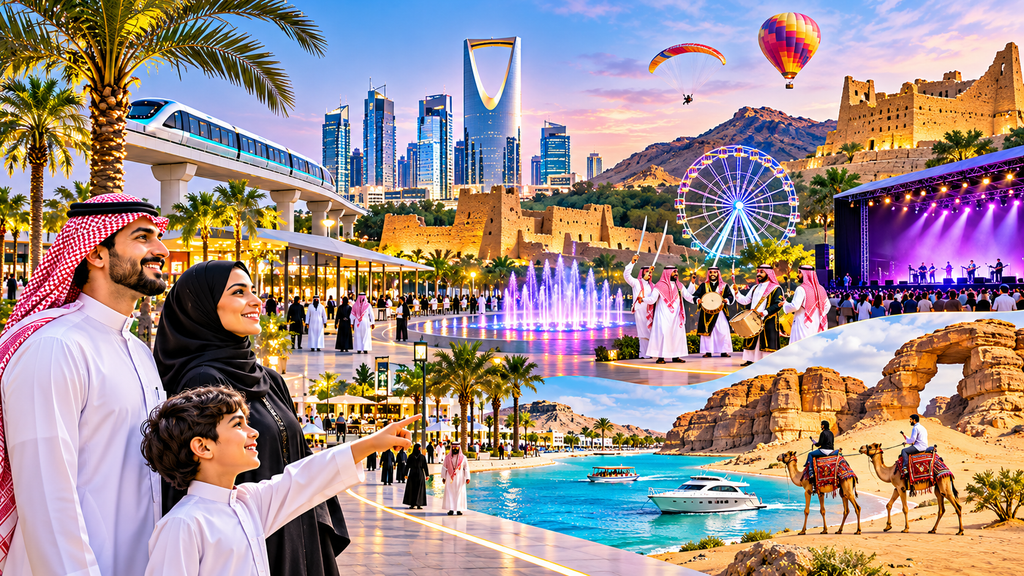
Quality of life also depends on having opportunities to relax, explore interests, and spend meaningful time with other people.
Saudi Arabia’s entertainment, cultural, and tourism sectors have expanded considerably under Vision 2030. Residents now have a growing range of options, including concerts, sporting events, cinemas, festivals, cultural exhibitions, museums, and outdoor attractions.
The Quality of Life Program’s 2025 report highlighted progress in entertainment and hobbies. It reported that 84.66% of selected leading global titles across books, video games, and films were available in the Saudi market, exceeding the target of 84.10%. It also recorded expatriate satisfaction with living conditions at 69%, meeting the programme’s target for that indicator.
Culture and entertainment are expected to remain important parts of Saudi Arabia’s future.
Examples include:
- Museums and heritage destinations.
- Music and performing arts.
- Film festivals and cinema.
- Traditional markets and cultural festivals.
- Sports and recreational events.
- Family entertainment centres.
- Outdoor tourism and nature experiences.
These activities can make communities more active and provide opportunities for people from different backgrounds to connect.
The future challenge will be to ensure that cultural and leisure options remain diverse, accessible, and relevant to local communities.
9. Sports and Active Lifestyles Will Become More Important
Physical activity is essential for maintaining good health. Regular exercise can support heart health, improve fitness, reduce stress, and contribute to better mental well-being.
Saudi Arabia is encouraging residents to participate in more sports and recreational activities through new facilities, community programmes, walking paths, cycling routes, and sporting events.
In December 2025, the Quality of Life Program reported that weekly participation in physical activity had reached 59%, reflecting greater engagement with active lifestyles. The Ministry of Health also reported a 59% level of regular physical activity among adults in 2025.
Future developments may include:
- More public sports facilities.
- Affordable fitness programmes.
- Accessible walking and cycling paths.
- Community sports clubs.
- School-based physical activities.
- More opportunities for women and young people to participate in sports.
- Greater awareness of nutrition and preventive healthcare.
It is important that sports facilities serve ordinary residents as well as professional athletes. Local parks, safe walking routes, public courts, and affordable fitness spaces can make physical activity part of everyday life.
A healthier population can also contribute to stronger communities and a more productive workforce.
10. Digital Services Will Make Everyday Tasks Easier
Digital transformation is changing the relationship between residents and government services.
Many everyday tasks that once required physical visits, paperwork, and long queues can now be completed through online platforms and mobile applications.
Saudi Arabia has developed digital services across areas such as government administration, healthcare, education, transport, business, and property services.
The Digital Government Authority reported that the Digital Experience Maturity Index reached 87.06% in 2026, following an assessment of 59 digital platforms. The index considers areas such as user satisfaction, experience, complaint handling, and the technologies used to provide services.
The next stage of digital development is not only about putting services online. It is about making them easier to use, more reliable, secure, and accessible.
Future improvements may include:
- More integrated government applications.
- Faster online payments and documentation.
- Digital health and appointment services.
- Smart transport information.
- Easier access to education resources.
- Improved digital identity and verification.
- Better protection of personal information.
Technology can save time and make public services more convenient. However, digital systems should also remain accessible to older people, people with disabilities, and individuals who need assistance using online platforms.
11. Environmental Sustainability Will Protect Future Living Conditions
Saudi Arabia’s future quality of life will also depend on how successfully it manages environmental challenges.
The Kingdom has an arid climate, limited freshwater resources, and growing urban areas. Rising temperatures, water demand, pollution, and pressure on natural habitats make environmental sustainability an important long-term concern.
The Saudi Green Initiative supports the country’s wider environmental goals through tree planting, land restoration, biodiversity protection, and emissions reduction.
The National Transformation Program’s 2025 annual report stated that more than 151 million trees had been planted across the Kingdom and over one million hectares had been restored by the end of 2025. These figures reflect national environmental activity, although they should not be confused with the completion of individual city greening targets.
Environmental improvements can support quality of life through:
- More efficient water management.
- Renewable energy development.
- Better waste collection and recycling.
- Cleaner public spaces.
- Sustainable buildings.
- Protection of wildlife and natural habitats.
- Improved air quality monitoring.
- Climate-resilient urban planning.
Saudi Arabia’s future cities will need to balance development with the responsible use of natural resources.
12. Challenges That Will Shape Saudi Arabia’s Quality of Life
Although the Kingdom is making progress in several areas, improving quality of life across such a large and diverse country is a complex task.
Different cities and communities have different needs. A major metropolitan area may need better public transport and affordable housing, while a smaller town may require improved healthcare access, schools, or employment opportunities.
Some challenges that need continued attention include:
Housing affordability: Increasing homeownership is important, but the cost of buying or renting a suitable property remains a concern in high-demand locations.
Regional balance: Development should reach smaller cities and rural communities, not only major urban centres.
Climate and water pressure: Green spaces, buildings, and public infrastructure must be designed for hot and dry conditions.
Employment quality: New job opportunities should offer suitable skills development, fair conditions, and long-term career prospects.
Healthcare accessibility: Expanding coverage must go hand in hand with reliable services, qualified staff, and reasonable waiting times.
Digital inclusion: Online services should remain easy to access for people with different levels of digital knowledge.
Measuring real progress: National indicators are useful, but everyday experiences and community feedback are also important when evaluating success.
Addressing these issues will help make development more inclusive and ensure that progress reaches more people.
Conclusion: Building a Better Future for Everyone
The future of quality of life in Saudi Arabia is closely connected to the country’s wider transformation under Vision 2030. Healthcare, housing, education, transportation, digital services, green spaces, entertainment, and employment are all important parts of this journey.
Recent progress in healthcare coverage, physical activity, homeownership, digital services, public transport, and entertainment shows how different sectors are contributing to the development of a more vibrant society.
At the same time, challenges such as housing affordability, regional differences, environmental pressures, and access to quality services require continued attention.
The real measure of success will be how these developments improve everyday experiences for people living across the Kingdom. A successful future is not simply about building larger cities or attracting more visitors. It is about creating safe communities, accessible services, meaningful opportunities, healthy lifestyles, and a cleaner environment.
Saudi Arabia’s future quality of life will depend on turning national ambitions into everyday benefits, creating a country where people can live comfortably, develop their potential, and enjoy a healthier and more fulfilling future.
Frequently Asked Questions (FAQs)
1. What does quality of life mean in Saudi Arabia?
Quality of life refers to the overall well-being of people, including healthcare, education, housing, employment, safety, transportation, environmental conditions, cultural activities, and access to public services.
2. How does Vision 2030 improve quality of life?
Vision 2030 supports improvements in healthcare, housing, education, city infrastructure, sports, entertainment, tourism, environmental sustainability, and digital services through different national programmes and initiatives.
3. What is the Quality of Life Program in Saudi Arabia?
The Quality of Life Program is a Vision 2030 initiative focused on improving living conditions through better city services, sports, culture, entertainment, tourism, and community development.
4. How is healthcare improving in Saudi Arabia?
Healthcare improvements include wider primary care coverage, digital health platforms, preventive services, specialist treatment, medical workforce development, and greater attention to public health.
5. Will Saudi cities become more environmentally friendly?
Environmental programmes such as Green Riyadh and the Saudi Green Initiative support tree planting, land restoration, biodiversity protection, and more sustainable urban development.
Do follow us on Instagram
Read More – Why Green Buildings Matter in the UAE’s Climate