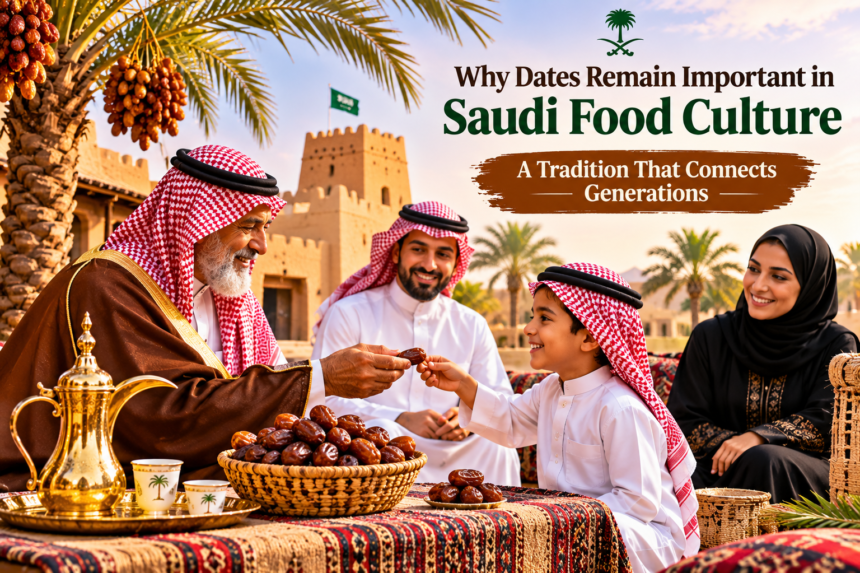
Why Dates Remain Important in Saudi Food Culture
Dates are among the most important foods in Saudi Arabia. They are more than a sweet fruit enjoyed after meals. They represent hospitality, family traditions, religious customs, agriculture, and the history of life in the Arabian Peninsula. From a simple cup of Arabic coffee served with dates to a beautifully prepared Ramadan iftar, they have a special place in the daily lives of Saudi people.
- 1. Dates Have a Long History in Saudi Arabia
- 2. Dates Are a Symbol of Saudi Hospitality
- 3. Dates Have a Special Place During Ramadan
- 4. Saudi Arabia Is Home to Hundreds of Date Varieties
- 5. Dates Are Important to Saudi Farming and the Economy
- 6. Dates Are Used in Many Saudi Foods and Recipes
- 7. The Date Palm Is Part of Saudi Cultural Heritage
- 8. Traditional Date Markets Keep the Culture Alive
- 9. Dates Have Nutritional Value and Fit into Everyday Diets
- 10. Dates Continue to Connect Different Generations
- 11. How Saudi Arabia Is Supporting the Future of Its Date Industry
- Conclusion: Dates Are More Than Food in Saudi Arabia
- Frequently Asked Questions (FAQs)
For centuries, date palms have grown in the Kingdom’s oases and agricultural regions. They provided food in a dry climate and supported communities through farming, trading, and traditional crafts. Dates were easy to store, carry, and share, making them a valuable food for travellers, families, and merchants.
Today, despite the growth of modern supermarkets, restaurants, and international food trends, dates remain an essential part of Saudi food culture. They are served in homes, hotels, offices, celebrations, and religious gatherings. Saudi Arabia also produces hundreds of date varieties and exports them to markets around the world.
According to the General Authority for Statistics, Saudi Arabia produced approximately 1.923 million tonnes of dates in 2024, supported by more than 37.6 million palm trees. In 2025, the Kingdom’s date exports reached approximately SAR 1.938 billion in value, representing growth of 14.3% compared with the previous year.
So, why do dates continue to hold such an important place in Saudi Arabia? Their importance comes from a combination of history, religion, hospitality, taste, agriculture, and cultural identity.
1. Dates Have a Long History in Saudi Arabia
Date palms have been connected with life in the Arabian Peninsula for thousands of years. In dry and desert regions, where water and fresh food could be difficult to find, date palms provided an important source of nutrition and useful materials.
Oasis communities developed around suitable water sources where palm trees could grow. Farmers cultivated dates for their families and local markets, while traders transported them to other towns and settlements.
Dates were especially useful because they could be eaten fresh or dried. They could also be stored for longer periods and carried during journeys across the desert.
The importance of date palms extended beyond food. Their leaves, fibres, and other parts were used to make baskets, mats, ropes, and household products. The trees also provided shade and helped shape traditional agricultural landscapes.
Over generations, communities developed knowledge about planting, watering, pollinating, harvesting, and storing dates. These skills became part of regional culture and were passed from parents and grandparents to younger family members.
Date palms thrived in the fertile oases of Al-Ahsa, Medina, Al-Qassim, and AlUla. Ancient civilizations and Nabatean communities relied heavily on the fruit for sustenance and trade.
This long relationship explains why dates are still closely connected with Saudi identity today.
2. Dates Are a Symbol of Saudi Hospitality
One of the strongest reasons dates remain important is their connection with hospitality.
In Saudi homes, it is common to welcome guests with dates and Arabic coffee, known as qahwa. The combination is a familiar part of social visits, family gatherings, business meetings, and special occasions.
Guests are invariably welcomed with dates and coffee immediately upon entry, whether walking into a Bedouin tent, a corporate boardroom, or a luxury hotel.
Offering dates is a simple way of showing respect and generosity. A guest may be invited to sit, enjoy coffee, and choose from a plate of dates before a conversation begins.
Dates are meticulously arranged on a large platter or mishlah, showcasing the host’s generosity by offering the finest varieties available
Dates are also served in many hotels, offices, and public reception areas. Their presence helps introduce visitors to an important part of Saudi culture.
The tradition reflects values such as:
- Generosity: Sharing food with guests is an important expression of welcome.
- Respect: Offering refreshments shows care for visitors.
- Togetherness: Dates and coffee create a relaxed setting for conversation.
- Tradition: Serving dates helps keep cultural customs alive.
- Identity: Dates connect everyday hospitality with the Kingdom’s agricultural heritage.
Even as lifestyles change, this welcoming custom continues to bring people together.
3. Dates Have a Special Place During Ramadan
Ramadan is one of the most important times of the year for dates in Saudi Arabia.
During the holy month, Muslims fast from dawn until sunset. At iftar, the evening meal that breaks the fast, dates are traditionally eaten before the main meal.
Breaking the fast with dates is a deeply revered tradition (Sunnah) modeled after the practices of Prophet Muhammad, who broke his fast with fresh dates (rutab), dried dates (tamr), or a sip of water.
This practice is connected with Islamic tradition and the example of Prophet Muhammad. Many families begin iftar with one or more dates and water before enjoying other dishes.
Dates are useful during this time because they contain natural sugars and carbohydrates that provide energy. They are also easy to serve and share with family members and guests.
Saudi iftar tables may include different date varieties, often served alongside:
- Water and Arabic coffee.
- Traditional soups.
- Sambousek and other savoury snacks.
- Rice dishes and meat.
- Bread and local sweets.
- Fresh fruit and juices.
During Ramadan, supermarkets, traditional markets, and date shops display a wide selection of varieties. Families may buy dates for everyday use, while beautifully packaged boxes are also popular as gifts.
The tradition of sharing dates during Ramadan shows how food, faith, and family life are connected in Saudi society.
4. Saudi Arabia Is Home to Hundreds of Date Varieties
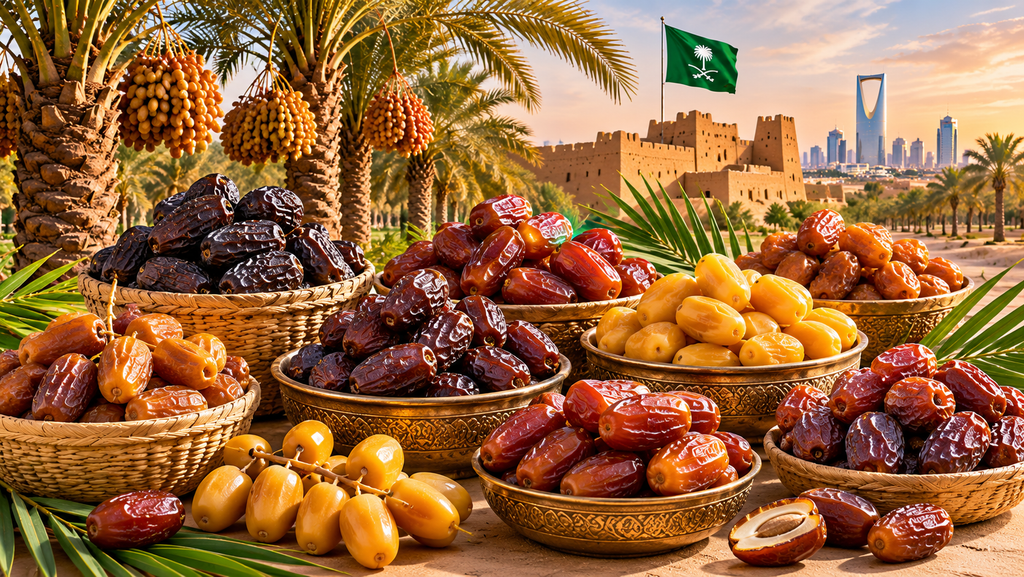
Another reason dates remain important is the wide variety available across the Kingdom.
Different regions produce dates with different colours, textures, sizes, and levels of sweetness. Some are soft and moist, while others are firm, chewy, or slightly dry.
Saudi Arabia produces more than 300 varieties of dates, according to the National Center for Palms and Dates.
Some well-known varieties include:
Ajwa: Closely associated with Madinah, Ajwa dates are dark in colour and have a soft texture. They are especially valued for their religious and cultural significance.
Sukkari: Popular in the Qassim region, Sukkari dates are known for their golden colour and sweet taste.
Khalas: These dates are widely grown and valued for their balanced sweetness and soft texture. They are also important in commercial markets.
Safawi: Often associated with Madinah, Safawi dates are dark and soft, with a rich flavour.
Mabroom: These dates are generally long, firm, and chewy, with a distinctive sweet taste.
Barhi: Barhi dates are often enjoyed fresh at an earlier stage of ripening, when they are yellow and crisp. They become softer and sweeter as they mature.
Sagai: Recognised by its distinctive colour and texture, Sagai is another popular Saudi variety.
Each variety offers a different experience, which makes selecting and tasting dates an enjoyable part of shopping and hospitality.
5. Dates Are Important to Saudi Farming and the Economy
Dates are not only a traditional food; they are also an important agricultural product.
The date palm sector supports farmers, harvest workers, packaging businesses, food manufacturers, traders, transport companies, and exporters. It also creates opportunities for small family businesses.
Saudi Arabia’s date production reached approximately 1.923 million tonnes in 2024. The Kingdom’s 2024 agricultural statistics also recorded more than 37.6 million palm trees, of which over 32 million were productive.
The sector continues to receive support through agricultural programmes, market development, and efforts to improve the quality of locally produced dates.
In 2025, Saudi date exports reached approximately SAR 1.938 billion and were distributed across 125 countries, according to the Ministry of Environment, Water and Agriculture.
This growth benefits the wider economy and helps introduce Saudi agricultural products to international consumers.
Dates are therefore important both as a traditional food and as a source of business opportunities.
6. Dates Are Used in Many Saudi Foods and Recipes
Dates are delicious on their own, but they are also used in a variety of traditional and modern recipes.
Their natural sweetness makes them suitable for desserts, drinks, snacks, and some savoury dishes. Different varieties can provide different textures and flavours.
Popular ways of enjoying dates include:
- Eating whole dates with Arabic coffee.
- Stuffing dates with almonds, pistachios, or walnuts.
- Serving dates with sesame seeds or tahini.
- Adding chopped dates to porridge and breakfast dishes.
- Preparing date paste for baking.
- Using date syrup as a sweetener.
- Making cakes, cookies, and traditional sweets.
- Adding dates to selected rice and savoury recipes.
Date products have also become more widely available. These include date molasses, date paste, date powder, date-filled chocolates, and packaged snacks.
This variety allows dates to remain part of everyday eating while also finding a place in modern food products and restaurant menus.
7. The Date Palm Is Part of Saudi Cultural Heritage
The importance of dates extends beyond the fruit itself. The date palm has influenced traditional work, architecture, crafts, poetry, and community life.
In oasis communities, palm trees were an important part of the landscape and local economy. Families depended on them for food and materials, while farmers developed knowledge about caring for the trees and protecting their harvests.
The leaves and fibres were used in traditional crafts, including baskets, mats, ropes, and household objects. These products demonstrate how communities made practical use of available natural resources.
The cultural knowledge, skills, traditions, and practices associated with date palms were recognised by UNESCO in 2022 through an international inscription on its Representative List of the Intangible Cultural Heritage of Humanity. Saudi Arabia was among the participating countries.
This recognition highlights that date palm traditions are not simply agricultural activities. They are also part of a shared cultural heritage that deserves to be preserved.
8. Traditional Date Markets Keep the Culture Alive
Traditional markets, or souks, play an important role in maintaining the popularity of dates.
During the harvest season, markets in regions such as Qassim, Riyadh, Madinah, and Al-Ahsa become busy with farmers, wholesalers, retailers, and shoppers.
Visitors can see different varieties, compare prices, taste products, and learn about their origins directly from sellers.
Madinah’s date markets are particularly well known for varieties such as Ajwa, while Qassim is closely associated with Sukkari dates.
Date markets also give small farmers an opportunity to sell their produce. They connect agricultural communities with consumers and help keep traditional trading practices active.
Today, shoppers can purchase dates from:
- Traditional souks and local date markets.
- Farm shops and seasonal markets.
- Supermarkets and grocery stores.
- Specialist date boutiques.
- Online shopping platforms.
The combination of traditional selling methods and modern retail helps dates remain accessible to different generations.
9. Dates Have Nutritional Value and Fit into Everyday Diets
Dates are naturally sweet fruits that provide carbohydrates, fibre, and small amounts of various vitamins and minerals.
They are often eaten as a quick snack, included in breakfast, or served with coffee. Their natural sweetness also makes them useful in recipes that would otherwise use added sugar.
Some nutritional benefits of dates include:
- Energy: Their natural carbohydrates provide energy.
- Fibre: Dates contain dietary fibre, which supports normal digestion.
- Minerals: They provide minerals such as potassium and magnesium.
- Plant compounds: They contain naturally occurring antioxidant compounds.
However, dates are also energy-dense and contain natural sugars. Portion size matters, especially for people who need to monitor their blood glucose or overall sugar intake.
Eating dates as part of a balanced diet is a practical way to enjoy their taste and nutritional value without treating them as a medicine or a replacement for other healthy foods.
10. Dates Continue to Connect Different Generations
One of the most meaningful reasons dates remain important is their ability to connect generations.
Older family members may remember harvesting dates, visiting traditional markets, or preparing date-based dishes at home. Younger people may enjoy packaged date snacks, desserts, or modern recipes.
Although the ways people buy and eat dates have changed, the cultural connection remains strong.
Dates continue to appear during family visits, religious occasions, weddings, celebrations, and everyday meals. Parents and grandparents also introduce children to different varieties and explain their importance.
Schools, cultural organisations, agricultural events, and local festivals can help younger generations learn about date farming and traditional practices.
The future of this tradition depends on keeping both the agricultural knowledge and the cultural meaning of dates alive.
11. How Saudi Arabia Is Supporting the Future of Its Date Industry
Saudi Arabia is working to strengthen its date sector through agricultural development, quality improvement, processing, marketing, and export growth.
The National Center for Palms and Dates supports farmers, producers, traders, and other parts of the industry. Its programmes include agricultural support, date-market development, and initiatives designed to improve the value of Saudi date products.
The future of the industry may include:
- Better farming and harvesting methods.
- Improved packaging and storage.
- More processed date products.
- Stronger international marketing.
- Digital platforms for selling dates.
- Support for small farmers.
- More efficient water use.
- Greater attention to product quality and food safety.
Sustainability is particularly important. Date farming takes place in a country with limited water resources, so efficient irrigation, good farm management, and responsible use of agricultural land are necessary for long-term growth.
By combining traditional knowledge with modern technology, Saudi Arabia can continue developing its date industry while protecting its cultural value.
Conclusion: Dates Are More Than Food in Saudi Arabia
Dates remain important in Saudi food culture because they connect many parts of life in the Kingdom. They represent hospitality, religious customs, family gatherings, traditional farming, local markets, and national identity.
From Ajwa dates in Madinah to Sukkari dates in Qassim and Khalas dates across several regions, the Kingdom offers a wide variety of flavours and textures. Their use in Ramadan, everyday meals, traditional recipes, and guest hospitality keeps them close to people’s lives.
The date palm also represents generations of agricultural knowledge and traditional craftsmanship. Today, Saudi Arabia continues to support this heritage through farming programmes, food production, market development, and international exports.
As lifestyles become more modern, the ways dates are sold and prepared may continue to change. However, their cultural meaning is likely to remain strong.
Dates are not simply a traditional food in Saudi Arabia. They are a symbol of generosity, heritage, and the connection between the country’s past and its future.
Frequently Asked Questions (FAQs)
1. Why are dates important in Saudi Arabia?
Dates are important because they are part of Saudi hospitality, religious traditions, everyday meals, agriculture, and cultural identity. They are commonly served with Arabic coffee and during family gatherings.
2. Why do Muslims eat dates during Ramadan?
Many Muslims traditionally break their fast with dates and water. This practice follows the example of Prophet Muhammad and has become a familiar part of Ramadan iftar meals.
3. What are the most popular types of Saudi dates?
Popular varieties include Ajwa, Sukkari, Khalas, Safawi, Mabroom, Barhi, and Sagai. Each has its own taste, texture, and regional associations.
4. Which region of Saudi Arabia is famous for Sukkari dates?
The Qassim region is particularly famous for Sukkari dates, which are known for their sweet taste and golden colour.
5. What makes Ajwa dates special?
Ajwa dates are closely associated with Madinah and are valued for their distinctive dark colour, soft texture, and religious and cultural significance.
Do follow us on Instagram
Read More – The History of Traditional Markets in the Kingdom