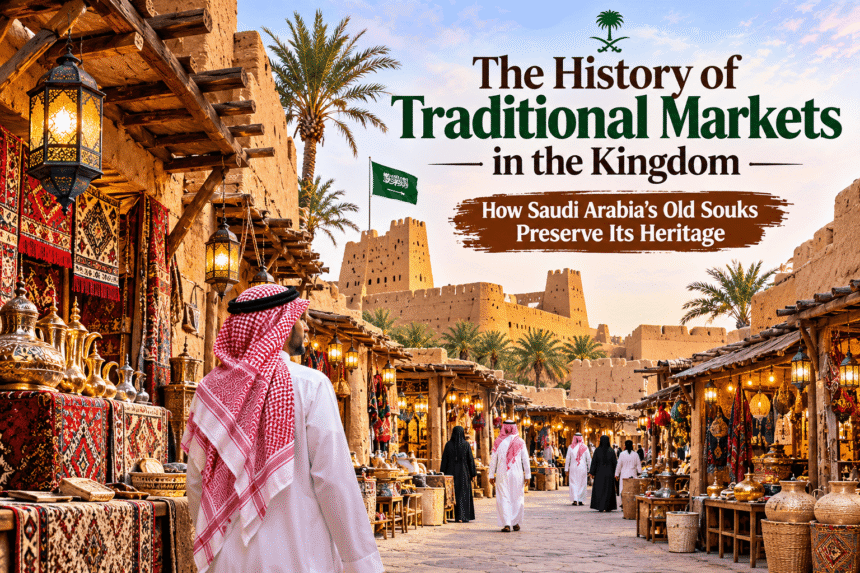
The History of Traditional Markets in Saudi Arabia: Souks and Heritage
Traditional markets have always been an important part of life in Saudi Arabia. Long before modern shopping malls, supermarkets, and online stores appeared, people visited local markets to buy food, clothes, spices, household goods, jewellery, and handmade products. These markets were more than places for shopping. They were meeting points where people exchanged news, shared ideas, built relationships, and learned about different cultures.
- 1. How Traditional Markets Began in Saudi Arabia
- 2. Souk Okaz: One of the Oldest Markets in Arabian History
- 3. The Role of Trade Routes in the Growth of Traditional Souks
- 4. Traditional Markets in Historic Jeddah
- 5. Al-Qaisariya Market: A Historic Trading Centre in Al-Ahsa
- 6. The Importance of Weekly and Local Markets
- 7. Traditional Products and Crafts Found in Saudi Markets
- 8. How Traditional Markets Reflect Saudi Culture and Community Life
- 9. The Modern Revival of Traditional Markets
- 10. Why Traditional Markets Still Matter Today
- Conclusion: Traditional Markets Keep the Kingdom’s Heritage Alive
- Frequently Asked Questions (FAQs)
Known as souks or aswaq in Arabic, traditional markets developed around trade routes, ports, villages, religious centres, and growing towns. Their products and architectural styles often reflected the local environment and the skills of the people living there.
Today, many historic markets continue to welcome shoppers and visitors. Places such as Souq Okaz in Taif, Al-Qaisariya Market in Al-Ahsa, and the traditional souks of Historic Jeddah offer a glimpse into the Kingdom’s commercial and cultural past.
As Saudi Arabia develops its tourism and heritage sectors under Vision 2030, these markets are gaining renewed attention. They help visitors understand how communities lived, traded, and preserved their traditions.
This article explores the history of traditional markets in Saudi Arabia, their role in trade and community life, famous historical souks, traditional products, and how they continue to preserve the Kingdom’s cultural identity.
1. How Traditional Markets Began in Saudi Arabia
Traditional market is known as souks or qaisariyas in Saudi Arabia.
Traditional markets developed because people needed places to exchange goods and services. In earlier times, most communities depended on agriculture, livestock, fishing, crafts, and trade. Local markets helped people obtain products that were not available in their own villages or towns.
Markets often developed near important roads, water sources, settlements, ports, and gathering places. Traders travelled from different areas carrying goods on camels and other transport animals, while local farmers and craftspeople brought their products to sell.
In the Arabian Peninsula, trading connections linked communities with Yemen, the Levant, Iraq, Persia, and regions around the Red Sea and Gulf.
Traditional markets commonly offered:
- Dates, grains, fruits, and vegetables.
- Camel, sheep, and other livestock.
- Spices, perfumes, and herbs.
- Fabrics, clothing, and leather goods.
- Gold, silver, and jewellery.
- Handmade tools and household items.
- Traditional food and local products.
These markets allowed people to exchange goods, earn a living, and build connections with traders from different regions. Over time, some grew into important commercial centres that influenced the development of nearby towns.
2. Souk Okaz: One of the Oldest Markets in Arabian History
One of the most famous early markets associated with the history of Saudi Arabia is Souk Okaz, located near Taif in the Makkah Region.
According to Saudipedia, the market began around 501 CE, approximately a century before the emergence of Islam. It became an important gathering place for Arab tribes, merchants, poets, and visitors from different parts of the Arabian Peninsula.
Souk Okaz was special because it was not only a commercial marketplace. It was also a centre for literature, poetry, discussions, and social gatherings.
Traders brought products from different regions, including:
- Ghee, milk, sheep, and camels from Arabian areas.
- Embroidered clothing and leather products from Yemen.
- Weapons from the Levant.
- Perfumes and silk from Persia.
- Leather, raisins, and grapes from Taif.
Poets also gathered at the market to recite their work and compete with one another. Important agreements, alliances, and public announcements could take place there because so many people attended.
The market followed a seasonal schedule connected with the pilgrimage period. After Souk Okaz closed, visitors moved to other markets before continuing towards Hajj.
Souk Okaz therefore represents an early form of a marketplace where trade, literature, culture, and social life came together. It was revived in 2007 and later developed as a cultural tourism destination, helping introduce its historical importance to new generations.
3. The Role of Trade Routes in the Growth of Traditional Souks
Trade routes played an important role in the development of traditional markets throughout the Kingdom.
Saudi Arabia’s geographical position connected the Arabian Peninsula with important trading regions. Merchants travelled across desert routes, coastal settlements, and inland towns to transport products and meet customers.
Jeddah became particularly important because of its location on the Red Sea. It developed as a commercial port and a gateway for pilgrims travelling to Makkah. This brought merchants, visitors, and products from different parts of the world into the city.
Historic Jeddah’s importance as a gateway to Makkah dates back to 647 CE, when Caliph Uthman bin Affan established it as a major port for receiving pilgrims. Its commercial activity also supported fishing, construction, crafts, and local businesses.
Trade helped traditional markets become places where people could find products from different cultures. It also influenced local food, clothing, architecture, and business practices.
4. Traditional Markets in Historic Jeddah
Historic Jeddah, also known as Al-Balad, is one of the best places to understand the history of traditional markets in Saudi Arabia.
For centuries, the district developed as a busy commercial area because of its connection to Red Sea trade and pilgrimage travel. Its narrow streets contained homes, mosques, warehouses, small shops, and traditional markets.
Some of its well-known markets include:
- Souq Qabil: A historic shopping street associated with the commercial life of old Jeddah.
- Souq Al-Badu: A traditional market historically serving Bedouin communities and local shoppers.
- Souq Alawi: Known for its variety of traditional goods and commercial activities.
- Souq Bab Makkah: An important market area close to one of the historic entrances to the city.
- Souq Al-Khaskeya: Associated with traditional trading and commercial buildings.
Historic Jeddah also had specialised shops selling fabrics, perfume, jewellery, shoes, food, and other products. Some traditional commercial buildings were known as khans, where groups of shops or traders operated in particular sections.
These markets helped make Jeddah a multicultural trading centre. Traders and customers from different backgrounds met there, creating a commercial environment influenced by local and international connections.
5. Al-Qaisariya Market: A Historic Trading Centre in Al-Ahsa
Another important example of Saudi Arabia’s market heritage is Al-Qaisariya Market in Al-Hofuf, Al-Ahsa.
Built in 1822, the market is one of the Kingdom’s well-known historic commercial sites. Its traditional design includes rows of shops, covered walkways, wooden doors, and corridors that allow natural light and ventilation.
The market has around 422 shops and reflects the commercial importance of Al-Ahsa in the Eastern Province. Its history is closely connected with local trade, traditional industries, and the movement of goods across the region.
Visitors can find a range of traditional and modern products, including:
- Perfumes and incense.
- Gold and jewellery.
- Traditional clothing and bishts.
- Abayas and fabrics.
- Leather goods and copperware.
- Handicrafts and household products.
- Food and locally produced items.
The market is also valued for its architecture and cultural atmosphere. Its restoration and continued operation allow people to experience a historic shopping environment while supporting local traders.
In 2018, Al-Qaisariya Market was included in the UNESCO-listed Al-Ahsa Oasis property, recognising the wider cultural landscape and heritage value of the region.
6. The Importance of Weekly and Local Markets
Not every traditional market was a large commercial centre. Many communities depended on weekly markets where people gathered on a particular day to buy and sell goods.
These markets connected villages, towns, farmers, traders, and craftspeople. People could bring agricultural products, livestock, handmade items, and household goods to sell.
One example is Souq Al-Khamis in Al-Qatif, which is traditionally held on Thursdays. The market has remained an important local and regional gathering place, attracting shoppers from neighbouring towns and Gulf areas.
Traditional products include palm-frond items, local ghee, birds, and other everyday goods.
Souq An-Nu’ayriyyah is another example in the Eastern Province. It features traditional products, Al-Sadu weaving, palm-frond crafts, and goods associated with Bedouin culture.
Weekly markets were valuable because they made shopping possible for communities that did not have access to large permanent commercial centres. They also provided opportunities for small producers and family businesses to earn income.
7. Traditional Products and Crafts Found in Saudi Markets
Traditional markets are important because they preserve the products and skills that reflect Saudi Arabia’s regional identity.
Different areas of the Kingdom developed their own crafts according to available materials, local needs, and cultural traditions.
Some well-known products include:
Dates and agricultural goods: Dates have been an important part of Saudi food culture and trade, especially in oasis regions such as Al-Ahsa.
Perfumes and incense: Traditional perfumes, oud, and incense have long been associated with hospitality and everyday cultural practices.
Textiles and clothing: Fabrics, abayas, bishts, and embroidered products reflect regional styles and traditional craftsmanship.
Al-Sadu weaving: This traditional weaving craft uses geometric patterns and has strong connections with Bedouin heritage.
Palm-frond products: Palm leaves are used to make baskets, mats, and household items.
Metal and leather crafts: Traditional artisans produce decorative objects, tools, accessories, and useful household goods.
These products are more than items for sale. They preserve knowledge passed between generations and help keep traditional skills visible in modern society.
8. How Traditional Markets Reflect Saudi Culture and Community Life
Traditional souks have always had a social role alongside their commercial purpose.
People visited markets not only to purchase goods but also to meet friends, exchange news, discuss community matters, and maintain relationships.
Market activities were connected with important occasions such as Ramadan, Eid, weddings, and seasonal celebrations. During these periods, people purchased clothing, food, gifts, perfumes, and household products.
The markets also encouraged trust and personal relationships between customers and shopkeepers. Regular shoppers often knew local traders personally and returned to the same shops over many years.
This atmosphere is different from shopping in many modern retail centres, where transactions may be faster and interactions more limited.
Traditional souks therefore represent an important part of Saudi social history. They show how commerce, hospitality, relationships, and cultural traditions developed together.
9. The Modern Revival of Traditional Markets
The development of shopping malls, supermarkets, and online shopping has changed the way people buy everyday products. However, traditional markets have not lost their importance.
Many historic souks are being restored and promoted as cultural attractions. Their aim is to preserve traditional architecture, support local businesses, and introduce younger generations to the Kingdom’s heritage.
Souk Okaz is an example of a historical market revived as a cultural destination. Historic Jeddah has also benefited from conservation and restoration projects, while Al-Qaisariya continues to attract shoppers and heritage visitors.
These developments support several important goals:
- Preserving historic buildings and traditional architecture.
- Supporting local shopkeepers and craftspeople.
- Encouraging cultural tourism.
- Creating opportunities for small businesses.
- Introducing traditional crafts to younger generations.
- Keeping local products and customs visible.
As Saudi Arabia continues developing its tourism sector under Vision 2030, traditional markets can play an important role in offering visitors experiences connected to the country’s history and culture.
10. Why Traditional Markets Still Matter Today
Traditional markets remain relevant because they offer something that modern retail spaces cannot always provide: a direct connection to local heritage and everyday culture.
They also support small businesses, independent traders, craftspeople, and family-owned shops.
For tourists, visiting a traditional souk can provide a better understanding of local lifestyles. Instead of seeing only modern buildings and shopping centres, visitors can discover traditional products, taste local food, learn about crafts, and interact with local communities.
For younger generations, these markets can become informal learning spaces where history and culture are experienced rather than simply read about.
Their continued success will depend on maintaining historic character while meeting modern needs such as cleanliness, accessibility, safety, and convenient visitor services.
Conclusion: Traditional Markets Keep the Kingdom’s Heritage Alive
The history of traditional markets in Saudi Arabia reflects centuries of trade, travel, culture, and community life. From the literary gatherings of Souk Okaz to the historic trading streets of Jeddah and the covered corridors of Al-Qaisariya, these markets have played an important role in shaping the Kingdom’s commercial and cultural identity.
They provided places for merchants to exchange products, craftspeople to sell their work, and communities to meet and share traditions. Their influence can still be seen in traditional clothing, food, architecture, crafts, and social customs.
Today, the restoration and development of historic souks offer new opportunities for cultural tourism and local businesses. They also help ensure that traditional skills and stories are not forgotten.
Traditional markets are more than old shopping places. They are living reminders of Saudi Arabia’s history, showing how trade, culture, and community have grown together across generations.
Frequently Asked Questions (FAQs)
1. What are traditional markets called in Saudi Arabia?
Traditional markets are commonly called souks or aswaq in Arabic. They are places where people buy and sell food, clothing, perfumes, handicrafts, and other products.
2. What is the oldest traditional market in Saudi Arabia?
Souk Okaz near Taif is one of the oldest historically documented Arab markets. According to Saudipedia, it began around 501 CE, before the emergence of Islam.
3. What was the main purpose of traditional markets?
Traditional markets provided places for buying and selling goods, exchanging news, meeting people, trading handmade products, and supporting local communities.
4. What is Al-Qaisariya Market famous for?
Al-Qaisariya Market in Al-Hofuf, Al-Ahsa, is famous for its historic architecture, traditional shops, covered walkways, handicrafts, fabrics, perfumes, and jewellery.
5. Why is Historic Jeddah important for traditional markets?
Historic Jeddah developed as an important commercial port and gateway for pilgrims travelling to Makkah. Its old markets reflect centuries of local and international trade.
Do follow us on Instagram
Read More – How to Start a Small Business in Saudi Arabia