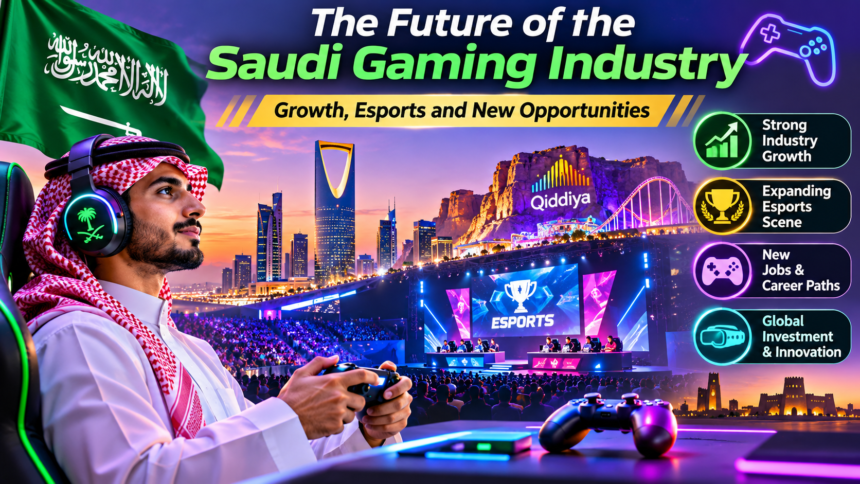
The Future of the Saudi Gaming Industry
The gaming industry has become one of the fastest-growing areas of digital entertainment around the world. Video games are no longer just a way to spend free time. They have developed into a large business that includes technology, entertainment, professional competitions, game development, education, content creation, and digital marketing.
- 1. Saudi Arabia’s Vision for the Gaming Industry
- 2. Growing Investment in Gaming Companies
- 3. Esports Will Become a Major Part of the Industry
- 4. More Opportunities for Saudi Game Developers
- 5. Qiddiya Could Become an Important Gaming Destination
- 6. Mobile Gaming Will Continue to Create Opportunities
- 7. Artificial Intelligence and New Gaming Technologies
- 8. Education and Training Will Prepare Future Game Developers
- 9. New Career Opportunities in the Saudi Gaming Industry
- 10. Global Partnerships Will Help the Industry Grow
- 11. Gaming Can Support Tourism and Entertainment
- 12. Supporting Small Gaming Businesses and Startups
- 13. Challenges Saudi Arabia Must Address
- 14. What Could the Saudi Gaming Industry Look Like by 2030?
- Conclusion: A New Chapter for the Saudi Gaming Industry
- Frequently Asked Questions (FAQs)
Saudi Arabia is working to become an important name in this global industry. Through its Vision 2030 programme, the Kingdom is investing in gaming companies, esports events, digital infrastructure, training, and local talent. Its aim is not only to attract international gaming brands but also to develop Saudi game developers, create new jobs, and produce games that can compete in international markets.
Saudi Arabia’s gaming and esports industry is growing quickly. Through its National Gaming and Esports Strategy, the country aims to become a major global entertainment destination by 2030.
The country’s young population, growing interest in digital entertainment, and strong investment plans are creating new opportunities for this sector. Major companies such as Savvy Games Group are helping build connections with the international gaming industry, while new projects are creating space for gaming businesses and esports communities.
But what will the future of the Saudi gaming industry look like? How will technology, local talent, esports, and investment shape its growth? Let’s explore the major developments and opportunities that could make Saudi Arabia an important gaming destination in the coming years.
1. Saudi Arabia’s Vision for the Gaming Industry
Saudi Arabia’s gaming ambitions are closely connected to Vision 2030, the national programme designed to diversify the economy and support new industries.
In September 2022, the Kingdom introduced the National Gaming and Esports Strategy. The strategy aims to develop the entire gaming industry, from game creation and publishing to esports, technology, and professional services.
It includes several major goals for 2030:
- Contribute approximately SAR 50 billion to the national economy, directly and indirectly.
- Create more than 39,000 job opportunities.
- Support the development of more than 30 globally recognised games.
- Establish 250 electronic gaming companies in the Kingdom.
- Help Saudi Arabia reach the top three countries globally in the number of professional esports players.
These are official targets, not figures that have already been achieved. They show the scale of the country’s ambitions and the importance it places on developing a complete gaming ecosystem.
The strategy also includes 86 initiatives supported by more than 20 public and private organisations. These initiatives cover investment, education, business development, technology, and international partnerships.
The main goal is to build an industry that creates long-term opportunities rather than depending only on gaming events and entertainment.
2. Growing Investment in Gaming Companies
Investment will play an important role in the future of Saudi Arabia’s gaming industry. Developing successful games requires money, skilled workers, technology, marketing, and time. Strong investment can help companies build these resources and compete internationally.
One of the most important organisations in this area is Savvy Games Group, which is owned by Saudi Arabia’s Public Investment Fund (PIF). Established in 2021, Savvy focuses on long-term growth in the gaming and esports business.
Savvy has expanded its international presence through major business acquisitions. One important example is its $4.9 billion acquisition of video game company Scopely, completed in 2023. Savvy also owns ESL FACEIT Group, a major organisation involved in esports competitions and platforms.
These investments give Saudi Arabia connections with experienced international companies. They also provide opportunities to learn about game publishing, professional competitions, game operations, and global audiences.
In the coming years, investment may also support:
- New game development studios.
- Local technology companies.
- Mobile game businesses.
- Esports organisations.
- Gaming education and training.
- Animation and digital design services.
- Marketing and game publishing companies.
The long-term challenge will be to turn investment into a strong local industry that can create successful games and businesses.
3. Esports Will Become a Major Part of the Industry
Esports, or electronic sports, involves organised video game competitions in which players and teams compete professionally. Popular esports games include football simulations, strategy games, battle arena games, and competitive shooting games.
Saudi Arabia has been investing in esports as an important part of its entertainment and economic development plans.
The Esports World Cup in Riyadh has helped bring international attention to the Kingdom. The first edition was held in 2024, followed by a second edition in 2025. These events brought together professional players, teams, gaming companies, fans, and sponsors from different countries.
Esports can support more than professional players. Large tournaments also create demand for:
- Event managers and organisers.
- Game commentators and presenters.
- Technical support teams.
- Video editors and content creators.
- Marketing and sponsorship professionals.
- Broadcast and production specialists.
- Coaches and team managers.
In the future, Saudi Arabia may continue to attract major esports competitions and develop more local professional teams. This could help young players find opportunities to compete at national and international levels.
However, a healthy esports industry also needs regular competitions, player development, fair rules, and good support for professional players.
4. More Opportunities for Saudi Game Developers
One of the most important parts of the future gaming industry will be local game development.
International games are popular in Saudi Arabia, but the country also wants to create its own games. Local developers can use their creativity, technical knowledge, and understanding of regional culture to build original gaming experiences.
Game development involves several skills, including programming, animation, sound design, storytelling, game testing, and user experience design.
Saudi Arabia has an opportunity to support studios that develop games for mobile phones, computers, and gaming consoles.
Some possible areas of development include:
- Mobile adventure and puzzle games.
- Sports and racing games.
- Educational games for children.
- Games based on Arabian history and culture.
- Strategy and simulation games.
- Multiplayer games for international players.
Local stories and settings can give Saudi games a unique identity. For example, developers could create games inspired by traditional architecture, desert environments, historical trade routes, or stories from the Arabian Peninsula.
However, a successful game needs more than a local theme. It must also offer enjoyable gameplay, good design, strong performance, and a reason for players to return.
5. Qiddiya Could Become an Important Gaming Destination
Qiddiya City is one of Saudi Arabia’s major entertainment and development projects. Its planned Gaming and Esports District is designed to support competitive esports, casual gaming, and digital entertainment.
According to the Public Investment Fund’s project information, the district is planned to include four esports arenas with more than 5,000 seats each, along with interactive gaming spaces, esports clubs, and areas for fans.
The published project plan also identifies around 183,100 square metres of gaming and interactive entertainment space.
This development could create a dedicated place for gaming events, professional training, entertainment, and business activities. It is also intended to attract leading international gaming brands and regional headquarters.
The district may help Saudi Arabia bring several parts of the gaming industry closer together.
For visitors, it could provide opportunities to watch tournaments, explore gaming activities, and experience interactive entertainment. For companies, it could offer a place to connect with players, partners, and other businesses.
Key Highlights of the Qiddiya Gaming District
- Large Area: The gaming district will cover more than 500,000 square metres. It will also have 100,000 square metres of space for shops, restaurants, and entertainment activities.
- Esports Arenas: The district will have four esports arenas. One of them is expected to be among the three largest esports venues in the world.
- Seating Capacity: All four arenas together will be able to accommodate around 73,000 spectators. They will be designed to host major international gaming tournaments.
- Gaming Industry Hub: Qiddiya aims to become a home for up to 30 leading esports teams and several major gaming companies.
- Modern Gaming Experience: The district will combine real-world entertainment with digital gaming experiences. It will also include gaming-themed hotels, homes, and interactive spaces for visitors and gaming fans.
The important point is that Qiddiya’s gaming district is a development project. Its long-term impact will depend on construction, business participation, event activity, and the organisations that establish operations there.
6. Mobile Gaming Will Continue to Create Opportunities
Mobile gaming is an important part of the global gaming market, and Saudi Arabia is no exception. Smartphones make gaming easy to access because people can play almost anywhere without purchasing a computer or console.
Mobile games also attract different types of players. Some people enjoy simple puzzle games, while others prefer online multiplayer games, sports games, racing games, and competitive titles.
As mobile technology develops, Saudi Arabia may see more opportunities in mobile game design and publishing.
Future developments could include:
- Better graphics and smoother gameplay.
- More multiplayer experiences.
- Improved online gaming services.
- Games designed for different age groups.
- Arabic-language gaming content.
- New payment and subscription options.
- Mobile esports competitions.
Local developers can benefit from creating games that work well on different devices and appeal to both regional and international audiences.
At the same time, companies must pay attention to fair in-game purchases, privacy, and safe online experiences.
7. Artificial Intelligence and New Gaming Technologies
Technology will have a major influence on the future of gaming. Artificial intelligence, virtual reality, augmented reality, cloud gaming, and better graphics tools are changing how games are created and played.
Artificial intelligence can help developers with several parts of game production. It can support testing, help create early design ideas, assist with animation workflows, and make certain game characters respond more naturally.
Virtual reality can create interactive experiences in which players feel more connected to digital environments. Augmented reality can combine digital content with the real world.
Cloud gaming may also make some games easier to access by allowing players to stream them instead of depending entirely on powerful local hardware. However, a good internet connection and suitable services are still necessary.
Some important technology areas for Saudi gaming companies include:
- Artificial intelligence: Supporting game testing, character behaviour, and development tools.
- Virtual reality: Creating interactive games and simulation experiences.
- Augmented reality: Bringing digital elements into real environments.
- Cloud gaming: Making selected games accessible through streaming services.
- Advanced graphics: Improving the visual quality of games.
- Cybersecurity: Protecting player information, accounts, and online communities.
Saudi companies that develop these skills may find opportunities in both gaming and other digital industries.
8. Education and Training Will Prepare Future Game Developers
A successful gaming industry needs people with the right skills. It requires programmers, artists, designers, writers, testers, sound engineers, and business professionals.
Education and training will therefore be important for building the next generation of Saudi gaming talent.
An important development took place in February 2026, when Saudi Arabia’s Ministry of Education and Savvy Games Group signed three memoranda of understanding with education-related organisations. The partnerships focus on developing skills, supporting game creation competitions, improving teacher training, and introducing gaming and interactive learning activities into education.
The announced areas of cooperation also include educational game development, teacher development, student competitions, and the creation of a Savvy Games and Innovation Lab.
These efforts could help students understand how games are made and introduce them to careers in the gaming industry at an earlier stage.
Useful skills for students who want to enter this field include:
- Programming languages such as C#, C++, and JavaScript.
- Game engines such as Unity and Unreal Engine.
- 2D and 3D animation.
- Digital illustration and graphic design.
- Sound design and music production.
- Storytelling and creative writing.
- Game testing and quality assurance.
- Project management and teamwork.
Practical experience is especially important. Students can begin with small projects, join game development competitions, build portfolios, and work with other developers.
9. New Career Opportunities in the Saudi Gaming Industry
The growth of gaming will create opportunities for people with different educational and professional backgrounds.
Not every job in the gaming industry requires programming knowledge. Many roles focus on creativity, communication, business, marketing, event management, and customer support.
Some possible career paths include:
| Career | Main responsibility |
|---|---|
| Game Developer | Builds and improves video games |
| Game Designer | Plans gameplay, rules, and features |
| 3D Artist | Creates characters and digital environments |
| Animator | Adds movement to characters and objects |
| Game Tester | Finds errors and checks game quality |
| Esports Manager | Organises teams and competitions |
| Game Producer | Manages development projects |
| Community Manager | Communicates with players |
| Game Writer | Develops stories and dialogue |
| Marketing Specialist | Promotes games and gaming events |
There may also be opportunities in video production, live streaming, broadcasting, translation, legal services, finance, and business development.
For young people, this industry offers different career options. The best preparation is to develop practical skills and build a portfolio that shows what they can do.
10. Global Partnerships Will Help the Industry Grow
Gaming is an international business. Successful companies often work with publishers, technology providers, investors, distributors, and developers in different countries.
International partnerships can help Saudi gaming businesses learn from experienced companies and understand global markets.
For example, partnerships can provide access to:
- Experienced game designers and producers.
- International publishing networks.
- Advanced development tools.
- Training and professional support.
- Global marketing opportunities.
- New business and investment connections.
Savvy Games Group’s international portfolio is one example of how Saudi Arabia is building connections with established gaming companies.
In the future, more partnerships could support joint game development, training programmes, technology exchange, and local studio growth.
However, international cooperation should also help local companies build their own skills and creative independence. The goal is not simply to bring foreign businesses into Saudi Arabia, but to create a strong local industry that can work successfully around the world.
11. Gaming Can Support Tourism and Entertainment
Gaming is also becoming part of the wider entertainment and tourism experience.
Large esports tournaments attract players, fans, media, sponsors, and visitors. These events can create demand for hotels, restaurants, transport, shopping, and other services.
Gaming attractions and interactive entertainment centres may also give visitors new reasons to explore Saudi cities.
Projects such as Qiddiya’s planned Gaming and Esports District could connect gaming with other leisure activities. Visitors may be able to watch professional competitions, take part in interactive experiences, and attend gaming-related events.
Gaming tourism can also support local businesses. Food outlets, accommodation providers, event companies, and transport services may benefit when major competitions attract visitors.
Over time, a mix of gaming events, entertainment facilities, and cultural activities could help Saudi Arabia strengthen its position as a destination for digital entertainment.
12. Supporting Small Gaming Businesses and Startups
Large investments are important, but small businesses and independent developers will also play a major role in the future of the Saudi gaming industry.
Small studios can experiment with new ideas, build original games, and develop services for other gaming companies.
For example, a startup may focus on mobile games, animation, game testing, character design, online communities, or educational games.
Smaller businesses may need support with:
- Early-stage funding.
- Business advice and mentoring.
- Access to development equipment.
- Training and professional networks.
- Marketing and publishing.
- Opportunities to meet investors.
- Guidance on legal and intellectual property matters.
Business incubators, accelerators, and industry partnerships can help young companies turn creative ideas into real products.
A healthy gaming ecosystem should provide opportunities for businesses of different sizes, not only large international brands.
13. Challenges Saudi Arabia Must Address
Although Saudi Arabia has strong plans for gaming, building a successful industry will take time. Investment and major events can create attention, but lasting growth requires good games, skilled workers, responsible business practices, and regular demand from players.
Some important challenges include:
Developing original games: Producing games that attract international audiences is difficult. Local studios must focus on quality, creativity, and player experience.
Building experienced teams: Game production requires people who understand programming, design, publishing, marketing, and project management. Developing this experience takes time.
Global competition: Saudi companies will compete with established gaming markets that already have successful studios, popular franchises, and experienced developers.
Long development cycles: Making a high-quality game can take years. Companies need realistic budgets and long-term planning.
Sustainable business models: Studios must find ways to earn money without damaging player trust through unfair pricing or excessive in-game purchases.
Player safety: Online games need strong privacy protections, fair competition, moderation, and safeguards against harassment and harmful behaviour.
Long-term investment: Businesses need to focus on building products and skills that remain valuable after major events and short-term excitement.
Addressing these challenges will be important if Saudi Arabia wants to become a lasting centre for gaming and esports.
14. What Could the Saudi Gaming Industry Look Like by 2030?
By 2030, Saudi Arabia aims to have a larger and more developed gaming ecosystem. If its plans progress successfully, the country could have more local studios, more trained professionals, stronger esports organisations, and a wider range of gaming-related businesses.
The National Gaming and Esports Strategy provides a direction for this development through its targets for jobs, businesses, economic contribution, and internationally recognised games.
Some possible changes by 2030 include:
- More Saudi-developed games reaching international players.
- A stronger network of local gaming companies.
- More professional training and educational programmes.
- Greater participation in international esports.
- New opportunities in mobile and console game development.
- More partnerships between Saudi and international studios.
- Further growth in gaming-related tourism and entertainment.
These developments are ambitions, not guaranteed results. Their success will depend on the quality of projects, the skills of local talent, market demand, and the ability of companies to build sustainable businesses.
The most important measure of progress will be whether Saudi Arabia can create games and gaming companies that remain successful over the long term.
Conclusion: A New Chapter for the Saudi Gaming Industry
The future of the Saudi gaming industry looks full of opportunities. Through Vision 2030, the National Gaming and Esports Strategy, investment from Savvy Games Group, and major entertainment developments, Saudi Arabia is working to become a global centre for gaming and esports.
The growth of professional competitions, local game development, education, and new technologies could create jobs and open doors for young people. Projects such as Qiddiya’s planned Gaming and Esports District may also strengthen the country’s position as a destination for gaming events and digital entertainment.
However, long-term success will depend on more than investment and large tournaments. Saudi Arabia will need talented developers, original games, responsible businesses, strong education programmes, and lasting international partnerships.
The future of the Saudi gaming industry will be shaped by the people who create, develop, play, and support games. By investing in talent and original ideas, the Kingdom has an opportunity to build a gaming ecosystem that can compete on the global stage.
Frequently Asked Questions (FAQs)
1. What is the future of the Saudi gaming industry?
The industry is expected to grow through investment, local game development, esports, technology, education, and international partnerships. Saudi Arabia aims to become a global gaming and esports hub by 2030.
2. What is Saudi Arabia’s National Gaming and Esports Strategy?
It is a national strategy launched in 2022 to develop the gaming and esports industry. Its 2030 targets include creating more than 39,000 jobs, supporting 250 gaming companies, and producing more than 30 globally recognised games.
3. What is Savvy Games Group?
Savvy Games Group is a company owned by Saudi Arabia’s Public Investment Fund. It invests in the gaming and esports industry and has major businesses such as Scopely and ESL FACEIT Group in its portfolio.
4. Why is Saudi Arabia investing in esports?
Saudi Arabia is investing in esports to develop entertainment, attract international events, create jobs, support professional players, and strengthen its digital economy.
5. What is the Gaming and Esports District in Qiddiya?
It is a planned district in Qiddiya City dedicated to competitive esports, casual gaming, and digital entertainment. The project plan includes professional arenas, gaming spaces, and facilities for fans and players.
6. What jobs will be available in the Saudi gaming industry?
Potential jobs include game developer, game designer, animator, 3D artist, game tester, esports manager, community manager, game producer, and marketing specialist.
7. How can students prepare for gaming careers?
Students can learn programming, game design, animation, 3D modelling, sound design, and project management. They can also build small games, create portfolios, and join competitions.
8. Will Saudi Arabia develop its own video games?
Yes. Developing local games is a major part of the National Gaming and Esports Strategy. The country aims to support local studios and produce more than 30 globally recognised games by 2030.
9. How will technology influence Saudi gaming?
Artificial intelligence, virtual reality, augmented reality, cloud gaming, and advanced graphics tools may create new ways to develop and experience games.
10. What are the main challenges for the Saudi gaming industry?
Important challenges include developing experienced talent, producing original games, competing internationally, supporting small studios, creating sustainable business models, and protecting players online.
Do follow us on Instagram
Read More – Why Taif Is Famous for Its Rose Industry Amazing Story