
What Should You Eat for Better Gut Health: 12 Foods That Support Healthy Digestion
Healthy digestion is essential for overall well-being because it helps the body break down food, absorb nutrients, and eliminate waste effectively. The healthy digestive system plays an important role in maintaining energy levels, supporting immunity, and keeping the body functioning properly. However, unhealthy eating habits, stress, insufficient physical activity, and inadequate water intake can sometimes contribute to digestive discomfort, bloating, constipation, and irregular bowel movements. One of the simplest ways to support digestive health is by including nutritious, gut-friendly foods in your daily diet.
- 1. Why Is Healthy Digestion Important for Overall Health?
- 2. Which Foods Are Best for Healthy Digestion?
- 3. Which Benefits Do Bananas Offer for Digestion?
- 4. How Does Yoghurt Support Healthy Gut Bacteria?
- 5. Why Are Oats Good for Digestive Health?
- 6. Can Papaya Help Improve Digestion Naturally?
- 7. How Does Ginger Support the Digestive System?
- 8. Why Are Apples Beneficial for Healthy Digestion?
- 9. How Do Leafy Green Vegetables Improve Digestion?
- 10. Can Fermented Foods Like Kimchi Support Gut Health?
- 11. Why Are Chia Seeds Helpful for Digestive Health?
- 12. How Do Whole Grains Support Better Digestion?
- 13. Can Avocados Help Maintain a Healthy Digestive System?
- 14. Why Are Lentils and Beans Good for Digestion?
- 15. How Much Fibre Should You Eat for Healthy Digestion?
- 16. What Other Daily Habits Help Improve Digestion Naturally?
- 17. Which Foods Should You Limit for Better Digestive Health?
- 18. What Is a Simple Daily Diet Plan for Healthy Digestion?
- 19. Can Eating the Right Foods Prevent Digestive Problems?
- 20. What Are the Best Foods to Eat Every Day for Better Gut Health?
But what foods are best for healthy digestion? Can fruits, vegetables, whole grains, and fermented foods improve gut health naturally? The answer is yes. Many everyday foods contain dietary fibre, probiotics, prebiotics, water, and other nutrients that help support a balanced digestive system. Eating a varied diet that includes these foods can promote regular bowel movements and support beneficial gut bacteria.
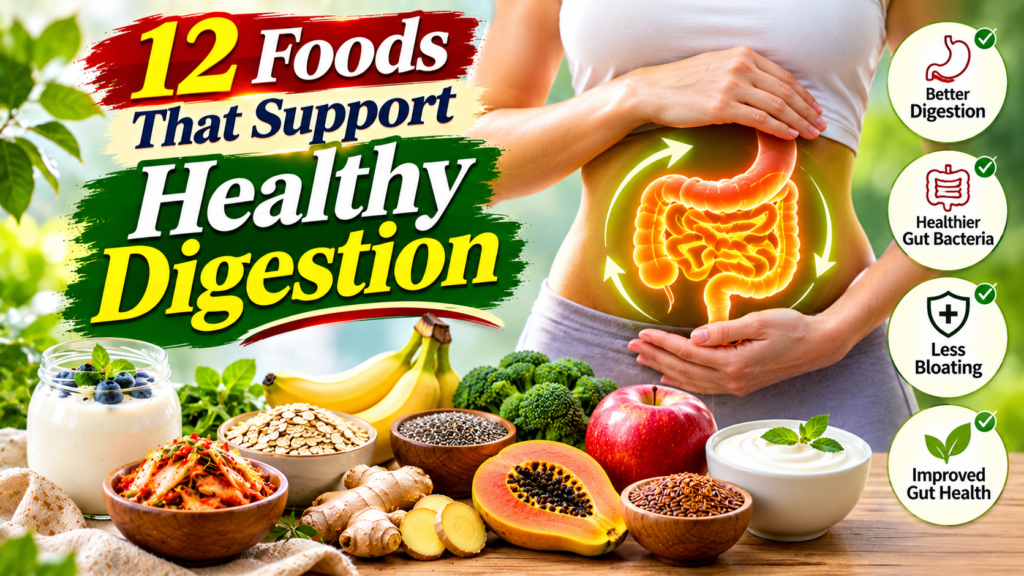
In this article, we explore 12 foods that support healthy digestion, explain their potential benefits, and discuss how you can include them in your everyday meals.
1. Why Is Healthy Digestion Important for Overall Health?
Healthy digestion allows the body to process food efficiently and obtain the nutrients needed for energy, growth, and tissue repair. The digestive system includes several organs, including the stomach, small intestine, large intestine, liver, and pancreas. Each plays a specific role in breaking down food and absorbing essential nutrients.
When healthy digestion functions properly, the body can absorb vitamins, minerals, proteins, carbohydrates, and healthy fats more effectively. A healthy digestive system also supports the gut microbiome, which consists of trillions of microorganisms living in the digestive tract.
Maintaining healthy digestion is important for several reasons:
- Better nutrient absorption: Helps the body obtain essential nutrients from food.
- Regular bowel movements: Dietary fibre supports healthy and consistent bowel habits.
- Gut microbiome balance: Certain foods nourish beneficial gut bacteria.
- Immune system support: The digestive tract plays an important role in immune function.
- Digestive comfort: Appropriate food choices may help reduce occasional constipation and digestive discomfort.
- Overall wellness: A balanced digestive system contributes to general health.
Eating a nutritious diet, drinking enough water, staying physically active, and maintaining regular meal habits can all contribute to better digestive health.
2. Which Foods Are Best for Healthy Digestion?
Several foods contain nutrients that support the digestive process. Fibre-rich fruits and vegetables help maintain bowel regularity, fermented foods provide beneficial microorganisms, and whole grains supply fibre that supports gut bacteria.
Here are 12 foods worth including in a balanced diet for a healthy digestion.
3. Which Benefits Do Bananas Offer for Digestion?
Bananas are among the most convenient fruits for supporting digestive health. They contain dietary fibre, including soluble fibre, which helps maintain regular bowel movements. Bananas also contain resistant starch, particularly when they are slightly green. Resistant starch passes through the small intestine without being completely digested and can be fermented by beneficial bacteria in the large intestine.
This process produces short-chain fatty acids, which help support the health of the intestinal lining.
Bananas also provide potassium, an essential mineral involved in maintaining fluid balance and normal muscle function.
How can you include bananas in your diet?
- Eat a ripe banana as a morning snack.
- Add sliced bananas to oatmeal.
- Blend bananas into smoothies.
- Combine bananas with plain yoghurt.
- Use mashed bananas in homemade breakfast recipes.
Ripe bananas are generally easier to tolerate than less-ripe bananas for some people. However, individual digestive responses can vary.
4. How Does Yoghurt Support Healthy Gut Bacteria?
Yoghurt is a popular fermented dairy food that can support digestive health. Many varieties contain live bacterial cultures, including Lactobacillus and other beneficial microorganisms. These microorganisms are commonly known as probiotics.
Probiotics are live microorganisms that provide health benefits when consumed in adequate amounts. Certain probiotic strains may help maintain a healthy balance of gut bacteria and support digestive function.
Yoghurt also contains protein, calcium, and other important nutrients. However, not every yoghurt product contains live cultures, so checking the product label is important.
What should you look for when buying yoghurt?
- Choose plain yoghurt with live and active cultures.
- Prefer varieties without excessive added sugar.
- Consider unsweetened Greek yoghurt for additional protein.
- Add fresh fruits for natural sweetness.
- Avoid products that contain ingredients you do not tolerate.
People who are lactose intolerant may find lactose-free yoghurt more comfortable. Individual tolerance varies.
5. Why Are Oats Good for Digestive Health?
Oats are an excellent source of soluble fibre, particularly beta-glucan. This type of fibre absorbs water and forms a gel-like substance during digestion. It can help support bowel regularity and contribute to healthy cholesterol levels.
Oats also contain prebiotic fibre that helps nourish beneficial gut microorganisms. Including oats in breakfast can be an easy way to increase daily fibre intake.
Another advantage of oats is that they provide complex carbohydrates, which offer a steady source of energy.
How can you eat oats for better healthy digestion?
- Prepare oatmeal with milk or a suitable plant-based alternative.
- Add bananas, apples, or berries.
- Mix oats with yoghurt for overnight oats.
- Include chia seeds for additional fibre.
- Use oats in homemade breakfast pancakes.
Start with moderate portions if your current diet is low in fibre. Increasing fibre gradually can help prevent gas and bloating.
6. Can Papaya Help Improve Digestion Naturally?
Papaya is a nutritious tropical fruit that contains water, dietary fibre, vitamin C, and vitamin A precursors. It is particularly known for containing papain, a natural enzyme that helps break down proteins.
Papain is used in some digestive enzyme products and food preparation. However, eating papaya should not be considered a treatment for digestive disorders.
The fruit’s fibre and water content can contribute to regular bowel movements and help support hydration.
What are some easy ways to enjoy papaya?
- Eat fresh papaya as a mid-morning snack.
- Add papaya cubes to fruit salads.
- Blend papaya into smoothies.
- Combine papaya with yoghurt.
- Enjoy it as part of a balanced breakfast.
Fresh, ripe papaya is generally a nutritious addition to a varied diet.
7. How Does Ginger Support the Digestive System?
Ginger has been used in traditional food preparation and wellness practices for centuries. It contains natural compounds called gingerols and shogaols, which have been studied for their potential effects on digestive function.
Research suggests that ginger may help support stomach emptying and reduce certain types of nausea. It is also commonly consumed as a warm beverage after meals.
Although ginger can be helpful for some people, its effects vary depending on the individual and the amount consumed.
How can you include ginger in your daily diet?
- Prepare fresh ginger tea.
- Add grated ginger to vegetable soups.
- Use ginger in homemade curries.
- Add small amounts to smoothies.
- Include ginger in stir-fried vegetables.
People who experience heartburn may find that ginger aggravates their symptoms, so it is important to observe individual tolerance.
8. Why Are Apples Beneficial for Healthy Digestion?
Apples are rich in dietary fibre and contain a soluble fibre called pectin. Pectin absorbs water and forms a gel-like substance in the digestive tract. It can help support bowel regularity and nourish beneficial gut bacteria.
Apples also contain polyphenols, which are plant compounds associated with antioxidant activity.
Eating apples with their skin provides additional fibre, provided they are washed properly before consumption.
What is the best way to eat apples for digestive health?
- Eat a whole apple as a healthy snack.
- Add sliced apples to oatmeal.
- Combine apples with natural peanut butter.
- Include chopped apples in fruit salads.
- Cook apples into homemade compotes.
Some people with irritable bowel syndrome (IBS) may experience bloating or discomfort after eating apples because they contain fermentable carbohydrates. In such cases, portion size and individual tolerance matter.
9. How Do Leafy Green Vegetables Improve Digestion?
Leafy green vegetables such as spinach, kale, and lettuce are valuable sources of fibre, vitamins, minerals, and plant compounds. Including them regularly can help support digestive health and overall nutrition.
Dietary fibre adds bulk to stool and helps maintain regular bowel movements. Vegetables also provide water, which contributes to hydration and supports normal digestive processes.
Spinach, in particular, contains folate, vitamin K, magnesium, and other nutrients.
Which leafy greens should you include in your diet?
- Spinach
- Kale
- Lettuce
- Swiss chard
- Mustard greens
- Amaranth leaves
You can add leafy vegetables to soups, salads, smoothies, curries, and cooked meals. If raw vegetables cause discomfort, lightly cooking them may make them easier to tolerate.
10. Can Fermented Foods Like Kimchi Support Gut Health?
Fermented foods are increasingly recognised for their potential role in supporting digestive health. Kimchi is a traditional Korean dish made primarily from fermented vegetables, including cabbage and radish.
During fermentation, microorganisms break down certain components of food and produce different compounds. Some traditionally fermented foods contain live microorganisms that may contribute to gut microbial diversity.
Kimchi also contains fibre and various vitamins and plant compounds from its vegetable ingredients.
How can you include kimchi in your meals?
- Serve a small portion alongside rice.
- Add it to vegetable bowls.
- Include it in savoury breakfast dishes.
- Combine it with cooked vegetables.
- Use it as a flavourful side dish.
Not all fermented foods contain live cultures when purchased because some products are heat-treated. Check labels if live microorganisms are your goal.
Kimchi can also be high in sodium, so people monitoring their salt intake should pay attention to portion sizes.
11. Why Are Chia Seeds Helpful for Digestive Health?
Chia seeds are small but nutrient-rich seeds containing soluble fibre, insoluble fibre, plant-based omega-3 fatty acids, and protein.
Their fibre absorbs water and forms a gel-like substance, which can help soften stool and support bowel regularity. Chia seeds also provide nutrients that contribute to a balanced diet.
However, consuming too much fibre too quickly may cause gas, bloating, or abdominal discomfort.

What are the best ways to consume chia seeds?
- Prepare chia pudding with milk or a plant-based alternative.
- Add soaked chia seeds to smoothies.
- Mix them into oatmeal.
- Sprinkle them over yoghurt.
- Combine them with fresh fruit.
It is advisable to soak chia seeds or mix them thoroughly with sufficient liquid before eating. Avoid swallowing large quantities of dry chia seeds.
12. How Do Whole Grains Support Better Digestion?
Whole grains are important components of a fibre-rich diet. Unlike refined grains, whole grains retain their bran, germ, and endosperm, providing a wider range of nutrients.
They contain dietary fibre, B vitamins, minerals, and plant compounds that support overall health.
Fibre helps maintain regular bowel movements and supports beneficial bacteria in the large intestine.
Some excellent whole-grain options include:
- Brown rice
- Whole wheat
- Quinoa
- Barley
- Oats
- Whole-grain bread
- Millet
Incorporating whole grains into daily meals can help improve overall fibre intake. For example, replacing some refined rice or white bread with whole-grain alternatives is a simple dietary change.
People with coeliac disease should avoid wheat, barley, and other gluten-containing grains and choose suitable gluten-free alternatives.
13. Can Avocados Help Maintain a Healthy Digestive System?
Avocados are nutrient-dense fruits containing dietary fibre and healthy monounsaturated fats. They also provide potassium, folate, and vitamin E.
Their fibre content supports bowel regularity, while their healthy fats contribute to a balanced diet.
Avocados contain both soluble and insoluble fibre, making them a useful addition to meals focused on digestive wellness.
How can you add avocados to your diet?
- Spread mashed avocado on whole-grain toast.
- Add avocado slices to salads.
- Blend avocado into smoothies.
- Include avocado in vegetable sandwiches.
- Prepare homemade guacamole.
Although avocados are nutritious, they contain fermentable carbohydrates that may trigger symptoms in some people with IBS, especially in larger portions.
14. Why Are Lentils and Beans Good for Digestion?
Lentils and beans are excellent sources of dietary fibre and plant-based protein. They also provide resistant starch and other nutrients that support gut health.
Their fibre content helps increase stool bulk and supports regular bowel movements. Some of their carbohydrates are fermented by gut bacteria, producing short-chain fatty acids that contribute to intestinal health.
Popular options include:
- Green lentils
- Red lentils
- Chickpeas
- Kidney beans
- Black beans
- Black-eyed peas
These foods can be included in soups, salads, curries, stews, and homemade vegetable dishes.
However, beans and lentils may cause gas in some people because gut bacteria ferment certain carbohydrates in them.
How can you make legumes easier to digest?
- Soak dried beans before cooking.
- Rinse canned beans thoroughly.
- Cook legumes until they are soft.
- Start with smaller portions.
- Increase intake gradually.
- Drink enough water throughout the day.
These simple practices can help improve tolerance.
15. How Much Fibre Should You Eat for Healthy Digestion?
Dietary fibre is essential for digestive health, but many people do not consume enough of it.
Fibre helps regulate bowel movements, supports beneficial gut bacteria, and contributes to overall digestive function. It is found naturally in fruits, vegetables, legumes, nuts, seeds, and whole grains.
For most adults, a general target is approximately 25–38 grams of fibre per day, depending on age, sex, and individual nutritional needs.
You can increase fibre intake through simple daily changes:
- Eat whole fruits instead of drinking fruit juice.
- Include vegetables in lunch and dinner.
- Choose whole grains more frequently.
- Add lentils or beans to meals.
- Eat nuts and seeds in moderate portions.
- Include oats in your breakfast.
Remember that increasing fibre suddenly can lead to bloating and gas. Gradually increasing your intake and drinking enough water can help your digestive system adjust.
16. What Other Daily Habits Help Improve Digestion Naturally?
Although food plays an important role in digestive health, lifestyle habits are equally important. Even a nutritious diet may not provide the desired benefits if daily habits consistently interfere with normal digestive function.
Here are some practical ways to support a healthy digestive system.
1. Drink enough water
Water helps soften stool and supports the movement of food through the digestive tract. Drink regularly throughout the day, adjusting your intake according to activity, climate, and individual needs.
2. Eat slowly and chew properly
Eating too quickly can contribute to swallowing excess air and digestive discomfort. Chewing food thoroughly helps break it into smaller pieces before swallowing.
3. Stay physically active
Regular physical activity, including walking, cycling, and swimming, can help support normal bowel movements.
4. Maintain regular meal habits
Eating meals at reasonably consistent times may help establish a comfortable daily routine.
5. Manage stress
Stress can influence digestive function and may worsen symptoms such as bloating, abdominal discomfort, and changes in bowel habits. Relaxation exercises, meditation, and adequate sleep can help.
6. Get sufficient sleep
Good sleep habits support overall health and may contribute to a healthier relationship between the brain and digestive system.
7. Limit excessive processed foods
Highly processed foods that are low in fibre may contribute to an unbalanced diet when consumed frequently. Choose a variety of minimally processed foods instead.
17. Which Foods Should You Limit for Better Digestive Health?
Not every food affects everyone in the same way. Some people can eat spicy foods, dairy products, or high-fat meals without difficulty, while others may experience digestive discomfort.
If you frequently experience bloating, gas, heartburn, or irregular bowel movements, consider observing how your body responds to particular foods.
Depending on individual tolerance, it may help to limit:
- Excessively fried and greasy foods.
- Highly processed snacks.
- Sugary drinks.
- Excessive alcohol.
- Large amounts of caffeine.
- Very spicy meals if they trigger symptoms.
- Foods that cause known intolerances or allergies.
It is not necessary to eliminate entire food groups without a clear reason. A balanced approach based on individual tolerance is generally more sustainable.
18. What Is a Simple Daily Diet Plan for Healthy Digestion?
Creating a digestion-friendly meal routine does not have to be complicated. A balanced eating plan can include fruits, vegetables, whole grains, fermented foods, and protein-rich ingredients.
Here is an example of how you can include digestive-supporting foods throughout the day.
| Meal | Suggested foods |
|---|---|
| Early morning | A glass of water |
| Breakfast | Oatmeal with banana and chia seeds |
| Mid-morning snack | Fresh papaya or an apple |
| Lunch | Brown rice, cooked vegetables, and lentils |
| Evening snack | Plain yoghurt or a suitable alternative |
| Dinner | Whole-grain roti with cooked vegetables |
| Optional side | A small serving of fermented vegetables |
This is a general example rather than a personalised nutrition plan. Adjust portion sizes and ingredients according to your dietary needs, preferences, and digestive tolerance.
19. Can Eating the Right Foods Prevent Digestive Problems?
Eating a balanced diet can support normal digestive function and may reduce the likelihood of certain common digestive complaints, such as constipation associated with inadequate fibre intake.
However, food alone cannot prevent or cure every digestive condition. Problems such as irritable bowel syndrome, inflammatory bowel disease, gastroesophageal reflux disease, food intolerances, and gastrointestinal infections may require specific medical evaluation and treatment.
A healthy digestive routine should include:
- A varied diet rich in fibre.
- Adequate hydration.
- Regular physical activity.
- Sufficient sleep.
- Stress management.
- Appropriate medical care when symptoms persist.
If you experience persistent abdominal pain, unexplained weight loss, blood in your stool, ongoing diarrhoea, or significant changes in bowel habits, consult a healthcare professional.
20. What Are the Best Foods to Eat Every Day for Better Gut Health?
There is no single food that can provide everything the digestive system needs. The best approach is to eat a wide variety of nutritious foods that supply different types of fibre, vitamins, minerals, and beneficial plant compounds.
Some excellent everyday choices include:
- Bananas: Provide fibre and resistant starch.
- Yoghurt: Certain varieties contain live probiotic cultures.
- Oats: Supply beta-glucan and other fibres.
- Papaya: Provides fibre, water, and papain.
- Ginger: May help with certain digestive symptoms, including nausea.
- Apples: Contain pectin and polyphenols.
- Leafy greens: Provide fibre, vitamins, and minerals.
- Kimchi: A fermented vegetable food that may contain live microorganisms.
- Chia seeds: Offer soluble and insoluble fibre.
- Whole grains: Support bowel regularity through dietary fibre.
- Avocados: Supply fibre and healthy fats.
- Lentils and beans: Provide fibre, resistant starch, and plant protein.
Combining these foods in different meals can help create a nutritious and varied diet.
Conclusion: How Can You Support Healthy Digestion Through Everyday Food Choices?
Healthy digestion begins with consistent and balanced lifestyle choices. Including fibre-rich fruits, vegetables, whole grains, legumes, seeds, and fermented foods in your daily diet can help support bowel regularity and nourish beneficial gut bacteria.
The 12 foods discussed in this article offer different nutrients and digestive benefits. From bananas and yoghurt to oats, papaya, ginger, leafy greens, and lentils, each can contribute to a varied eating pattern that supports digestive wellness.
However, improving digestion is not about eating one particular superfood. It is about maintaining a balanced diet, drinking enough water, staying physically active, managing stress, and recognizing which foods your body tolerates best.
Start with small changes, introduce fibre gradually, and focus on long-term healthy eating habits. With consistency and appropriate nutritional choices, you can support your digestive system and contribute to better overall well-being.
Do follow us on Instagram
Read More – What Are the Healthiest Foods to Include in Your Daily Diet?