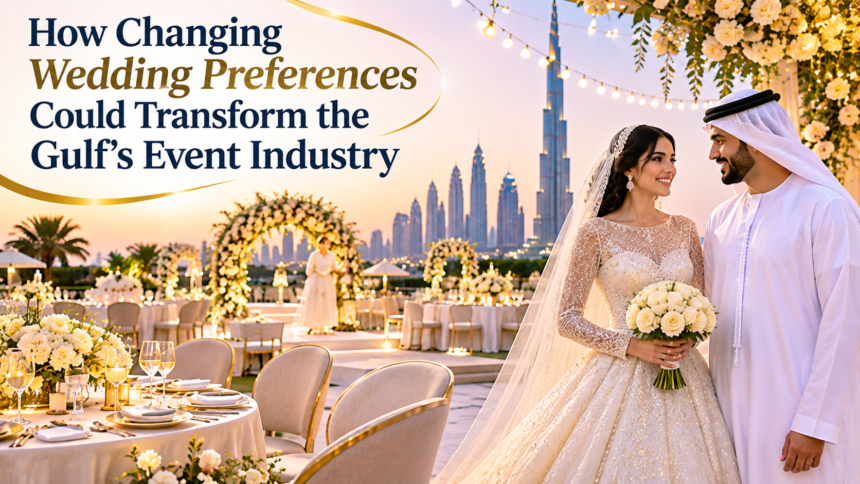
Why Destination Weddings Are Creating Opportunities for GCC Hospitality
Weddings have always held an important place in Gulf society, representing family traditions, cultural identity, community relationships and personal milestones. From elegant hotel ballrooms in Dubai to traditional celebrations in Saudi Arabia, weddings remain an important part of the region’s hospitality and event management industry. However, changing lifestyles, financial priorities, technological developments and evolving expectations are beginning to influence how couples approach their celebrations.
- 1. Why Gulf wedding trends Are Changing
- 2. How Intimate Weddings Could Reshape the Gulf’s Event Venue Market
- 3. The Growing Importance of Destination Weddings in Gulf Hospitality
- 4. How Personalisation and Technology Are Transforming Wedding Planning
- 5. Why Sustainable Weddings Could Create New Business Opportunities
- 6. How Cultural Traditions and Modern Wedding Expectations Can Coexist
- 7. What Changing Wedding Preferences Mean for Gulf Event Businesses
- 8. The Future of the Gulf’s Wedding and Event Industry
- Conclusion: A Changing Wedding Market Creates New Possibilities
Changing Gulf wedding trends are creating new possibilities for event planners, luxury hotels, wedding designers, catering businesses and entertainment providers. While large celebrations continue to hold cultural significance, some couples are exploring smaller gatherings, personalised experiences, destination weddings and celebrations that reflect their individual personalities.
These changes do not necessarily suggest that traditional weddings are disappearing. Instead, they reflect a more diverse market in which couples and families can choose from different styles, budgets, locations and experiences.
For event management companies, understanding these preferences is becoming increasingly important. Businesses that once concentrated primarily on large wedding halls and elaborate decorations may need to introduce flexible packages, creative services and technology-supported planning.
The transformation also extends beyond weddings themselves. Changes in consumer expectations can influence hospitality investment, event venue design, professional employment, sustainable business practices and the development of regional tourism destinations.
As the Gulf Cooperation Council (GCC) countries continue investing in tourism and hospitality, changing wedding preferences could become an important influence on the future direction of the region’s event industry.
1. Why Gulf wedding trends Are Changing
Wedding celebrations in the Gulf have traditionally been shaped by family expectations, cultural customs, religious practices and community relationships. In many families, weddings are not simply private events for two individuals but occasions that bring together relatives, friends and wider social networks.
These cultural foundations remain important, especially in communities where weddings help preserve family connections and longstanding traditions.
However, couples increasingly have access to different wedding concepts through international travel, social media, digital platforms and exposure to global hospitality experiences.
This greater variety can influence decisions about venues, guest lists, decorations, entertainment and the overall structure of wedding celebrations.
Changing lifestyles and individual priorities
Modern lifestyles can affect how couples organise their weddings.
Professional commitments, international careers and changing family circumstances may encourage some couples to prefer celebrations that are easier to manage and more closely connected to their personal priorities.
For instance, a couple working in Dubai may have family members living in India, Europe and other Gulf countries. Rather than organising a large local celebration, they might select a destination wedding that allows their closest relatives to travel together.
Other couples may prioritise traditional ceremonies while reducing expenditure on certain decorative or entertainment elements.
These choices demonstrate how wedding planning is becoming more flexible.
The influence of younger consumers
Younger couples are also contributing to the diversification of wedding preferences.
Digital inspiration platforms provide access to thousands of wedding concepts, from minimalist ceremonies to elaborate themed celebrations.
A 2025 report by Khaleej Times highlighted the growing emphasis among Gen Z couples on authenticity, personalisation, transparent pricing and sustainability. These themes suggest a broader shift toward celebrations that reflect individual values rather than standardised wedding formats. Khaleej Times
However, it would be inaccurate to assume that every younger couple prefers a smaller or less traditional wedding.
Preferences vary considerably depending on family expectations, cultural background, financial circumstances and personal taste.
Financial planning and wedding expenses
Wedding budgets can influence decisions across every part of the event.
Venue rental, catering, clothing, photography, transportation, accommodation and entertainment all contribute to overall expenditure.
Some couples may prefer allocating more money toward housing, travel, education or future financial security.
Others may continue investing heavily in weddings while becoming more selective about how their budgets are distributed.
For Gulf event businesses, these differences highlight the importance of offering choices rather than assuming every customer wants the same experience.
2. How Intimate Weddings Could Reshape the Gulf’s Event Venue Market
One of the most interesting developments in the wedding industry is the growing visibility of intimate weddings.
These celebrations generally involve fewer guests and place greater emphasis on personal interaction, atmosphere and carefully selected experiences.
An intimate wedding does not necessarily mean a low-cost celebration. Some couples prefer smaller guest lists while investing more in premium dining, exclusive venues, professional photography and customised decoration.
Reporting from Dubai has documented interest in personalised weddings with approximately 50 to 100 guests, while industry research also identifies smaller wedding formats as an area of potential growth within the GCC destination wedding market. Khaleej Times+1
Changing demand for wedding venues
Traditional wedding venues often rely on large halls designed to accommodate hundreds of guests.
These spaces remain important, especially for families organising extensive celebrations.
However, a more diversified market could increase interest in smaller event environments such as rooftop restaurants, boutique hotels, private villas, garden venues and beachfront properties.
Hospitality operators may therefore benefit from designing spaces that accommodate different guest capacities.
For example, a hotel could offer one large ballroom alongside several smaller event rooms, landscaped outdoor locations and private dining areas.
Such flexibility allows venues to serve weddings, engagement ceremonies, anniversaries and other celebrations.
Greater emphasis on guest experiences
Smaller celebrations can create opportunities for more personalised hospitality.
Instead of offering a large buffet with limited interaction, organisers might design a curated dining experience featuring specialised menus and attentive service.
Decorations may also focus on individual storytelling rather than simply filling a large venue.
Wedding planners can incorporate meaningful details such as family photographs, personalised invitations, cultural elements and carefully selected entertainment.
Comparison of wedding formats
| Feature | Large traditional wedding | Intimate personalised wedding |
|---|---|---|
| Guest list | Often extensive | Usually more selective |
| Venue | Large ballroom or event hall | Boutique hotel, villa or smaller venue |
| Catering | Large-scale food service | Curated or specialised dining |
| Decoration | Extensive venue-wide design | Personalised design elements |
| Planning | Complex guest coordination | Greater focus on individual details |
| Budget | Often substantial overall spending | Flexible, potentially premium per guest |
| Entertainment | Designed for a large audience | Tailored to the guest experience |
Neither format is automatically better.
The important change is the growing need for event companies to support different types of celebrations with equal professionalism.
This could encourage venues to reconsider fixed packages, minimum guest requirements and the flexibility of their event services.
3. The Growing Importance of Destination Weddings in Gulf Hospitality
Destination weddings connect the wedding industry with tourism, travel and hospitality.
Instead of organising their celebrations in their hometowns, couples may travel to another city or country where the venue, environment or guest experience better matches their expectations.
The Gulf has several characteristics that support destination wedding development, including international air connections, luxury accommodation, beach resorts and extensive hospitality services.
Dubai has actively promoted itself as a destination wedding location. Its official tourism platform highlights options ranging from luxury hotel celebrations to beachfront weddings, supported by planners, photographers, florists and other suppliers. Visit Dubai
Why couples consider Gulf destinations
Couples may choose Gulf destinations for several reasons:
- Luxury hotels with dedicated wedding planning teams.
- International airport connectivity.
- Beachfront, desert and urban event locations.
- Accommodation suitable for travelling family members.
- Diverse catering and entertainment services.
- Availability of multicultural wedding specialists.
- Opportunities to combine wedding celebrations with leisure activities.
These advantages can make Gulf destinations attractive for couples organising international or multicultural celebrations.
However, wedding-related legal requirements, visa arrangements, venue regulations and seasonal weather conditions differ between locations. Couples must verify these details before confirming plans.
Destination weddings and hotel revenue
Destination weddings can create demand across several hospitality services.
Guests travelling from overseas may book hotel rooms, airport transfers, restaurants, sightseeing activities and entertainment.
The celebration itself may require multiple events, including welcome dinners, cultural ceremonies, the main wedding and farewell gatherings.
This creates opportunities for hotels to provide integrated packages.
For example, a resort could combine accommodation, catering, wedding coordination and recreational activities within one booking arrangement.
Such offerings can help hospitality businesses attract visitors who are seeking convenience and coordinated service.
Saudi Arabia’s expanding hospitality ecosystem
Saudi Arabia’s broader investment in tourism, culture and entertainment may create additional opportunities for private celebrations and destination events.
Its Events Investment Fund is intended to support the development of event infrastructure, while tourism initiatives are expanding the Kingdom’s wider hospitality and visitor economy. Events Investment Fund+1
These developments could provide new opportunities for wedding-related suppliers, particularly where suitable venues and visitor services are introduced.
Nevertheless, growth in general tourism infrastructure should not be interpreted as guaranteed demand for weddings at every destination.
Businesses will still need to evaluate local regulations, cultural expectations and customer preferences.
4. How Personalisation and Technology Are Transforming Wedding Planning
Wedding planning is increasingly influenced by digital communication, online inspiration and specialised event management tools.
Technology allows couples to compare venues, communicate with suppliers and explore different celebration concepts before making final decisions.
For event companies, digital services can improve operational efficiency while supporting more personalised experiences.
Digital wedding planning platforms
Planning tools can help manage guest lists, schedules, budgets, seating arrangements and vendor communications.
Instead of relying entirely on spreadsheets, telephone calls and printed documents, organisers can coordinate multiple activities through digital platforms.
These systems may be particularly useful for destination weddings, where couples and suppliers are located in different countries.
For example, a couple living in London could communicate with a Dubai wedding planner, review venue options online and participate in virtual meetings before travelling.
This can reduce unnecessary coordination difficulties.
Virtual venue tours and digital presentations
Hotels and wedding venues can use high-quality videos, virtual walkthroughs and interactive floor plans to explain their facilities.
These tools allow clients to understand venue layouts, decoration possibilities and seating arrangements without immediately visiting the property.
Digital presentations can also help wedding designers communicate their ideas more effectively.
Artificial intelligence in event coordination
Artificial intelligence may support certain planning activities, including schedule creation, budget comparisons, guest communication and preliminary design concepts.
However, AI-generated information should be reviewed carefully, particularly when it relates to prices, vendor availability, legal requirements or contractual commitments.
Technology should assist professional decision-making rather than replace experienced event coordinators.
Personalised wedding experiences
Beyond administrative planning, digital tools can support individual guest experiences.
Examples include customised event websites, multilingual invitations, digital RSVP systems and personalised schedules.
Some couples may also choose interactive entertainment, multimedia presentations or professionally produced wedding films.
These services can create new business opportunities for designers, videographers, technology providers and event production companies.
Technology opportunities for Gulf event businesses
| Technology | Wedding planning application | Potential advantage |
|---|---|---|
| Digital RSVP systems | Guest invitations and attendance tracking | Easier coordination |
| Virtual venue tours | Remote property viewing | Better destination planning |
| Budget software | Tracking wedding expenditure | Improved financial visibility |
| 3D design tools | Visualising venue decoration | Clearer creative decisions |
| Event management platforms | Coordinating suppliers and schedules | Operational efficiency |
| AI-assisted planning | Drafting schedules and comparing options | Administrative support |
| Digital guest guides | Sharing event and travel information | Improved guest convenience |
The most effective technologies are likely to be those that simplify planning while preserving the personal attention expected from hospitality professionals.
5. Why Sustainable Weddings Could Create New Business Opportunities
Sustainability is becoming an important consideration across hospitality, tourism and event management. Wedding celebrations can involve significant consumption of food, flowers, decorations, lighting, packaging and transportation.
As environmental awareness grows, some couples are exploring ways to celebrate important occasions while reducing unnecessary waste.
This does not mean abandoning luxury or traditional wedding experiences. Instead, sustainability may encourage more thoughtful decisions about resources, suppliers and event design.
Reducing food waste at wedding celebrations
Large weddings can involve complex catering arrangements, particularly when organisers need to accommodate hundreds of guests with different dietary preferences.
Accurate guest estimates, carefully planned menus and improved food management can help reduce unnecessary waste.
In October 2026, Dubai announced a wedding food redistribution initiative involving the UAE Food Bank and the Community Development Authority. The initiative aims to recover suitable surplus food from celebrations and redirect it to beneficiaries. 275
This development demonstrates how wedding operations can connect with wider community welfare and sustainability objectives.
Reusable decorations and event materials
Wedding decorations often include flowers, temporary structures, furniture, lighting installations and themed displays.
Event businesses can explore reusable decorative systems, rental furniture and materials suitable for multiple celebrations.
For example, a wedding design company could create modular stage structures that can be adapted for different themes instead of building entirely new installations for every event.
Local flower sourcing, where suitable, may also reduce certain transportation and supply-chain requirements.
Sustainable wedding planning services
Environmental considerations could support specialised wedding planning packages.
These services might include:
- Digital invitations instead of unnecessary printed materials.
- Reusable or rented decorative elements.
- Responsible food purchasing and surplus management.
- Efficient transportation arrangements for guests.
- Venue selection based partly on sustainability practices.
- Collaboration with local suppliers and artisans.
- Waste segregation and recycling arrangements.
- Suitable alternatives to single-use event materials.
Dubai’s Department of Economy and Tourism provides sustainability initiatives and guidance for hospitality operators, reflecting the wider importance of responsible tourism management. Dubai Department of Economy and Tourism
Businesses should nevertheless avoid presenting ordinary cost reductions as environmental achievements without evidence.
Meaningful sustainability requires realistic planning and transparent assessment of environmental impacts.
6. How Cultural Traditions and Modern Wedding Expectations Can Coexist
Cultural identity remains central to weddings across Gulf societies.
Marriage celebrations frequently include customs associated with family heritage, hospitality, traditional clothing, religious practices and ceremonial gatherings.
Although preferences are changing, modernisation does not necessarily require abandoning these traditions.
Instead, some couples may seek new ways to preserve cultural meaning while introducing contemporary design and hospitality experiences.
The continuing value of family traditions
For many Gulf families, weddings are important opportunities to maintain relationships between generations.
Traditional ceremonies may reflect religious values, regional customs and expectations surrounding family participation.
Event planners working in the Gulf must therefore understand that wedding decisions may involve multiple family members rather than only the couple.
A professional wedding organiser should consider these expectations during the planning process.
Blending modern design with cultural identity
Contemporary weddings may combine traditional ceremonial elements with modern venues, lighting, photography and dining experiences.
For example, a celebration may feature traditional Arabic hospitality alongside modern floral arrangements and customised digital presentations.
Another couple might choose a contemporary hotel venue while preserving family ceremonies and traditional wedding clothing.
The objective is not to replace cultural traditions but to create suitable environments for them.
Opportunities in multicultural wedding planning
The Gulf’s international population also creates demand for celebrations involving different cultural backgrounds.
Wedding planners may need to coordinate events that bring together families with different languages, food preferences, religious traditions and ceremonial expectations.
This creates opportunities for specialist event businesses offering multicultural coordination.
Such services require more than decorative knowledge. Planners may need familiarity with religious requirements, appropriate catering arrangements, guest hospitality and suitable event schedules.
Preserving traditional wedding industries
Changing preferences could also encourage innovation among traditional suppliers.
Local artisans, clothing designers, jewellery specialists, henna artists, musicians and traditional catering businesses can remain important contributors to contemporary celebrations.
Wedding companies that collaborate with these suppliers may help preserve regional craftsmanship while reaching new customers.
This approach could strengthen the relationship between cultural heritage and the modern hospitality industry.
7. What Changing Wedding Preferences Mean for Gulf Event Businesses
The diversification of wedding preferences could have significant implications for businesses operating across the Gulf event industry.
Hotels, event management companies, decorators, photographers, caterers, transportation providers and entertainment agencies may all need to reconsider aspects of their services.
Businesses that recognise changing customer requirements may be better positioned to develop relevant offerings.
Greater demand for flexible packages
Fixed wedding packages may not satisfy every couple.
Some clients may require comprehensive event planning, while others prefer selecting individual services.
Event companies could respond by creating modular packages covering venue management, catering, decoration, guest coordination and entertainment.
Clients would then be able to select services that match their budgets and requirements.
Specialisation within the wedding industry
As the market becomes more diverse, specialist businesses may find additional opportunities.
Examples include intimate wedding planners, multicultural event coordinators, sustainable decoration suppliers and destination wedding consultants.
Luxury wedding businesses may continue focusing on elaborate celebrations while incorporating personalised services and advanced event production.
This diversification could support both established companies and smaller creative businesses.
New professional skills
Changing wedding expectations may increase demand for professionals with skills extending beyond traditional event coordination.
Potentially valuable specialisations include digital event management, sustainable catering, visual storytelling, guest-experience design, multilingual communication and destination logistics.
Staff members who understand both hospitality standards and cultural requirements can provide added value to international clients.
Challenges facing event companies
The changing market also presents challenges.
Businesses may need to invest in technology, staff training and updated equipment.
Smaller companies could face difficulties competing with established hospitality groups offering integrated wedding packages.
In addition, changing consumer expectations can make demand forecasting more complex.
A company investing heavily in large wedding structures may experience different financial pressures from a business specialising in smaller events.
Maintaining flexibility without sacrificing service quality will therefore be important.
Strategic business opportunities
| Industry segment | Changing customer preference | Potential business response |
|---|---|---|
| Luxury hotels | More personalised celebrations | Flexible wedding packages |
| Event planners | Greater customer involvement | Customised planning services |
| Catering companies | Diverse menus and responsible consumption | Flexible menus and waste-management planning |
| Decoration businesses | Unique and reusable designs | Modular decoration solutions |
| Photographers | Storytelling and authentic memories | Documentary-style wedding coverage |
| Technology providers | Digital coordination | Wedding management platforms |
| Tourism businesses | Destination wedding experiences | Integrated travel and celebration packages |
| Traditional suppliers | Heritage combined with modern design | Contemporary cultural wedding services |
For entrepreneurs, these developments could create opportunities to enter specialised areas of the event industry without necessarily competing directly with large wedding operators.
However, business success will depend on understanding customer demand, maintaining service standards and managing operating costs.
8. The Future of the Gulf’s Wedding and Event Industry
The future of wedding celebrations in the Gulf is likely to involve a combination of traditional customs, premium hospitality, individual creativity and technology-supported planning.
Large-scale weddings are expected to remain relevant for families who value extensive celebrations and established cultural practices.
At the same time, intimate ceremonies, destination weddings and personalised experiences may continue expanding the range of options available to couples.
For event businesses, this creates an opportunity to develop more adaptable business models.
A more diversified wedding market
The event industry may increasingly operate across several customer segments rather than relying on one dominant wedding format.
Luxury celebrations, intimate events, multicultural weddings and destination ceremonies all require different planning approaches.
Businesses capable of serving multiple segments may reduce their dependence on a narrow customer base.
Greater integration between tourism and events
Wedding tourism could strengthen connections between hotels, airlines, transport operators and entertainment providers.
A destination wedding may involve several days of accommodation, dining, sightseeing and celebrations.
This creates opportunities to develop coordinated services that improve the experience for travelling guests.
Dubai’s established wedding tourism promotion and Saudi Arabia’s wider hospitality development illustrate how event-related businesses can operate within larger tourism ecosystems. Media Office+1
Technology will support more efficient planning
Digital systems are likely to remain useful for managing suppliers, guest communications, schedules and budgets.
However, successful event businesses will need to combine technology with creativity, cultural awareness and personal service.
Weddings are emotional occasions, and their quality cannot be measured only by administrative efficiency.
Sustainability may influence supplier relationships
Responsible resource management could become a more visible consideration when selecting venues and vendors.
Companies capable of documenting their environmental practices may appeal to customers who prioritise responsible consumption.
At the same time, price, convenience, quality and tradition will remain important influences on purchasing decisions.
Customer experience will remain central
Regardless of wedding size or style, couples generally expect reliability, professional coordination and meaningful experiences.
Event companies should therefore focus on delivering the promises made during the planning process.
Clear contracts, transparent pricing, suitable contingency plans and respectful communication can strengthen customer confidence.
The most resilient businesses may be those that adapt to new preferences without losing the hospitality values that have traditionally defined Gulf celebrations.
Conclusion: A Changing Wedding Market Creates New Possibilities
Changing wedding preferences could transform the Gulf’s event industry by encouraging greater flexibility, creativity, specialisation and cooperation across hospitality sectors.
While traditional celebrations remain culturally significant, interest in personalised weddings, destination experiences, digital planning and sustainable event practices is expanding the range of services that businesses may need to provide.
For hotels and event management companies, these developments offer opportunities to reach different customer groups and create new service packages.
For smaller suppliers and entrepreneurs, specialised wedding services may provide ways to participate in a competitive market.
However, the future of the industry should not be viewed simply as a movement from large weddings toward smaller celebrations. It is better understood as a transition toward greater choice.
Couples and families will continue making decisions based on their values, cultural backgrounds, financial circumstances and personal expectations.
The Gulf’s event industry can respond by offering celebrations that respect tradition while accommodating modern preferences.
Ultimately, the businesses most capable of shaping the future of Gulf weddings will be those that understand that memorable celebrations depend not only on their scale, but also on their meaning, quality and personal relevance.
Do follow us on Instagram
Read More – Why Accessible Tourism Deserves More Attention in Middle Eastern Hospitality