What Makes the Arabian Humpback Whale Genetically and Ecologically Unique
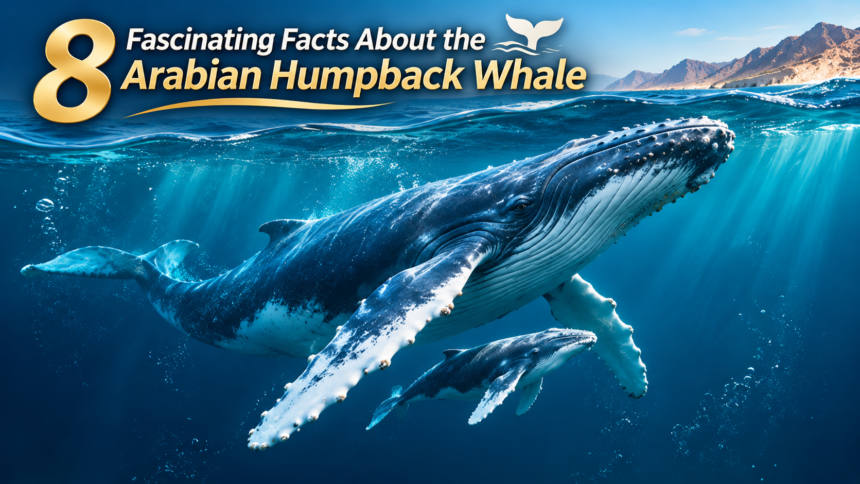
The Arabian Sea is home to one of the world’s most unusual and endangered marine mammals: the Arabian Sea humpback whale. While many people associate humpback whales with long migrations through cold oceans, this remarkable population has developed a very different way of life.
- 1. The Arabian Humpback Whale Is the Only Known Non-Migratory Humpback Population
- 2. Arabian Sea Humpbacks Have Been Isolated for Tens of Thousands of Years
- 3. Oman Is One of the Most Important Places for Arabian Humpback Whales
- 4. Fewer Than 100 Whales Were Estimated in a Major Oman Population Study
- 5. Arabian Humpback Whales Produce Distinctive Underwater Songs
- 6. Their Feeding Habits Are Connected to the Arabian Sea’s Seasonal Monsoon
- 7. Fishing Nets and Ship Collisions Are Major Threats to Their Survival
- 8. Scientists Are Working Across Borders to Save This Unique Whale Population
- Conclusion: A Rare Whale Population That Deserves Greater Protection
These whales live in the waters of the northwestern Indian Ocean, particularly around Oman, where scientists have studied their movements, behaviour, genetics and conservation needs.
What makes the Arabian humpback whale especially fascinating is its extraordinary isolation. Unlike most humpback whale populations, which migrate between distant feeding and breeding areas, Arabian Sea humpbacks remain within the same broad region throughout the year.
Their unusual lifestyle, distinctive genetic history and small population have made them an important subject of international marine research.
Scientific studies suggest that Arabian Sea humpback whales have remained genetically isolated from other humpback populations for tens of thousands of years. Research published in 2026 has provided additional evidence that they may deserve recognition as a distinct humpback whale subspecies, although that proposal does not mean a new subspecies has already been formally adopted. PubMed+1
Despite their remarkable characteristics, these whales face significant threats from fishing gear, shipping activities, underwater noise and habitat disturbance.
For Oman and neighbouring countries, protecting this population is an important part of preserving the Arabian region’s marine biodiversity.
Here are eight fascinating facts about the Arabian humpback whale, explaining what makes this extraordinary marine mammal unique and why its survival matters.
1. The Arabian Humpback Whale Is the Only Known Non-Migratory Humpback Population
One of the most extraordinary characteristics of the Arabian Sea humpback whale is that it does not undertake the long seasonal migrations normally associated with its species.
Most humpback whale populations travel between colder feeding grounds and warmer breeding areas.
Some individuals undertake journeys of thousands of kilometres each year, making humpbacks among the world’s best-known long-distance marine travellers.
Arabian Sea humpbacks behave differently.
They remain in the broader Arabian Sea region throughout the year, where they can both feed and reproduce.
The International Whaling Commission identifies this population as an exceptional case among humpback whales. iwc.int
Why do these whales stay in the Arabian Sea?
Scientists believe the region’s seasonal ocean conditions are an important factor.
During the southwest monsoon, winds drive an oceanographic process known as upwelling along parts of the Arabian Sea coastline.
Upwelling brings deeper, nutrient-rich water toward the surface.
These nutrients support plankton growth and marine food webs, creating feeding opportunities for fish and the whales that depend on them.
The availability of suitable feeding conditions within the same broad region as breeding areas may help explain why these whales do not need to migrate to polar or temperate waters.
Does non-migratory mean they never travel?
No. These whales can still move considerable distances within the Arabian Sea.
Non-migratory means they do not follow the typical large-scale seasonal movement between high-latitude feeding grounds and tropical breeding grounds.
Recent satellite-tracking research has helped scientists understand more about their movements and habitat use.
A 2026 study published in Frontiers in Marine Science examined satellite telemetry and documented movement patterns within the Arabian Sea. Frontiers
This unusual behaviour makes the population especially valuable for understanding how marine mammals adapt to regional environmental conditions.
2. Arabian Sea Humpbacks Have Been Isolated for Tens of Thousands of Years
Another remarkable fact is that Arabian Sea humpback whales are genetically distinct from other humpback populations.
Genetic differences develop when groups remain separated and exchange relatively few breeding individuals over long periods.
For Arabian Sea humpbacks, that separation appears to have lasted an extraordinary amount of time.
What genetic research has discovered
A major study published in PLOS ONE in 2014 compared genetic material from 67 Arabian Sea humpback whales with samples from other humpback populations.
Researchers examined mitochondrial DNA and genetic markers to investigate relationships between the groups.
The results suggested that the Arabian Sea population had been isolated for approximately 70,000 years. PLOS
This finding was particularly significant because humpback whales are generally known for their extensive movements across oceans.
New research strengthens the evidence
Research published in 2026 provided further evidence of the population’s distinctive evolutionary history.
The study examined genetic differences between Arabian Sea humpbacks and other recognised humpback whale subspecies.
Its authors proposed that Arabian Sea humpbacks may warrant recognition as an additional subspecies, potentially named Megaptera novaeangliae indica. Frontiers
This remains a scientific taxonomic proposal, not confirmation that every relevant authority has adopted the classification.
Why genetic isolation matters
Genetic distinctiveness makes the population scientifically important.
It also raises conservation concerns.
When a population is small and receives little genetic exchange from other groups, losses may be difficult to replace through immigration.
Protecting these whales is therefore not simply about conserving individual animals.
It is also about preserving a distinctive evolutionary lineage.
3. Oman Is One of the Most Important Places for Arabian Humpback Whales
Oman’s Arabian Sea coastline is one of the best-studied habitats for this population.
Researchers have documented whales along parts of the country’s eastern and southern coastal waters.
These observations have provided much of the evidence used to understand the animals’ year-round presence, reproduction and movements.
Important whale habitats in Oman
The following are broad ecological research areas rather than guaranteed whale-watching locations.
| Area | Ecological importance |
|---|---|
| Gulf of Masirah | Important Arabian Sea humpback whale habitat and feeding activity |
| Dhofar coast | Year-round habitat used for feeding and breeding |
| Offshore waters of Oman | Whale movement and habitat research |
| Muscat coastal waters | Occasional documented humpback sightings |
The Marine Mammal Protected Areas Task Force identifies the Gulf of Masirah and Dhofar among important marine mammal areas associated with Arabian Sea humpbacks. Marine Mammal Protected Areas Task Force+1
Are they found only in Oman?
No. Although Oman is central to much of the existing research, the population is not restricted to its national waters.
Evidence of Arabian Sea humpbacks has also been documented around other parts of the northern Indian Ocean, including waters associated with India and Pakistan.
Scientists have identified movements and acoustic evidence suggesting that some whales use habitats across national boundaries.
This makes international cooperation essential.
Arabian Sea versus Arabian Gulf
There is also an important geographic distinction.
The whale’s primary documented habitat is the Arabian Sea and adjacent northern Indian Ocean waters, not the inner Arabian Gulf between the Arabian Peninsula and Iran.
Although historical records and regional conservation assessments consider a wider range, the best-established concentrations are associated with the Arabian Sea, particularly around Oman.
This distinction helps avoid the mistaken impression that Arabian Sea humpback whales are commonly found around the waterfronts of Dubai, Doha or Bahrain.
4. Fewer Than 100 Whales Were Estimated in a Major Oman Population Study
The Arabian Sea humpback whale population is considered endangered, and one of the most concerning facts about it is its small estimated size.
A frequently cited study based on photographic identification and mark-recapture analysis estimated approximately 82 individuals in the surveyed Oman population, with a 95% confidence interval of 60 to 111 whales.
This estimate helped inform the population’s Endangered assessment. Marine Mammal Protected Areas Task Force
However, it is important to understand what this number represents.
Is 82 the exact number of Arabian Sea humpback whales alive today?
No. The figure comes from an earlier scientific population estimate based on available survey data.
It is not a complete, continuously updated count of every Arabian Sea humpback whale across its entire range.
Whales can be difficult to detect, particularly when they spend time underwater or move through areas where surveys are limited.
A broader regional population estimate would require coordinated research across multiple countries.
Nevertheless, the evidence points to a very small and vulnerable population.
Why small populations face additional risks
A small population may be more vulnerable to the loss of individual breeding animals.
For example, the death of an adult female could affect future population growth if relatively few reproductive females remain.
Small populations may also experience challenges associated with genetic diversity and environmental changes.
These issues are especially concerning when animals face several human-related threats at the same time.
What does Endangered mean?
The International Union for Conservation of Nature (IUCN) uses the category Endangered for species or populations facing a very high risk of extinction in the wild under its assessment criteria.
The Arabian Sea humpback whale population is assessed as Endangered, even though the global humpback whale species has a different overall conservation status.
This distinction matters because conservation success at the global species level does not mean every regional population is secure.
Population facts at a glance
| Conservation detail | What the evidence shows |
|---|---|
| Species | Humpback whale, Megaptera novaeangliae |
| Population | Arabian Sea humpback whale |
| Regional status | Endangered |
| Widely cited Oman estimate | Approximately 82 individuals |
| Estimate uncertainty | 60–111 individuals, 95% confidence interval |
| Main concern | Very small, isolated population exposed to human-related threats |
The International Whaling Commission continues to recognise the urgent need to protect this population through coordinated research and conservation planning. iwc.int
5. Arabian Humpback Whales Produce Distinctive Underwater Songs
Humpback whales are famous for their complex vocal behaviour.
Male humpback whales produce long, organised sequences of sounds commonly described as songs.
These can include repeated phrases and patterns that change over time.
The Arabian Sea humpback whale population also produces songs, but scientific research has identified features that distinguish them from songs recorded in other parts of the Indian Ocean.
Why do humpback whales sing?
Humpback whale song is strongly associated with breeding behaviour.
Researchers believe singing plays a role in reproductive communication, although its precise functions remain an active area of scientific study.
Songs may contain repeated sound units arranged into phrases and themes.
Their structure can change gradually as the breeding season progresses.
What makes the Arabian Sea song special?
Research comparing recordings from Oman and other Indian Ocean locations has found differences in song structure.
The distinctive songs provide additional evidence that Arabian Sea humpbacks are relatively isolated from other populations.
The 2026 genetic study also discusses how the population’s vocal behaviour supports the case for its long-term separation. Frontiers
How scientists listen to whales
Researchers use underwater microphones called hydrophones to record whale sounds.
Hydrophones can operate from research vessels or be deployed in suitable underwater recording systems.
Acoustic monitoring is useful because whales may be heard even when they are not visible at the surface.
Recordings help researchers examine seasonal activity and investigate whether whales are present in particular areas.
However, hearing whale song does not always reveal the exact number of animals present, and recordings need careful analysis.
Why underwater sound matters for conservation
The ocean is naturally full of sound.
Marine mammals use acoustic signals for communication, and human activities can alter their acoustic environment.
Shipping, industrial operations and other sources of underwater noise may interfere with some forms of marine mammal communication.
The effects depend on sound frequency, intensity, duration and proximity to the animals.
For a small population with distinctive vocal behaviour, understanding and managing underwater noise is an important research priority.
6. Their Feeding Habits Are Connected to the Arabian Sea’s Seasonal Monsoon
The Arabian Sea humpback whale’s unusual lifestyle is closely connected to the region’s marine environment.
Unlike many other humpback populations, these whales do not need to travel to distant polar feeding grounds.
The Arabian Sea provides productive marine habitats during parts of the year, particularly where seasonal upwelling supports marine food webs.
How monsoon winds support ocean productivity
The southwest monsoon influences ocean circulation along the coasts of Oman and neighbouring regions.
Under suitable conditions, wind-driven upwelling brings nutrient-rich water toward the surface.
These nutrients support phytoplankton growth.
Phytoplankton form the foundation of marine food webs, supporting zooplankton, fish and larger predators.
For Arabian Sea humpbacks, productive waters can provide feeding opportunities within their regional habitat.
The International Whaling Commission identifies seasonal upwelling as a likely factor contributing to the population’s unusual non-migratory behaviour. iwc.int
What do Arabian Sea humpback whales eat?
Like other humpback whales, they are baleen whales.
Instead of teeth for capturing and chewing prey, they have plates of baleen that help filter food from seawater.
Humpbacks elsewhere feed on small schooling fish and krill, depending on the region.
Observations from Oman associate Arabian Sea humpback feeding activity with productive waters and concentrations of small fish.
However, scientists are still studying the details of their diet and how feeding opportunities change across seasons and locations.
How baleen feeding works
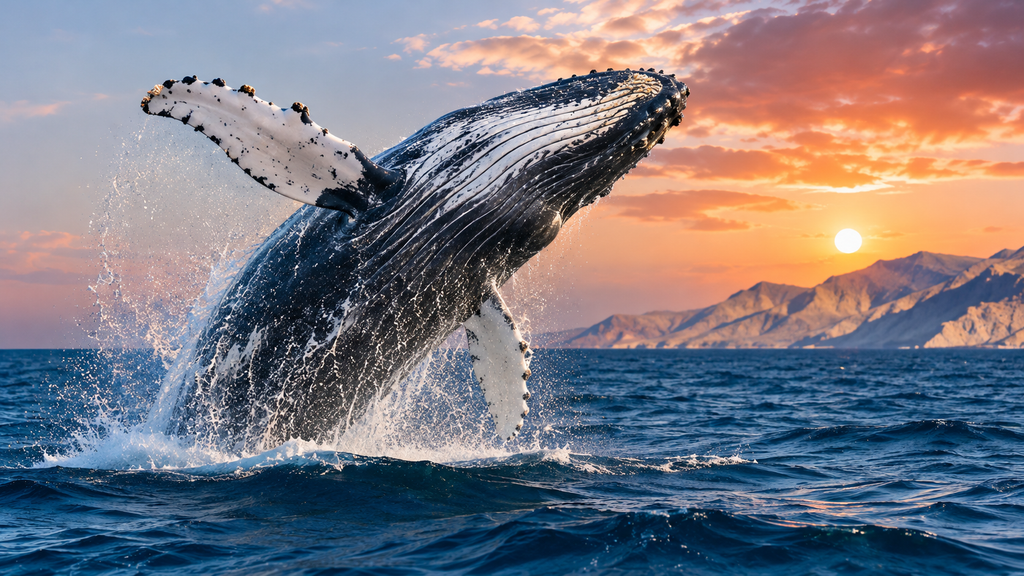
Humpback whales can take large mouthfuls of water containing prey.
They then expel much of the water while retaining food using their baleen.
The process allows them to feed on relatively small animals in large quantities.
Why food availability matters
A population that remains within one broad region may be especially sensitive to environmental changes affecting its food supply.
Changes in ocean temperature, productivity or prey distribution could influence where whales feed.
However, predicting future impacts requires careful ecological research.
Scientists should not assume that every environmental change will have the same effect across all parts of the Arabian Sea.
The connection between whales and their marine environment
| Ocean condition | Potential relationship to whales |
|---|---|
| Monsoon-driven upwelling | Supports marine productivity |
| Phytoplankton growth | Helps sustain marine food webs |
| Concentrations of small fish | May provide feeding opportunities |
| Ocean temperature changes | Can influence marine habitat conditions |
| Vessel activity in feeding areas | May create disturbance or collision risk |
| Prey distribution | Influences whale movement and habitat use |
The Arabian Sea’s seasonal environmental conditions help explain how this remarkable whale population can maintain a lifestyle that differs from other humpbacks around the world.
7. Fishing Nets and Ship Collisions Are Major Threats to Their Survival
Despite their remarkable adaptations, Arabian Sea humpback whales face serious threats from human activities.
Their small population size makes these dangers particularly concerning.
Even the loss of a few individuals could have important consequences for a population with limited reproductive capacity.
Entanglement in fishing gear
Whales may become trapped in fishing nets, ropes or other marine equipment.
Entanglement can restrict movement, cause injuries and prevent animals from feeding normally.
In severe cases, it may result in death.
A whale may also carry fishing gear for extended periods, causing additional physical stress.
A remarkable rescue in Oman
In January 2021, an endangered Arabian Sea humpback whale became entangled in fishing gear inside the Port of Duqm in Oman.
A coordinated team involving Oman’s Environment Authority and specialist marine organisations responded to the incident.
The whale was successfully released.
The IUCN Cetacean Specialist Group documented the rescue as an example of the importance of trained entanglement-response teams and cooperation between organisations. SSC Cetacean Specialist Group
However, members of the public should never attempt to approach or free a large entangled whale themselves. Such situations require trained specialists and appropriate safety procedures.
Collisions with vessels
Ship strikes are another important concern.
Large commercial vessels may travel through areas used by whales.
Collisions can result in severe injuries or death, particularly when animals are not detected in time.
Potential management approaches include identifying high-risk areas, evaluating vessel routes and introducing appropriate speed-management measures where justified.
Underwater noise and habitat disturbance
Shipping and industrial activities also create underwater sound.
Noise may disturb whale behaviour or affect acoustic communication.
Coastal development, marine pollution and changes in habitat conditions create further pressures.
The International Whaling Commission identifies entanglement, vessel collisions, coastal development and offshore industrial activity among the major conservation concerns for Arabian Sea humpback whales. iwc.int
Major conservation threats
| Threat | Potential consequence | Conservation response |
|---|---|---|
| Fishing gear entanglement | Injury, restricted movement or death | Safer fishing practices and trained response teams |
| Ship strikes | Serious injury or mortality | Identify high-risk areas and improve vessel management |
| Underwater noise | Disturbance and communication interference | Monitor noise and reduce exposure |
| Marine pollution | Health and habitat risks | Pollution prevention |
| Coastal development | Disturbance of important habitats | Environmental assessment |
| Climate-related changes | Potential effects on prey and habitat | Long-term ecological monitoring |
Protecting these whales requires coordinated action across fisheries, shipping, environmental authorities and research organisations.
8. Scientists Are Working Across Borders to Save This Unique Whale Population
Arabian Sea humpback whales move through marine environments that cross national boundaries.
This means their conservation cannot depend on one country’s efforts alone.
Oman has played a major role in scientific research, but cooperation with neighbouring countries is necessary to understand the population’s full distribution and threats.
The Arabian Sea Whale Network
The Arabian Sea Whale Network brings together researchers, conservation organisations and other relevant specialists working to improve knowledge of whales in the region.
Its activities support research collaboration, information exchange and conservation planning.
Researchers use several methods to investigate Arabian Sea humpback whales.
These include photographic identification, genetic analysis, satellite tracking and acoustic monitoring.
How photo identification works
Individual humpback whales can often be recognised by patterns on their tails and other distinguishing marks.
Researchers photograph whales and compare the images with existing records.
This helps them identify individuals encountered during different surveys.
Repeated sightings can provide information about movements, survival and habitat use.
Satellite tracking
Satellite tags can help scientists investigate where whales travel and which marine areas they use.
A 2026 study examined satellite telemetry data to better understand the habitat use of Arabian Sea humpbacks.
The research demonstrated that these animals can make substantial movements within the Arabian Sea, even though they do not undertake conventional long-distance seasonal migrations. Frontiers
Genetic research
Genetic samples provide information about population relationships, diversity and evolutionary history.
Recent research has strengthened evidence that Arabian Sea humpbacks are genetically distinct from other recognised humpback whale groups.
These findings may influence future scientific classification and conservation priorities.
The importance of conservation management
The International Whaling Commission has supported efforts to develop a coordinated Conservation Management Plan for Arabian Sea humpback whales.
Such planning can help countries identify priority threats, share scientific information and consider appropriate mitigation measures. iwc.int
However, conservation planning must ultimately lead to practical changes in activities that create risks for whales.
A practical conservation roadmap
- Improve population monitoring: Continue photographic identification, genetic and acoustic studies.
- Identify important habitats: Map feeding, breeding and movement areas.
- Reduce fishing-related risks: Investigate safer practices and appropriate response systems.
- Assess shipping activity: Identify locations where vessel collisions may occur.
- Monitor underwater noise: Evaluate potential disturbance from human activities.
- Strengthen regional cooperation: Share research across national boundaries.
- Support trained emergency teams: Improve responses to stranded or entangled whales.
- Evaluate conservation outcomes: Track whether protection measures reduce threats over time.
Research organisations such as the Environment Society of Oman continue contributing to whale monitoring, conservation planning and international scientific cooperation. ESO
Conclusion: A Rare Whale Population That Deserves Greater Protection
The Arabian Sea humpback whale is one of the most remarkable marine mammals found in the waters surrounding the Arabian Peninsula.
Its unusual lifestyle challenges what scientists have traditionally understood about humpback whale migration.
While most humpback populations travel between distant feeding and breeding regions, Arabian Sea humpbacks remain within the northern Indian Ocean throughout the year.
Their genetic isolation, distinctive songs and connection to seasonal ocean productivity make them scientifically valuable.
However, these same whales face significant conservation challenges.
A very small population, exposure to fishing gear, increasing vessel activity and environmental disturbance create risks that require coordinated attention.
Oman’s scientific research, together with international collaboration and conservation initiatives, has helped improve understanding of these animals.
Yet much remains to be discovered about their distribution, population trends and long-term survival.
Protecting Arabian Sea humpback whales requires more than recognising their rarity. It requires safeguarding important habitats, reducing avoidable threats and supporting continued marine research.
Ultimately, the Arabian humpback whale represents a unique part of the region’s natural heritage, reminding us that the Arabian Sea contains extraordinary wildlife whose survival depends on responsible ocean conservation.
Do follow us on Instagram
Read More – How Mangrove Forests Protect the Arabian Gulf’s Coastline