



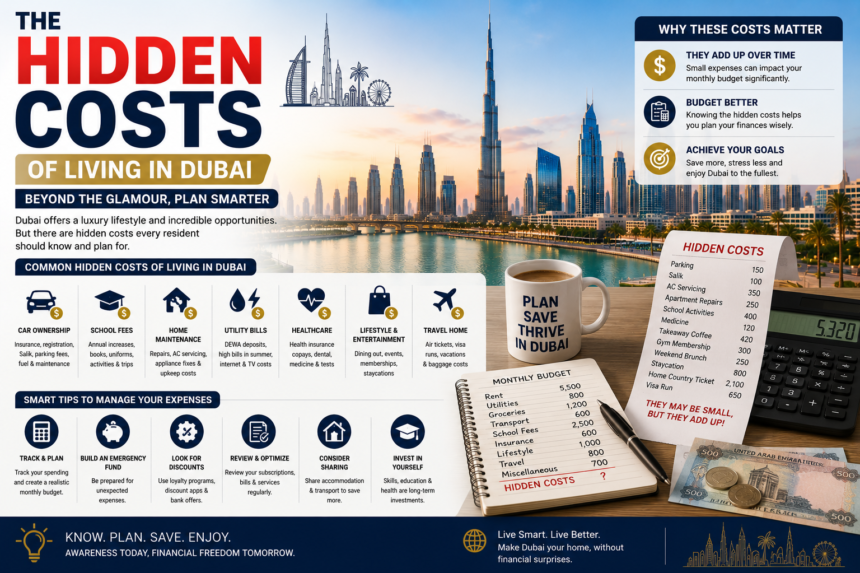
Hidden Costs of Living in Dubai Complete Budget Guide for Expats and Residents 2026
Dubai is one of the world’s most attractive cities for professionals, entrepreneurs, investors, and expatriates. With tax-friendly income policies, world-class infrastructure, excellent healthcare, luxurious lifestyles, and outstanding career opportunities, it attracts millions of people from around the globe.
- Why Understanding Hidden Costs of Living in Dubai Matters
- Hidden Costs of Living in Dubai: Housing Costs Beyond Monthly Rent
- Hidden Costs of Living in Dubai: Utility Bills
- Hidden Costs of Living in Dubai: Internet and Mobile Services
- Hidden Costs of Living in Dubai: Home Furnishing Costs
- Hidden Costs of Living in Dubai: Maintenance and Repairs
- Hidden Costs of Living in Dubai: Transportation Expenses
- Hidden Costs of Living in Dubai: Car Ownership Costs
- Hidden Costs of Living in Dubai: Road Tolls
- Hidden Costs of Living in Dubai: Parking Fees
- Hidden Costs of Living in Dubai: Healthcare Costs
- Hidden Costs of Living in Dubai: Health Insurance
- Education Expenses
- Grocery Spending
- Dining Out
- Lifestyle and Entertainment
- Shopping and Fashion
- Travel Costs
- Banking Charges
- Visa and Documentation Costs
- Insurance Beyond Healthcare
- Pet Ownership Costs
- Unexpected Expenses
- Budgeting Tips
- Ways to Reduce Living Costs
- Financial Planning for Expats
- Frequently Asked Questions
While many newcomers focus on obvious expenses such as rent, groceries, and transportation, there are several hidden costs of living in Dubai that can significantly affect monthly budgets. These overlooked expenses often surprise first-time residents and can increase living costs if they are not planned for properly.
Whether you’re relocating for work, starting a business, studying, or moving with your family, understanding these hidden costs will help you create a realistic financial plan and avoid unexpected expenses.
This guide explores the most common hidden costs of living in Dubai, practical budgeting strategies, and money-saving tips to help you enjoy life in the UAE while staying financially prepared.
Why Understanding Hidden Costs of Living in Dubai Matters
Many people calculate only the major expenses before moving to Dubai, including:
- Monthly rent
- Groceries
- Transport
- School fees
- Utilities
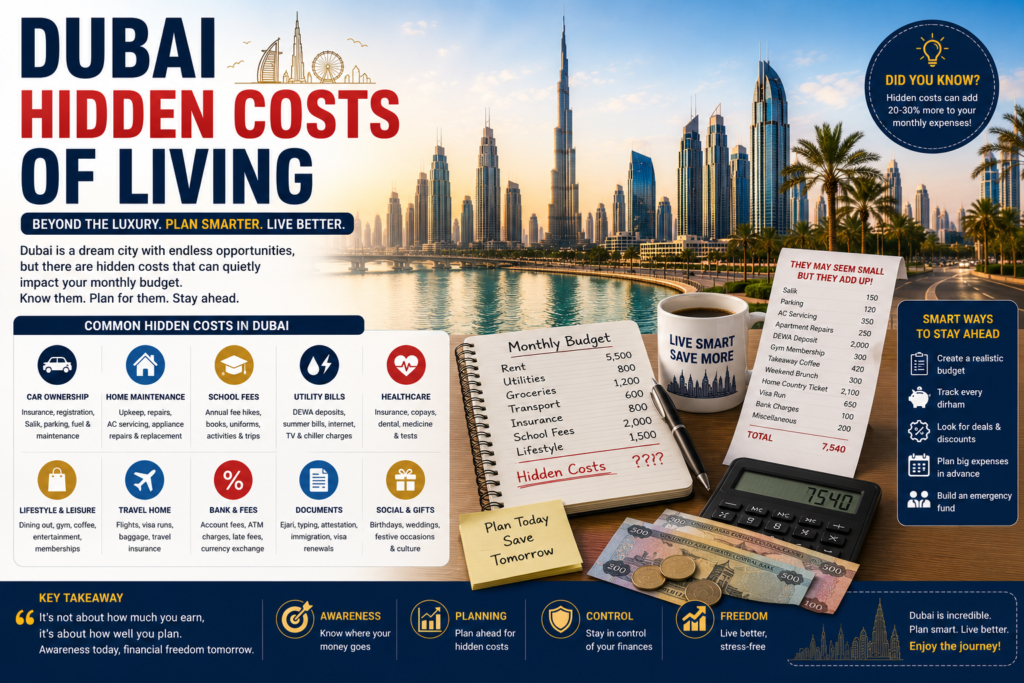
However, several additional costs can quietly add to your monthly spending in aspect to hidden costs of living in Dubai.
Planning for these hidden costs of living in Dubai expenses helps you:
- Avoid financial surprises
- Create a realistic monthly budget
- Build emergency savings
- Improve long-term financial stability
- Enjoy a stress-free lifestyle
Hidden Costs of Living in Dubai: Housing Costs Beyond Monthly Rent
Rent is usually the largest household expense, but it is rarely the only housing-related cost.
Additional expenses may include:
- Security deposits
- Agency or brokerage fees
- Building maintenance charges (where applicable)
- Furniture purchases
- Moving services
- Home setup costs
- Cleaning services
Understanding these costs before signing a tenancy agreement can help you budget more accurately.
Hidden Costs of Living in Dubai: Utility Bills
Many newcomers underestimate monthly utility expenses.
Typical utility costs can include:
- Electricity
- Water
- Cooling charges (where applicable)
- Gas services
- Waste collection (depending on the property)
Usage varies according to apartment size, season, occupancy, and lifestyle.
Hidden Costs of Living in Dubai: Internet and Mobile Services
Reliable internet and mobile connectivity are essential for work and daily life.
Recurring expenses often include:
- Home broadband
- Mobile plans
- International calling packages
- Streaming subscriptions
- Smart home connectivity
Premium internet speeds and larger data plans generally cost more than basic packages.
Hidden Costs of Living in Dubai: Home Furnishing Costs
Unfurnished apartments may require significant initial spending.
Common purchases include:
- Beds
- Sofas
- Dining furniture
- Kitchen appliances
- Curtains
- Home décor
- Kitchen utensils
- Cleaning equipment
These one-time expenses can substantially increase relocation costs.
Hidden Costs of Living in Dubai: Maintenance and Repairs
Although landlords are typically responsible for major structural repairs, tenants may still be responsible for certain maintenance obligations depending on the tenancy agreement.
Examples include:
- Minor repairs
- Appliance servicing
- Air-conditioning maintenance
- Plumbing issues
- Lock replacements
Always review your tenancy contract carefully to understand maintenance responsibilities.
Hidden Costs of Living in Dubai: Transportation Expenses
Dubai offers excellent transport options, but costs can extend beyond daily commuting.
Potential expenses include:
- Fuel
- Parking
- Vehicle servicing
- Car washing
- Public transport fares
- Taxi rides
- Occasional ride-hailing services
Your overall transport budget will depend on your lifestyle and travel habits.
Hidden Costs of Living in Dubai: Car Ownership Costs
Owning a vehicle involves more than purchasing the car.
Additional expenses may include:
- Vehicle insurance
- Registration renewals
- Routine servicing
- Tyres
- Repairs
- Fuel
- Parking permits
Regular maintenance is essential to keep long-term ownership costs under control.
Hidden Costs of Living in Dubai: Road Tolls
Drivers using certain roads should also account for electronic toll charges where applicable.
Frequent commuting can increase transport expenses over time, so these costs should be included in your monthly budget.
Hidden Costs of Living in Dubai: Parking Fees
Parking expenses vary depending on your workplace, residential community, and travel destinations.
Possible costs include:
- Public parking
- Mall parking (where applicable)
- Residential permits
- Event parking
- Airport parking
Planning ahead can help reduce unnecessary parking expenses.
Hidden Costs of Living in Dubai: Healthcare Costs
Dubai has a high-quality healthcare system, but medical expenses can vary depending on insurance coverage and individual needs.
Potential out-of-pocket expenses include:
- Specialist consultations
- Dental care
- Optical services
- Prescription medication
- Health screenings
- Physiotherapy
Reviewing your health insurance coverage can help you understand which services may involve additional costs.
Hidden Costs of Living in Dubai: Health Insurance
Health insurance is an important consideration for residents.
Depending on your employment or personal circumstances, costs may include:
- Individual policies
- Family coverage
- Policy upgrades
- Additional medical benefits
Choosing suitable coverage helps reduce unexpected healthcare expenses.
Education Expenses
Families with children should consider educational costs beyond tuition.
Additional expenses may include:
- Uniforms
- School transportation
- Books
- Technology requirements
- School trips
- Extracurricular activities
- Examination fees
Planning for these recurring costs is essential for long-term budgeting.
Grocery Spending
Food expenses vary depending on shopping habits.
Factors influencing grocery costs include:
- Imported products
- Organic foods
- Premium brands
- Household size
- Dining preferences
Creating shopping lists and comparing prices can help control spending.
Dining Out
Dubai offers restaurants for every budget, but frequent dining out can significantly increase monthly expenses.
Additional costs may include:
- Delivery fees
- Service charges
- Weekend brunches
- Coffee purchases
- Entertainment dining
Preparing meals at home more often can lead to meaningful savings.
Lifestyle and Entertainment
Dubai offers countless leisure activities.
Popular expenses include:
- Gym memberships
- Theme parks
- Beaches with paid access
- Cinema tickets
- Sports events
- Concerts
- Nightlife
- Family attractions
Setting a monthly entertainment budget helps maintain financial balance.
Shopping and Fashion
Dubai is known for its shopping malls and international brands.
Impulse purchases can quickly increase monthly expenses.
Budget-conscious shoppers may benefit from:
- Seasonal sales
- Loyalty programmes
- Discount events
- Outlet shopping
Travel Costs
Many residents travel internationally during holidays.
Travel-related expenses often include:
- Airfare
- Travel insurance
- Hotel bookings
- Airport transfers
- Holiday spending
Planning trips in advance may help reduce costs.
Banking Charges
Banking fees are often overlooked.
Possible charges include:
- Account maintenance fees
- International transfers
- Foreign exchange charges
- Card replacement fees
- ATM charges (depending on the provider)
Review your bank’s fee schedule to understand any applicable charges.
Visa and Documentation Costs
Residents may occasionally incur expenses related to:
- Visa renewals
- Document attestations
- Passport renewals
- Translation services
- Official certificates
Requirements vary depending on your residency status and personal circumstances.
Insurance Beyond Healthcare
Additional insurance policies may include:
- Motor insurance
- Home contents insurance
- Travel insurance
- Life insurance
- Personal accident cover
Selecting appropriate coverage can protect against unexpected financial losses.
Pet Ownership Costs
If you own pets, you should also budget for:
- Veterinary care
- Vaccinations
- Pet food
- Grooming
- Boarding services
- Licensing requirements (where applicable)
Responsible pet ownership involves ongoing financial commitments.
Unexpected Expenses
Emergency costs can arise at any time.
Examples include:
- Appliance replacement
- Medical emergencies
- Vehicle repairs
- Family emergencies
- Temporary accommodation
- Last-minute travel
Maintaining an emergency fund can provide valuable financial security.
Budgeting Tips
Effective budgeting begins with understanding where your money goes.
Helpful practices include:
- Track monthly spending.
- Separate essential and discretionary expenses.
- Build an emergency fund.
- Review subscriptions regularly.
- Compare service providers.
- Avoid unnecessary debt.
- Plan large purchases in advance.
- Monitor financial goals.
Ways to Reduce Living Costs
You can lower expenses by:
- Cooking at home more often.
- Using public transport where practical.
- Comparing utility plans.
- Shopping during sales.
- Choosing energy-efficient habits.
- Sharing accommodation if suitable.
- Taking advantage of loyalty programmes.
- Reviewing insurance policies annually.
Small savings across multiple categories can make a significant difference over time.
Financial Planning for Expats
Long-term financial planning is particularly important for expatriates.
Consider:
- Retirement savings
- Emergency funds
- Currency exchange needs
- International transfers
- Investment planning
- Family financial goals
Seeking professional financial advice may be beneficial for complex situations.
Frequently Asked Questions
Q1. Is Dubai expensive to live in?
Ans: The overall cost of living depends on your lifestyle, housing choice, family size, and spending habits. While salaries can be attractive, budgeting for both visible and hidden costs is essential.
Q2. What are the most overlooked expenses?
Ans: Commonly overlooked costs include security deposits, utilities, internet, transport-related expenses, healthcare, insurance, school-related costs, and leisure spending.
Q3. Can I reduce my monthly expenses?
Ans: Yes. Careful budgeting, comparing service providers, planning purchases, and avoiding unnecessary spending can help reduce overall living costs.
Q4. Should I keep an emergency fund?
Ans: Yes. Maintaining emergency savings can help cover unexpected expenses such as medical bills, repairs, or urgent travel.
Q5. Is public transport more affordable than owning a car?
Ans: For many residents, public transport may reduce costs associated with vehicle ownership, such as insurance, maintenance, parking, and fuel. The most suitable option depends on your location and travel requirements.
Conclusion
Dubai offers an exceptional quality of life, excellent career opportunities, and world-class amenities, making it one of the most desirable cities for expatriates and professionals. However, understanding the hidden costs of living in Dubai is just as important as budgeting for rent and groceries.
Expenses such as utility bills, internet services, transport, healthcare, education, insurance, banking fees, and lifestyle spending can have a noticeable impact on your monthly budget if they are overlooked. By planning ahead, tracking your spending, maintaining an emergency fund, and making informed financial decisions, you can enjoy everything Dubai has to offer while keeping your finances under control.
Whether you’re moving to Dubai for work, business, or family life, careful budgeting and realistic financial planning will help you settle in confidently and make the most of your experience in this vibrant global city.
Do follow us on Instagram
Read More – Cost of Living in Dubai Complete Ultimate 2026 Guide For You