



Avoid These Costly Investment Mistakes
Dubai has become one of the world’s leading destinations for real estate investment, attracting buyers from every corner of the globe. With a tax-friendly environment, modern infrastructure, strong rental demand, and a growing economy, investing in Dubai property offers excellent long-term opportunities. Whether you are purchasing your first investment property or expanding your portfolio, this Dubai Property Investment Guide will help you understand the market, evaluate opportunities, avoid common mistakes, and make informed investment decisions. By the end of this guide, you will have a clear understanding of how to invest confidently in Dubai’s dynamic property market.
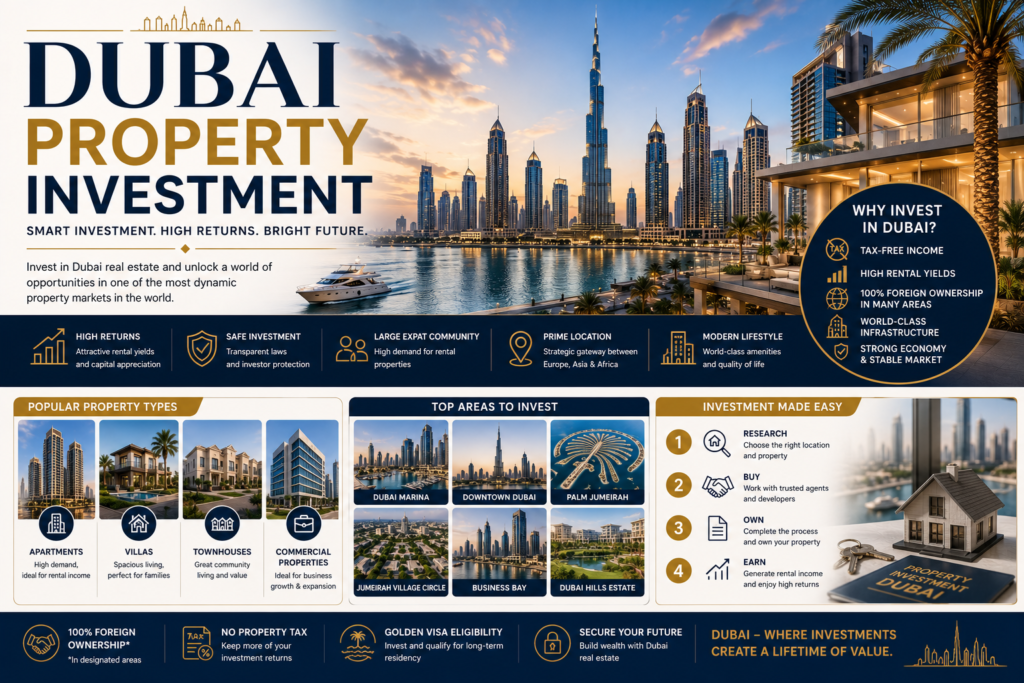
- Why Invest in Dubai Real Estate?
- Understanding the Dubai Property Market
- Who Can Invest in Dubai Property?
- Dubai Property Investment Guide: Choosing the Right Investment
- Best Areas to Invest in Dubai
- Types of Investment Properties
- Understanding Investment Costs
- Financing Your Investment
- Factors That Influence Property Value
- Common Mistakes Property Investors Should Avoid
- Rental Income and Return on Investment
- Off-Plan vs Ready Properties
- Tips for First-Time Property Investors
- How to Choose the Right Investment Property
- Dubai Property Investment Checklist
- Is Dubai Property a Good Long-Term Investment?
- Frequently Asked Questions
- Conclusion
Why Invest in Dubai Real Estate?
Dubai’s property market continues to attract investors because of its stability, transparency, and growth potential.
Some of the biggest advantages include:
- Tax-efficient property ownership.
- Competitive rental yields.
- Strong demand from local and international tenants.
- Modern infrastructure and world-class communities.
- Growing economy supported by tourism and business.
- Wide variety of residential and commercial properties.
- Long-term capital appreciation opportunities.
These benefits make Dubai one of the most attractive property investment destinations in the world.
Understanding the Dubai Property Market
Before making an investment, it is important to understand how the Dubai real estate market operates.
The market includes:
- Apartments.
- Villas.
- Townhouses.
- Penthouses.
- Commercial offices.
- Retail spaces.
- Off-plan developments.
- Ready-to-move properties.
Property prices vary depending on location, developer reputation, amenities, and market demand.
Understanding these factors helps investors make better purchasing decisions.
Who Can Invest in Dubai Property?
Dubai welcomes property investment from both residents and international buyers.
Eligible investors include:
- UAE nationals.
- GCC citizens.
- Expatriate residents.
- Foreign investors.
- Overseas buyers looking for long-term investments.
Foreign investors can purchase freehold properties in designated freehold areas, giving them full ownership rights.
Dubai Property Investment Guide: Choosing the Right Investment
Every investor has different financial goals, so selecting the right property requires careful planning.
Before investing, consider:
- Investment budget.
- Expected rental income.
- Capital appreciation potential.
- Property location.
- Community facilities.
- Developer reputation.
- Future infrastructure projects.
- Property management costs.
Making decisions based on research rather than emotions can significantly improve long-term investment performance.
Best Areas to Invest in Dubai
Several communities consistently attract investors because of their popularity and strong rental demand.
Popular investment locations include:
- Downtown Dubai.
- Dubai Marina.
- Business Bay.
- Dubai Hills Estate.
- Palm Jumeirah.
- Jumeirah Village Circle (JVC).
- Dubai Creek Harbour.
- Arabian Ranches.
Each area offers different investment opportunities depending on your budget and expected returns.
Types of Investment Properties
Dubai offers a wide range of investment options.
Common choices include:
- Studio apartments.
- One-bedroom apartments.
- Luxury apartments.
- Villas.
- Townhouses.
- Holiday homes.
- Commercial properties.
Each property type serves different investment objectives, from rental income to long-term capital growth.
Understanding Investment Costs
Successful investors look beyond the purchase price.
Additional costs may include:
- Property registration fees.
- Agency commission.
- Mortgage processing fees.
- Property valuation charges.
- Annual service charges.
- Maintenance expenses.
- Insurance.
- Utility connection costs.
Calculating the total investment cost helps you estimate your expected return more accurately.
Financing Your Investment
Many investors choose mortgage financing to purchase property.
When comparing mortgage options, evaluate:
- Interest rates.
- Down payment requirements.
- Loan tenure.
- Monthly repayments.
- Processing fees.
- Early settlement charges.
Choosing suitable financing can improve cash flow while supporting long-term investment growth.
Factors That Influence Property Value
Property values in Dubai are influenced by several important factors.
These include:
- Location.
- Infrastructure development.
- Accessibility.
- Community amenities.
- School and healthcare facilities.
- Public transport.
- Market demand.
- Economic growth.
Investors who understand these factors are better positioned to identify properties with strong appreciation potential.
Common Mistakes Property Investors Should Avoid
Even experienced investors can make costly mistakes when purchasing real estate. Avoiding these errors can improve your chances of achieving long-term success.
Some of the most common mistakes include:
- Investing without researching the local market.
- Ignoring additional ownership costs.
- Choosing a property based only on price.
- Failing to verify the developer’s reputation.
- Overestimating rental income.
- Purchasing without a long-term investment strategy.
- Not reviewing legal documents carefully.
- Taking on more debt than you can comfortably manage.
A disciplined investment approach helps reduce risk and improve returns.
Rental Income and Return on Investment
One of the biggest advantages highlighted in this Dubai Property Investment Guide is the opportunity to generate regular rental income.
When evaluating a property’s investment potential, consider:
- Expected annual rental income.
- Occupancy rates.
- Property management expenses.
- Maintenance costs.
- Service charges.
- Future rental demand.
- Potential appreciation in property value.
Balancing rental yield with long-term capital growth can create a strong investment portfolio.
Off-Plan vs Ready Properties
Investors often choose between off-plan developments and ready-to-move properties.
| Feature | Off-Plan Property | Ready Property |
|---|---|---|
| Purchase Price | Often lower | Market value |
| Payment Plans | Flexible | Mortgage or full payment |
| Rental Income | Available after completion | Immediate |
| Capital Appreciation | Potentially higher | Depends on market conditions |
| Risk Level | Moderate | Lower |
Your choice should depend on your financial goals, risk tolerance, and investment timeline.
Tips for First-Time Property Investors
If you are entering the Dubai real estate market for the first time, these practical tips can help you make informed decisions.
- Set a realistic investment budget.
- Research different communities.
- Compare several properties before buying.
- Focus on long-term investment potential.
- Calculate all ownership costs.
- Work with experienced real estate professionals.
- Avoid emotional purchasing decisions.
- Diversify your investment portfolio when possible.
Careful planning is the foundation of successful property investing.
How to Choose the Right Investment Property
Selecting the right property requires more than simply finding an attractive apartment or villa.
Evaluate factors such as:
- Location and accessibility.
- Nearby schools and hospitals.
- Shopping and entertainment options.
- Public transportation.
- Community facilities.
- Building quality.
- Security.
- Rental demand.
- Future infrastructure developments.
Properties in growing communities often provide stronger long-term appreciation and rental demand.
Dubai Property Investment Checklist
Use this checklist before making your investment.
| Checklist Item | Completed |
|---|---|
| Defined investment goals | □ |
| Set a realistic budget | □ |
| Researched property locations | □ |
| Compared multiple properties | □ |
| Verified legal documents | □ |
| Calculated total ownership costs | □ |
| Compared mortgage options | □ |
| Planned long-term investment strategy | □ |
Following a structured checklist helps reduce investment risks and improves decision-making.
Is Dubai Property a Good Long-Term Investment?
Dubai continues to attract investors because of its strong economy, growing population, business-friendly environment, and continuous infrastructure development.
Long-term advantages include:
- Consistent demand for residential properties.
- Attractive rental yields.
- Tax-efficient investment environment.
- Modern infrastructure.
- Global business hub status.
- Ongoing development projects.
- Diverse investment opportunities.
For investors seeking stable long-term growth, Dubai remains one of the world’s most competitive property markets.
Frequently Asked Questions
Can foreigners invest in Dubai property?
Yes. Foreign nationals can purchase freehold properties in designated areas of Dubai and enjoy full ownership rights.
Is Dubai property a good investment?
Many investors consider Dubai real estate an attractive option because of competitive rental yields, modern infrastructure, and long-term growth potential.
Can expatriates obtain a mortgage?
Yes. Many UAE banks provide mortgage financing to eligible expatriates, subject to their lending criteria and financial assessment.
What additional costs should investors expect?
Besides the purchase price, investors should budget for registration fees, agency commissions, mortgage-related expenses, annual service charges, maintenance costs, and insurance.
Should I invest in an off-plan or ready property?
The choice depends on your investment objectives. Off-plan properties may offer lower purchase prices and higher appreciation potential, while ready properties provide immediate rental income.
Conclusion
This Dubai Property Investment Guide demonstrates why Dubai remains one of the most attractive real estate markets for local and international investors. With tax-friendly policies, excellent infrastructure, growing demand, and a wide selection of residential and commercial properties, the city offers outstanding opportunities for long-term wealth creation. However, successful investing requires careful planning, market research, and a clear understanding of the financial commitments involved.
By comparing locations, evaluating financing options, understanding ownership costs, and avoiding common investment mistakes, you can make confident decisions that align with your financial goals. Whether you are purchasing your first investment property or expanding an existing portfolio, following the advice in this Dubai Property Investment Guide will help you maximize returns while minimizing unnecessary risks. With the right strategy and a long-term perspective, investing in Dubai property can become a valuable step toward building lasting financial security.
Do follow us on Instagram
Read More – Buying Property in Dubai: Everything First-Time Buyers Need to Know