



Complete Guide to Best Traditional Food of UAE Authentic Emirati Cuisine
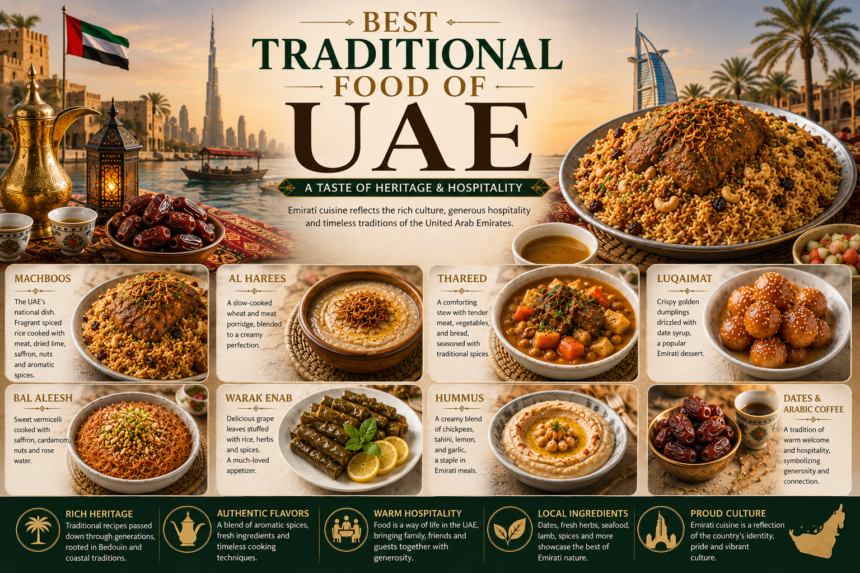
The United Arab Emirates (UAE) is famous for its impressive skyline, luxury hotels, beautiful beaches, vast deserts, and multicultural lifestyle. However, behind its modern image lies a rich culinary heritage shaped by centuries of Arabian traditions, coastal communities, desert life, agriculture, fishing, and international trade. The best traditional food of UAE offers a unique combination of fragrant rice, tender meat, fresh seafood, dates, aromatic spices, traditional breads, and delicious desserts.
- What Makes Traditional UAE Food Special?
- 1. Best Traditional Food of UAE: Al Machboos
- 2. Best Traditional Food of UAE: Al Harees
- 3. Best Traditional Food of UAE: Khuzi
- 4. Best Traditional Food of UAE: Al Madrooba
- 5. Best Traditional Food of UAE: Thareed
- 6. Best Traditional Food of UAE: Saloona
- 7. Best Traditional Food of UAE: Balaleet
- 8. Best Traditional Food of UAE: Chebab
- 9. Best Traditional Food of UAE: Al Jabab
- 10. Best Traditional Food of UAE: Luqaimat
- 11. Best Traditional Food of UAE: Khabeesa
- 12. Best Traditional Food of UAE: Khabees
- 13. Best Traditional Food of UAE: Dates
- 14. Best Traditional Food of UAE: Arabic Coffee or Gahwa
- 15. Best Traditional Food of UAE: Fresh Gulf Seafood
- 16. Best Traditional Food of UAE: Samak Mashwi
- 17. Best Traditional Food of UAE: Shawarma
- 18. Best Traditional Food of UAE: Falafel
- 19. Best Traditional Food of UAE: Hummus
- 20. Best Traditional Food of UAE: Manakish
- 21. Best Traditional Food of UAE: Biryani in the UAE
- 22. Best Traditional Food of UAE: Grilled Meats and Kebabs
- 23. Best Traditional Food of UAE: Arabic Mezze
- Traditional UAE Breakfast
- Traditional UAE Lunch and Dinner
- Traditional UAE Desserts
- Important Spices in Traditional UAE Food
- The Importance of Rice in UAE Cuisine
- Traditional UAE Food and Emirati Hospitality
- Best Places to Try Traditional UAE Food
- Best Traditional Food to Try in Dubai
- Best Traditional Food to Try in Abu Dhabi
- Tips for Trying Traditional Emirati Food
- Frequently Asked Questions About Traditional Food of UAE
Traditional Emirati cuisine is deeply connected to hospitality and family life. Food is often prepared in large quantities and shared among family members, friends, and guests. Arabic coffee and dates are commonly offered as a gesture of welcome, while elaborate rice and meat dishes are served during celebrations, weddings, religious occasions, and family gatherings.
For travelers, discovering traditional UAE food is one of the best ways to experience Emirati culture. Although Dubai and Abu Dhabi offer restaurants serving cuisines from around the world, visitors should also make time to taste authentic Emirati dishes. From the famous Al Machboos and Al Harees to Luqaimat, Balaleet, Thareed, Khuzi, and traditional Arabic coffee, UAE cuisine provides an exciting journey through the country’s history and culture.
What Makes Traditional UAE Food Special?
Traditional UAE cuisine developed in an environment where people relied on locally available ingredients and products brought through trade. The UAE’s coastal location meant that fish and seafood were important sources of food, while communities living in desert and oasis areas depended on dates, grains, livestock, and dairy products.
Rice eventually became a major part of the regional diet, especially in dishes prepared for large family gatherings. Spices such as saffron, cardamom, cinnamon, cloves, turmeric, black pepper, and dried lime added aroma and flavor.
Unlike some cuisines that depend heavily on hot chili peppers, traditional Emirati cooking is generally more aromatic than extremely spicy. The flavour comes from carefully combined spices, herbs, cooking techniques, and high-quality ingredients.
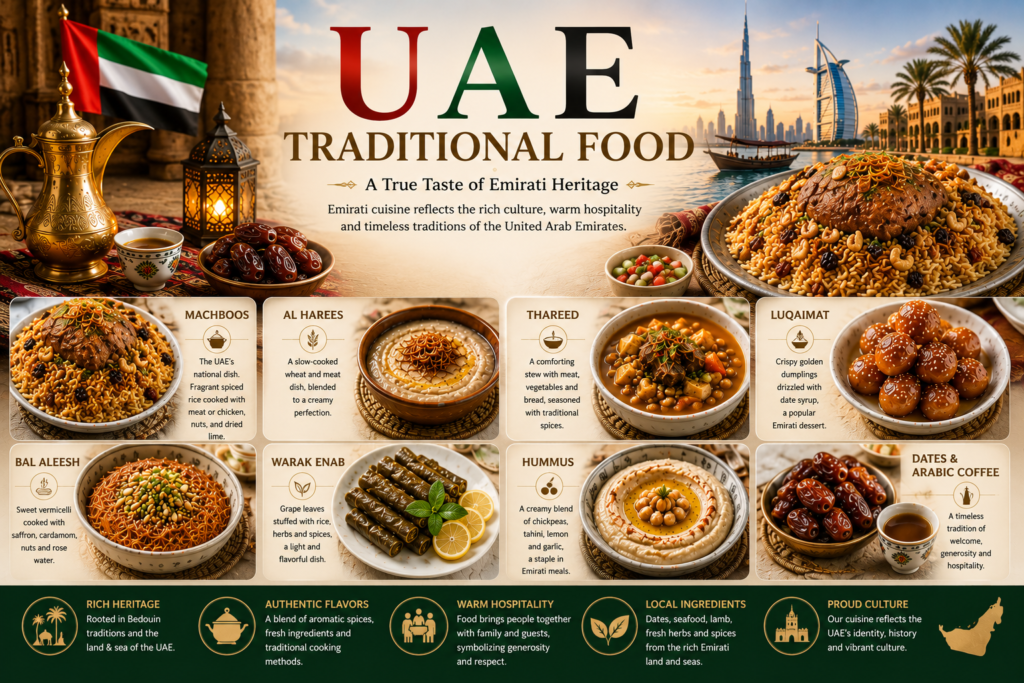
Some characteristics of traditional UAE cuisine include:
- Fragrant rice dishes
- Slow-cooked meat and chicken
- Fresh Gulf seafood
- Dates and date-based products
- Traditional breads
- Aromatic spices
- Sweet and savory combinations
- Shared family-style meals
- Arabic coffee and traditional beverages
- Desserts flavored with saffron, cardamom, and rose water
1. Best Traditional Food of UAE: Al Machboos
Al Machboos is one of the most famous traditional foods in the UAE and should be at the top of any list of Emirati dishes to try. This flavorful rice dish is usually prepared with chicken, meat, or seafood and a carefully selected combination of spices.
The rice is cooked with ingredients such as onions, tomatoes, dried lime, cardamom, cinnamon, cloves, and other seasonings. The meat or seafood is prepared in the same cooking process, allowing the rice to absorb the rich flavors.
Al Machboos is commonly served during family gatherings, celebrations, holidays, and special occasions. It is also popular in traditional Emirati restaurants.
The dish represents the importance of rice-based meals in Gulf cuisine and demonstrates how simple ingredients can create a complex and aromatic flavor.
Why try Al Machboos?
- It is one of the most recognizable Emirati dishes.
- It combines fragrant rice with meat, chicken, or seafood.
- It uses traditional Arabian spices.
- It is commonly served during celebrations.
- It is ideal for sharing with family and friends.
2. Best Traditional Food of UAE: Al Harees
Al Harees is another iconic Emirati dish and an important part of UAE culinary heritage. It is made primarily from wheat, meat, and salt and is cooked slowly for several hours.
The long cooking process creates a smooth, thick texture. Unlike some other traditional dishes, Al Harees is relatively mild in flavor, allowing the natural taste of the wheat and meat to stand out.
Al Harees is especially popular during Ramadan, Eid, weddings, and other important occasions. Preparing it can be time-consuming, which is one reason it has traditionally been associated with special events and communal gatherings.
For visitors interested in authentic Emirati cuisine, Al Harees is a dish that provides a genuine taste of traditional UAE home cooking.
3. Best Traditional Food of UAE: Khuzi
Khuzi, also known as Ghuzi, is a traditional Gulf dish featuring roasted meat served over fragrant rice. It is often prepared for large gatherings and celebrations.
The meat is cooked until tender and may be accompanied by vegetables, nuts, raisins, and spices. The rice absorbs the flavors of the meat and seasonings, creating a rich and satisfying meal.
Khuzi is particularly suitable for group dining because it is traditionally presented as a large shared dish. It reflects the generous hospitality associated with Emirati culture.
If you are looking for a traditional UAE meal suitable for a special occasion, Khuzi is an excellent choice.
4. Best Traditional Food of UAE: Al Madrooba
Al Madrooba is a traditional UAE dish that highlights the country’s connection to the sea. It is generally prepared with salted fish, spices, and a thick sauce.
The ingredients are cooked together until they develop a rich and hearty consistency. The use of fish reflects the historical importance of fishing to communities along the Arabian Gulf.
Al Madrooba offers a distinctive combination of salty, savory, and aromatic flavors. It is particularly interesting for travelers who want to discover lesser-known traditional Emirati dishes.
5. Best Traditional Food of UAE: Thareed
Thareed is a traditional stew made with bread, meat, vegetables, and flavorful broth. Pieces of bread absorb the stew, becoming soft and infused with the flavors of the cooking liquid.
It is a filling and comforting dish that is often associated with home cooking. Thareed is also commonly enjoyed during Ramadan.
The combination of bread, vegetables, meat, and broth makes Thareed an excellent example of traditional Arabian cooking.
6. Best Traditional Food of UAE: Saloona
Saloona is a traditional UAE stew that can be prepared with chicken, meat, or fish. Vegetables and spices are added to create a flavorful broth, and the dish is often served with rice or bread.
Different families and restaurants may have their own versions of Saloona, making it a versatile part of Emirati cuisine.
For travelers who enjoy hearty stews and home-style cooking, Saloona is a traditional dish worth exploring.
7. Best Traditional Food of UAE: Balaleet
Balaleet is one of the most distinctive traditional Emirati breakfast dishes. It combines sweet vermicelli noodles with spices such as cardamom and saffron and is often served with eggs.
The contrast between sweet noodles and savory egg makes Balaleet particularly interesting for visitors experiencing Emirati cuisine for the first time.
Sugar, rose water, cardamom, and saffron may be used to create its characteristic fragrance and sweetness.
Balaleet is commonly enjoyed for breakfast and can also be served during celebrations and special occasions.
8. Best Traditional Food of UAE: Chebab
Chebab is a traditional Emirati bread that resembles a thin pancake. It is often made using flour, yeast, saffron, and cardamom.
The bread can be served with honey, date syrup, cheese, or other accompaniments. Its fragrant aroma and soft texture make it a popular traditional breakfast food.
Chebab pairs particularly well with Arabic coffee and dates, creating a classic Emirati breakfast experience.
9. Best Traditional Food of UAE: Al Jabab
Al Jabab is another traditional UAE bread that is commonly enjoyed for breakfast or as a snack. It is generally thin and can have a slightly crisp exterior.
It may be served with date syrup, honey, cheese, or other toppings. The dish demonstrates the importance of simple breads in traditional Emirati cuisine.
Visitors who want to experience traditional UAE breakfast foods should consider trying both Chebab and Al Jabab.
10. Best Traditional Food of UAE: Luqaimat
Luqaimat is arguably one of the most popular traditional Emirati desserts. These small golden dumplings are fried until crisp on the outside while remaining soft inside.
They are typically served with date syrup, honey, or other sweet toppings. Sesame seeds may also be added.
Luqaimat is especially popular during Ramadan, festivals, family gatherings, and other celebrations.
Its combination of crispy texture, soft interior, and sweet syrup makes it a favorite among both locals and international visitors.
Why Luqaimat is one of the best UAE desserts
- It is strongly associated with Emirati cuisine.
- It is easy to share.
- It pairs well with Arabic coffee.
- It is commonly served during celebrations.
- It combines traditional ingredients with a simple preparation.
11. Best Traditional Food of UAE: Khabeesa
Khabeesa is a traditional Emirati sweet made with flour, sugar, and aromatic spices. Cardamom and saffron are often included to provide its distinctive fragrance.
The dessert has a soft texture and is usually served during family gatherings and special occasions.
Khabeesa demonstrates the importance of simple ingredients in traditional UAE desserts. Although it may not be as internationally recognized as Luqaimat, it remains an important part of Emirati food culture.
12. Best Traditional Food of UAE: Khabees
Khabees is another traditional Emirati sweet that uses ingredients such as roasted flour, sugar, butter or oil, and spices.
The roasting process gives the flour a distinctive flavor, while cardamom and other spices provide aroma.
Khabees is a good choice for visitors interested in traditional desserts that are less commonly found on international restaurant menus.
13. Best Traditional Food of UAE: Dates
Dates are among the most important traditional foods in the UAE. They have been part of Arabian culture for centuries and remain a major symbol of hospitality.
Date palms were historically important to communities across the Arabian Peninsula because they provided food, shade, and other useful products. Dates could also be stored, making them valuable in the region’s climate.
Today, dates are enjoyed fresh, dried, stuffed with nuts, covered with chocolate, or transformed into syrup and desserts.
In Emirati hospitality, dates are frequently served with Arabic coffee to welcome guests.
Popular types of date-based foods include:
- Fresh dates
- Stuffed dates
- Date syrup
- Date desserts
- Date cakes
- Chocolate-covered dates
- Dates with nuts
14. Best Traditional Food of UAE: Arabic Coffee or Gahwa
Arabic coffee, commonly called Gahwa, is an essential part of Emirati hospitality and traditional food culture.
It is generally lighter in color than many Western coffee varieties and is often flavored with cardamom. Saffron or other spices may also be used.
Arabic coffee is traditionally served in small cups and accompanied by dates. The serving of coffee is often associated with welcoming guests and showing generosity.
For travelers, drinking Gahwa is an important cultural experience that goes beyond simply enjoying a beverage.
15. Best Traditional Food of UAE: Fresh Gulf Seafood
The UAE’s location along the Arabian Gulf has strongly influenced its culinary traditions. Fishing was historically an important occupation for many coastal communities.
Today, seafood remains popular across the UAE. Traditional and modern restaurants serve grilled fish, prawns, crab, lobster, and seafood rice dishes.
Fish may be prepared with aromatic spices and served alongside rice, bread, salads, or vegetables.
Seafood lovers visiting the UAE should explore both traditional fish dishes and modern interpretations of Gulf cuisine.
16. Best Traditional Food of UAE: Samak Mashwi
Samak Mashwi refers to grilled fish and is a simple but flavorful part of Gulf cuisine. Fresh fish is seasoned and grilled until tender.
The fish can be served with rice, vegetables, salads, lemon, or sauces. The preparation allows the natural flavor of the seafood to remain prominent while spices add aroma.
It is an excellent option for travelers looking for traditional UAE seafood.
17. Best Traditional Food of UAE: Shawarma
Although shawarma is not originally an Emirati dish, it has become one of the most popular foods in the modern UAE.
Chicken or meat is slowly cooked on a vertical rotating spit and sliced into thin pieces. It is then served in flatbread with vegetables, pickles, sauces, or garlic dressing.
Shawarma is widely available throughout Dubai, Abu Dhabi, Sharjah, and other emirates.
Its popularity reflects the multicultural character of the UAE’s modern food scene.
18. Best Traditional Food of UAE: Falafel
Falafel is a popular Middle Eastern food that can be found in restaurants and cafes across the UAE. It is traditionally made from chickpeas or fava beans combined with herbs and spices.
Falafel is fried until crispy and can be served in bread, with salads, or as part of a mezze platter.
It is also an excellent vegetarian-friendly option for travelers.
19. Best Traditional Food of UAE: Hummus
Hummus is one of the most popular Middle Eastern foods in the UAE. Made primarily from chickpeas and tahini, it is commonly flavored with lemon juice, garlic, and olive oil.
Hummus is generally served with Arabic bread and may appear as part of a mezze spread.
Although it is not exclusively Emirati, it has become an essential part of dining throughout the UAE.
20. Best Traditional Food of UAE: Manakish
Manakish is a Middle Eastern flatbread commonly available in UAE bakeries and restaurants. It can be topped with za’atar, cheese, minced meat, or other ingredients.
It is often eaten for breakfast or as a quick snack. Freshly baked manakish is especially popular because it is affordable and convenient.
21. Best Traditional Food of UAE: Biryani in the UAE
Biryani is not traditionally Emirati, but it is one of the most popular foods in the modern UAE. The country’s large South Asian community has contributed significantly to its food culture.
Restaurants serve many varieties of chicken, lamb, beef, seafood, and vegetarian biryani.
The dish generally features fragrant rice, spices, vegetables, and meat or other ingredients. It demonstrates how the UAE has developed a multicultural culinary identity while maintaining its own traditional cuisine.
22. Best Traditional Food of UAE: Grilled Meats and Kebabs
Grilled meats are widely enjoyed across the UAE. Restaurants offer lamb, chicken, beef, kofta, kebabs, and mixed grills.
Meat is typically marinated with herbs and spices before being grilled over charcoal or another heat source.
Mixed grills are particularly popular for groups because they offer a selection of meats in one meal. They are commonly served with rice, Arabic bread, hummus, salads, and sauces.
23. Best Traditional Food of UAE: Arabic Mezze
Arabic mezze is a collection of small dishes designed for sharing. A typical mezze selection may include hummus, baba ghanoush, tabbouleh, fattoush, labneh, falafel, and other appetizers.
Mezze is ideal for people who want to taste several Middle Eastern foods in one sitting.
Sharing multiple small dishes also reflects the social nature of dining across the region.
Traditional UAE Breakfast
Traditional Emirati breakfast can be quite different from a typical Western breakfast. It may include sweet and savory foods alongside Arabic coffee and dates.
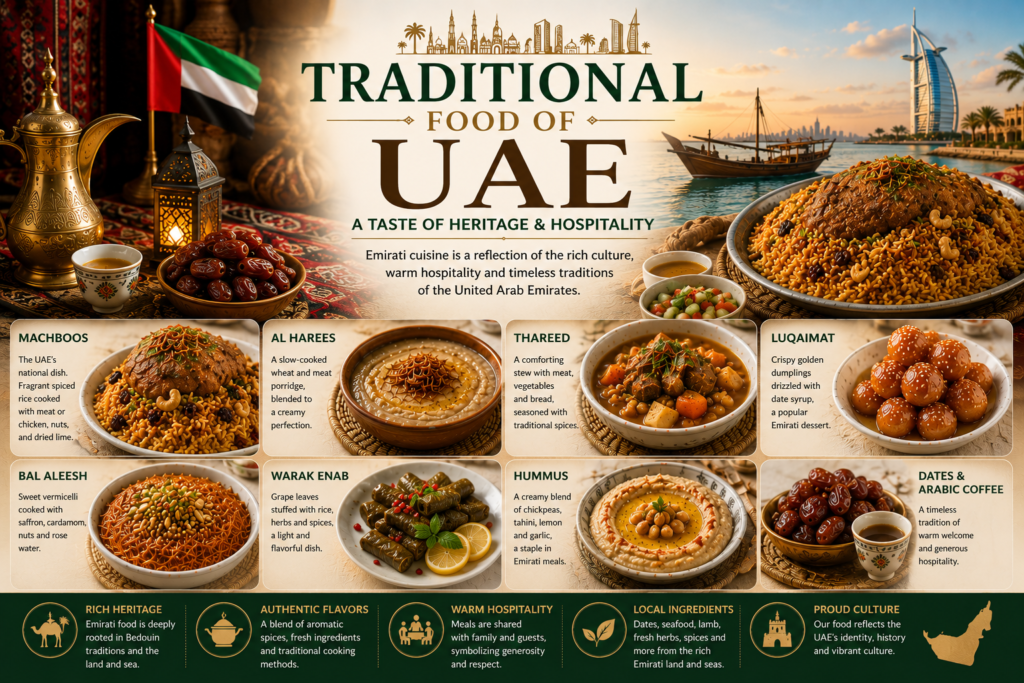
Some traditional breakfast options include:
- Balaleet
- Chebab
- Al Jabab
- Eggs
- Cheese
- Dates
- Arabic coffee
- Hummus
- Arabic bread
A traditional breakfast is one of the best ways to begin exploring authentic Emirati cuisine because many breakfast foods have strong connections to local heritage.
Traditional UAE Lunch and Dinner
Lunch and dinner are often more substantial than breakfast. Rice-based dishes with meat, chicken, or seafood are particularly popular.
Traditional choices include:
- Al Machboos
- Al Harees
- Khuzi
- Thareed
- Saloona
- Al Madrooba
- Grilled fish
- Mixed grills
These dishes are often served in large portions and shared among family members or guests.
Traditional UAE Desserts
Traditional UAE desserts use ingredients that have long been important to the region, including dates, flour, sugar, nuts, saffron, cardamom, and rose water.
Popular desserts include:
- Luqaimat
- Khabeesa
- Khabees
- Date-based sweets
- Umm Ali
- Baklava
- Maamoul
Luqaimat is particularly associated with Emirati cuisine and is one of the most recognizable local desserts.
Important Spices in Traditional UAE Food
Spices play a central role in traditional Emirati cooking. They help create the rich aroma and flavor associated with UAE dishes.
Common spices include:
- Cardamom
- Saffron
- Cinnamon
- Cloves
- Turmeric
- Dried lime
- Black pepper
- Cumin
- Coriander
- Ginger
Dried lime is especially interesting because it provides a distinctive sour and aromatic flavor to many rice and meat dishes.
The Importance of Rice in UAE Cuisine
Rice is a major component of many traditional UAE meals. It is especially important in dishes such as Al Machboos and Khuzi.
Rice became increasingly important through regional and international trade and is now deeply integrated into Gulf cuisine.
Fragrant rice is often cooked with spices, meat, chicken, fish, or vegetables. Large rice dishes are also ideal for sharing, making them particularly suitable for family gatherings and celebrations.
Traditional UAE Food and Emirati Hospitality
Food plays a central role in Emirati hospitality. Guests are often welcomed with dates and Arabic coffee, followed by meals that may include several dishes.
Large meals are frequently prepared for family gatherings, weddings, Ramadan, Eid, and other celebrations.
Sharing food is an important social activity. Traditional dishes are often placed in the center of the table so everyone can enjoy them together.
This combination of food and hospitality makes traditional Emirati dining a cultural experience rather than simply a meal.
Best Places to Try Traditional UAE Food
Visitors can experience authentic UAE cuisine in several different settings.
Traditional Emirati Restaurants
These restaurants are the best choice for trying dishes such as Al Machboos, Al Harees, Khuzi, Thareed, and Luqaimat.
Local Cafes
Local cafes are ideal for Arabic coffee, dates, traditional breads, and light snacks.
Souks and Food Markets
Traditional markets offer opportunities to discover dates, spices, sweets, breads, and other regional ingredients.
Hotels and Cultural Events
Many hotels and cultural venues offer Emirati dishes during Ramadan, UAE National Day celebrations, and other special events.
Family-Style Restaurants
Family restaurants often serve large portions of rice, meat, seafood, and grilled dishes designed for sharing.
Best Traditional Food to Try in Dubai
Dubai is one of the best places to explore Emirati food because it combines traditional cuisine with a highly diverse restaurant scene.
Visitors should consider trying:
- Al Machboos
- Al Harees
- Khuzi
- Luqaimat
- Balaleet
- Chebab
- Arabic coffee
- Dates
- Traditional seafood
Dubai’s traditional neighborhoods, cultural districts, and Emirati restaurants can provide a more authentic local food experience away from the international restaurant scene.
Best Traditional Food to Try in Abu Dhabi
Abu Dhabi also offers excellent opportunities to experience Emirati cuisine. Traditional restaurants and cultural destinations provide dishes such as Al Machboos, Al Harees, Khuzi, seafood, dates, and Arabic sweets.
Visitors can combine food experiences with visits to cultural attractions to gain a deeper understanding of Emirati traditions.
Tips for Trying Traditional Emirati Food
If you are trying UAE cuisine for the first time, these tips can make the experience more enjoyable:
- Begin with a traditional Emirati restaurant.
- Try Al Machboos as an introduction to local cuisine.
- Order Luqaimat for dessert.
- Enjoy Arabic coffee with dates.
- Try traditional breakfast dishes such as Balaleet and Chebab.
- Explore seafood dishes if you enjoy fish.
- Share large meals with family or friends.
- Visit local markets to discover dates and sweets.
- Ask restaurant staff about regional specialties.
- Check ingredients if you have allergies or dietary restrictions.
Frequently Asked Questions About Traditional Food of UAE
Q1. What is the most famous traditional food in the UAE?
Ans: Al Machboos is one of the most famous traditional Emirati foods. It is a fragrant rice dish prepared with chicken, meat, or seafood and a variety of spices.
Q2. What is the traditional food of Dubai?
Ans: Dubai has a diverse food culture, but traditional Emirati dishes commonly found in the city include Al Machboos, Al Harees, Khuzi, Thareed, Balaleet, and Luqaimat.
Q3. What is the most famous Emirati dessert?
Ans: Luqaimat is one of the most famous Emirati desserts. These small fried dumplings are usually served with date syrup or honey.
Q4. What do Emiratis drink with dates?
Ans: Arabic coffee, or Gahwa, is traditionally served with dates and is an important part of Emirati hospitality.
Q5. Is Emirati food spicy?
Ans: Traditional Emirati food is generally aromatic rather than extremely spicy. Cardamom, saffron, cinnamon, dried lime, turmeric, and other spices are commonly used.
Q6. Is seafood traditional in the UAE?
Ans: Yes. Seafood has historically been an important part of Emirati cuisine because of the UAE’s coastal location along the Arabian Gulf.
Q7. What is a traditional Emirati breakfast?
Ans: Traditional Emirati breakfast can include Balaleet, Chebab, Al Jabab, eggs, dates, cheese, Arabic bread, and Arabic coffee.
Final Thoughts
The best traditional food of UAE offers a fascinating combination of history, culture, hospitality, and flavor. Dishes such as Al Machboos, Al Harees, Khuzi, Al Madrooba, Thareed, and Saloona represent the traditional cooking heritage of Emirati communities, while foods such as Balaleet, Chebab, and Al Jabab provide a glimpse into traditional breakfast culture.
Traditional desserts such as Luqaimat, Khabeesa, and Khabees highlight the UAE’s love of sweet flavors and aromatic spices. Dates and Arabic coffee remain central to Emirati hospitality and provide visitors with one of the simplest ways to experience local culture.
At the same time, modern UAE cuisine reflects the country’s multicultural population. Shawarma, hummus, falafel, biryani, manakish, kebabs, and international cuisines have become part of everyday dining across the country.
Whether you are visiting Dubai, Abu Dhabi, Sharjah, Fujairah, Ras Al Khaimah, Ajman, or another emirate, exploring traditional food can make your trip more memorable. Try a local Emirati restaurant, sample traditional rice and meat dishes, enjoy fresh seafood, taste Luqaimat, and experience Arabic coffee with dates.
Ultimately, traditional UAE food is more than a collection of recipes. It represents the country’s history, environment, cultural connections, and strong tradition of hospitality. Exploring these dishes allows visitors and residents alike to experience an authentic and delicious side of the United Arab Emirates.
Do follow us on Instagram
Read More – Typical Food in United Arab Emirates