


Checking Property Titles and Developers
Buying Gulf Property can be an attractive option for expats living in the UAE, Saudi Arabia, Qatar, Bahrain, Oman and Kuwait, but property ownership rules, costs and investment opportunities vary significantly across the GCC.
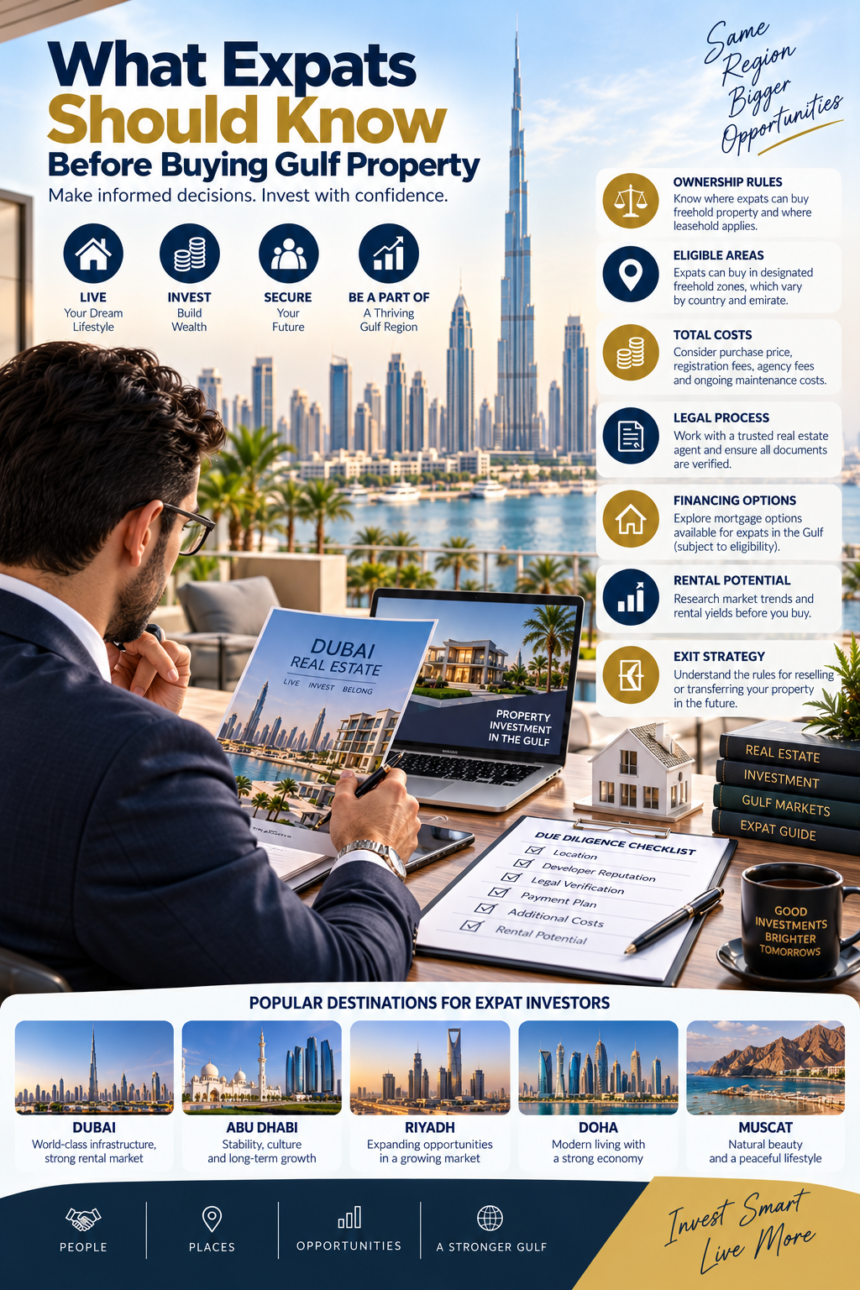
- What Expats Should Know Before Buying Gulf Property: 2026 Overview
- 1. Confirming Foreign Property Ownership Rights
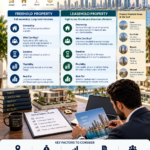
- 2. Choosing Between Freehold and Other Property Rights
- 3. Setting a Realistic Total Purchase Budget
- 4. Understanding Mortgage and Deposit Requirements
- 5. Researching the Location Before Buying
- 6. Calculating Rental Yield and Net Returns
- 7. Checking the Developer and Property Title
- 8. Comparing Ready and Off-Plan Property
- 9. Understanding Taxes, Registration Fees and Service Charges
- 10. Checking Property-Linked Residency Benefits
- 11. Planning for Employment and Residency Changes
- 12. Creating a Long-Term Exit Strategy
- Buying Property in the UAE as an Expat
- Buying Property in Saudi Arabia as an Expat
- Buying Property in Qatar as an Expat
- Buying Property in Bahrain as an Expat
- Buying Property in Oman as an Expat
- Buying Property in Kuwait as an Expat
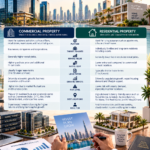
- Residential Property for Gulf Expats
- Commercial Property for Gulf Expats
- Property Ownership for Expats Living Outside the GCC
- Common Property Buying Mistakes Expats Should Avoid
- Practical Gulf Property Buying Checklist
- Final Thoughts for Expats Buying Gulf Property
Many expatriates spend years working in the Gulf and eventually consider purchasing a home or investment property instead of continuing to rent. Real estate can provide rental income, potential capital growth and, in some countries, access to property-linked residency benefits.
However, buying property requires more than choosing an attractive apartment or development. Expats need to understand foreign ownership rules, freehold and long-term property rights, mortgages, registration fees, service charges, rental demand and eventual resale options.
The strongest property decision begins with understanding exactly what you can legally own, what the purchase will really cost and whether the investment can remain manageable if your employment or residency situation changes.
What Expats Should Know Before Buying Gulf Property: 2026 Overview
The first major difference between GCC markets is foreign ownership.
| GCC Country | General Position for Foreign Buyers |
|---|---|
| UAE | Foreign ownership permitted in designated areas, particularly extensive in Dubai |
| Saudi Arabia | New non-Saudi ownership system effective from January 22, 2026, subject to designated geographical and regulatory controls |
| Qatar | Freehold and usufruct rights available in designated areas |
| Bahrain | Non-Bahrainis can own in officially approved areas and projects |
| Oman | Foreign ownership available primarily through qualifying Integrated Tourism Complexes |
| Kuwait | More restrictive for many non-Kuwaiti buyers, with legislation amended in 2025 |
Dubai Land Department confirms that foreign nationals can own real estate in designated freehold areas, while UAE and GCC nationals have broader ownership rights throughout Dubai. It also stresses that real estate transactions must be officially registered to protect ownership rights.
Saudi Arabia’s market changed substantially in 2026. The new Real Estate Ownership System for Non-Saudis officially entered into force on January 22, 2026, with ownership applications managed through the official Saudi Properties platform.
These differences make legal eligibility the first step in every Gulf property purchase.
1. Confirming Foreign Property Ownership Rights
Never assume that being a legal resident gives you unrestricted property ownership rights.
Residency and property ownership are separate legal matters.
Dubai provides a relatively straightforward example. Dubai Land Department states that foreigners may own property in designated freehold areas. Its property status system identifies freehold locations where purchases are permitted for all nationalities.
Saudi Arabia follows a different model.
Under its active non-Saudi ownership law, foreigners may own property or acquire other real rights within geographical areas determined under the regulatory framework. A legally resident non-Saudi natural person may also own one residential property outside those designated geographical areas, subject to the law’s conditions and special restrictions involving Makkah and Madinah.
Qatar also limits foreign ownership to specific arrangements and areas.
Bahrain publishes official maps identifying areas where non-Bahrainis can own.
Oman focuses foreign ownership significantly around Integrated Tourism Complexes.
Kuwait remains considerably more restrictive.
Before paying a reservation fee, confirm your eligibility through the relevant government land authority.
2. Choosing Between Freehold and Other Property Rights

Not every property marketed to an expatriate provides permanent freehold ownership.
Expats can encounter legal structures including:
- Freehold
- Usufruct
- Musataha
- Long-term lease rights
Freehold generally provides permanent ownership without a fixed expiry date.
Usufruct gives someone the right to use and benefit from property owned by another party for a specified period.
Long-term property rights can still be valuable investments, but buyers need to know exactly what will be registered in their name.
In Dubai, foreign nationals in designated areas can acquire freehold ownership as well as other real estate interests such as usufruct, musataha and long-term leases of up to 99 years.
Qatar similarly divides foreign investment locations into freehold and usufruct areas. The Ministry of Justice confirms that ownership and usufruct rights can also pass to non-Qataris through inheritance in permitted areas.
Do not accept the term “ownership” without checking the title structure.
The more useful question is:
What exact legal right will the government registry place in my name?
3. Setting a Realistic Total Purchase Budget
The property price is only part of the cost.
A Gulf property buyer may also need money for:
- Down payment
- Registration
- Brokerage
- Mortgage fees
- Valuation
- Insurance
- Service charges
- Developer charges
- Furnishing
- Maintenance
- Moving expenses
First-time buyers often make the mistake of using almost all their savings for the deposit.
That leaves little protection against unexpected costs.
Imagine an expat has AED 500,000 available.
Putting the entire amount into the down payment might allow the purchase of a more expensive Dubai apartment, but it could leave the owner without emergency cash when service charges, repairs or employment uncertainty appear.
A more responsible budget separates:
Property capital + transaction costs + emergency savings.
Do not treat emergency money as part of the property deposit.
4. Understanding Mortgage and Deposit Requirements
Mortgage finance can make property ownership accessible, but it also increases financial risk.
Banks consider factors such as:
- Salary
- Employer
- Credit history
- Existing loans
- Property value
- Age
- Residency
- Down payment
Mortgage conditions can also differ between citizens and expatriates.
An expat should obtain mortgage pre-approval before making a serious property offer.
This gives the buyer a more realistic idea of how much a bank is willing to finance.
However, bank approval should never become your personal spending target.
If a lender says you can afford a AED 2 million property, that does not automatically mean purchasing one is financially wise.
Consider whether repayments would remain manageable if:
- Employment changed
- Salary dropped
- Interest or financing costs increased
- The property remained vacant
- Family expenses increased
A mortgage can continue for decades. Expat employment arrangements can change much sooner.
5. Researching the Location Before Buying
Real estate performance is heavily influenced by location.
However, “prime location” is often used too casually in property marketing.
A good investment location should have identifiable demand drivers.
For residential property these can include:
- Employment centres
- Schools
- Public transport
- Supermarkets
- Healthcare
- Parks
- Restaurants
- Major roads
Commercial property requires different analysis.
Office investors should examine business districts, parking, metro access and building quality.
Retail investors need footfall and local spending.
Warehouse investors should focus on roads, logistics infrastructure, zoning and industrial demand.
Do not research only current conditions.
Check future supply.
A neighbourhood with excellent occupancy today could receive thousands of new apartments over the next three years.
That additional supply can influence both rents and resale prices.
6. Calculating Rental Yield and Net Returns
Rental yield is one of the most frequently advertised property numbers.
The basic gross-yield calculation is:
Annual rent ÷ purchase price × 100
If an apartment costs AED 1 million and produces AED 70,000 in annual rent, the gross rental yield is 7%.
That does not mean the investor actually earns 7%.
Costs may include:
- Service charges
- Maintenance
- Property management
- Leasing fees
- Vacancy
- Insurance
- Financing costs
If those costs total AED 18,000, the investor’s net rental income becomes AED 52,000.
The practical yield is therefore much lower.
First-time investors should always calculate both:
Gross rental yield
and
Net rental yield
When an agent advertises an unusually high return, ask exactly what expenses have been excluded.
7. Checking the Developer and Property Title
Property due diligence is essential whether buying ready or off-plan real estate.
For completed property, check:
- Legal owner
- Title deed
- Existing mortgage
- Outstanding service charges
- Current tenant
- Lease terms
- Property condition
- Building maintenance
Dubai Land Department states that property transactions involving ownership, transfer or changes in rights must be recorded in its registers and that unregistered transactions are considered invalid.
This makes official registration much more important than a private agreement between buyer and seller.
For off-plan investments, investigate the developer’s history.
A well-known marketing campaign does not prove that the developer consistently completes projects on time or maintains buildings properly after handover.
Check past developments and speak with existing owners where possible.
8. Comparing Ready and Off-Plan Property
Both ready and off-plan investments are popular across Gulf property markets.
Ready property advantages
The buyer can inspect the actual unit.
Rental income can potentially begin quickly.
Existing market rent and service charges are easier to estimate.
Off-plan advantages
Developers may offer lower initial payments and longer payment plans.
The property is new.
Buyers can sometimes benefit from appreciation between launch and completion.
The risks differ.
Off-plan investors face:
- Construction delays
- Changes in market conditions
- Handover uncertainty
- Large future supply
- Differences between marketing and completed product
A payment plan should never be confused with investment return.
A property does not become a good investment simply because the developer asks for only 10% initially.
Compare its full purchase price with completed properties in the same area.
9. Understanding Taxes, Registration Fees and Service Charges
Gulf property markets are often promoted internationally as relatively tax-friendly.
That does not mean property ownership is free of government charges or taxes.
Possible costs can include:
- Property registration
- Transfer fees
- VAT on certain transactions
- Municipal charges
- Service charges
- Rental-related charges
Commercial and residential property can also receive different tax treatment.
Owners using corporate structures may face additional tax considerations compared with individuals investing personally.
Service charges deserve particular attention.
A luxury apartment with concierge services, pools, landscaping and extensive amenities can have substantial annual building charges.
These expenses continue even when the property is vacant.
An investor should therefore obtain actual historical service-charge information before purchasing.
10. Checking Property-Linked Residency Benefits
Property ownership can support residency applications in some GCC markets, but immigration benefits should always be checked separately from ownership.
Qatar has one of the clearest official systems.
The Ministry of Justice states that purchasing qualifying real estate worth at least QAR 730,000 can allow a non-Qatari owner to obtain a residency permit without a sponsor, subject to conditions including spending at least 90 days per year in Qatar. Property valued at least QAR 3.65 million can provide additional benefits associated with permanent residency holders.
Oman also offers a residence service for qualifying owners of residential units in Integrated Tourism Complexes. Its government portal currently describes a two-year property-owner residence visa subject to the service conditions.
Residency should nevertheless be treated as an additional benefit.
Do not buy a financially weak property only because it advertises visa eligibility.
Immigration programmes can change while property ownership continues.
11. Planning for Employment and Residency Changes
This is particularly important for expatriates.
A property may remain in your name even after the job that originally brought you to the Gulf ends.
Before buying, understand what happens if you:
- Change employer
- Lose your job
- Leave the GCC
- Become a non-resident
- Rent the property from overseas
- Need to sell quickly
Also check whether your mortgage conditions change if salary transfers stop.
Someone planning to remain in Dubai for ten years may comfortably hold a property.
Someone working on a two-year contract with uncertain future plans may need far greater liquidity.
The property should fit your level of long-term certainty.
Do not buy simply because you are tired of paying rent.
12. Creating a Long-Term Exit Strategy
Property investment should begin with the eventual sale in mind.
Ask who is likely to buy the property from you later.
Possible future buyers include:
- Another investor
- First-time homeowner
- Family
- International buyer
- Business
A small apartment in a popular residential community may have a broad resale audience.
A highly specialised commercial property may take longer to sell.
Ownership restrictions also affect liquidity.
A property available to buyers of all nationalities can potentially have a broader international market than one restricted to specific ownership categories.
Consider how long you expect to hold the property.
Property usually suits medium and long-term investment better than short-term speculation because every purchase and sale creates costs.
Buying Property in the UAE as an Expat
The UAE is one of the most established Gulf markets for expatriate property ownership.
Dubai in particular offers extensive foreign freehold areas.
Dubai Land Department states that foreign ownership is permitted in designated freehold areas and provides a property-status service identifying land where purchase is open to all nationalities.
In 2025, Dubai expanded freehold opportunities further by allowing owners of 457 plots in specified parts of Sheikh Zayed Road and Al Jaddaf to convert their properties to freehold ownership for all nationalities.
Dubai also introduced a First-Time Home Buyer Programme. Current DLD eligibility includes UAE residents of any nationality who are at least 18, do not already own a freehold residential property in Dubai and seek a property worth less than AED 5 million.
For expatriates, the UAE’s mature registration, mortgage and rental systems make it one of the easier GCC markets to research.
That does not mean every Dubai property is a strong investment.
Building quality, supply and purchase price remain critical.
Buying Property in Saudi Arabia as an Expat
Saudi Arabia is one of the GCC markets experiencing the most significant regulatory change.
The Real Estate Ownership System for Non-Saudis officially entered into force on January 22, 2026. Applications are processed through the Saudi Properties platform, which supports resident and non-resident applicants subject to the relevant rules.
The law allows non-Saudis to own real estate or acquire other real rights within geographical areas determined under the system.
The regulations can specify:
- Permitted areas
- Types of property rights
- Maximum foreign ownership percentages
- Usufruct periods
- Additional controls
A legally resident non-Saudi individual may also own one property for personal residence outside the designated geographical areas, with special restrictions applying to Makkah and Madinah.
Foreign buyers should therefore use the official Saudi Properties system to verify whether their intended property and ownership category qualify.
Do not rely on older articles describing Saudi foreign-ownership rules before January 2026.
Buying Property in Qatar as an Expat
Qatar has an established framework for non-Qatari property ownership.
The Ministry of Justice divides permitted locations into freehold and usufruct areas.
This provides foreign investors with different forms of long-term property rights depending on location.
Property investment can also provide residency advantages.
The current Ministry framework provides a property-linked residency category beginning at QAR 730,000 and a higher category from QAR 3.65 million with additional benefits, subject to the applicable conditions.
Before buying, expats should verify:
- Whether the area is freehold or usufruct
- Exact property title
- Remaining usufruct period where relevant
- Service charges
- Rental demand
- Residency eligibility
Do not assume every development in Doha has identical foreign ownership rights.
Buying Property in Bahrain as an Expat
Bahrain allows non-Bahraini property ownership in designated areas and projects.
The Survey and Land Registration Bureau provides official maps showing where non-Bahrainis may own property across Bahrain’s governorates.
The authority’s FAQ also confirms that non-Bahrainis may purchase land and property in designated areas under the country’s ownership framework.
The designated ownership map was updated in 2025, including the addition of Bilaj Al Jazayer to the relevant investment and tourism areas.
Bahrain can therefore provide relatively clear foreign ownership opportunities, particularly in approved developments.
Buyers should still examine rental demand and resale liquidity rather than focusing only on eligibility.
Buying Property in Oman as an Expat
Oman provides a well-established foreign ownership route through Integrated Tourism Complexes.
Official legislation allows both Omani and non-Omani natural and legal persons to own land or constructed units in properly licensed ITCs for accommodation or investment purposes.
These developments often combine residential property with leisure, hospitality and tourism infrastructure.
Foreign investors should confirm that a development has the required legal status before purchasing.
Do not assume every new residential development in Muscat provides unrestricted foreign freehold ownership.
Property owners in qualifying ITCs may also have access to a property-owner residence visa under the applicable immigration service.
As with every residency-linked investment, verify the current visa conditions independently.
Buying Property in Kuwait as an Expat
Kuwait requires much greater caution.
The country’s real estate ownership framework for non-Kuwaitis remains more restrictive than the designated foreign ownership systems found in Dubai, Bahrain or Qatar.
Kuwait’s Direct Investment Promotion Authority confirms that Decree Law No. 7 of 2025 amended provisions of the country’s existing law regulating real estate ownership by non-Kuwaitis.
Because eligibility can depend on nationality, legal status and the structure of the proposed purchase, expatriates should obtain current legal confirmation before treating a property as available for purchase.
GCC nationals can also have rights that differ from those of other expatriates.
Do not use UAE ownership assumptions when evaluating Kuwait.
Residential Property for Gulf Expats
Residential property is usually the easiest category for individual expatriates to understand.
Popular investments include:
- Studios
- Apartments
- Townhouses
- Villas
Apartments often require less capital and can provide broad tenant demand.
Townhouses and villas may attract longer-term family tenants but require more investment and maintenance.
When comparing properties, focus on:
- Tenant profile
- Annual rent
- Vacancy
- Service charges
- Building age
- Nearby supply
A beautiful apartment that nobody wants to rent is not a strong investment.
Commercial Property for Gulf Expats
Commercial assets include offices, retail units and warehouses.
They can produce attractive rental income and longer leases.
However, they require greater specialist knowledge.
Commercial investors need to examine:
- Business activity
- Tenant quality
- Fit-out
- Lease terms
- Parking
- Access
- Building grade
- Licensing requirements
Commercial vacancy can also last longer.
For many first-time expat buyers, residential property offers a more straightforward starting point.
Property Ownership for Expats Living Outside the GCC
Some buyers purchase Gulf property while living overseas.
This can work, but remote ownership requires additional planning.
Consider:
- Property management
- Banking
- International transfers
- Tax obligations in your home country
- Power of attorney
- Maintenance
- Tenant disputes
- Sale procedures
A property may generate income in a low-tax Gulf environment while still creating reporting obligations in the investor’s country of tax residence.
Tax rules are personal and country-specific.
International investors should therefore obtain qualified tax advice in both relevant jurisdictions when necessary.
Common Property Buying Mistakes Expats Should Avoid
Buying before checking ownership eligibility
Foreign ownership differs between countries and areas.
Using every saving for the deposit
Keep emergency funds.
Trusting advertised rental returns
Calculate net yield yourself.
Ignoring service charges
Recurring costs can reduce profit significantly.
Buying purely for residency
A visa does not make an overpriced property attractive.
Assuming prices always rise
Property markets move through cycles.
Ignoring future supply
New developments can change rents and resale demand.
Choosing only from developer marketing
Compare ready properties and actual transactions.
Skipping legal registration checks
Official property registration protects ownership rights.
Buying because rent feels expensive
Compare the financial cost of renting and owning objectively.
Practical Gulf Property Buying Checklist
Before purchasing Gulf real estate as an expat:
- Confirm foreign ownership eligibility
- Identify the exact property right
- Verify the property through official records
- Research the developer
- Set a maximum purchase budget
- Keep emergency savings
- Obtain mortgage pre-approval if required
- Calculate transaction costs
- Research actual market rents
- Calculate gross rental yield
- Calculate expected net yield
- Review service charges
- Check property condition
- Review future supply
- Compare ready and off-plan alternatives
- Understand rental regulations
- Verify residency benefits separately
- Consider future employment changes
- Decide how the property will be managed
- Identify your likely future buyer
- Create an exit strategy
- Obtain legal or tax advice where the transaction requires it
Final Thoughts for Expats Buying Gulf Property
Understanding What Expats Should Know Before Buying Gulf Property starts with accepting that the GCC is made up of six separate property markets rather than one unified foreign ownership system.
The UAE, particularly Dubai, provides extensive foreign freehold opportunities in officially designated locations, together with mature registration and property financing infrastructure.
Saudi Arabia entered a major new phase on January 22, 2026, when its updated non-Saudi property ownership system took effect. The framework now provides formal routes for resident and non-resident foreign buyers according to designated geographical and legal controls.
Qatar allows non-Qataris to acquire freehold or usufruct rights in designated areas and links qualifying property ownership with residency opportunities.
Bahrain permits non-Bahraini ownership in approved areas and provides official maps identifying those locations.
Oman provides foreign property ownership principally through licensed Integrated Tourism Complexes.
Kuwait remains more restrictive for many foreign individual buyers despite amendments to its non-Kuwaiti ownership legislation in 2025.
For expatriates, however, legal permission is only the beginning.
A good property purchase should have a sensible price, clear title, genuine demand, manageable service charges, realistic financing and an exit strategy.
It should also fit your personal situation.
If your employment is uncertain, maintain more liquidity. If you expect to remain in the Gulf for many years, long-term ownership may make greater sense. If the property is primarily an investment, judge it by net returns rather than emotional appeal.
Most importantly, verify everything independently.
Check the ownership right. Confirm official registration. Calculate the real costs. Understand the mortgage. Research rental demand and make sure you could hold the property through a weaker market.
Buying Gulf property can become a valuable long-term financial decision for an expatriate.
The difference between a strong purchase and an expensive mistake usually comes down to the quality of the research completed before the deposit is paid.
Do follow us on Instagram
Read More – Freehold vs Leasehold Property in the Gulf: 12 Essential Differences for Investors in 2026