




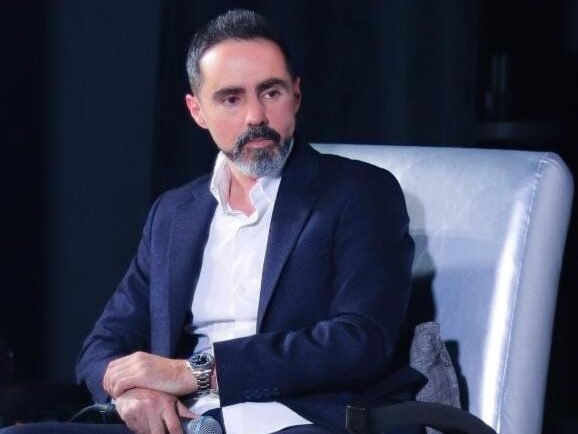
From An Empty Birthday Party To A Bigger Question
At 13, Dr. Fady Sahyoun experienced a moment that many people would simply try to forget.
It was his birthday. He had invited people he considered friends and imagined the kind of celebration most teenagers would look forward to. He expected conversation, laughter and a room full of familiar faces.
Instead, almost nobody came.
For a teenager, the experience was painful and confusing. Dr. Fady had believed he was doing many things right. He was academically successful, confident and surrounded by people he considered friends. Yet when the moment came for those relationships to show themselves, the room was almost empty.
Years later, that memory would become more than a childhood disappointment. It would become the beginning of a question that eventually shaped Dr. Fady’s professional life.
Why are some people naturally followed, trusted and listened to while others, despite having intelligence and ability, struggle to create the same connection?
That question has remained at the center of Dr. Fady’s work for more than eleven years.
Turning Rejection Into Curiosity
Instead of allowing that early experience to define how he saw himself, Dr. Fady eventually became curious about it.
His story offers a different way of looking at rejection. Rather than treating rejection as proof of personal failure, he began treating it as information.
That shift became important in his professional development.
His work today focuses on charisma, executive presence, leadership psychology, communication and organizational influence. His interest is not simply in why certain people appear confident or attractive in social situations. He is interested in the deeper mechanisms that influence whether people trust someone, believe someone and voluntarily choose to follow them.
That distinction has become central to Dr. Fady’s philosophy.
Charisma, in Dr. Fady’s approach, is not simply about being charming, entertaining or naturally outgoing. It is connected to behavior, perception, communication, credibility, conviction and the emotional experience created when people interact with someone.
This perspective has allowed Dr. Fady to work with professionals who want to become more effective without simply trying to imitate someone else’s personality.
Making Charisma A Developable Skill
One of Dr. Fady’s strongest ideas is that charisma should not be treated as a mysterious quality that people either possess or lack.
He sees it as something that can be studied, practiced and developed.
That philosophy became the foundation for his book The Code: 27 Laws for Charisma, where he brings together principles designed to help readers understand the behaviors and qualities that shape presence and influence.
The book reflects a broader ambition in Dr. Fady’s work. Rather than presenting charisma as surface level confidence, he approaches it as a practical discipline involving the way people think, communicate, behave and respond to others.
His message is particularly relevant in modern professional environments, where technical competence alone does not always determine who becomes influential.
A highly skilled professional may have the knowledge required to succeed, but leadership also depends on whether others trust their judgment, understand their vision and feel confident following their direction.
Dr. Fady’s work explores that space between competence and influence.
Why Executive Presence Matters
Executive presence has become an increasingly important part of leadership conversations, particularly as professionals are expected to communicate across teams, organizations and cultures.
For Dr. Fady, presence is not about entering a room and attempting to dominate it.
It is about what people experience when someone enters the room.
How does that person communicate under pressure?
How clearly do they express an idea?
Can they remain composed when challenged?
Do their words match their behavior?
Can they create confidence without relying entirely on their title?
These questions sit at the heart of Dr. Fady’s advisory and development work.
His professional work has also explored areas such as political intelligence, power dynamics, executive influence and the relationship between authority and perception.
The idea is simple but significant. A position can give someone power, but influence often depends on what people believe about the person holding that position.
From Leaders To Public Figures
Dr. Fady’s work has extended across corporate, academic and institutional environments, giving him the opportunity to observe influence in very different settings.
Executives, entrepreneurs, students, political figures and officers may operate within completely different structures, but the psychology of human interaction often remains remarkably similar.
People want to understand who they are dealing with.
They look for confidence, consistency, credibility and emotional control. They notice how someone reacts when challenged. They observe whether that person’s behavior creates trust or uncertainty.
This is where Dr. Fady believes charisma becomes more than personal appeal.
It becomes a leadership capability.
His perspective also brings attention to the importance of leadership communication in highly visible environments. For Dr. Fady, moments involving prominent leaders demonstrate how influence can begin before words are even spoken.
Body language, composure, tone, facial expressions and the ability to remain grounded under pressure can all contribute to how leadership is perceived.
Respect Over Approval
Another principle that has become important to Dr. Fady is the difference between being liked and being respected.
He believes that constantly seeking approval can eventually force people to compromise their judgment, avoid difficult conversations or move away from their principles.
Respect, on the other hand, develops through consistency, credibility, character and boundaries.
His philosophy can be captured in one simple thought.
“Be warm. Be human. But never trade respect for approval.”
It is an idea that connects closely with his understanding of authentic influence. Effective leadership does not require everyone to agree with you. It requires people to understand where you stand and believe that your position comes from something genuine.
The Real Achievement Behind The Code
For Dr. Fady, the biggest achievement is not simply publishing a book or building a professional reputation.
It is turning a deeply personal question into a body of work.
The experience of being left with an almost empty birthday room could have remained an uncomfortable memory from childhood. Instead, it became the beginning of a much larger investigation into human behavior.
More than eleven years of study, observation and professional experience eventually produced The Code: 27 Laws for Charisma and a broader platform for executive advisory, speaking and development.
The journey has also reinforced an important lesson for Dr. Fady. Pain does not always arrive with an immediate explanation. Sometimes its meaning becomes clear only after years of reflection.
That idea has shaped the way he approaches both rejection and personal growth.
A Wider Vision For The Future
Today, Dr. Fady’s ambitions extend beyond helping individual professionals become more confident.
He wants charisma to be taken more seriously as a field that can be studied, understood and developed.
His ongoing work combines executive advisory, research, speaking and specialized development programs, with a growing focus on bringing his ideas to a wider international audience.
The larger objective is to help people understand the difference between simply being visible and becoming influential.
In a world where professionals are constantly communicating through meetings, presentations, social platforms and public appearances, the ability to create trust and credibility has become increasingly valuable.
Dr. Fady believes that people can deliberately develop these qualities rather than waiting for them to appear naturally.
The Person Behind The Professional
Perhaps the most compelling part of Dr. Fady’s journey is that his professional work still connects back to the teenager who once sat in an almost empty room and wondered what had gone wrong.
The question has changed, but it has never disappeared.
Today, instead of asking why people did not come to his birthday, Dr. Fady studies why people choose to follow certain individuals.
The journey between those two questions represents more than professional success. It represents personal transformation.
His message to others is therefore not simply to become more charismatic.
It is to remain curious about who you can become.
Knowledge, technical ability and professional achievement matter, but so do the qualities that determine how those abilities are experienced by others.
How you enter a room matters.
How you listen matters.
How you respond under pressure matters.
How consistently you live by your principles matters.
And perhaps most importantly, the person you become while building your career matters just as much as the career itself.
Dr. Fady’s story is ultimately a reminder that people are not finished products. The experiences that challenge us can become the questions that guide us, and those questions can eventually become the foundation for meaningful work.
For Dr. Fady, an almost empty birthday party became the beginning of a lifelong investigation into charisma, influence and human connection.
The room was nearly empty.
The question, however, became much bigger than the room.
Follow Dr. Fady Sahyoun on Instagram
Read More –Dubai Silent Traffic Radars: How to Spot Them and Avoid Fines