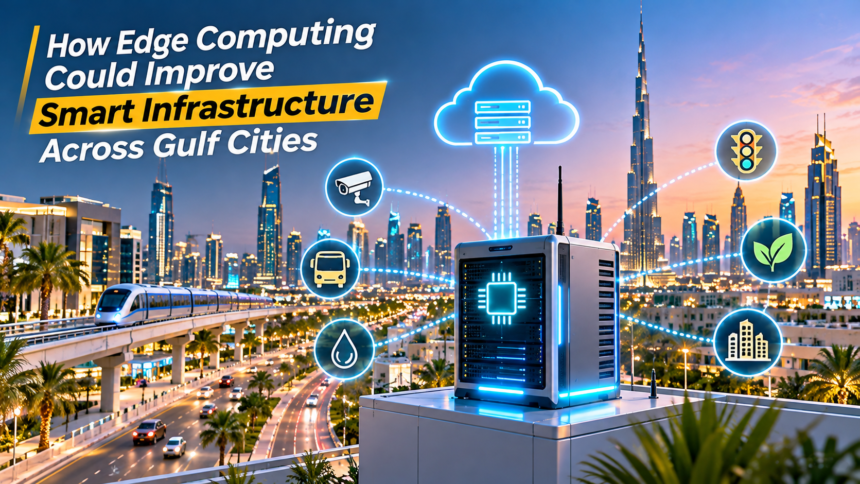
Why Edge Computing Matters for the Future of Gulf Smart Cities
Cities across the Arabian Gulf are becoming increasingly connected as governments invest in intelligent transportation systems, advanced utilities, digital public services, and modern urban infrastructure. Roads, buildings, electricity networks, water facilities, and public spaces are gradually incorporating sensors and software that collect information about their operations. These technologies can help authorities understand infrastructure conditions and respond to changing urban needs. However, processing the growing volume of information generated by connected systems presents new technical challenges.
- 1. Why Edge Computing Is Becoming Important for Gulf Smart Cities
- 2. How Edge Computing Could Improve Traffic and Transportation Management
- 3. How Edge Computing Can Strengthen Water, Electricity, and Building Infrastructure
- 4. How 5G and Edge Computing Are Developing Across Gulf Markets
- 5. Why Edge Computing Could Improve Emergency Response and Digital Resilience
- 6. Challenges of Edge Computing: Cybersecurity, Costs, and Data Governance
- 7. The Future of Edge Computing in Gulf Cities: AI, Digital Twins, and Smarter Infrastructure
- Conclusion
Edge computing in Gulf cities could provide an important solution by allowing data to be processed closer to the infrastructure or devices generating it. Instead of transferring every piece of information to distant cloud servers, edge systems can analyse selected data locally and support faster operational decisions.
This approach could be particularly valuable for traffic management, electricity distribution, water monitoring, public transport, building automation, and emergency response. Many of these services require timely information, reliable connectivity, and the ability to operate when central network connections become unavailable.
Across the United Arab Emirates, Saudi Arabia, Qatar, Kuwait, Bahrain, and Oman, smart-city investment and the expansion of advanced telecommunications networks are creating potential opportunities for edge computing.
However, the technology is not a universal replacement for cloud computing. Its effectiveness depends on suitable infrastructure, cybersecurity, reliable maintenance, and clearly defined applications.
Understanding how edge computing works can help governments, infrastructure operators, and technology businesses evaluate its role in developing more efficient and resilient Gulf cities.
1. Why Edge Computing Is Becoming Important for Gulf Smart Cities
Modern smart-city infrastructure generates information continuously.
Traffic cameras monitor road conditions, sensors measure water pressure, and building systems record energy consumption. Public transport networks, environmental monitoring equipment, and industrial facilities may also produce large volumes of operational data.
Traditionally, much of this information could be transferred to central computing facilities for analysis.
Although centralised computing remains valuable, sending every data stream to a remote location can introduce additional network traffic and communication delays.
What Is Edge Computing?
Edge computing is a distributed computing approach in which selected processing and storage activities take place near the source of data.
The computing equipment may be installed within a building, at an industrial facility, inside a telecommunications network, or at another suitable local location.
For example, a traffic camera connected to an edge processor could analyse vehicle movement near an intersection.
Instead of transmitting continuous high-resolution video to a distant data centre, the system could send selected traffic statistics or relevant alerts.
This may reduce unnecessary data transmission and support faster analysis.
Edge Computing Versus Cloud Computing
Cloud computing uses computing resources hosted in data centres, often shared across multiple organisations and locations.
Edge computing places some computing capabilities closer to devices and physical operations.
The two approaches can work together.
| Feature | Cloud Computing | Edge Computing |
|---|---|---|
| Processing Location | Centralised or regional data centres | Near devices or operational systems |
| Response Time | Depends on network distance and conditions | May reduce communication delays |
| Data Transfer | Often requires information to reach remote servers | Can process selected information locally |
| Computing Capacity | Can offer extensive shared resources | Generally constrained by local hardware |
| Connectivity | Remote access depends on network availability | Selected tasks may continue locally |
| Main Applications | Large-scale storage and analytics | Time-sensitive monitoring and control |
Why Gulf Cities Could Benefit
Gulf cities are developing infrastructure systems that require both extensive data analysis and timely operational responses.
A citywide planning system may benefit from central cloud computing, while equipment controlling a particular intersection may need local processing.
Edge computing can help distribute these responsibilities.
However, each application requires an assessment of response-time requirements, network reliability, safety, and operating costs.
2. How Edge Computing Could Improve Traffic and Transportation Management
Transportation networks are among the most promising areas for edge computing.
Road systems must respond to changing traffic volumes, unexpected incidents, weather conditions, and the movement of public transport.
In busy urban areas, delays in processing information can affect how quickly systems respond.
Faster Traffic Data Processing
Traffic monitoring systems may collect information through cameras, sensors, and connected roadside equipment.
An edge processor could analyse selected information near the road rather than transmitting every video frame to a remote server.
This may support quicker identification of traffic congestion, stopped vehicles, or unusual movement patterns.
Authorities could then use the information to support traffic management decisions.
However, automated traffic detection must be thoroughly tested to reduce incorrect alerts.
Intelligent Traffic Signals
Traffic signals can be supported by systems that assess vehicle movement and adjust timings according to defined policies.
Edge computing may help process traffic information locally, reducing dependence on a remote data centre for selected decisions.
For example, a controlled system might evaluate traffic volumes at an intersection and recommend adjustments to signal timing.
Safety-critical operations must remain subject to engineering requirements and appropriate fail-safe controls.
Connected Vehicles and Roadside Infrastructure
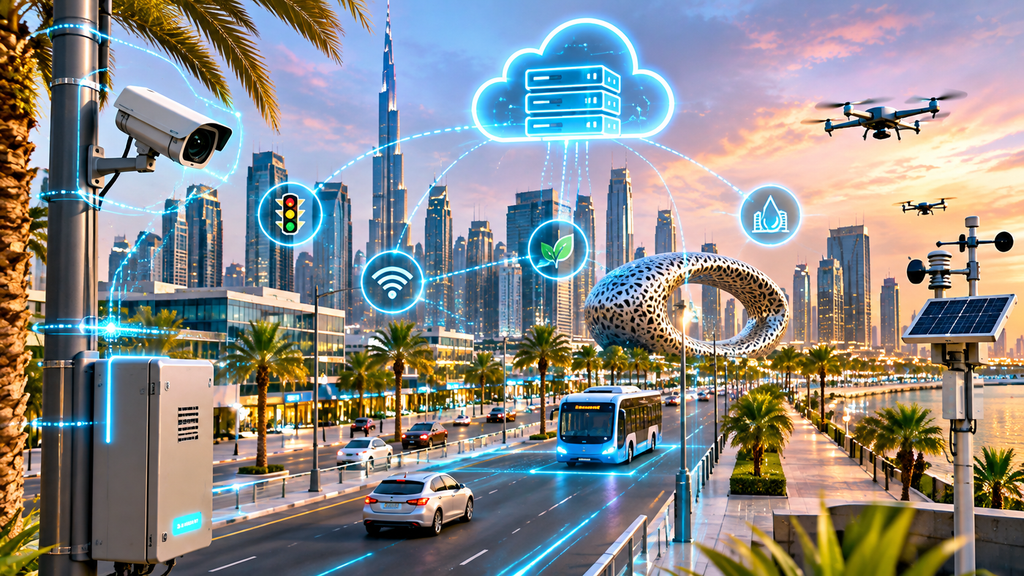
Connected vehicles may exchange selected information with nearby infrastructure.
This is often described as vehicle-to-everything communication.
Potential applications include warnings about road hazards, signal information, and traffic coordination.
Edge processing can support applications requiring rapid communication.
However, not every connected vehicle service requires edge computing, and widespread deployment depends on standards, vehicle capabilities, and secure infrastructure.
Transportation Applications
| Application | Potential Role of Edge Computing |
|---|---|
| Traffic Monitoring | Local analysis of traffic patterns |
| Smart Intersections | Faster processing of sensor information |
| Public Transport | Local monitoring of vehicle and station operations |
| Parking Management | Processing occupancy information |
| Connected Vehicles | Supporting nearby communication services |
| Road Incident Detection | Identifying selected abnormal events |
The Need for Reliable Infrastructure
Fast processing does not automatically improve traffic conditions.
A system must collect accurate information, interpret it correctly, and connect its recommendations to effective traffic management processes.
Authorities should measure actual changes in travel times, safety outcomes, and operational reliability before expanding deployments.
3. How Edge Computing Can Strengthen Water, Electricity, and Building Infrastructure
Smart utilities are another important application for edge computing.
Electricity networks, water systems, and large buildings depend on equipment that must operate reliably under changing demand and environmental conditions.
Processing selected operational information locally may support faster monitoring and more coordinated maintenance.
Monitoring Electricity Infrastructure
Electricity networks use monitoring equipment to observe operating conditions.
Edge devices may analyse information from substations, distribution equipment, and other selected assets.
For example, a local processor could detect unusual temperature or voltage patterns and notify maintenance personnel.
However, protection and control functions must meet rigorous engineering and safety requirements.
General-purpose AI systems should not replace certified electrical protection mechanisms without appropriate design and validation.
Improving Water Infrastructure
Water systems rely on pumps, valves, pipelines, and treatment facilities.
Connected sensors may collect pressure, flow, and equipment-performance information.
Edge computing could process selected measurements locally and identify conditions that warrant investigation.
This may help infrastructure operators respond more promptly to certain equipment problems.
However, suspected water losses or mechanical failures still require confirmation through appropriate operational procedures.
Building Automation in Hot Climates
Cooling systems are particularly important in Gulf buildings because of the region’s high temperatures.
Large commercial buildings may use sensors and automated controls to monitor indoor conditions and energy consumption.
Edge computing can support local analysis of occupancy patterns, cooling demand, and equipment performance.
For example, building-management software might adjust selected operating schedules using current conditions.
Any changes must preserve indoor comfort, ventilation, and safety requirements.
Smart Infrastructure Applications
| Infrastructure Type | Information Processed Locally | Potential Benefit |
|---|---|---|
| Electricity Networks | Equipment condition and selected power measurements | Faster operational awareness |
| Water Systems | Pressure and flow readings | Improved monitoring |
| Commercial Buildings | Temperature and equipment data | Better building management |
| District Cooling | System operating information | More informed performance optimisation |
| Public Facilities | Asset condition and usage patterns | Improved maintenance planning |
| Environmental Sensors | Air-quality and temperature data | Faster local analysis |
Predictive Maintenance Opportunities
Edge systems may support predictive maintenance by detecting patterns associated with equipment deterioration.
However, predictive models must be trained and validated using reliable operational data.
A warning generated by software should be evaluated by qualified personnel before significant maintenance decisions are made.
4. How 5G and Edge Computing Are Developing Across Gulf Markets
The development of advanced telecommunications networks can support edge computing because connected infrastructure requires reliable communication between devices and computing systems.
In particular, 5G networks can provide connectivity for selected applications requiring high bandwidth or low communication delays.
However, edge computing does not require 5G in every deployment.
Industrial facilities and buildings may also use fibre connections, wired networks, or Wi-Fi.
Saudi Arabia’s Private 5G and Edge Services
Saudi telecommunications operator stc offers private 5G edge computing services for enterprise applications.
Its official service information identifies potential uses in smart factories, ports, airports, energy operations, and smart cities.
These solutions combine private communications networks with local processing capabilities.
The approach is intended to support applications requiring responsive communication and control over selected operational data.
However, the availability of a commercial service does not establish that every Saudi smart-city project uses it.
The UAE’s Telecommunications Infrastructure
The UAE has invested in advanced mobile networks and telecommunications modernisation.
In February 2024, e& UAE announced the deployment of Microsoft Azure Operator Nexus and Azure Operator 5G Core solutions.
The initiative focuses on network modernisation, automated operations, and greater flexibility in telecommunications infrastructure.
Such developments can provide relevant foundations for future distributed computing applications.
However, the announcement should not be treated as proof that a specific municipality has achieved measurable edge-computing benefits.
Opportunities Across the Wider GCC
Qatar, Kuwait, Bahrain, and Oman also operate advanced telecommunications environments supporting digital services and connected infrastructure.
Potential applications include smart ports, industrial facilities, intelligent buildings, and municipal monitoring.
Adoption will depend on project requirements, network design, available computing infrastructure, and commercial feasibility.
GCC Edge Computing Opportunities
| Market | Relevant Infrastructure Context | Potential Application |
|---|---|---|
| UAE | Advanced telecommunications and smart urban services | Connected buildings and traffic analytics |
| Saudi Arabia | Private 5G and industrial digitalisation | Industrial automation and smart facilities |
| Qatar | Urban infrastructure and connected facilities | Local utility and building monitoring |
| Oman | Ports and industrial infrastructure | Equipment monitoring and logistics |
| Bahrain | Digital services and industrial operations | Enterprise and facility automation |
| Kuwait | Utility and urban infrastructure development | Local monitoring and asset management |
These are potential applications, not claims of confirmed nationwide deployment.
The Importance of Network Architecture
5G and edge computing can complement one another, but performance depends on where applications are hosted.
A device connected to a fast mobile network may still experience delays if its application must communicate with a distant server.
Similarly, an edge processor located near infrastructure may provide limited benefit if the supporting network is unreliable.
Engineers must design the complete system around operational needs.
5. Why Edge Computing Could Improve Emergency Response and Digital Resilience
Smart infrastructure must continue functioning under difficult conditions.
Network interruptions, equipment failures, severe weather, and unexpected operational incidents can affect urban services.
Edge computing may help some systems maintain essential local functions when communication with remote computing facilities becomes unavailable.
Local Processing During Network Interruptions
A system that depends entirely on a distant server may lose important capabilities when its external connection fails.
An appropriately designed edge system can continue selected tasks locally.
For example, a building-monitoring system might retain the ability to collect equipment readings during an interruption to its cloud connection.
The information could be synchronised with central systems when connectivity returns.
However, offline operation requires deliberate system design and cannot be assumed for every edge deployment.
Supporting Emergency Operations
Local computing systems may help process information from environmental sensors, facility alarms, or selected video feeds.
This could support faster identification of unusual conditions.
For example, infrastructure operators could receive alerts about equipment failures affecting a public facility.
However, automated warnings should complement established emergency procedures rather than replace trained personnel.
Managing Extreme Environmental Conditions
Gulf cities can experience intense heat, dust, and occasional severe rainfall.
Edge computing may support environmental monitoring systems by processing sensor information near affected locations.
For example, local devices could analyse rainfall or drainage measurements and provide alerts when readings exceed predefined thresholds.
These systems may improve situational awareness, but they cannot guarantee accurate predictions of every hazardous event.
The Importance of System Redundancy
Edge computing distributes processing across locations, which may reduce dependence on a single remote computing facility.
However, it also creates additional equipment that requires electricity, maintenance, and security.
A poorly maintained edge installation can introduce new failure points.
Resilient infrastructure therefore requires backup power, appropriate monitoring, secure communications, and tested recovery procedures.
6. Challenges of Edge Computing: Cybersecurity, Costs, and Data Governance
Edge computing introduces opportunities but also creates technical and organisational challenges.
Unlike centralised computing, distributed systems may involve numerous devices and processing locations.
Managing these environments requires appropriate standards, professional expertise, and clear responsibilities.
Cybersecurity Across Distributed Infrastructure
Edge equipment may operate in buildings, roadside cabinets, industrial facilities, or other geographically dispersed locations.
Some devices may be physically accessible to unauthorised individuals.
Cybersecurity concerns can include compromised software, stolen credentials, insecure communication, and physical tampering.
The International Telecommunication Union’s Recommendation ITU-T X.1648, approved in April 2025, addresses edge computing data-security challenges.
Its guidance covers encryption, access controls, secure deployment, monitoring, and protection against unauthorised access.
Data Privacy and Video Analytics
Smart-city systems may process information involving vehicles, building users, or other individuals.
Processing data locally can reduce the need to transmit certain raw information to external servers.
However, local processing does not automatically guarantee privacy.
Data collection, storage, retention, and access must still comply with relevant legal requirements.
High Operating and Maintenance Costs
Edge computing may require hardware purchases, installation, software management, replacement equipment, electricity, and technical support.
Distributed systems can be more difficult to maintain because equipment is located across multiple sites.
Businesses should assess whether lower communication delays or reduced data transmission justify these expenses.
Challenges and Practical Responses
| Challenge | Potential Risk | Possible Response |
|---|---|---|
| Distributed Equipment | Increased maintenance complexity | Centralised monitoring and asset management |
| Cybersecurity Threats | Unauthorised access and disruption | Encryption and access controls |
| Physical Exposure | Device tampering | Secure enclosures and site controls |
| Data Privacy | Inappropriate information handling | Data minimisation and governance |
| High Costs | Limited financial returns | Targeted pilot programmes |
| Network Integration | Incompatible systems | Interoperability standards |
| Power Interruptions | Loss of local processing | Appropriate backup power |
The Challenge of Technical Skills
Edge computing combines networking, software development, cybersecurity, infrastructure engineering, and data management.
Municipalities may require multidisciplinary teams to operate these systems effectively.
Training and partnerships with specialised technology providers can help address skills gaps.
However, outsourcing technical operations does not remove the infrastructure owner’s responsibility for appropriate oversight.
7. The Future of Edge Computing in Gulf Cities: AI, Digital Twins, and Smarter Infrastructure
The future of edge computing in Gulf cities is likely to involve greater integration with artificial intelligence, digital twins, connected sensors, and advanced telecommunications.
These technologies can support one another, but they perform different functions.
Edge computing determines where selected processing occurs, while AI provides analytical capabilities and digital twins represent physical systems using models and relevant data.
The Rise of Edge AI
Edge AI refers to artificial intelligence applications running near the location where data is generated.
For example, an edge device may analyse camera images to identify selected infrastructure conditions.
This can reduce the need to transmit continuous video streams to central servers.
However, AI models still require appropriate testing, cybersecurity, and monitoring.
An inaccurate local model can make mistakes just as a centralised model can.
Connecting Edge Systems With Digital Twins
Digital twins can represent buildings, transport systems, or other infrastructure through virtual models.
Edge devices may supply updated information to those models.
For example, a digital twin of a water network could receive selected measurements from local monitoring equipment.
Central systems could then use the information for longer-term planning and simulation.
This combination may support infrastructure analysis while keeping time-sensitive processing close to physical assets.
A Practical Edge Computing Implementation Checklist
- Identify infrastructure functions requiring rapid data processing.
- Measure existing network delays and operational performance.
- Determine which information needs local processing.
- Assess available connectivity and computing equipment.
- Review cybersecurity and privacy requirements.
- Establish procedures for equipment maintenance.
- Define responsibilities between infrastructure and technology providers.
- Test local operations during network interruptions.
- Compare implementation costs with measurable benefits.
- Expand deployment only after evaluating pilot results.
How Gulf Cities Should Measure Success
Edge computing projects should be assessed according to practical operational outcomes.
These may include response time, data transmission volume, equipment availability, maintenance costs, and the reliability of infrastructure services.
A traffic-management project could measure whether local processing improves the speed and accuracy of incident detection.
A building project might evaluate whether its edge-enabled control systems reduce unnecessary energy consumption without compromising comfort.
A water-management initiative could examine whether local monitoring helps operators identify equipment problems more effectively.
Potential Performance Indicators
| Performance Area | Measurement |
|---|---|
| Network Responsiveness | End-to-end application latency |
| System Reliability | Availability and interruption duration |
| Data Efficiency | Information transmitted to central systems |
| Maintenance | Equipment monitoring and repair performance |
| Energy | Computing and infrastructure consumption |
| Cybersecurity | Security incidents and control effectiveness |
| Financial Value | Total costs relative to operational benefits |
Opportunities for Gulf Technology Companies
Edge computing could create opportunities for regional software developers, cybersecurity providers, telecommunications companies, equipment suppliers, and systems integrators.
Startups may develop applications for smart buildings, industrial monitoring, connected transport, and environmental sensing.
Universities and technical institutions could also contribute through research, testing, and workforce development.
However, successful commercial applications require reliable products, suitable procurement opportunities, and demonstrable customer value.
Conclusion
Edge computing in Gulf cities could become an important component of smart infrastructure development by allowing selected data processing activities to take place closer to physical operations.
Its potential applications include intelligent transportation, electricity networks, water systems, public buildings, environmental monitoring, and connected industrial facilities.
The technology may help reduce communication delays, improve operational awareness, and support certain local functions during network interruptions.
Developments involving private 5G and telecommunications modernisation in Saudi Arabia and the UAE demonstrate relevant regional capabilities.
However, edge computing is not a guaranteed solution to infrastructure inefficiency.
Cities must consider cybersecurity, data governance, equipment costs, maintenance, system integration, and the limitations of automated analysis.
The strongest approach will usually combine edge processing with central cloud infrastructure and professional operational oversight.
As Gulf cities continue investing in connected infrastructure, edge computing could help make urban systems more responsive and adaptable.
Ultimately, its value will depend on how effectively cities use technology to solve real infrastructure problems rather than how widely they deploy computing equipment.
Do follow us on Instagram
Read More – Why Arabic-Language Speech Recognition Still Faces Unique Technical Challenges