



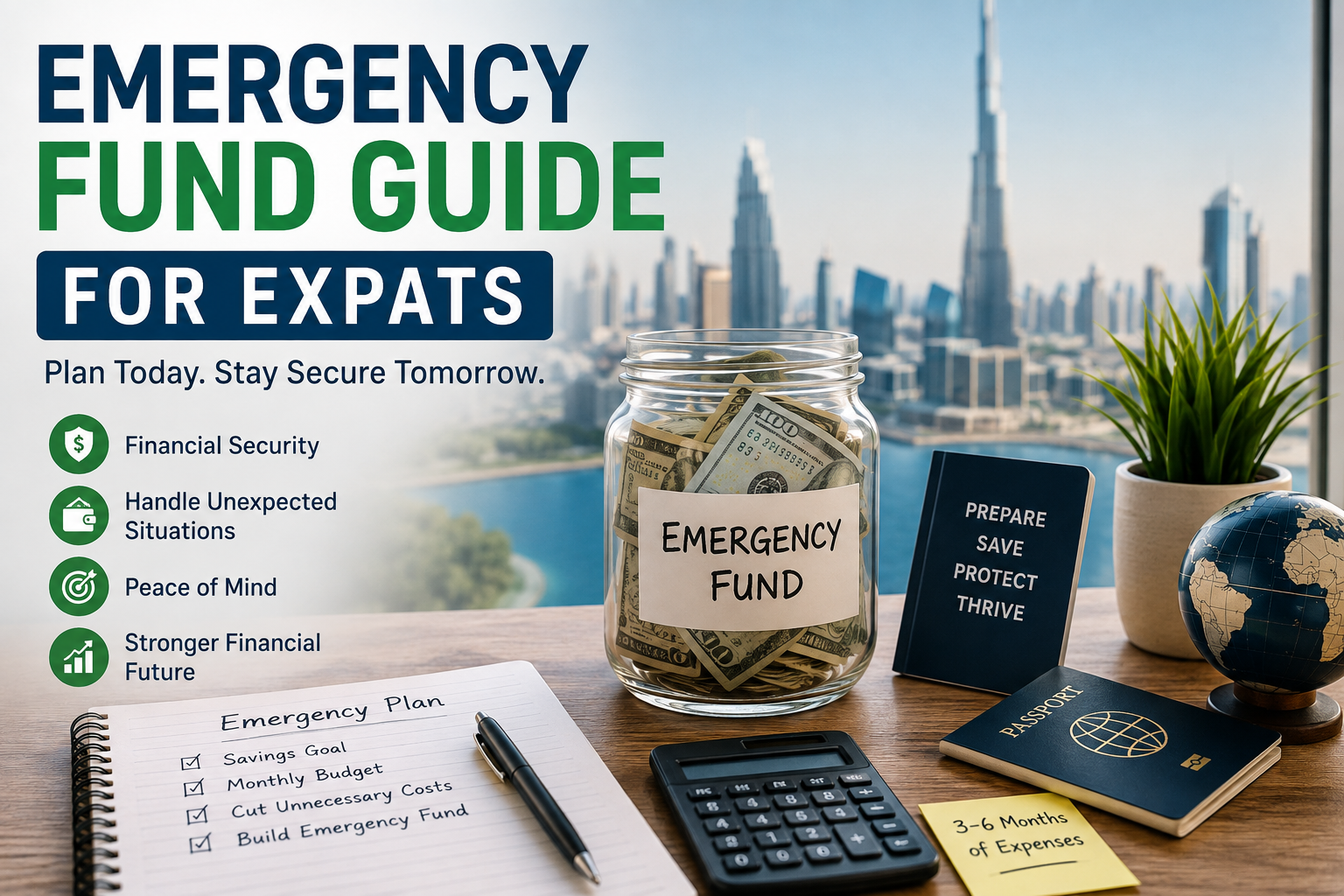
Build Financial Security While Living Abroad: Emergency Fund Guide for Expats
Living abroad is an exciting adventure filled with new opportunities, cultures, and career growth. Whether you have moved to the UAE, Saudi Arabia, Qatar, Singapore, Canada, Australia, Europe, or another destination, being an expat comes with unique financial responsibilities. While many expatriates focus on earning, investing, and supporting their families back home, one financial priority often gets overlooked—building an emergency fund.
- What Is an Emergency Fund?
- Why Every Expat Needs an Emergency Fund
- How Much Should Expats Save?
- Factors That Determine Your Emergency Fund Size
- Where Should You Keep Your Emergency Fund?
- Where NOT to Keep Emergency Savings
- How to Build an Emergency Fund Guide for Expats Faster
- Common Emergency Expenses for Expats
- Emergency Fund vs Regular Savings
- Emergency Fund vs Investment Portfolio
- Should Expats Invest Before Building an Emergency Fund?
- Tips for Expats Supporting Family Abroad
- Common Mistakes to Avoid
- Emergency Fund Guide for Expats Checklist
- Benefits of Having an Emergency Fund
- Frequently Asked Questions
An emergency fund is a dedicated savings reserve designed to cover unexpected expenses such as job loss, medical emergencies, urgent travel, family crises, or sudden relocation. For expats, having this financial safety net is even more important because they may not always have access to government support, unemployment benefits, or nearby family assistance.
This comprehensive Emergency Fund Guide for Expats explains why an emergency fund matters, how much you should save, practical strategies to build your savings, common mistakes to avoid, and tips to protect your financial future while living overseas.
What Is an Emergency Fund?
An emergency fund is money set aside exclusively for unexpected financial emergencies. Unlike investment accounts or regular savings, this fund should remain easily accessible and should only be used during genuine emergencies.
Examples include:
- Sudden job loss
- Medical emergencies
- Emergency flights home
- Visa-related expenses
- Unexpected home repairs
- Vehicle breakdowns
- Family emergencies
- Natural disasters
- Temporary loss of income
The purpose is simple: prevent debt while maintaining financial stability.
Why Every Expat Needs an Emergency Fund
Moving abroad often means living without the financial safety nets available in your home country.
Here are several reasons why expats should prioritize emergency savings.
1. Job Loss Can Happen Anytime
Many expat visas are linked to employment. Losing your job could also mean losing your residency status, making it necessary to relocate quickly.
Having emergency savings allows you to:
- Continue paying rent
- Cover food expenses
- Pay utility bills
- Purchase return tickets
- Search for a new job without panic
2. Medical Emergencies
Although many employers provide health insurance, policies may not cover everything.
Unexpected expenses may include:
- Specialist consultations
- Prescription medications
- Dental treatments
- Medical procedures
- Emergency surgeries
Your emergency fund fills the financial gaps.
3. Family Emergencies Back Home
Many expatriates need to travel home unexpectedly because of:
- Illness of parents
- Family emergencies
- Funerals
- Childcare needs
International flights booked at short notice can be extremely expensive.
Emergency savings make these trips possible without borrowing money.
4. Visa and Immigration Costs
Visa renewals, legal paperwork, document translations, residency renewals, and immigration fees often arrive unexpectedly.
An emergency fund prevents these expenses from disrupting your monthly budget.
5. Unexpected Relocation
Sometimes companies restructure or projects end earlier than expected.
Relocating requires money for:
- Flights
- Shipping belongings
- Temporary accommodation
- Hotel stays
- New rental deposits
Emergency savings reduce financial stress during transitions.
How Much Should Expats Save?
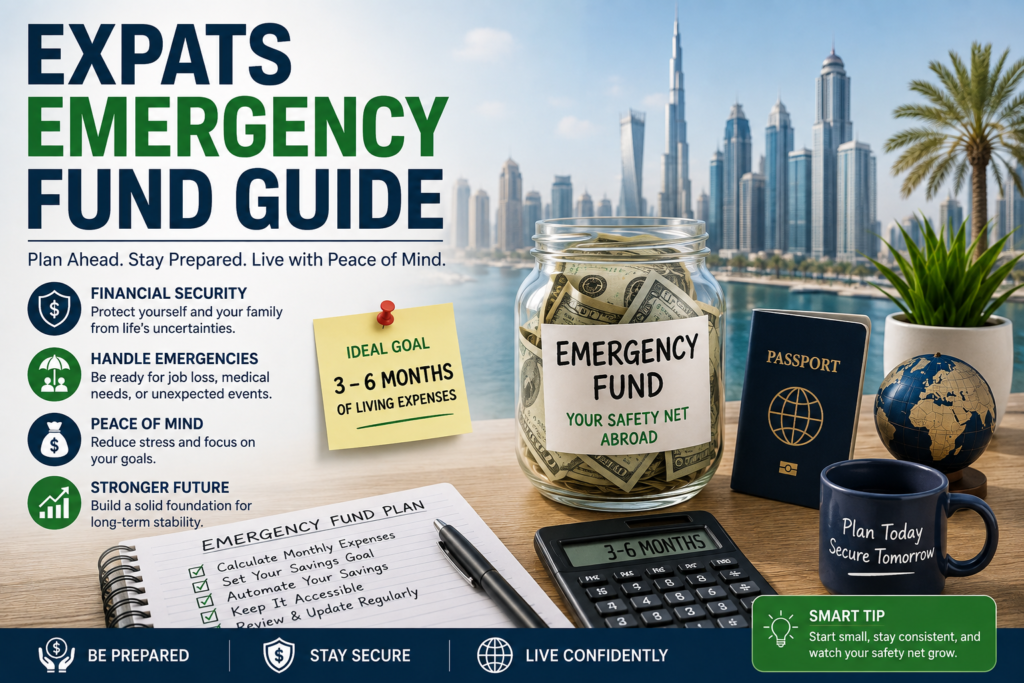
Financial experts generally recommend saving between 3 and 6 months of essential living expenses.
If your job is unstable or your industry experiences frequent layoffs, consider saving 6 to 12 months.
Example Monthly Budget
| Expense | Monthly Cost |
|---|---|
| Rent | $1,200 |
| Food | $450 |
| Utilities | $180 |
| Transportation | $170 |
| Insurance | $150 |
| Internet & Mobile | $80 |
| Miscellaneous | $270 |
Total Monthly Expenses = $2,500
Emergency fund targets:
- 3 months = $7,500
- 6 months = $15,000
- 12 months = $30,000
Factors That Determine Your Emergency Fund Size
Every expat has different financial responsibilities.
Consider:
- Number of dependents
- Job stability
- Industry demand
- Country of residence
- Cost of living
- Monthly obligations
- Existing insurance coverage
- Availability of family support
Higher financial uncertainty requires larger emergency savings.
Where Should You Keep Your Emergency Fund?
Accessibility is more important than high investment returns.
Good options include:
High-Interest Savings Account
Benefits:
- Easy access
- Lower risk
- Earns interest
- Suitable for emergencies
Money Market Account
Provides:
- Better returns
- Liquidity
- Capital preservation
Multi-Currency Savings Account
Ideal for expatriates earning in one currency while supporting family in another.
Benefits include:
- Reduced exchange risks
- Easier international transfers
- Flexible withdrawals
Where NOT to Keep Emergency Savings
Avoid placing emergency money in:
- Stocks
- Cryptocurrency
- Long-term mutual funds
- Real estate
- Retirement accounts
- Locked fixed deposits
These investments may lose value or take time to access when you need cash urgently.
How to Build an Emergency Fund Guide for Expats Faster
1. Set a Monthly Savings Goal
Treat savings like a mandatory monthly expense.
For example:
Income = $5,000
Emergency savings = $500
Transfer automatically on payday.
2. Automate Savings
Automatic transfers remove the temptation to spend.
Automation also builds consistency.
3. Reduce Non-Essential Spending
Review monthly expenses.
Cut back on:
- Dining out
- Subscription services
- Luxury shopping
- Entertainment
- Impulse purchases
Redirect the savings into your emergency account.
4. Save Bonuses and Incentives
Many expatriates receive:
- Annual bonuses
- Overtime payments
- Commission
- Tax refunds
- Performance incentives
Allocate part or all of these payments to your emergency fund.
5. Increase Your Income
Additional income sources include:
- Freelancing
- Online tutoring
- Consulting
- Weekend projects
- Selling unused items
Extra earnings can significantly accelerate your savings goal.
Common Emergency Expenses for Expats
Emergency funds often cover:
- Passport replacement
- Visa renewal
- Family emergencies
- Medical bills
- Vehicle repairs
- Emergency accommodation
- Flight changes
- Employment gaps
- Legal expenses
- Pet emergencies
Planning ahead prevents financial hardship.
Emergency Fund vs Regular Savings
Many people confuse these two accounts.
Emergency Fund
Purpose:
- Unexpected expenses only
Examples:
- Medical emergencies
- Job loss
- Family crisis
Regular Savings
Purpose:
- Planned spending
Examples:
- Vacation
- New laptop
- Home furniture
- Holiday shopping
Never mix these accounts.
Emergency Fund vs Investment Portfolio
Investments help grow wealth over time.
Emergency savings protect you today.
Investment values fluctuate, while emergency funds should remain stable and immediately accessible.
Both are important but serve different purposes.
Should Expats Invest Before Building an Emergency Fund?
Generally, no.
Before investing aggressively, ensure you have sufficient emergency savings.
A solid emergency fund prevents you from selling investments during market downturns.
The recommended order:
- Pay essential bills
- Build emergency fund
- Eliminate high-interest debt
- Invest for long-term goals
Tips for Expats Supporting Family Abroad
Many expatriates regularly send money home.
To protect your finances:
- Save before sending extra money
- Maintain separate emergency savings
- Avoid using emergency funds for monthly remittances
- Discuss financial expectations with family members
- Budget for both home and overseas expenses
Helping loved ones is important, but financial stability starts with protecting yourself.
Common Mistakes to Avoid
Waiting Too Long
Many people believe emergencies won’t happen.
Unfortunately, unexpected events rarely come with advance notice.
Start saving today.
Spending the Fund on Wants
Avoid using emergency savings for:
- Vacations
- New gadgets
- Shopping
- Luxury purchases
Reserve it strictly for emergencies.
Saving Too Little
A small emergency fund may not cover major financial disruptions.
Review your savings annually and adjust for inflation and lifestyle changes.
Ignoring Inflation
Living costs change over time.
Recalculate your emergency fund every year.
Not Replenishing After Use
If you use part of your emergency fund, prioritize rebuilding it as soon as your finances recover.
Emergency Fund Guide for Expats Checklist
Know your monthly expenses
Calculate your target amount
Open a dedicated savings account
Automate monthly transfers
Reduce unnecessary expenses
Review your progress monthly
Increase contributions after salary raises
Keep the fund accessible
Avoid risky investments
Use it only for genuine emergencies
Benefits of Having an Emergency Fund
A well-funded emergency account provides:
- Financial independence
- Reduced stress
- Better career flexibility
- Confidence during uncertain times
- Improved financial discipline
- Protection against debt
- Peace of mind for your family
- Greater long-term financial stability
Frequently Asked Questions
Q1. How much should an expat save?
Ans: Aim for at least three to six months of essential living expenses. If your income is irregular or your visa depends on your job, consider six to twelve months.
Q2. Can I invest my emergency fund?
Ans: It is generally better to keep emergency savings in low-risk, easily accessible accounts rather than volatile investments.
Q3. Should I keep cash at home?
Ans: A small amount for immediate needs is reasonable, but most of your emergency fund should remain in a secure financial institution.
Q4. What if I already have debt?
Ans: Continue making required debt payments while building a modest emergency fund. Once you have a basic safety cushion, focus on paying off high-interest debt.
Q5. How often should I review my emergency fund?
Ans: Review it at least once a year or whenever your income, family size, or living expenses change.
Final Thoughts
Building an emergency fund is one of the smartest financial decisions any expat can make. Living abroad offers incredible opportunities, but it also comes with uncertainties such as employment changes, visa requirements, unexpected travel, medical costs, and family emergencies. A dedicated emergency fund helps you face these challenges with confidence rather than financial stress.
Start with a realistic savings goal, automate your contributions, keep the money in a safe and accessible account, and avoid using it for non-essential spending. Even small, consistent deposits can grow into a reliable financial cushion over time. By prioritizing emergency savings today, you create greater peace of mind, protect your loved ones, and strengthen your financial future wherever life takes you.
Do follow us on Instagram
Read More – Budgeting for Expats in the UAE