Making Human Leadership Matter in the AI Age
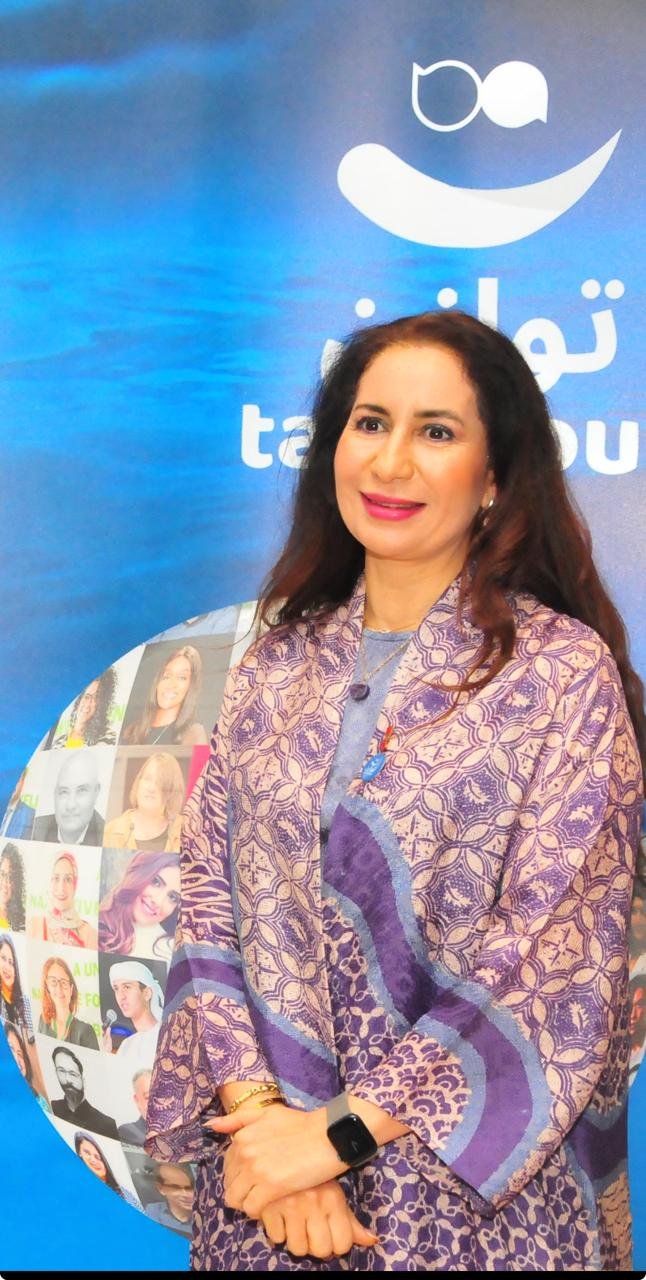
In a world increasingly shaped by artificial intelligence, automation and constant pressure to move faster, Dr. Hanane Benkhallouk is asking leaders to focus on something technology cannot replace so easily.
- From Casablanca to a Global Leadership Journey
- Dubai Became the Place Where Everything Connected
- Entrepreneurship Changed the Direction of Her Career
- Building People Before Building Businesses
- SEEDS of Change Turned Experience Into a Framework
- Education Is Becoming an Important Part of Her Next Chapter
- Sustainability Has Long Been Part of the Foundation
- Tawazoun Expanded the Idea of Balance
- Recognition Followed but Purpose Remained Central
- Keep It Human Became More Than a Phrase
- AI Is Changing the Question Leaders Need to Ask
- Humanizing Business Connects the Different Parts of Her Work
- An Emerging Area of Thinking Around the Human Quotient
- The Next Chapter for Dr. Hanane Benkhallouk
Being human.
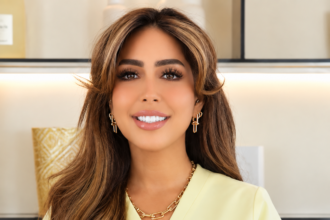
Known as a leadership and culture transformation advisor, author, speaker and educator, Dr. Hanane has spent more than two decades working across business, government, education and entrepreneurship. Her journey has moved through Casablanca, New York and Dubai, giving her a perspective shaped by different cultures, industries and ways of thinking.
Today, these experiences come together under an overarching mission that defines much of her work: Humanizing Business.
Her work sits at the intersection of human-centric leadership, culture transformation, sustainability, artificial intelligence, education and the future of work. Across these areas, Dr. Hanane helps leaders and organizations navigate transformation while keeping people, purpose and performance connected.
As technology becomes more powerful, her message is not to resist change.
It is to make sure humanity remains at the center of it.
Keep It Human.
From Casablanca to a Global Leadership Journey
Dr. Hanane’s story began in Casablanca, Morocco.
Her early life was shaped by a strong belief in community, knowledge and the importance of helping people move forward. Those values later travelled with her when she continued her education and professional journey in New York.
The move exposed her to a completely different pace of life and business culture.
New York gave Dr. Hanane international experience, while her academic path strengthened her understanding of business, finance and management. She later completed an MBA and a Doctorate in Business Administration, adding formal business knowledge to a professional journey that would eventually cross multiple industries and regions.
Her doctoral research would also deepen an area that had already become increasingly important to her thinking: sustainability and the integration of ESG principles into business models.
For Dr. Hanane, sustainability was never meant to exist only in reports or corporate commitments. Her interest has been in how environmental, social and governance considerations can become embedded in business strategy, leadership, organizational culture and long-term value creation.
By 2005, another major chapter had begun.
Dubai became home.
Dubai Became the Place Where Everything Connected
When Dr. Hanane arrived in Dubai, the city was still in an earlier stage of the transformation that would later make it a major international business hub.
For her, Dubai offered an unusual combination.
It had the global energy she had experienced in New York while also keeping her close to the Arab world and its culture.
She worked across financial services, investments, retail, franchise development, government initiatives and nonprofit organisations. She later became involved in innovation and entrepreneurship programmes across the Arab world through her work with the Mohammed Bin Rashid Al Maktoum Foundation.
Those experiences exposed her to very different organizations, leadership styles, industries and cultures.
They also helped shape a question that would become increasingly central to her work.
What actually makes transformation sustainable?
Strategies can be written. Values can appear on walls. New systems can be introduced. Technology can make processes faster.
But none of those changes become meaningful unless people understand them, believe in them and experience them in the culture of the organization.
That realization helped move Dr. Hanane’s work increasingly toward leadership and culture transformation.
Entrepreneurship Changed the Direction of Her Career
In 2014, Dr. Hanane made a major professional shift.
After years of corporate and institutional experience, she moved fully into entrepreneurship and founded Sustain Leadership Consultancy.
The decision allowed her to focus more deeply on leadership transformation, organizational culture, innovation, sustainability and human-centered business.
Leaving established structures to build something independently brought a different kind of responsibility.
There was no longer a company title defining the work.
Dr. Hanane had to create the direction herself.
That transition eventually became one of the most important parts of her professional identity because it moved her from managing within systems to helping leaders and organizations rethink those systems.
Today, a significant part of that work involves helping organizations move beyond values and strategies that exist only on paper.
Culture, in her view, is what people actually experience.
It is created through leadership behaviours, organizational systems, everyday decisions, communication, incentives and the way people are treated.
Meaningful culture transformation therefore requires those elements to connect with the organization’s stated purpose.
It is this bridge between intention and lived experience that has become central to her work.
Building People Before Building Businesses
One idea has remained central throughout Dr. Hanane Benkhallouk’s journey.
She believes businesses are strengthened by developing people first.
That philosophy has shaped her work with entrepreneurs, executives, organizations and future leaders across different regions.
Over the years, Dr. Hanane has mentored and supported more than 5,000 entrepreneurs across over 20 countries through incubators, accelerators and entrepreneurship programmes.
Her work with the Mohammed Bin Rashid Al Maktoum Foundation also placed her close to innovation and entrepreneurship initiatives across the Arab world.
These experiences allowed her to observe leadership at many different stages.
Some people were building their first idea.
Others were responsible for established organizations and large teams.
Yet the underlying challenge was often similar.
Organizations cannot sustainably transform unless the people inside them are able to learn, adapt and grow with that transformation.
This belief continues to influence her work today, whether she is advising senior leaders, facilitating culture transformation or teaching the next generation of decision makers.
SEEDS of Change Turned Experience Into a Framework
Dr. Hanane eventually transformed many of those lessons into her book SEEDS of Change.
The book introduced a leadership framework built around five ideas:
Sense. Engage. Empower. Develop. Sustain.
Rather than treating change as something organizations should simply manage or fear, the framework encourages leaders to develop the awareness and capabilities required to navigate continuous transformation.
Sense is about understanding what is changing around and within an organization.
Engage recognizes that meaningful change requires people to participate rather than simply receive instructions.
Empower creates the conditions for individuals and teams to contribute and take responsibility.
Develop reflects the need for continuous learning and growth.
Sustain asks how change can create lasting value rather than disappearing once the initial initiative ends.
The book became a number one bestseller on Amazon UAE and gave Dr. Hanane’s leadership philosophy a wider audience.
But SEEDS was never intended to remain only on the page.
The framework reflects the practical work she continues to do with leaders and organizations navigating culture change, leadership development and transformation.
For Dr. Hanane, frameworks matter when they help people turn ideas into behaviours and behaviours into cultures.
Education Is Becoming an Important Part of Her Next Chapter
Alongside advising organizations and leaders, Dr. Hanane is increasingly focused on education and developing future leaders.
As an educator and professor, she works with students who will enter workplaces very different from those previous generations experienced.
Artificial intelligence is accelerating that change.
Future leaders will have access to tools capable of producing information, analyzing data, automating tasks and generating solutions at extraordinary speed.
But technical knowledge alone will not prepare them for leadership.
Dr. Hanane believes future leaders will increasingly need critical thinking, curiosity, self-awareness, adaptability, ethical judgment, collaboration and the ability to navigate complexity.
They will need to know when to question an answer rather than simply accept it.
They will need to understand technology while also understanding themselves.
They will need the confidence to make decisions in situations where information is incomplete and where the right choice cannot always be calculated by an algorithm.
For Dr. Hanane, developing those capabilities is an important part of leadership education.
The classroom therefore becomes more than a place for transferring knowledge.
It becomes a space for preparing people to remain thoughtful, responsible and human in environments where technology will increasingly shape how decisions are made.
Sustainability Has Long Been Part of the Foundation
Sustainability is not a recent addition to Dr. Hanane’s work.
It has been part of the foundation of her thinking for years.
Her doctoral research focused on the integration of ESG into business models and reflected her interest in moving sustainability beyond reporting requirements and public commitments.
For organizations, sustainability can become much more meaningful when it is connected to strategy, leadership, culture and value creation.
This means asking how decisions affect not only short-term business performance but employees, communities, society and the environment.
It also means considering whether sustainability principles are reflected in everyday organizational behaviour.
That approach connects naturally with her broader Humanizing Business mission.
A sustainable organization, from this perspective, is not simply one that publishes environmental targets.
It is one that thinks carefully about the long-term consequences of how it leads, operates and creates value.
Tawazoun Expanded the Idea of Balance
Another expression of this broader philosophy can be found in Tawazoun, the platform founded by Dr. Hanane around the idea of balance.
Tawazoun, which means balance in Arabic, looks at sustainability and human-centered progress across four interconnected dimensions:
People | Workplaces | Society | Planet
The framework reflects a belief that organizations do not operate separately from the world around them.
Healthy workplaces depend on healthy people.
Businesses exist within societies.
Economic activity affects the planet.
Decisions in one area eventually influence the others.
Tawazoun therefore represents a wider expression of Dr. Hanane’s belief that sustainable business requires leaders to think beyond isolated performance indicators and consider human, organizational, societal and planetary impact together.
Recognition Followed but Purpose Remained Central
Dr. Hanane’s work has received recognition over the years.
Her awards include the Saphira Award from Morocco in 2016, the Game Changer Award from the Middle East Institute of Excellence in Dubai in 2019, the Visionary Award at the Mastercard Women SME Leaders Awards in 2024 and the Impact Woman Award in 2025.
She has also contributed her thinking to major business publications and participated in conferences, leadership forums and international discussions.
Yet her public message rarely focuses only on awards.
The more consistent theme is impact.
Dr. Hanane frequently discusses leadership, organizational culture, inclusion, sustainability and whether organizations actually live the values they communicate publicly.
For her, leadership is not simply what appears in a strategy document or corporate presentation.
It is what people experience through decisions, behaviours, relationships and systems every day.
That distinction sits at the heart of culture transformation.
Keep It Human Became More Than a Phrase
One of Dr. Hanane’s most recognizable messages today is Keep It Human.
The phrase captures the essence of her wider Humanizing Business philosophy.
Organizations are operating in an environment increasingly shaped by technology, automation, data and demands for greater efficiency.
Dr. Hanane does not see those forces as something leaders should resist.
Technology can create enormous opportunities.
Artificial intelligence can make organizations more productive, improve access to knowledge and transform how people solve problems.
But greater technological capability also creates a new leadership responsibility.
Organizations must decide what should become faster without allowing speed to replace judgment.
They need to understand what can be automated without weakening relationships.
And leaders need to consider how technology can support human potential instead of reducing people to productivity metrics.
Keep It Human therefore does not mean avoiding technology.
It means making deliberate choices about how technology is introduced and ensuring that human judgment, dignity, purpose, relationships, responsibility and culture remain central.
AI Is Changing the Question Leaders Need to Ask
The rapid development of artificial intelligence has made Dr. Hanane’s work around human-centered leadership even more relevant.
But her interest is not in AI for its own sake.
The larger question is how leadership needs to evolve as technology transforms work.
At the heart of her current thinking is a challenging question:
What does leadership need to become when AI can increasingly do what we once considered uniquely human?
AI systems can process extraordinary amounts of information.
They can generate ideas, summarize knowledge, recognize patterns and automate decisions that once required significant human effort.
That changes what organizations need from people.
Leadership may increasingly depend less on simply possessing information and more on knowing how to interpret it, question it and make responsible decisions with it.
Human judgment becomes more important, not less.
So do purpose, relationships, ethics, curiosity and the ability to understand context.
The future of leadership, in Dr. Hanane’s view, is therefore not simply about learning how to use increasingly sophisticated technology.
It is about becoming more intentional about the human capabilities that technology cannot responsibly replace.
Humanizing Business Connects the Different Parts of Her Work
From the outside, Dr. Hanane Benkhallouk’s work can appear to cover many different areas.
Leadership.
Culture.
Sustainability.
Entrepreneurship.
Education.
Artificial intelligence.
The future of work.
But underneath them is one consistent mission.
Humanizing Business.
Her work focuses on helping organizations navigate transformation without disconnecting people from purpose or performance.
Leadership development matters because leaders shape cultures.
Culture matters because strategies ultimately depend on how people behave.
Sustainability matters because businesses operate inside larger social and environmental systems.
Education matters because tomorrow’s organizations will depend on the leaders being developed today.
Technology matters because it is rapidly changing how all of those systems operate.
When viewed together, these areas are not separate themes.
They are different parts of the same question: how can organizations continue to evolve without losing sight of the human beings who create, lead and experience them?
An Emerging Area of Thinking Around the Human Quotient
As part of this continuing exploration, Dr. Hanane is also developing new thinking around what she refers to as HQ, or the Human Quotient.
The work remains an emerging area of research and has not yet been formally published as a complete framework.
Rather than defining it too early, Dr. Hanane is continuing to explore the human qualities that may become increasingly important as AI takes on more technical and cognitive tasks.
It represents another extension of the question that has shaped much of her career.
What do humans need to strengthen when the world around them changes?
The Next Chapter for Dr. Hanane Benkhallouk
Dr. Hanane Benkhallouk’s journey has never followed one narrow professional identity.
She has worked across corporate environments, government initiatives, entrepreneurship, advisory work, leadership development, education, sustainability and organizational transformation.
Her path from Casablanca to New York and eventually Dubai was not simply a geographical journey.
Each place and professional chapter added something to the body of work she is building today.
Casablanca gave her an early connection to community and human relationships.
New York expanded her global and professional perspective.
Dubai became the place where those experiences could connect across business, government, entrepreneurship and education.
Today, those chapters come together in her work as a leadership and culture transformation advisor, author, speaker and educator focused on Humanizing Business.
She works with organizations and leaders navigating a future shaped by profound technological, cultural and economic change, while also helping develop a new generation of leaders preparing to enter that future.
Artificial intelligence will continue to become more capable.
Workplaces will continue to transform.
Business models will change.
New technologies will emerge.
The question is not whether leaders can stop that transformation.
It is what kind of organizations they choose to build within it.
For Dr. Hanane, progress should connect people, purpose and performance rather than forcing leaders to choose between them.
And as machines become capable of doing more, her message becomes increasingly simple.
Keep It Human.
Do follow Hanane Benkhallouk on Instagram
Read More – 10 Best Brunches in Dubai That Are Worth Every Dirham