

How Michel Fadel Built a Powerful Life Around Music
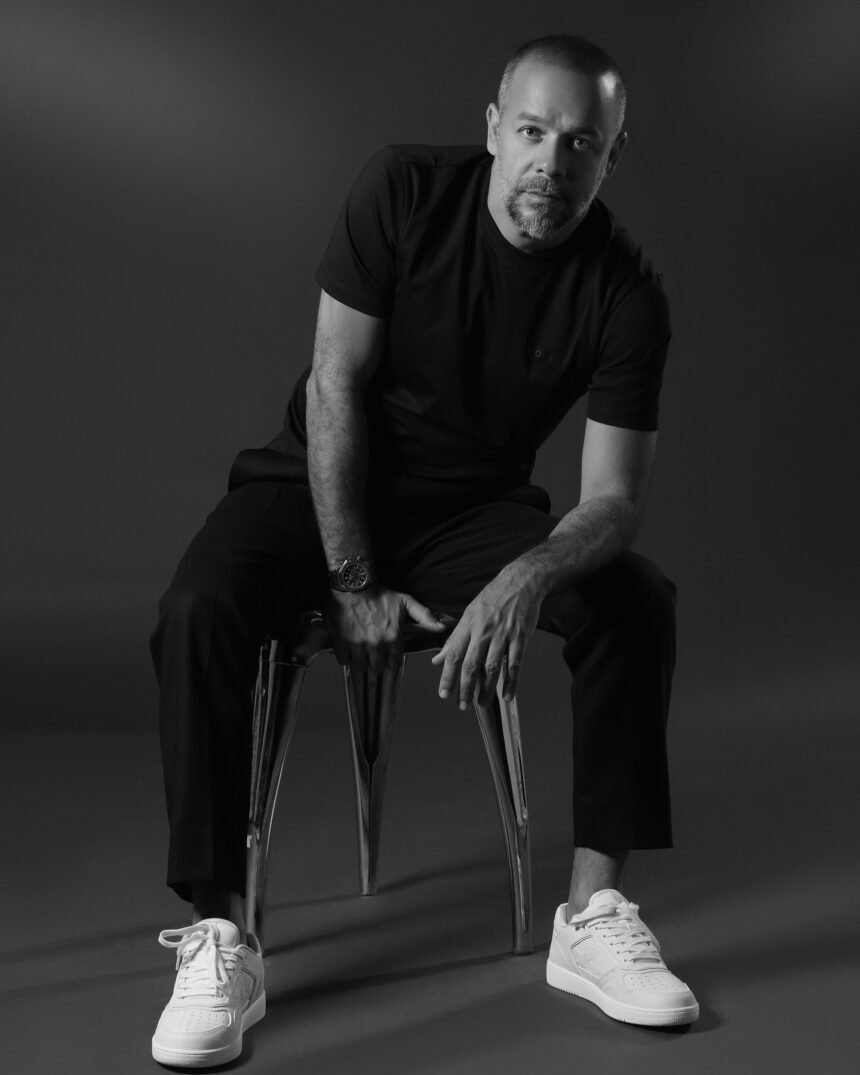
For Michel Fadel, the piano was never simply an instrument. It became a language through which he could communicate long before international stages, television programmes and major collaborations became part of his life.
- Music Entered His Life Almost Immediately
- Classical Training Built the Foundation
- Working With Major Arab Artists Changed His Career
- Television Introduced Him to a New Generation
- Composition Took Him Beyond the Concert Stage
- La Scène Turned Music Into an Experience
- O by Michel Fadel Expanded the Idea Into Egypt
- His 2026 Journey Remains International
- The Next Chapter for Michel Fadel
The Lebanese composer, pianist, producer and entrepreneur began playing when he was only three years old. Decades later, music remains at the centre of almost everything he builds.
His career has taken him from classical training in Lebanon and France to working with some of the Arab world’s most recognised voices. He has written music for films and television, coached emerging performers and created entertainment concepts such as La Scène Beirut and O by Michel Fadel in Egypt.
Today, Michel represents a musician who has gradually turned artistic experience into something larger than performance alone.
Music Entered His Life Almost Immediately
Michel grew up in an environment where music was taken seriously.
His father, Fouad Fadel, was a composer, arranger and opera teacher who introduced him to the piano at a very young age. What started when Michel was around three years old quickly became disciplined training rather than an occasional childhood hobby.
As he grew older, practice became demanding.
Michel has spoken about spending several hours each day at the piano during his formative years. The routine taught him something that would follow him throughout his career.
Talent can open a door, but discipline determines how far someone goes through it.
He eventually completed advanced piano studies at the Lebanese National Conservatory, graduating in 1998 with strong academic results before continuing his musical education in France.
Classical Training Built the Foundation
Moving to France allowed Michel to deepen his knowledge of composition, orchestration and musical structure.
Classical training gave him technical discipline, but his career would never remain limited to one musical style.
That became one of his greatest strengths.
Michel learned how to move between classical music, contemporary Arabic songs, Western influences and large live arrangements without treating those styles as separate worlds.
Over time, his music developed around this ability to combine traditions.
A familiar Arabic melody could be presented through a larger orchestral arrangement. A classical piece could sit beside a popular song during the same concert.
For Michel, music did not need rigid boundaries.
It needed emotion.
Working With Major Arab Artists Changed His Career
As Michel’s reputation grew, so did the scale of the artists and projects around him.
His career has included collaborations with performers such as Elissa, Nancy Ajram, Carole Samaha, Nawal Al Zoghbi, Julia Boutros, Adam and Nabil Shuail.
He has also accompanied legendary singers including Fairuz and Majida El Roumi on piano.
These collaborations placed Michel inside some of the most important musical environments in the Arab world.
But working with established artists requires a particular kind of maturity.
A musician has to know when to lead and when to support. The arrangement should strengthen the singer without overwhelming the song.
That ability to serve the music rather than simply showcase technical skill became important to Michel’s style.
Television Introduced Him to a New Generation
Michel also became familiar to television audiences through talent programmes.
He worked as a coach during several seasons of Star Academy, helping young performers develop their voices, musical understanding and stage confidence. He later became involved with Arab Idol as well.
Television changed his relationship with audiences.
Instead of being known only by people attending concerts or following production credits, viewers began seeing the person behind the arrangements.
It also placed Michel in the position of teacher.
Working with young performers requires a different type of musical ability. A coach cannot simply demonstrate what sounds good. He has to help another person understand why something works and develop enough confidence to perform it themselves.
Composition Took Him Beyond the Concert Stage
Michel’s creativity also expanded into film, television series and advertising.
Composing for visual stories is different from performing live.
The music has to support a scene rather than dominate it. A few notes can create tension, sadness, nostalgia or hope before a character says anything.
This part of his career allowed Michel to use music as storytelling in another form.
It also reinforced his ability to move between musical worlds.
One project might require orchestral emotion, while another needs something contemporary and immediate.
The constant change helped prevent his career from becoming predictable.
La Scène Turned Music Into an Experience
One of the biggest changes in Michel Fadel’s journey came when he moved beyond performing music and began creating places where music could be experienced differently.
La Scène Beirut opened in December 2022.
The concept combines live performance, dining and nightlife, but Michel’s musical identity sits at its centre.
Rather than building a conventional nightclub, La Scène was created around the idea that entertainment should feel like a complete show.
Large ensembles, singers, carefully arranged music and visual production all become part of the experience.
For Michel, the project represented entrepreneurship without abandoning artistry.
He was no longer only preparing what he would play on stage.
He was shaping the entire environment around the audience.
O by Michel Fadel Expanded the Idea Into Egypt
Egypt became another important part of Michel’s entertainment journey through O by Michel Fadel at Marassi on the North Coast.
The concept was developed as an Ode to the Opera and brought together Oriental and Western musical influences with live entertainment, dining and large scale production.
Its programming featured performers from different countries, reflecting Michel’s preference for music that moves across cultural boundaries.
The project showed how his career had evolved.
The young pianist who once focused on mastering his instrument had become an entrepreneur thinking about stages, audiences, hospitality, visual technology and complete entertainment experiences.
His 2026 Journey Remains International
Michel continues to perform while developing his entertainment projects.
His official 2026 schedule has included performances connected with La Scène in Beirut as well as international appearances, including a September performance in Cannes.
That balance reflects the way he now lives professionally.
One part of his work remains deeply connected to Lebanon.
Another moves internationally.
Despite decades in the industry, performing still appears to remain the emotional centre of the journey.
Businesses can expand and projects can change, but the piano remains where the story began.
The Next Chapter for Michel Fadel
Michel Fadel’s career is difficult to place inside one title.
He is a pianist, but he is also a composer.
He is a producer, teacher and arranger.
Increasingly, he is also an entrepreneur creating spaces where music, hospitality and live entertainment meet.
The journey from a three year old learning piano in Lebanon to building entertainment concepts across the region shows what can happen when technical discipline and imagination develop together.
His story also carries a useful lesson for young artists.
Mastering a craft does not mean remaining inside one version of it forever.
Music can lead to performance.
Performance can lead to production.
Production can lead to mentorship.
And experience can eventually become the foundation for creating something entirely new.
For Michel Fadel, every stage of the career has returned to the same starting point.
A piano, an audience and the belief that music should make people feel something long after the final note disappears.
Do follow Michel Fadel on Instagram
Read More – How Artificial Intelligence Is Reshaping Gulf Career Opportunities