



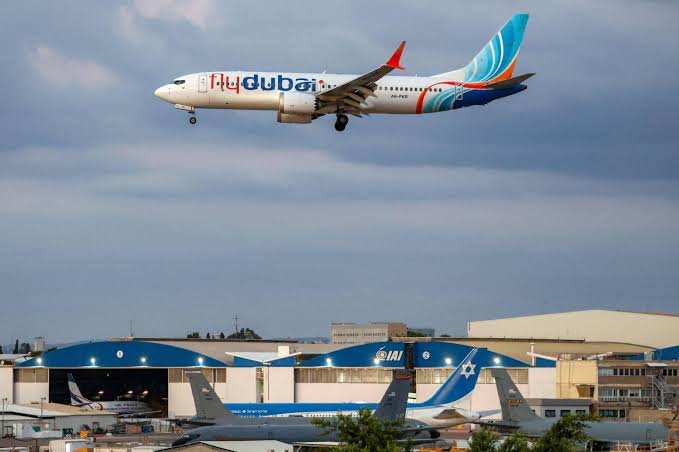
How the flydubai FZ1073 Incident Could Change Airline Security Procedures
What happened aboard flydubai flight FZ1073 on September 30, 2026, began as a routine journey from Dubai to Tel Aviv and turned into a serious in-flight security emergency inside the cockpit.
- What Happened Aboard flydubai FZ1073?
- What Happened Inside the Cockpit?
- Why Did the Aircraft Suddenly Plunge?
- How the Co-Pilot Was Restrained
- Who Actually Landed FZ1073?
- Why Was There a Crash Axe in the Cockpit?
- What Is Known About the Co-Pilot?
- What Has the UAE Officially Confirmed?
- What Happened After the Emergency Landing?
- Timeline of the FZ1073 Incident
- What Questions Are Investigators Still Trying to Answer?
- Why the FZ1073 Incident Matters for Aviation Security
- What Really Saved Flight FZ1073?
In the days after the incident, official UAE findings, flydubai statements and accounts from Captain Smit Machchhar and passengers helped establish a clearer picture of what happened.
The UAE Attorney-General, Dr Hamad Saif Al Shamsi, said investigators concluded that the co-pilot attempted to carry out a terrorist act during the flight. According to the official investigation, he attacked the captain inside the flight deck using the aircraft’s crash axe and attempted to take control of the flight controls.
Captain Machchhar was seriously injured during the struggle, while the aircraft entered a sharp descent. He nevertheless managed to open the cockpit door, allowing other crew members and passengers to intervene. The co-pilot was restrained, on-duty flydubai crew travelling on the aircraft secured the flight, and FZ1073 was diverted to Tabuk in Saudi Arabia. All 172 passengers and crew were ultimately safe.
The investigation remains open. UAE prosecutors are still examining the motive, possible connections, technical evidence and digital material. Authorities have said final findings will be released when the investigation is complete.
That distinction matters because some details circulating online remain allegations or have come from unnamed sources rather than final investigative findings.
Here is what is currently known about the FZ1073 incident and how the aircraft was brought safely to the ground.
What Happened Aboard flydubai FZ1073?
Flight FZ1073 departed Dubai International Airport on September 30, 2026, bound for Ben Gurion International Airport in Tel Aviv.
Flydubai initially confirmed only that the flight had experienced an incident while en route and had landed safely at Tabuk Airport in Saudi Arabia. The airline said all passengers were safe and accounted for.
As more information emerged, flydubai confirmed that an altercation had occurred inside the flight deck.
The airline said on-duty flydubai crew travelling on the aircraft intervened, secured the aircraft and diverted it to Tabuk, where it landed safely.
Three days later, the UAE Attorney-General provided the most important official update.
Dr Hamad Saif Al Shamsi said investigators had established that the co-pilot had attempted to carry out a terrorist act. He said the co-pilot attacked the captain with a crash axe and tried to take control of the aircraft’s flight controls.
The incident therefore moved from being described publicly as an unexplained cockpit altercation to an officially investigated attempted terrorist act.
What Happened Inside the Cockpit?
Captain Smit Machchhar later described the attack in conversations after receiving medical treatment.
According to his account reported by Khaleej Times, the first blow struck the back of his head.
At first, he believed something catastrophic may have happened to the aircraft itself.
Then further blows followed.
That was when he realised the threat was coming from the other person inside the cockpit.
Machchhar tried to stop the attack while his vision was deteriorating and the aircraft began pitching sharply downward.
He managed to open the cockpit door, but the attacker shut it again.
Despite being badly injured and on the floor, the captain was eventually able to reach the door control and open it again. That allowed colleagues and others outside the cockpit to enter and intervene.
This moment appears to have been critical.
Without access to the flight deck, the people outside would have had very limited ability to stop what was happening inside.
The UAE Attorney-General’s statement confirms that the co-pilot was attempting to seize control of the aircraft during the attack.
Why Did the Aircraft Suddenly Plunge?
Passengers did not initially know there was an attack inside the cockpit.
What they felt was the aircraft suddenly descending.
Witnesses described panic inside the cabin.
Passengers reported screaming and children crying as the aircraft dropped unexpectedly. One passenger initially thought the aircraft had entered a severe air pocket before realising the descent was continuing.
Reports have placed the loss of altitude at roughly 14,000 feet during the incident, although the exact flight-data reconstruction will ultimately depend on the official investigation. The National reported that the Boeing 737 plunged about 14,000 feet during the struggle.
The important point is that the aircraft’s abnormal descent occurred while control of the cockpit was being contested.
That explains why passengers experienced the crisis before they understood its cause.
The cabin crew and passengers had no immediate view of what was happening behind the cockpit door.
They only knew the aircraft had entered a dangerous and unusual flight condition.
How the Co-Pilot Was Restrained
Once the cockpit door was opened, people outside the flight deck were able to intervene.
According to passenger accounts gathered after the flight, passengers rushed forward and helped overpower the co-pilot.
Witnesses said he was initially restrained using a headphone cord before plastic zip ties were brought to secure him more firmly.
Other people attended to Captain Machchhar, who had suffered serious injuries.
Flydubai later thanked the passengers who assisted the crew during the incident, confirming that passenger intervention formed part of the response.
The airline also thanked its cabin crew and the pilots who subsequently secured the aircraft.
The incident is unusual because the threat originated inside the cockpit rather than from a passenger attempting to force entry.
That meant the normal hardened-cockpit-door security system could not by itself prevent the attack.
Instead, stopping the threat required the injured captain to regain access to the door controls and allow help into the flight deck.
Who Actually Landed FZ1073?
After the co-pilot was restrained, another challenge remained.
The aircraft still had to be stabilised, diverted and landed safely.
Flydubai said that on-duty crew travelling on the flight secured the aircraft and diverted it to Tabuk Airport in Saudi Arabia.
The airline has not publicly identified which individual pilot ultimately flew the landing.
Flydubai CEO Ghaith Al Ghaith thanked “the pilots who secured the aircraft and landed it safely,” along with the captain, cabin crew and passengers.
This wording indicates that additional qualified pilots were available on the flight and were able to take over after the immediate threat was contained.
That can happen on longer or operationally demanding services where additional pilots travel as part of the operating crew arrangement.
The safe landing at Tabuk ended the immediate emergency.
Saudi authorities then assisted the passengers and crew, while replacement aircraft were sent to help continue travel arrangements.
Why Was There a Crash Axe in the Cockpit?
The use of a crash axe attracted attention because many passengers did not realise such equipment is carried aboard commercial aircraft.
Under UAE General Civil Aviation Authority rules, commercial aeroplanes above specified weight or passenger-seat thresholds must carry at least one crash axe or crowbar in the flight crew compartment.
The equipment is intended for emergency purposes such as gaining access through aircraft structures or panels during fires or other serious incidents.
It is not carried as a weapon.
For larger aircraft with more than 200 approved passenger seats, an additional crash axe or crowbar may also be required near the rear galley.
UAE regulations further state that any such tool stored in the passenger compartment should not be visible to passengers.
So the presence of the crash axe aboard FZ1073 was not unusual by itself.
What was extraordinary was its alleged use during the cockpit attack.
The UAE Attorney-General specifically said the crash axe was used to attack Captain Machchhar during the attempted seizure of the aircraft.
What Is Known About the Co-Pilot?
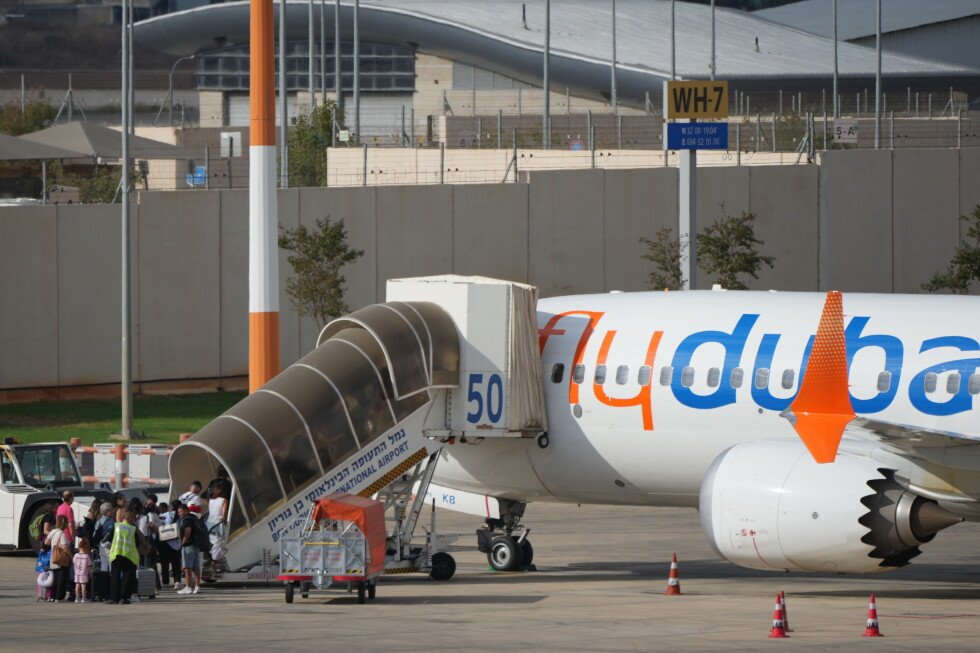
UAE authorities and flydubai had not publicly named the co-pilot as of October 6.
Reuters reported that two sources identified him as an Omani national named Hamam al-Hammami, but Reuters also noted that UAE authorities and flydubai had not officially disclosed his identity.
That means responsible reporting should distinguish between:
Officially confirmed
and
Reported by sources.
Reuters also reported on October 6 that New Zealand Police confirmed the co-pilot had spent approximately six months in New Zealand between November 2018 and May 2019 completing part of his flight training for a UK-based company that no longer operates there.
New Zealand Police said they were reviewing records and making enquiries about his time in the country.
Australian counterterrorism authorities are also examining possible links to Australia, according to Reuters.
The existence of international enquiries does not by itself establish wider involvement in the attack.
That is exactly what investigators are trying to determine.
What Has the UAE Officially Confirmed?
The strongest confirmed findings currently come from the UAE Attorney-General.
Authorities have officially said:
- The co-pilot attempted to carry out a terrorist act.
- He attacked the captain inside the flight deck.
- A crash axe was used.
- He attempted to take control of the aircraft’s flight controls.
- Investigations are continuing into motive and possible links.
- Technical, physical and digital evidence is still being analysed.
The UAE has not yet published the complete investigative report.
This means several questions remain open.
These include:
- What was the exact motive?
- Was the attack planned alone?
- Were there external connections?
- What digital evidence has been recovered?
- What happened immediately before the attack?
- Were there earlier warning signs?
The Attorney-General said final findings would be announced once all necessary procedures had been completed.
Until then, claims beyond the official findings should be treated carefully.
What Happened After the Emergency Landing?
After FZ1073 landed in Tabuk, all 172 passengers and crew were confirmed safe and accounted for.
Captain Machchhar received medical treatment and later returned to the UAE after being medically cleared.
Flydubai deployed two replacement aircraft to Tabuk to assist passengers and crew.
The airline subsequently suspended flights to and from Israel while the investigation continued.
Flydubai said the suspension was being coordinated with relevant authorities and would allow investigators to establish the facts surrounding the incident.
The company also stressed that the incident did not affect other scheduled operations across its network.
The suspect was later transferred into UAE custody as the criminal and security investigation continued. Reuters reported on October 6 that he remained in UAE custody.
Timeline of the FZ1073 Incident
| Stage | What Happened |
|---|---|
| September 30, 2026 | FZ1073 departed Dubai for Tel Aviv |
| During flight | Co-pilot allegedly attacked Captain Machchhar with crash axe |
| Cockpit struggle | Aircraft entered sharp descent |
| Captain response | Cockpit door was eventually opened |
| Intervention | Crew and passengers helped overpower and restrain co-pilot |
| Aircraft secured | Additional flydubai pilots took control |
| Diversion | Flight diverted to Tabuk, Saudi Arabia |
| Landing | Aircraft landed safely |
| October 3 | UAE Attorney-General classified incident as attempted terrorist act |
| October 6 | International enquiries into suspect’s background continued |
The timeline is based on official flydubai statements, the UAE Attorney-General’s announcement and subsequently reported witness accounts.
What Questions Are Investigators Still Trying to Answer?
The most important remaining question is motive.
The UAE has officially classified the incident as an attempted terrorist act, but authorities have not yet publicly explained the complete ideological or operational background.
Investigators are analysing:
- Physical evidence
- Digital evidence
- Technical data
- Possible connections
International interest in the suspect’s history has also expanded.
New Zealand Police are examining his earlier period of flight training, while other authorities are reportedly checking possible international links.
Another major question is how the suspect progressed through airline employment and crew screening.
Reports have circulated about earlier concerns regarding him, but some of those claims rely on unnamed sources and have not yet been incorporated into a final UAE investigative report.
That distinction is important.
The final investigation will need to establish not only what happened in the cockpit but also whether there were warning signs that should have been identified before the flight.
Why the FZ1073 Incident Matters for Aviation Security
Modern commercial aviation security has largely focused on preventing unauthorised people from gaining access to the cockpit.
Reinforced cockpit doors became a central part of airline security after the September 11 attacks.
FZ1073 raises a different type of problem.
The alleged attacker was already an authorised member of the flight crew.
That creates what aviation security specialists call an insider threat.
The incident could therefore trigger renewed scrutiny around:
- Pilot background checks
- Behavioural monitoring
- Crew vetting
- Mental-health reporting systems
- Access to emergency equipment
- Cockpit procedures
It may also lead regulators and airlines to review how information about pilots is shared between countries and previous employers.
However, any policy changes will depend on what the final investigation establishes.
One incident does not automatically prove that existing security systems failed in every area.
What it does show is that aviation security must consider threats originating from people who already have legitimate access to restricted spaces.
What Really Saved Flight FZ1073?
Several actions appear to have prevented a much more serious outcome.
First, Captain Smit Machchhar continued resisting despite being badly injured.
His ability to reopen the cockpit door allowed other people to reach the attacker.
Second, crew members and passengers intervened quickly once they gained access.
The co-pilot was subdued and restrained before he could regain control.
Third, qualified flydubai pilots travelling on the aircraft were available to secure and land the plane safely.
Finally, the aircraft was successfully diverted to Tabuk, where Saudi authorities handled the emergency response.
Flydubai later thanked the captain, pilots, cabin crew, passengers and Saudi authorities for their roles in the outcome.
The incident aboard flydubai FZ1073 was therefore not simply an unexplained sudden descent or an ordinary cockpit disagreement.
UAE investigators say it was an attempted terrorist act in which the co-pilot attacked the captain with a crash axe and attempted to take control of the aircraft.
Captain Smit Machchhar managed to reopen the cockpit despite his injuries, allowing others to intervene. Passengers and crew restrained the attacker, additional pilots secured the aircraft, and the flight diverted safely to Tabuk.
All 172 people on board survived.
But the investigation is not finished.
Authorities are still examining the motive, digital evidence, technical evidence and possible wider connections.
Until those findings are released, the clearest picture is the one supported by official statements and verified witness accounts.
A serious attack began inside the cockpit.
The aircraft entered a dangerous descent.
The injured captain fought to regain access to the cockpit door.
Crew members and passengers intervened.
And a flight that could have ended very differently was ultimately brought safely to the ground.
Do follow us on Instagram
Read More – Dubai Schools Tighten Photography Rules as Parents Face New Privacy Warnings