UAE and Saudi Arabia: Food Waste Reduction Initiatives
A supermarket in Dubai receives fresh vegetables from an overseas supplier. A restaurant in Riyadh prepares hundreds of meals for the evening, while a family in Doha purchases groceries for the coming week. Each activity depends on food remaining fresh, safe and suitable for consumption. Yet somewhere between production, transportation, retail and the dinner table, substantial quantities of food are lost or discarded.
- Why Food Waste in Gulf Cities Is a Growing Concern
- 7 Powerful Ways Better Packaging and Storage Can Reduce Food Waste
- UAE and Saudi Arabia: Food Waste Reduction Initiatives
- How Cold Chains and Smart Storage Could Transform Food Distribution
- The Environmental and Financial Costs of Food Packaging
- Practical Food Storage Solutions for Gulf Households
- The Future of Food Waste Prevention in Gulf Cities and FAQs
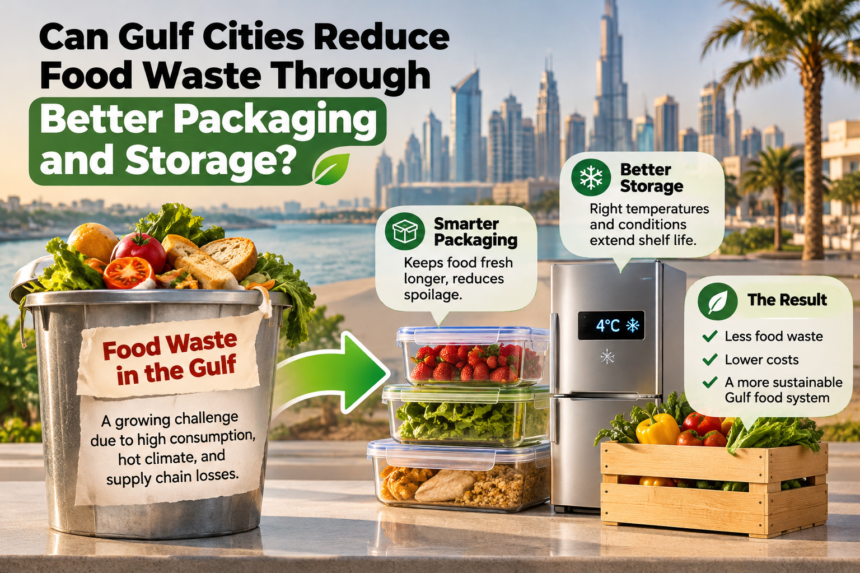
Reducing Food Waste in Gulf Cities is becoming an important sustainability and food-security priority as urban populations, hospitality businesses and food distribution networks place growing demands on regional supply chains.
One potential solution lies in something consumers encounter every day: food packaging and storage.
Appropriate packaging can protect products from damage, contamination and moisture loss. Refrigeration and temperature-controlled transportation can help maintain the quality and safety of perishable goods, while clear labels and suitable storage arrangements may help households use food before it spoils.
However, the solution is not simply to wrap every item in more plastic or purchase expensive refrigeration equipment.
Packaging has its own environmental footprint, while cold storage consumes energy and requires reliable maintenance. An effective strategy must balance food preservation with material efficiency, safety and affordability.
The scale of the global problem is significant.
According to the United Nations Environment Programme’s Food Waste Index Report 2024, approximately 1.05 billion tonnes of food were wasted at the household, food-service and retail levels in 2022.
Households accounted for 631 million tonnes, while food services and retail contributed approximately 290 million and 131 million tonnes respectively.
These are global estimates and should not be mistaken for current Gulf-specific waste volumes.
In the UAE, the national food loss and waste initiative, ne’ma, is working towards reducing food loss and waste by 50% by 2030. Its programme identifies cold-chain improvements, better shelf-life information and food rescue as important areas for action.
Saudi Arabia has also reported measurable progress. In September 2025, its General Food Security Authority announced that national food loss and waste had declined from 33.1% in the 2019 baseline to 27.9%, based on its assessment framework.
These developments demonstrate growing policy attention to food waste.
For Gulf cities, the opportunity involves improving the entire journey of food, from imported shipments and refrigerated warehouses to restaurant kitchens and household refrigerators.
Why Food Waste in Gulf Cities Is a Growing Concern
Food waste is not just the loss of something edible. It also represents the loss of resources used to produce, transport, refrigerate and prepare food.
Water, energy, labour, packaging and transportation capacity may already have been consumed before an item is thrown away.
Food Loss and Food Waste Are Different
Food loss generally occurs earlier in the supply chain, including production, storage, transportation and processing.
Food waste is usually associated with retail, food-service businesses and consumers.
For example, fruit damaged during transportation may contribute to food loss, while an untouched restaurant meal discarded after service contributes to food waste.
The distinction matters because different causes require different solutions.
Why Gulf Conditions Matter
High outdoor temperatures can make storage and transportation of perishable foods more demanding.
Fresh produce, dairy products, seafood and meat require suitable handling throughout their distribution journeys.
Temperature fluctuations can affect quality or safety, depending on the product.
The region’s dependence on international food supply chains for many products also makes coordination between suppliers, importers, logistics companies and retailers important.
However, the scale of food waste varies by market and sector. It would be inaccurate to assume that every Gulf city experiences identical conditions.
Food Waste Across the Supply Chain
| Stage | Possible Cause | Potential Intervention |
|---|---|---|
| Production | Harvest damage | Better handling |
| Transportation | Temperature interruptions | Cold-chain monitoring |
| Warehousing | Poor stock rotation | Inventory management |
| Retail | Packaging damage | Protective packaging |
| Restaurants | Excess preparation | Portion forecasting |
| Households | Forgotten leftovers | Better storage routines |
An effective food-waste strategy must identify where losses occur rather than applying the same solution everywhere.
7 Powerful Ways Better Packaging and Storage Can Reduce Food Waste
Packaging and storage technologies offer several ways to preserve food, improve handling and reduce unnecessary disposal.
Their usefulness depends on the product and how the technology is used.
1. Protective Packaging
Suitable containers can reduce bruising, crushing and contamination during transportation.
Fresh fruit, for example, may benefit from packaging that provides sufficient ventilation and physical protection.
However, oversized or unnecessary packaging can create additional material waste.
2. Temperature-Controlled Packaging
Insulated containers can help maintain suitable temperatures during selected delivery periods.
They are useful in transporting temperature-sensitive products, but they do not replace reliable refrigeration indefinitely.
Packaging performance must be tested under the actual transportation conditions.
3. Modified Atmosphere Packaging
Certain food products can benefit from packaging that adjusts the mixture of gases surrounding the food.
Under appropriate conditions, this can slow specific deterioration processes and extend quality.
However, it is not suitable for every product and must be validated for food safety.
4. Resealable and Portion-Sized Packaging
Smaller portions and resealable containers may help consumers use food over several occasions.
For a small household, a suitable smaller pack may prevent unused food from spoiling.
However, multiple small packs can increase packaging material per unit of food.
5. Smart Temperature Monitoring
Sensors and data loggers can record temperature changes during transportation and storage.
This information may help businesses detect refrigeration failures and investigate potentially compromised shipments.
However, monitoring alone does not preserve food; staff must act appropriately on the information.
6. Clearer Date and Storage Labels
Labels can explain storage conditions, expiry dates and handling requirements.
Confusion over date terminology may lead consumers to discard food unnecessarily.
However, safety-related expiry dates must be respected, and businesses must follow the applicable labelling regulations.
7. Better Household Storage
Well-organised refrigerators and freezers can help families use purchased food before it deteriorates.
Placing older products where they are visible and storing leftovers promptly are simple measures that may reduce waste.
Seven Solutions Compared
| Solution | Main Purpose | Important Limitation |
|---|---|---|
| Protective Packaging | Prevent damage | Material consumption |
| Insulated Packaging | Maintain temperature temporarily | Limited cooling duration |
| Modified Atmosphere | Extend suitable product life | Product-specific validation |
| Resealable Packs | Support portion control | Extra packaging |
| Smart Sensors | Detect temperature problems | Requires action |
| Clear Labels | Improve storage decisions | Regulatory requirements |
| Household Organisation | Reduce forgotten food | Depends on habits |
The most effective systems often combine multiple interventions.
UAE and Saudi Arabia: Food Waste Reduction Initiatives
Regional programmes are beginning to connect food-waste prevention with broader food security and circular-economy objectives.
However, national targets should be distinguished from achieved reductions.
The UAE’s ne’ma Initiative
The UAE’s National Food Loss and Waste Initiative, ne’ma, aims to halve food loss and waste by 2030.
Its strategy includes improving supply-chain efficiency, supporting cold-chain technologies, reviewing shelf-life practices and expanding food rescue.
The programme also emphasises measuring waste so that interventions can target the stages where they are needed most.
Its national baseline work is intended to establish more reliable evidence on food loss and waste across different sectors.
Smart Community Fridges in the UAE
In March 2026, ne’ma announced a Ramadan food-rescue collaboration involving more than 84 hospitality outlets.
The initiative was designed to recover untouched surplus meals from iftar buffets and redistribute suitable food through Smart Community Fridges.
This illustrates how controlled storage and organised redistribution can reduce avoidable disposal.
However, food rescue requires strict safety checks and cannot be used for every leftover meal.
An October 2026 UAE Partnership
On October 21, 2026, the UAE Ministry of Economy and Tourism announced an expanded partnership with ne’ma.
The collaboration focuses on circular-economy practices in hospitality and events, including measuring edible surplus, improving procurement and using data to reduce excess preparation.
It also creates opportunities for smaller businesses and technology providers working on practical food-waste solutions.
Saudi Arabia’s Reported Progress
Saudi Arabia’s General Food Security Authority reported in September 2025 that food loss and waste had declined from 33.1% to 27.9%, compared with the 2019 baseline.
The reported food loss rate was 12.1%, while the food waste rate was 15.8%.
The announcement was accompanied by the launch of the Letadom platform, which supports national efforts to reduce food loss and waste.
These figures refer to Saudi Arabia’s reporting methodology and should not be directly compared with unrelated household waste estimates.
Regional Approaches Compared
| Country | Documented Initiative | Main Focus |
|---|---|---|
| UAE | ne’ma | National waste reduction |
| UAE | Smart Community Fridges | Safe surplus redistribution |
| UAE | Ministry–ne’ma partnership | Hospitality efficiency |
| Saudi Arabia | Letadom programme | Measuring and reducing food loss and waste |
| Wider Gulf | Food-safety and storage requirements | Safe handling and distribution |
The key lesson is that better storage works most effectively alongside measurement, planning and appropriate food safety controls.
How Cold Chains and Smart Storage Could Transform Food Distribution
A cold chain is a temperature-controlled system used to transport and store products that require specific conditions.
It may involve refrigerated vehicles, warehouses, distribution centres, retail displays and delivery equipment.
For Gulf cities, where high outdoor temperatures can place additional demands on perishable food handling, cold-chain management is particularly important.
Maintaining the Correct Temperature
Different food products require different storage conditions.
A frozen product, fresh vegetable and chilled dairy item may not share identical requirements.
Businesses therefore need product-specific temperature controls supported by suitable monitoring.
A single refrigeration setting cannot be assumed appropriate for every food category.
Reducing Temperature Interruptions
Food can move through several locations before reaching consumers.
A shipment may pass from an importer to a warehouse, delivery vehicle, supermarket and household.
If temperature-sensitive food spends too long outside suitable conditions, its safety or quality may deteriorate.
Monitoring helps operators identify where interruptions occur.
Using Digital Monitoring Systems
Connected sensors can transmit information about temperature, humidity and equipment performance.
For example, a refrigerated warehouse may generate alerts when temperatures move outside a predetermined range.
However, sensors must be calibrated and maintained.
Staff must also follow documented procedures when an alert suggests that food safety may have been compromised.
Smarter Inventory Rotation
Storage improvements are not limited to refrigeration hardware.
Digital inventory systems can help retailers identify products approaching their permitted sale dates.
Businesses may use this information to adjust purchasing, apply suitable discounts or arrange safe redistribution.
The purpose is to avoid ordering more food than can realistically be sold or used.
Food Storage Technologies Compared
| Technology | Main Function | Potential Benefit |
|---|---|---|
| Refrigerated Warehousing | Maintain suitable storage temperatures | Protect perishables |
| Temperature Data Loggers | Record conditions | Identify handling problems |
| IoT Sensors | Provide remote monitoring | Faster response to faults |
| Inventory Software | Track stock and dates | Reduce overstocking |
| Humidity Monitoring | Manage storage conditions | Protect suitable produce |
| Insulated Delivery Containers | Limit temperature changes | Support short-distance delivery |
Smart storage should be considered a combination of reliable equipment, trained staff and effective operating procedures.
The Environmental and Financial Costs of Food Packaging
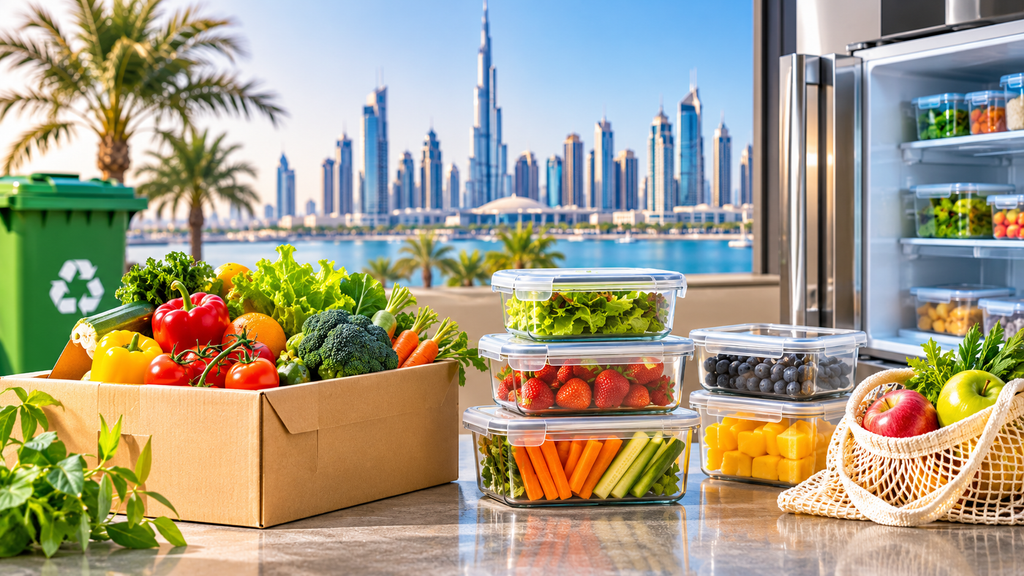
Packaging can reduce food waste, but it also consumes materials and energy.
Plastic films, cartons, metal containers and other materials all have environmental impacts associated with production and disposal.
The challenge is to choose packaging that protects food without creating unnecessary material waste.
The Food Waste–Packaging Trade-Off
The United Nations Environment Programme has examined the relationship between packaging and food waste.
Its lifecycle work emphasises that reducing packaging is not automatically environmentally preferable if it causes significantly more food to spoil.
Conversely, additional packaging may be difficult to justify when it provides little preservation benefit.
The correct choice depends on the food, package design, transport conditions and disposal system.
Recyclability Is Not the Only Measure
A highly recyclable package may still perform poorly if it fails to protect its contents.
Meanwhile, a multilayer package may preserve food effectively but be difficult to recycle through existing systems.
This is why lifecycle assessments can be more informative than judging packaging exclusively by its material.
The Financial Cost of Spoilage
Businesses lose more than the purchase price of discarded food.
They may also incur costs associated with transportation, storage, energy, labour and disposal.
An improved package may be worth purchasing if the reduction in spoilage exceeds the additional cost.
However, actual savings must be measured.
Illustrative Supermarket Packaging Model
Consider a fictional Gulf supermarket purchasing 10,000 units of a perishable food item each month.
| Measure | Existing Packaging | Improved Packaging |
|---|---|---|
| Units Purchased | 10,000 | 10,000 |
| Assumed Spoilage Rate | 8% | 4% |
| Units Lost | 800 | 400 |
| Cost per Lost Unit | AED 8 | AED 8 |
| Value of Spoiled Food | AED 6,400 | AED 3,200 |
| Additional Packaging Expense | AED 0 | AED 1,500 |
| Combined Monthly Cost | AED 6,400 | AED 4,700 |
Under these hypothetical assumptions, the improved packaging reduces combined monthly costs by AED 1,700.
However, it also introduces additional packaging expenditure and potentially more material waste.
The figures are fictional and do not represent actual Gulf retail spoilage rates or packaging prices.
A complete assessment should include packaging disposal, energy consumption, transportation and environmental impacts.
Questions Businesses Should Ask
Before adopting a new package, a retailer should examine whether it actually reduces spoilage and whether it can be handled safely.
The business should also compare the material footprint and determine whether local waste infrastructure can process the used packaging.
The best design is the one that performs well across food preservation, safety, cost and environmental criteria.
Practical Food Storage Solutions for Gulf Households
Households are responsible for a substantial share of global food waste.
According to UNEP’s 2024 report, the estimated global household contribution was 631 million tonnes in 2022.
Families can reduce some avoidable waste through better purchasing decisions, storage arrangements and meal planning.
However, food safety must remain more important than preventing disposal.
Maintain Safe Refrigerator Temperatures
The US Food and Drug Administration recommends maintaining refrigerators at or below 4°C and freezers at approximately −18°C or below.
A refrigerator thermometer can help households check whether equipment is maintaining suitable conditions.
Overcrowding the appliance may interfere with air circulation.
Store Leftovers Promptly
Perishable foods should generally be refrigerated within two hours.
When ambient temperatures exceed approximately 32°C, the recommended maximum time outside temperature control is reduced to one hour.
This is particularly relevant during outdoor meals or activities in Gulf summer conditions.
According to USDA guidance, many properly refrigerated cooked leftovers should be consumed within three to four days.
Specific foods may require different handling.
Use Suitable Containers
Covered, food-safe containers can protect food from contamination and help maintain quality.
Shallow containers can also support faster cooling of cooked food.
However, containers should be appropriate for the food and intended temperature.
Understand Food Labels
Consumers should distinguish quality-related date information from safety-related expiry requirements.
A date associated with quality does not always have the same meaning as an expiry deadline.
Nevertheless, families should follow applicable local labels and manufacturer instructions rather than treating expired products as automatically safe.
Organise the Refrigerator
An organised refrigerator can make food easier to find.
Placing products that should be used soon in a visible location may reduce the chance that they are forgotten.
Meal planning can also prevent unnecessary purchases.
Household Food Storage Checklist
- Check refrigerator and freezer temperatures.
- Refrigerate perishables promptly.
- Use covered, food-safe containers.
- Avoid overcrowding refrigerator shelves.
- Keep raw foods separated from ready-to-eat items.
- Label prepared leftovers with the storage date.
- Use or safely freeze food before it deteriorates.
- Check existing supplies before shopping.
- Follow local expiry and storage instructions.
- Discard food when its safety is uncertain.
Common Storage Mistakes
| Mistake | Possible Consequence | Better Practice |
|---|---|---|
| Overfilling the Refrigerator | Reduced air circulation | Leave adequate space |
| Leaving Food Outside Too Long | Safety risk | Refrigerate promptly |
| Uncovered Leftovers | Contamination | Use suitable containers |
| Forgetting Opened Products | Spoilage | Make contents visible |
| Buying Excess Produce | Unused food | Plan quantities |
| Ignoring Storage Instructions | Reduced safety or quality | Follow product guidance |
Small changes may reduce waste, but they must be maintained consistently.
The Future of Food Waste Prevention in Gulf Cities and FAQs
Food-waste prevention could become more integrated with urban food systems as Gulf cities adopt improved logistics, digital inventory management and more effective food recovery programmes.
However, technology alone cannot solve the problem.
Businesses must also improve procurement decisions, while households need practical ways to avoid excessive purchasing and unsafe storage.
Smarter Packaging Design
Future packaging may increasingly combine product protection with clearer storage information and easier material recovery.
Temperature indicators and other monitoring technologies may support supply-chain decisions where their performance has been validated.
However, connected or sensor-equipped packaging should not be assumed to be necessary for every product.
More Efficient Food Distribution
Retailers and logistics operators may use forecasting tools to align supply more closely with expected demand.
Accurate purchasing could reduce surplus before it reaches the consumer.
However, forecasting systems are imperfect, and businesses still need contingency plans.
Expanding Safe Food Rescue
The UAE’s 2026 Smart Community Fridges initiative illustrates how hospitality businesses can redirect suitable surplus food.
Expanding such approaches requires cold storage, food safety procedures and dependable distribution partners.
Food that has already become unsafe cannot be made suitable for donation simply by repackaging it.
Better Measurement
Authorities and businesses need reliable data to determine where food is being lost.
The UAE’s ne’ma baseline programme and Saudi Arabia’s national reporting illustrate the importance of measurement.
Without consistent information, it becomes difficult to distinguish genuine progress from isolated successful projects.
Frequently Asked Questions
Can better packaging reduce food waste?
Yes. Suitable packaging can protect food from damage, contamination and certain forms of deterioration, although its effectiveness depends on the product.
Why is food storage particularly important in Gulf cities?
High outdoor temperatures can make the handling and transportation of perishables more demanding, increasing the importance of reliable temperature controls.
Does more plastic packaging always keep food fresher?
No. Packaging effectiveness depends on its design, materials and compatibility with the food. Additional plastic does not automatically improve preservation.
What is a food cold chain?
It is a temperature-controlled system used to store and transport products that require specific conditions.
What is the UAE doing to reduce food waste?
The national ne’ma initiative aims to reduce food loss and waste by 50% by 2030 through measurement, cooperation, improved supply chains and food-rescue programmes.
Has Saudi Arabia reduced food waste?
The General Food Security Authority reported a reduction in its combined food loss and waste measure from 33.1% to 27.9%, comparing its 2019 baseline with results announced in September 2025.
Can smart packaging detect spoiled food?
Certain technologies can monitor selected conditions or indicators, but they are not universal guarantees of food safety.
What temperature should a home refrigerator maintain?
General FDA guidance recommends 4°C or below for refrigerators and −18°C or below for freezers.
Can restaurants donate surplus meals?
Potentially, when food remains safe and the organisation follows applicable handling and redistribution requirements.
Is recyclable packaging always the most sustainable choice?
Not necessarily. Food preservation performance, manufacturing impacts, recyclability and disposal conditions all matter.
How can families reduce food waste without buying new equipment?
They can plan purchases, organise refrigerators, store leftovers promptly and use existing food before purchasing more.
Will technology eliminate food waste completely?
No. Food waste also results from purchasing decisions, preparation practices, consumer behaviour and supply-chain inefficiencies.
Final Thoughts
Better packaging and storage could play an important role in reducing food waste across Gulf cities.
Protective packaging can limit product damage, while temperature-controlled logistics and improved inventory systems can help preserve perishable goods.
At home, suitable refrigeration, organised storage and thoughtful purchasing can reduce avoidable disposal.
Regional programmes in the UAE and Saudi Arabia demonstrate increasing attention to food-waste prevention, measurement and safe redistribution.
However, improving food preservation should not simply shift the environmental burden towards excessive packaging, energy consumption or costly equipment.
The most effective solutions will balance food safety, preservation, resource efficiency and affordability.
For retailers, this means measuring spoilage before investing in new technologies. For households, it means adopting consistent storage habits. For policymakers, it means supporting reliable standards and effective cooperation across the food supply chain.
Ultimately, reducing Food Waste in Gulf Cities requires more than keeping food fresh for longer.
It requires creating systems in which food is purchased responsibly, handled safely and used before valuable resources are lost.
Better packaging and storage can help make that ambition a practical part of everyday urban life.
Do follow us on Instagram
Read More – Solar Panel Recycling: 7 Critical Solutions for End-of-Life Panels