


Turning Life Stories Into Timeless Bronze
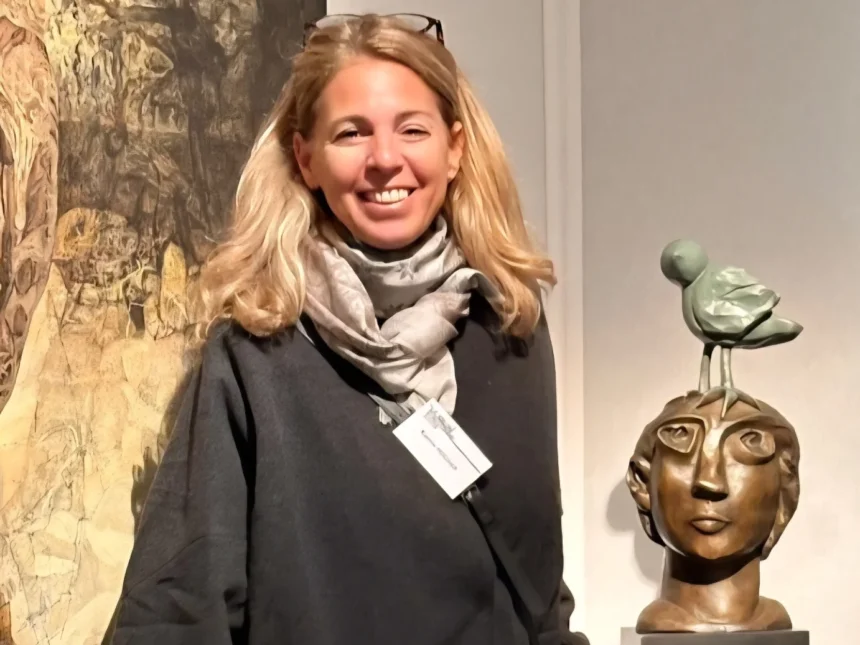
Some artists begin their careers with a clear plan. Karine Hochar’s journey took a more unexpected route. Born in Beirut and shaped by both Lebanese and Mexican heritage, she discovered her artistic identity through years of change, movement, experimentation and personal exploration. Today, she is known for her figurative bronze sculptures, limited edition works and an artistic language that brings together emotion, memory, femininity and the complexity of human experience.
- A Journey Shaped By Two Cultures
- Paris Became An Important Chapter For Karine Hochar
- From Different Creative Paths To Sculpture
- When Clay Becomes Emotion
- The Female Figure At The Heart Of Her Work
- A Workshop Surrounded By Lebanese Landscape
- From Beirut To The International Art Scene
- New Works Continue The Conversation
- An Artist Still Sculpting Her Journey
Her work has travelled beyond Lebanon, reaching audiences and collectors in several international art destinations. Yet behind that growing recognition is a deeply personal journey that began long before her name became associated with contemporary sculpture. Her story is not simply about creating art. It is about finding a way to transform experiences into forms that can speak without words.
A Journey Shaped By Two Cultures
Karine’s Lebanese and Mexican background gives her artistic perspective an unusual richness. Born in Beirut in 1970, she grew up surrounded by an environment where art, culture and heritage were deeply present. Her family also had strong creative connections. Her grandfather was a painter, while her aunt was a sculptor, helping introduce her to the world of artistic expression at an early age.
Lebanon itself became another important influence. Its archaeological heritage, landscapes, traditions and complicated history offered an endless source of visual and emotional inspiration.
For Karine, however, identity was never something fixed. Her Lebanese roots and Mexican heritage became part of a wider personal story, allowing her to see culture through more than one lens. That sense of belonging to different worlds continues to appear in the emotional depth of her work.
Paris Became An Important Chapter For Karine Hochar
One of the defining chapters of Karine’s life was her twelve year stay in Paris. She left Lebanon during the civil war, and the experience of living away from home naturally influenced the way she understood memory, identity and belonging.
Paris gave her an opportunity to encounter new artistic perspectives and broaden her horizons. At the same time, being away from Lebanon created a different relationship with her homeland.
Distance often changes the way people see the places they come from. For Karine, that distance appears to have strengthened her connection with Lebanese culture rather than weakening it. Memories, landscapes and emotions became elements that could later return through her creative work.
Her journey demonstrates how difficult periods in life can sometimes become part of an artist’s vocabulary. Experiences of displacement, change and renewal can remain quietly present, even when they are not directly represented.
From Different Creative Paths To Sculpture
Karine did not immediately become a sculptor. After returning to Lebanon, she explored several creative directions. She worked within the family winery and later experimented with painting wooden furniture and creating customized cakes through her Beirut based bakery Cup’n Cake.
These experiences may seem unrelated to sculpture at first, but they reveal an important part of her personality. Karine has consistently been drawn toward making things with her hands and turning ideas into tangible forms.
Eventually, sculpture became the medium through which her creative instincts found their strongest expression.
In 2008, she completed her first collection of bronze sculptures, marking a major turning point in her artistic career.
The decision to work with bronze gave Karine a material capable of carrying both strength and sensitivity. It allowed her to create figures that feel substantial while retaining movement, softness and emotional character.
When Clay Becomes Emotion
Karine’s creative process is closely connected to the physical act of working with clay. Rather than relying heavily on preliminary sketches, she often allows experiences and emotions to guide the development of a sculpture.
This approach gives her work a sense of spontaneity.
Her sculptures frequently feature generous volumes, expressive curves and textured surfaces. Some figures appear peaceful and joyful, while others carry a quieter sense of tension or reflection.
That contrast is one of the reasons her work can feel approachable while still inviting deeper interpretation.
A sculpture may initially attract attention because of its shape, but the longer a viewer looks at it, the more questions begin to emerge. What is the figure feeling? What story might exist behind the pose? What does the form say about freedom, identity, strength or vulnerability?
Karine leaves room for the viewer to create those answers.
The Female Figure At The Heart Of Her Work
Women occupy an important place in Karine’s sculptural universe. Her figures often move away from conventional ideas of perfection and instead celebrate individuality, softness, personality and presence.
Earlier works such as June, Joy, Guadalupe and other figurative creations demonstrate her interest in creating distinctive characters rather than simply reproducing realistic human bodies. Her limited edition bronze works have become part of international collections and exhibitions.
There is often something playful about these figures, but beneath that playfulness lies emotional depth.
Karine’s sculptures can appear joyful and carefree while also carrying traces of the experiences that shaped their creator. That balance allows her work to connect with audiences on an emotional level without becoming overly complicated.
A Workshop Surrounded By Lebanese Landscape
Today, Karine’s creative environment is closely connected to the mountains of Lebanon. Her workshop is situated in the Cedar Mountains overlooking the Holy Valley of Qadisha, an area deeply connected with Lebanese history, spirituality and natural beauty.
The setting offers a striking contrast to the international art world in which her sculptures now circulate.
Inside the studio, clay, metal and imagination come together. Outside, the landscape provides a constant reminder of the land that has influenced so much of her artistic identity.
This connection between place and creation is important to understanding Karine’s work. Her sculptures are contemporary, but they are not disconnected from history. They carry traces of a country that has experienced beauty, conflict, change and resilience.
From Beirut To The International Art Scene
Karine’s work has gradually moved beyond Lebanon and entered international artistic spaces. Her exhibitions and presentations have included Beirut, Dubai, Abu Dhabi, Cairo, Florence, Spain, Paris, London and New York. She has also participated in events such as the Florence Biennale, The Other Art Fair and Salon d’Automne.
One of the notable milestones in her career came in 2023, when she received the Special Commendation from the President at the fourteenth Florence Biennale. The official Florence Biennale listing confirms the recognition for Karine in the sculpture category.
Such recognition represents more than an award. For a self taught artist, it reflects the growing attention surrounding a practice developed through personal exploration rather than a conventional academic path.
New Works Continue The Conversation
Karine’s artistic language continues to evolve. Her more recent works demonstrate that she is not interested in repeating the same visual formula. Instead, she continues to explore symbolism, identity and the relationship between the human figure and the ideas surrounding it.
Her 2025 sculpture Tanit, for example, uses the image of a grounded foot alongside a pomegranate to explore belonging, growth and abundance.
The symbolism is particularly meaningful when viewed alongside Karine’s wider journey. Belonging has been a recurring theme in her life, from growing up between cultures to leaving Lebanon, spending years in Paris and eventually returning to her homeland.
Her sculptures therefore become more than objects. They become small reflections of a much larger personal conversation.
An Artist Still Sculpting Her Journey
Karine Hochar’s story is ultimately about evolution.
She did not follow a straight road toward sculpture. Her path moved through family influence, displacement, different creative disciplines, cultural experiences and years of exploration before bronze became her chosen language.
That makes her journey especially relatable to anyone who has ever questioned whether they are on the right path.
Her success shows that creative purpose does not always arrive at the beginning. Sometimes it develops slowly through every experience, every change and every unexpected turn.
Today, Karine continues to sculpt from Beirut, creating figurative bronze works that carry both individuality and emotion. Her sculptures invite viewers to pause, observe and feel. They reflect the beauty of the human form while leaving space for stories that belong to each person who encounters them.
For Karine, sculpture is not simply about shaping clay or casting bronze. It is about giving physical form to feelings that are often difficult to explain.
And perhaps that is what makes her journey so compelling. She is not only creating sculptures. She is continuing to sculpt her own story, one figure, one emotion and one piece at a time.
Follow Karine Hochar on Instagram
Read More – Why Marina Believes Fitness Is About More Than Appearance?