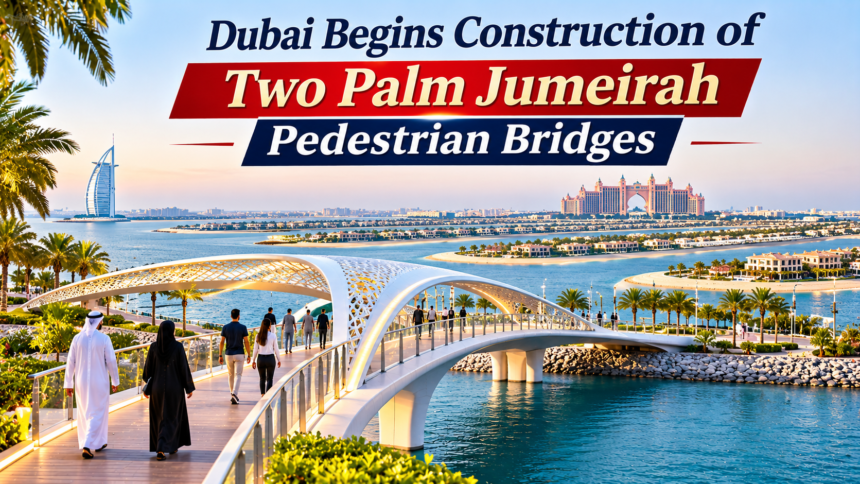
New Palm Jumeirah Bridges to Benefit 16,000 Dubai Residents
Dubai has officially begun construction of on Palm Jumeirah pedestrian bridges as part of a major infrastructure improvement project designed to enhance road safety, reduce traffic congestion, and improve connectivity across the popular residential and tourism destination. The project, announced by Dubai’s Roads and Transport Authority (RTA) on October 29, 2026, is being implemented in partnership with Dubai Holding Community Management.
- Palm Jumeirah Pedestrian Bridges Are Planned at Shoreline and Golden Mile
- Project Expected to Benefit Approximately 16,000 Residents
- Vehicle Waiting Times Expected to Fall by 50 Percent
- Palm Jumeirah Bridges Scheduled for Completion in 2027
- New Bridges Support Dubai’s Road Safety Strategy
- RTA and Dubai Holding Strengthen Infrastructure Partnership
- What the New Pedestrian Bridges Mean for Palm Jumeirah
- Two New Pedestrian Bridges Planned at Shoreline and Golden Mile
- Project Expected to Benefit Approximately 16,000 Residents
- Vehicle Waiting Times Expected to Fall by 50 Percent
- Palm Jumeirah Bridges Scheduled for Completion in 2027
- New Bridges Support Dubai’s Road Safety Strategy
- RTA and Dubai Holding Strengthen Infrastructure Partnership
- What the New Pedestrian Bridges Mean for Palm Jumeirah
The two bridges will be located near Shoreline and Golden Mile, serving residential communities, retail destinations, and visitors travelling through Palm Jumeirah. Once completed, the infrastructure is expected to benefit approximately 16,000 residents by providing safer and more convenient pedestrian crossings.
According to the RTA, the bridges will have a combined capacity of 2,700 pedestrians per hour and are expected to reduce vehicle waiting times at surrounding intersections by 50%. The development reflects Dubai’s continued investment in infrastructure designed to improve everyday mobility while accommodating future population and tourism growth.
Palm Jumeirah Pedestrian Bridges Are Planned at Shoreline and Golden Mile
The first pedestrian bridge will be constructed near Shoreline, at the entrance to Palm Jumeirah, on the inbound side of the development. The second will be located at Golden Mile, close to the area’s retail frontages on the outbound side.
Both locations were selected following detailed traffic and field studies examining pedestrian movements, vehicle volumes, land use, and future transportation requirements.
The RTA explained that the bridges are intended to replace existing ground-level pedestrian crossings, creating more convenient connections between residential and commercial facilities.
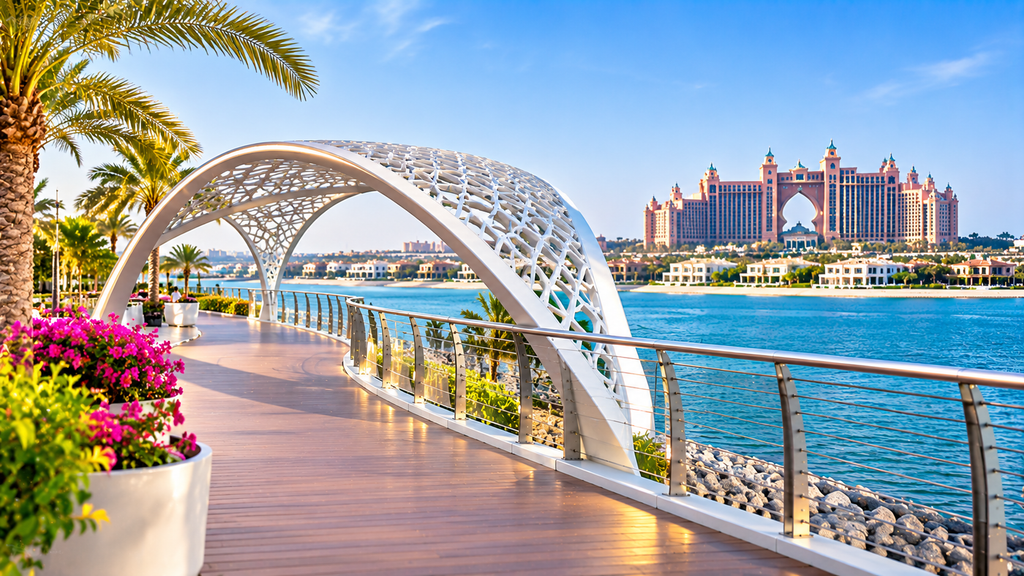
Each bridge will span approximately 40 metres and incorporate architectural features designed to complement Palm Jumeirah’s distinctive surroundings.
The new crossings are expected to improve accessibility for residents who regularly travel between apartment buildings, retail outlets, and nearby community facilities.
By separating pedestrian movements from vehicles at these locations, the development aims to address important safety concerns while improving traffic circulation.
Project Expected to Benefit Approximately 16,000 Residents
One of the project’s major objectives is to improve everyday accessibility for the thousands of people living on Palm Jumeirah.
According to the RTA, approximately 16,000 residents are expected to benefit from the new infrastructure.
The bridges will provide a combined hourly capacity of 2,700 pedestrians, exceeding current demand and allowing additional capacity for future development.
This forward-looking approach is particularly important for Palm Jumeirah, which contains residential communities, hotels, restaurants, retail establishments, and tourist attractions.
The combination of residential and commercial activity creates different transportation needs throughout the day.
Residents may travel between homes and shopping areas, while visitors move between leisure destinations and other facilities.
Providing dedicated pedestrian crossings can make these journeys safer and reduce conflicts between vehicles and people crossing the road.
The RTA stated that the additional capacity was planned with future growth in mind, ensuring the bridges remain useful as mobility patterns develop.
Vehicle Waiting Times Expected to Fall by 50 Percent
The infrastructure improvements are also expected to deliver significant benefits for motorists travelling through Palm Jumeirah.
The RTA estimates that vehicle waiting times at surrounding intersections will decline by 50% following completion of the two bridges.
Replacing ground-level pedestrian crossings with elevated walkways can help reduce interruptions to vehicle movements.
This may be particularly useful at locations experiencing regular pedestrian activity near retail and residential developments.
Improved traffic flow could also support more predictable journeys for residents, visitors, delivery vehicles, and service providers.
However, the projected 50% reduction applies specifically to vehicle waiting times at surrounding intersections, rather than a guaranteed reduction in overall journey times across the entire Palm Jumeirah network.
The RTA has also indicated that traffic management measures will be implemented during construction to maintain vehicle movement.
Drivers and pedestrians should follow official guidance and temporary traffic arrangements wherever construction affects existing routes.
Palm Jumeirah Bridges Scheduled for Completion in 2027
The two pedestrian bridges will be delivered according to separate construction schedules.
The Shoreline bridge, located on the inbound side of Palm Jumeirah, is scheduled for completion in June 2027.
The Golden Mile bridge, located on the outbound side, is expected to be completed in October 2027.
Both structures will include lifts and supporting facilities to improve accessibility for different community groups.
These design provisions are particularly important for older residents, People of Determination, and individuals who may find stairs difficult to use.
The RTA stated that the bridges will follow high standards of safety and accessibility while maintaining an architectural appearance consistent with Palm Jumeirah’s urban character.
The construction schedules remain planned completion dates, and the authorities have not announced an earlier opening.
The project is expected to provide a long-term improvement to pedestrian accessibility rather than a temporary solution to local traffic conditions.
New Bridges Support Dubai’s Road Safety Strategy
The Palm Jumeirah project forms part of Dubai’s broader efforts to improve pedestrian safety and develop a more accessible transportation network.
According to the RTA, Dubai’s pedestrian fatality rate declined by 98% between 2007 and 2025.
During the same period of infrastructure expansion, the number of pedestrian bridges and underpasses increased from 26 in 2006 to 178 by the end of 2025.
The authority stated that this represents an increase of approximately 585%.
The expansion reflects the Dubai Traffic Safety Strategy, which aims to achieve zero road fatalities through safer infrastructure and improved road-user protection.
Dedicated pedestrian bridges can contribute to these objectives by separating people crossing busy roads from moving vehicles.
They also support Dubai’s ambition to develop a more pedestrian-friendly urban environment.
In June 2026, the RTA approved a five-year programme covering 31 additional pedestrian bridges and tunnels across important locations in Dubai between 2026 and 2030.
The Palm Jumeirah project demonstrates how pedestrian infrastructure improvements are being incorporated into established residential and tourism communities.
RTA and Dubai Holding Strengthen Infrastructure Partnership
The construction of the two bridges forms part of a wider agreement signed between Dubai’s RTA and Dubai Holding in March 2025.
The partnership covers traffic improvements and road infrastructure upgrades serving 15 areas and development projects associated with Dubai Holding across the emirate.
Palm Jumeirah is among the destinations included in the agreement.
Planned improvements for the development include additional acceleration and deceleration lanes at six locations, alongside the two pedestrian bridges.
These measures are intended to improve entry and exit movements, reduce congestion, and support safer transportation connections.
Hussain Al Banna, Chief Executive Officer of the RTA’s Traffic and Roads Agency, emphasised the importance of coordinating infrastructure improvements with major urban developments.
The partnership aims to address existing transportation requirements while preparing road networks for future demand.
Dubai Holding Community Management has also highlighted its commitment to continued investment in infrastructure supporting residents and visitors.
The collaboration demonstrates how public authorities and private development organisations can coordinate improvements affecting established communities.
What the New Pedestrian Bridges Mean for Palm Jumeirah
Palm Jumeirah is one of Dubai’s most recognisable destinations, combining residential developments with hospitality, leisure, and commercial facilities.
As movement between these locations continues, pedestrian accessibility has become an important part of the development’s transportation requirements.
The new bridges are expected to provide safer crossings near Shoreline and Golden Mile while reducing interruptions to vehicle traffic.
For residents, the improvements could make everyday journeys between community facilities more convenient.
For visitors, clearly designated crossings can support easier movement between commercial and leisure destinations.
The lifts and accessibility features will also help accommodate pedestrians with different mobility needs.
Beyond their immediate function, the bridges represent another step in Dubai’s wider approach to developing transportation infrastructure around long-term community requirements.
With the Shoreline bridge scheduled for June 2027 and the Golden Mile bridge expected in October 2027, the project will add two dedicated pedestrian connections to Palm Jumeirah.
The development highlights Dubai’s continuing focus on road safety, accessibility, and coordinated infrastructure investment as the emirate prepares its residential and tourism destinations for future growth.
Dubai has officially begun construction of two new pedestrian bridges on Palm Jumeirah as part of a major infrastructure improvement project designed to enhance road safety, reduce traffic congestion, and improve connectivity across the popular residential and tourism destination. The project, announced by Dubai’s Roads and Transport Authority (RTA) on October 29, 2026, is being implemented in partnership with Dubai Holding Community Management.
The two bridges will be located near Shoreline and Golden Mile, serving residential communities, retail destinations, and visitors travelling through Palm Jumeirah. Once completed, the infrastructure is expected to benefit approximately 16,000 residents by providing safer and more convenient pedestrian crossings.
According to the RTA, the bridges will have a combined capacity of 2,700 pedestrians per hour and are expected to reduce vehicle waiting times at surrounding intersections by 50%. The development reflects Dubai’s continued investment in infrastructure designed to improve everyday mobility while accommodating future population and tourism growth.
Two New Pedestrian Bridges Planned at Shoreline and Golden Mile
The first pedestrian bridge will be constructed near Shoreline, at the entrance to Palm Jumeirah, on the inbound side of the development. The second will be located at Golden Mile, close to the area’s retail frontages on the outbound side.
Both locations were selected following detailed traffic and field studies examining pedestrian movements, vehicle volumes, land use, and future transportation requirements.
The RTA explained that the bridges are intended to replace existing ground-level pedestrian crossings, creating more convenient connections between residential and commercial facilities.
Each bridge will span approximately 40 metres and incorporate architectural features designed to complement Palm Jumeirah’s distinctive surroundings.
The new crossings are expected to improve accessibility for residents who regularly travel between apartment buildings, retail outlets, and nearby community facilities.
By separating pedestrian movements from vehicles at these locations, the development aims to address important safety concerns while improving traffic circulation.
Project Expected to Benefit Approximately 16,000 Residents
One of the project’s major objectives is to improve everyday accessibility for the thousands of people living on Palm Jumeirah.
According to the RTA, approximately 16,000 residents are expected to benefit from the new infrastructure.
The bridges will provide a combined hourly capacity of 2,700 pedestrians, exceeding current demand and allowing additional capacity for future development.
This forward-looking approach is particularly important for Palm Jumeirah, which contains residential communities, hotels, restaurants, retail establishments, and tourist attractions.
The combination of residential and commercial activity creates different transportation needs throughout the day.
Residents may travel between homes and shopping areas, while visitors move between leisure destinations and other facilities.
Providing dedicated pedestrian crossings can make these journeys safer and reduce conflicts between vehicles and people crossing the road.
The RTA stated that the additional capacity was planned with future growth in mind, ensuring the bridges remain useful as mobility patterns develop.
Vehicle Waiting Times Expected to Fall by 50 Percent
The infrastructure improvements are also expected to deliver significant benefits for motorists travelling through Palm Jumeirah.
The RTA estimates that vehicle waiting times at surrounding intersections will decline by 50% following completion of the two bridges.
Replacing ground-level pedestrian crossings with elevated walkways can help reduce interruptions to vehicle movements.
This may be particularly useful at locations experiencing regular pedestrian activity near retail and residential developments.
Improved traffic flow could also support more predictable journeys for residents, visitors, delivery vehicles, and service providers.
However, the projected 50% reduction applies specifically to vehicle waiting times at surrounding intersections, rather than a guaranteed reduction in overall journey times across the entire Palm Jumeirah network.
The RTA has also indicated that traffic management measures will be implemented during construction to maintain vehicle movement.
Drivers and pedestrians should follow official guidance and temporary traffic arrangements wherever construction affects existing routes.
Palm Jumeirah Bridges Scheduled for Completion in 2027
The two pedestrian bridges will be delivered according to separate construction schedules.
The Shoreline bridge, located on the inbound side of Palm Jumeirah, is scheduled for completion in June 2027.
The Golden Mile bridge, located on the outbound side, is expected to be completed in October 2027.
Both structures will include lifts and supporting facilities to improve accessibility for different community groups.
These design provisions are particularly important for older residents, People of Determination, and individuals who may find stairs difficult to use.
The RTA stated that the bridges will follow high standards of safety and accessibility while maintaining an architectural appearance consistent with Palm Jumeirah’s urban character.
The construction schedules remain planned completion dates, and the authorities have not announced an earlier opening.
The project is expected to provide a long-term improvement to pedestrian accessibility rather than a temporary solution to local traffic conditions.
New Bridges Support Dubai’s Road Safety Strategy
The Palm Jumeirah project forms part of Dubai’s broader efforts to improve pedestrian safety and develop a more accessible transportation network.
According to the RTA, Dubai’s pedestrian fatality rate declined by 98% between 2007 and 2025.
During the same period of infrastructure expansion, the number of pedestrian bridges and underpasses increased from 26 in 2006 to 178 by the end of 2025.
The authority stated that this represents an increase of approximately 585%.
The expansion reflects the Dubai Traffic Safety Strategy, which aims to achieve zero road fatalities through safer infrastructure and improved road-user protection.
Dedicated pedestrian bridges can contribute to these objectives by separating people crossing busy roads from moving vehicles.
They also support Dubai’s ambition to develop a more pedestrian-friendly urban environment.
In June 2026, the RTA approved a five-year programme covering 31 additional pedestrian bridges and tunnels across important locations in Dubai between 2026 and 2030.
The Palm Jumeirah project demonstrates how pedestrian infrastructure improvements are being incorporated into established residential and tourism communities.
RTA and Dubai Holding Strengthen Infrastructure Partnership
The construction of the two bridges forms part of a wider agreement signed between Dubai’s RTA and Dubai Holding in March 2025.
The partnership covers traffic improvements and road infrastructure upgrades serving 15 areas and development projects associated with Dubai Holding across the emirate.
Palm Jumeirah is among the destinations included in the agreement.
Planned improvements for the development include additional acceleration and deceleration lanes at six locations, alongside the two pedestrian bridges.
These measures are intended to improve entry and exit movements, reduce congestion, and support safer transportation connections.
Hussain Al Banna, Chief Executive Officer of the RTA’s Traffic and Roads Agency, emphasised the importance of coordinating infrastructure improvements with major urban developments.
The partnership aims to address existing transportation requirements while preparing road networks for future demand.
Dubai Holding Community Management has also highlighted its commitment to continued investment in infrastructure supporting residents and visitors.
The collaboration demonstrates how public authorities and private development organisations can coordinate improvements affecting established communities.
What the New Pedestrian Bridges Mean for Palm Jumeirah
Palm Jumeirah is one of Dubai’s most recognisable destinations, combining residential developments with hospitality, leisure, and commercial facilities.
As movement between these locations continues, pedestrian accessibility has become an important part of the development’s transportation requirements.
The new bridges are expected to provide safer crossings near Shoreline and Golden Mile while reducing interruptions to vehicle traffic.
For residents, the improvements could make everyday journeys between community facilities more convenient.
For visitors, clearly designated crossings can support easier movement between commercial and leisure destinations.
The lifts and accessibility features will also help accommodate pedestrians with different mobility needs.
Beyond their immediate function, the bridges represent another step in Dubai’s wider approach to developing transportation infrastructure around long-term community requirements.
With the Shoreline bridge scheduled for June 2027 and the Golden Mile bridge expected in October 2027, the project will add two dedicated pedestrian connections to Palm Jumeirah.
The development highlights Dubai’s continuing focus on road safety, accessibility, and coordinated infrastructure investment as the emirate prepares its residential and tourism destinations for future growth.
Do follow us on Instagram
Read More – UAE Central Bank Fines Foreign Bank Branch AED 200 Million Over Compliance Failures