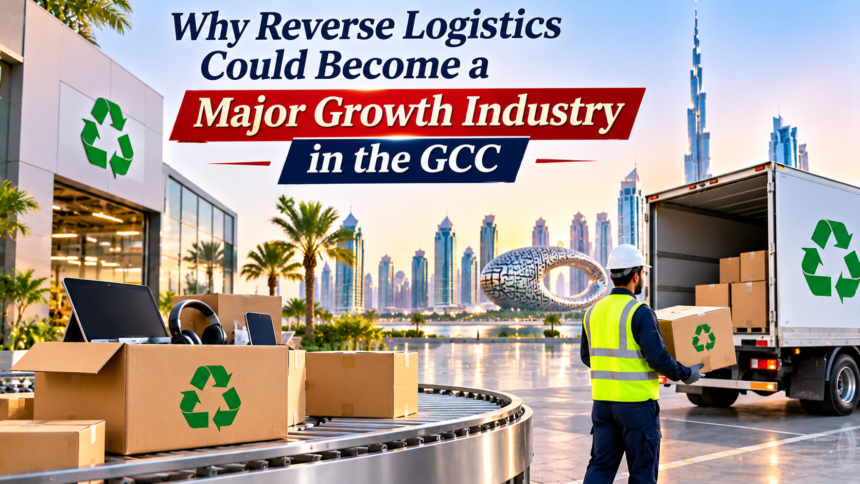
Why E-commerce Returns Are Transforming Gulf Supply Chains
The rapid expansion of e-commerce, international trade, and consumer spending is transforming supply chains across the Gulf Cooperation Council (GCC). While businesses have traditionally focused on delivering products quickly and efficiently, another part of the supply chain is attracting increasing attention: what happens when products need to move in the opposite direction? From online shopping returns and damaged electronics to reusable packaging and refurbished equipment, managing products after their initial sale is becoming an increasingly important business activity.
- 1. What Is Reverse Logistics and Why Does It Matter in the GCC?
- 2. How E-commerce Returns Are Creating New Logistics Opportunities
- 3. Why Circular Economy Policies Could Accelerate Reverse Logistics Growth
- 4. UAE and Saudi Arabia Could Become Major Reverse Logistics Hubs
- 5. How Technology Can Make Reverse Logistics More Efficient
- 6. Challenges That Could Limit Reverse Logistics Expansion in the GCC
- 7. The Future of Reverse Logistics in the GCC: Business Growth and Investment Opportunities
- Conclusion
Reverse logistics in the GCC could emerge as a significant growth industry as retailers, manufacturers, logistics providers, and governments place greater emphasis on operational efficiency and resource recovery. Unlike conventional logistics, which focuses on moving goods from suppliers to customers, reverse logistics manages the return, inspection, repair, resale, recycling, or disposal of products.
This shift is particularly relevant for the United Arab Emirates, Saudi Arabia, Qatar, Kuwait, Bahrain, and Oman, where e-commerce development, infrastructure investment, and sustainability objectives are influencing business strategies.
For companies, reverse logistics represents more than the cost of processing unwanted merchandise. Properly managed return systems can help recover product value, improve customer satisfaction, reduce unnecessary waste, and create new commercial opportunities.
However, building a profitable reverse logistics industry requires specialised infrastructure, reliable technology, transparent return policies, and cooperation between businesses. Understanding these requirements explains why reverse logistics could become an important part of the GCC’s next phase of economic and industrial development.
1. What Is Reverse Logistics and Why Does It Matter in the GCC?
Reverse logistics refers to the movement of products, materials, or packaging from their point of consumption or use back through the supply chain for assessment, recovery, reuse, recycling, or disposal.
Traditional logistics generally focuses on delivering goods from manufacturers, warehouses, or retailers to customers. Reverse logistics manages the processes that occur when those products need to return.
These activities may involve customer returns, product recalls, warranty repairs, reusable shipping materials, unsold inventory, and end-of-life equipment.
Understanding the Reverse Logistics Process
A typical reverse logistics operation begins when a customer, retailer, or business identifies a product that needs to be returned or recovered.
The product is collected, transported to an appropriate facility, inspected, and assigned to a suitable recovery process.
Possible outcomes include returning the product to inventory, repairing it, selling it through a secondary market, recovering usable components, or sending materials to authorised recyclers.
For example, a customer returning a pair of shoes purchased online may trigger several operational activities. The retailer must arrange transportation, verify the return, inspect the shoes, update inventory, and determine whether the item can be resold.
Forward Logistics Versus Reverse Logistics
| Feature | Forward Logistics | Reverse Logistics |
|---|---|---|
| Direction | Supplier to customer | Customer or user back to a business or recovery facility |
| Main Purpose | Deliver products | Recover value or manage returned goods |
| Typical Activities | Warehousing, fulfilment, delivery | Collection, inspection, repair, resale, recycling |
| Product Condition | Usually new or ready for sale | May be unused, damaged, defective, or obsolete |
| Inventory Planning | Relatively predictable product flows | More variable volumes and product conditions |
| Business Objective | Fulfil orders efficiently | Control recovery costs and maximise usable value |
Why the GCC Presents an Opportunity
GCC economies combine large urban consumer markets, international transport connections, expanding digital commerce, and established retail sectors.
These characteristics create potential demand for specialised product-return services.
A business operating across several Gulf countries may need to manage merchandise purchased through different websites, delivered by multiple carriers, and returned through separate channels.
Without coordinated systems, returned products can remain in storage, lose resale value, or generate unnecessary transportation expenses.
Specialised reverse logistics providers could help businesses handle these processes more effectively.
The opportunity is not limited to online retail. Healthcare equipment, automotive components, industrial machinery, electronics, and reusable commercial packaging also require reverse supply chain services.
2. How E-commerce Returns Are Creating New Logistics Opportunities
The expansion of online shopping is an important potential driver of reverse logistics demand.
As consumers purchase more products through digital platforms, retailers must manage situations where customers receive incorrect sizes, defective items, damaged packaging, or products that do not meet expectations.
Even when return rates remain relatively low, a business processing large order volumes can face significant operational challenges.
The Operational Cost of Product Returns
A product return may involve multiple costs beyond transporting an item back to a warehouse.
Retailers may need to pay for collection, customer support, inspection, repackaging, storage, refund processing, and redistribution.
Some returned merchandise cannot be resold at its original price.
For example, a consumer electronics product may require testing before resale. A clothing item may need inspection and repackaging, while a damaged appliance could require repair or component recovery.
These additional processes affect profitability.
Why Returns Influence Customer Trust
A clear and reliable return process can influence purchasing decisions.
Customers may feel more confident ordering products when they understand how refunds, exchanges, and defective-item claims will be handled.
However, offering convenient returns without considering operational costs can create financial pressure for retailers.
Businesses therefore need return policies that balance customer expectations with sustainable operating practices.
The Importance of Collection Networks
Convenient return collection is an important part of reverse logistics.
Possible models include scheduled home collection, retail-store drop-offs, parcel lockers, and authorised collection points.
Each model has advantages and limitations.
| Return Method | Potential Advantage | Main Challenge |
|---|---|---|
| Home Collection | Convenient for customers | Higher collection costs for dispersed returns |
| Store Drop-Off | Uses existing retail facilities | Requires suitable locations and staff |
| Parcel Locker | Flexible collection and consolidated transport | Depends on locker accessibility and capacity |
| Authorised Collection Point | Expands neighbourhood coverage | Requires partner coordination |
| Courier Exchange | Combines replacement delivery with collection | Requires precise scheduling |
Cross-Border E-commerce Returns
Cross-border returns introduce additional challenges because products may need to move through customs systems and international transportation networks.
A customer in Bahrain might purchase an item from a retailer whose main fulfilment centre is located in the UAE.
Returning that item could involve transportation expenses, customs documentation, refund procedures, and decisions about whether the product should be resold locally or shipped back.
Actual requirements depend on the goods, customs arrangements, contractual terms, and applicable national regulations.
Regional reverse logistics providers may create value by consolidating merchandise and helping businesses coordinate these processes.
A strong cross-border return network could become particularly useful for retailers serving customers across multiple GCC markets.
3. Why Circular Economy Policies Could Accelerate Reverse Logistics Growth
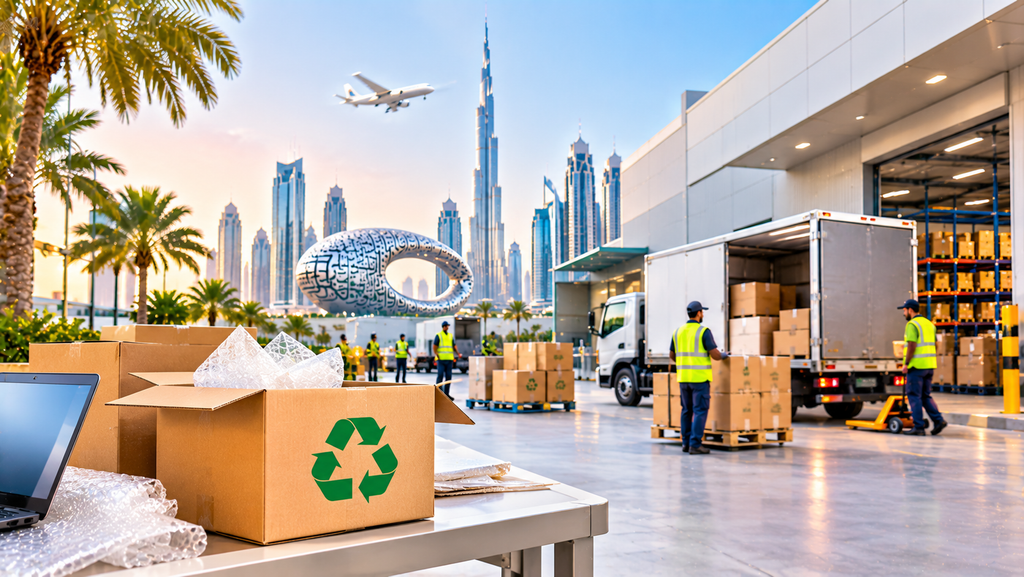
Reverse logistics is closely connected to the concept of a circular economy.
A traditional linear economic model generally involves extracting resources, manufacturing products, selling them, and disposing of them after use.
A circular approach aims to retain value within products and materials for longer through repair, reuse, refurbishment, remanufacturing, and recycling.
Reverse logistics provides the physical and operational systems needed to collect products and move them toward appropriate recovery processes.
The UAE’s Circular Economy Direction
The UAE Circular Economy Policy 2021–2031 establishes a national framework for improving resource efficiency and reducing environmental pressures.
Its priority areas include sustainable manufacturing, transportation, infrastructure, and food production and consumption.
These objectives create a relevant policy environment for businesses developing product recovery and reuse models.
For example, manufacturers may benefit from collecting reusable components, while retailers could reduce waste by directing suitable returned products into resale channels.
However, the policy does not automatically guarantee demand or profitability for every reverse logistics business.
Commercial success depends on collection costs, product value, material quality, market demand, and regulatory compliance.
Reverse Logistics and Waste Reduction
Not every returned product should be recycled immediately.
An unused item that remains suitable for sale may retain more economic value through resale than through material recovery.
Similarly, a repairable appliance may have a longer useful life if a replacement component can be installed.
This creates a hierarchy of potential outcomes that businesses can evaluate.
Product Recovery Options
| Recovery Method | Typical Application | Potential Value |
|---|---|---|
| Direct Resale | Unused merchandise in saleable condition | Preserves product value |
| Repair | Products with correctable defects | Extends useful life |
| Refurbishment | Used electronics and equipment | Creates resale opportunities |
| Remanufacturing | Industrial components and machinery | Recovers functional equipment |
| Component Harvesting | Products beyond economical repair | Recovers usable parts |
| Recycling | Materials unsuitable for higher-value reuse | Recovers raw materials |
| Safe Disposal | Non-recoverable or hazardous waste | Supports responsible waste management |
Environmental Benefits Require Careful Evaluation
Reverse logistics can support waste reduction, but its environmental benefits are not automatic.
Transporting a low-value product over long distances for recovery may create emissions and costs that outweigh some expected benefits.
Similarly, recycling processes can require energy, water, and specialised treatment.
Businesses should consider the environmental impact of collection, transportation, processing, and the final recovery method.
A properly designed system aims to recover value while avoiding unnecessary movements and resource consumption.
This approach can support sustainability objectives without treating every return as environmentally beneficial.
4. UAE and Saudi Arabia Could Become Major Reverse Logistics Hubs
The UAE and Saudi Arabia are important markets for examining reverse logistics opportunities because both countries have invested in transportation infrastructure, international trade connectivity, and logistics development.
However, their market structures and geographical characteristics differ.
The UAE has established international port, airport, warehousing, and free-zone infrastructure supporting regional trade.
Saudi Arabia has a large domestic market and is expanding its logistics network as part of its economic diversification strategy.
The UAE’s Regional Distribution Advantage
The UAE’s logistics ecosystem includes major transport and distribution infrastructure serving domestic and international businesses.
These facilities can support the collection, sorting, consolidation, and redistribution of returned merchandise.
For example, a retailer operating across the Gulf might use a UAE distribution facility to inspect returns and decide whether products should re-enter inventory or move to specialised recovery partners.
Such arrangements would depend on the retailer’s commercial network and applicable customs requirements.
The availability of logistics infrastructure does not remove the need for dedicated reverse logistics capabilities.
Specialised inspection teams, testing equipment, inventory systems, and recovery partnerships remain necessary.
Saudi Arabia’s Logistics Expansion
Saudi Arabia’s National Transport and Logistics Strategy aims to strengthen the Kingdom’s position as a major international logistics hub.
The country’s broader logistics development plans include a network of 59 logistics centres designed to support trade, distribution, and connectivity.
These investments primarily address wider transport and supply chain objectives, but they may also create opportunities for complementary reverse logistics services.
Businesses operating across large geographical areas need efficient ways to consolidate returned merchandise and direct it toward suitable facilities.
A network of regional inspection and recovery centres could help reduce unnecessary transport movements.
Opportunities Across the Wider GCC
Qatar, Kuwait, Bahrain, and Oman also present potential opportunities, although their market sizes and infrastructure needs differ.
Businesses serving these markets may benefit from local collection and inspection points connected to regional recovery facilities.
This model could help retailers avoid transporting every returned item back to an overseas warehouse.
However, cross-border operations must consider customs rules, product restrictions, tax treatment, consumer protection requirements, and waste movement regulations.
Potential Regional Business Models
| Market | Potential Reverse Logistics Opportunity |
|---|---|
| UAE | Regional return consolidation, inspection, refurbishment, and re-export |
| Saudi Arabia | Domestic returns networks, industrial recovery, and specialised warehousing |
| Qatar | Retail collection, electronics recovery, and local inspection services |
| Kuwait | E-commerce returns and consumer product recovery |
| Bahrain | Local returns processing and regional consolidation |
| Oman | Industrial component recovery, refurbishment, and logistics services |
These opportunities are illustrative rather than confirmed market forecasts.
Their commercial viability would require detailed research into local demand, operating costs, regulations, and available service providers.
5. How Technology Can Make Reverse Logistics More Efficient
Technology can help businesses manage the uncertainty associated with returned products.
Unlike standard fulfilment operations, returns may involve merchandise arriving in different conditions, without predictable schedules or consistent packaging.
Digital systems can improve visibility by tracking each item from the return request to its final destination.
Return Management Software
Return management systems can automate parts of the process, including authorisation, collection arrangements, tracking, refunds, and inventory updates.
For example, an online retailer might allow customers to request a return through an application.
The system could generate a collection instruction, update the warehouse, and track the item’s arrival for inspection.
Integration between the retailer, logistics provider, and payment system can reduce delays and administrative duplication.
Artificial Intelligence and Automated Inspection
Artificial intelligence may assist with analysing return reasons, predicting demand for recovery services, and identifying unusual return patterns.
Computer vision systems could also support product inspection in suitable categories.
However, automated assessments must be tested carefully because products may contain defects that are not visible in photographs.
High-value electronics, safety-sensitive equipment, and regulated products may require specialised human inspection.
Data Analytics and Return Prevention
One of the most valuable applications of return data is identifying why customers send products back.
Repeated clothing-size returns could indicate unclear sizing information.
Frequent damage claims might suggest inadequate packaging or handling practices.
A high proportion of incorrect-item returns may reveal problems with warehouse picking procedures.
By addressing the causes of returns, businesses may reduce future reverse logistics costs.
Technology Applications and Benefits
| Technology | Application | Potential Benefit |
|---|---|---|
| Barcode and RFID Tracking | Item identification | Improved inventory visibility |
| Return Management Systems | Authorisation and refund workflows | Faster coordination |
| AI Analytics | Return pattern analysis | Better forecasting and prevention |
| Computer Vision | Product condition assessment | Faster preliminary inspection |
| Route Optimisation | Collection planning | Reduced transport inefficiency |
| Warehouse Automation | Sorting and movement | Improved processing capacity |
Technology investment should be proportionate to operational needs.
A small retailer may benefit more from reliable inventory software and clear procedures than from expensive automated machinery.
For larger operators, integrated systems could become an important source of competitive advantage.
6. Challenges That Could Limit Reverse Logistics Expansion in the GCC
Despite its commercial potential, reverse logistics remains operationally complex.
The condition, location, and recoverable value of returned products can vary considerably.
Businesses must also coordinate transport, inspection, customer communication, inventory decisions, and recovery partners.
High Collection and Processing Costs
Collecting individual parcels from dispersed locations may be expensive.
Transport costs can increase further when returned products must travel between countries or specialised processing facilities.
Businesses need to determine whether an item should be repaired, resold, recycled, or disposed of safely.
In some cases, the cost of recovery may exceed the product’s remaining market value.
This makes accurate cost calculations essential.
Product Condition and Quality Control
Returned products may arrive unused, opened, damaged, incomplete, or unsuitable for resale.
Businesses require clear standards for determining product condition.
Consumer safety is particularly important when dealing with electrical appliances, children’s products, batteries, or other potentially hazardous items.
Products should not be returned to the market without appropriate checks.
Regulatory and Cross-Border Complexity
The GCC comprises six countries with different domestic legal and administrative requirements.
Businesses handling consumer returns must consider applicable consumer protection rules, customs procedures, product standards, and waste regulations.
Certain recovered materials may be classified as waste rather than ordinary merchandise, creating additional obligations.
Hazardous electronic components and batteries require particularly careful handling.
Common Challenges and Possible Responses
| Challenge | Business Impact | Potential Response |
|---|---|---|
| Expensive Collections | Lower recovery margins | Consolidated collection networks |
| Unpredictable Return Volumes | Difficult capacity planning | Forecasting and flexible operations |
| Variable Product Condition | Inconsistent resale value | Standardised inspection systems |
| Cross-Border Procedures | Delays and administrative costs | Local regulatory expertise |
| Limited Recovery Partners | Fewer disposal and resale options | Verified repair and recycling networks |
| Inventory Visibility Gaps | Lost or delayed merchandise | Integrated tracking systems |
| Environmental Costs | Unnecessary transport and processing | Lifecycle-based recovery decisions |
The Need for Trust and Transparency
Customers need clear information about how returns, exchanges, and refunds are handled.
Retailers need reliable reporting from logistics providers.
Recovery partners must accurately document product condition and treatment.
Without trustworthy data, disputes can arise over missing items, damaged products, or delayed refunds.
Effective reverse logistics therefore requires both physical infrastructure and reliable information-sharing processes.
7. The Future of Reverse Logistics in the GCC: Business Growth and Investment Opportunities
Reverse logistics could develop into a specialised industry supporting retail, manufacturing, electronics, automotive services, and circular economy activities.
Its growth will depend on whether businesses can recover enough value from returned products to justify collection and processing costs.
Rather than viewing reverse logistics only as an operational expense, companies may increasingly consider it part of customer service, inventory management, and resource efficiency.
Emerging Business Opportunities
Several commercial models could become relevant across Gulf markets.
Specialised providers may offer return collection and inspection services to online retailers.
Technology companies could develop platforms connecting customers, merchants, couriers, and recovery facilities.
Refurbishment businesses might focus on electronics, appliances, and equipment suitable for secondary markets.
Other providers may specialise in reusable packaging, spare parts recovery, or responsible recycling.
These opportunities require different levels of investment, technical expertise, and regulatory approval.
Skills and Workforce Development
A more developed reverse logistics sector could create demand for professionals in several fields.
Potential roles include:
- Returns operations coordinators.
- Inventory and warehouse specialists.
- Product inspection technicians.
- Electronics repair and refurbishment professionals.
- Logistics software developers.
- Supply chain data analysts.
- Quality control specialists.
- Recycling and environmental compliance professionals.
Vocational training and employer partnerships could help develop the practical competencies required for these occupations.
Technical skills will be especially important where product testing, repair, or hazardous material handling is involved.
How Businesses Can Prepare
Companies considering reverse logistics investments should first understand their existing product-return volumes and costs.
Useful questions include whether returns are concentrated in particular product categories, how long inspection takes, and what proportion of merchandise can be resold.
Businesses should also assess potential partners and compare centralised processing with local recovery models.
Reverse Logistics Readiness Checklist
- Measure return volumes by product category.
- Identify the most common reasons for returns.
- Calculate collection, inspection, storage, and processing costs.
- Establish product condition and quality standards.
- Evaluate local repair, resale, and recycling partners.
- Review consumer protection and customs requirements.
- Use reliable inventory tracking and reporting systems.
- Define measurable recovery and customer service targets.
- Assess environmental impacts of transport and processing.
- Review profitability before expanding operations.
Measuring Commercial Success
Businesses should evaluate reverse logistics performance using indicators that reflect operational efficiency and recovered value.
Important measures may include processing time, cost per return, percentage of products recovered, refund completion time, and customer satisfaction.
A high recycling rate alone does not necessarily indicate successful performance if repairable products are being destroyed unnecessarily.
Similarly, fast refunds may improve customer experience but must be supported by reliable fraud prevention and inventory controls.
The most effective systems balance customer service, cost management, product safety, and responsible resource use.
Conclusion
Reverse logistics in the GCC has the potential to become an increasingly important part of regional supply chains as e-commerce, industrial development, and circular economy initiatives continue to evolve.
The movement of returned merchandise, used equipment, packaging, and recoverable materials creates demand for specialised services extending beyond conventional delivery operations.
The UAE’s established international logistics infrastructure and Saudi Arabia’s transportation development programmes provide relevant foundations for additional recovery and redistribution capabilities.
Other GCC markets may also benefit from local collection networks and coordinated regional processing facilities.
However, reverse logistics growth is not guaranteed. High operating costs, complex regulations, inconsistent product conditions, and limited recovery infrastructure can affect commercial viability.
Businesses that combine accurate data, efficient transportation, quality control, and responsible recovery practices may be better positioned to develop sustainable services.
Ultimately, reverse logistics could help GCC economies move beyond simply distributing products toward managing their entire lifecycle.
If supported by practical investment and effective partnerships, this developing segment could contribute to business innovation, resource efficiency, and new employment opportunities across the region.
Do follow us on Instagram
Read More – Dubai Begins Construction of Two Palm Jumeirah Pedestrian Bridges