Why Pre-Owned Designer Fashion Is Attracting Middle Eastern Shoppers
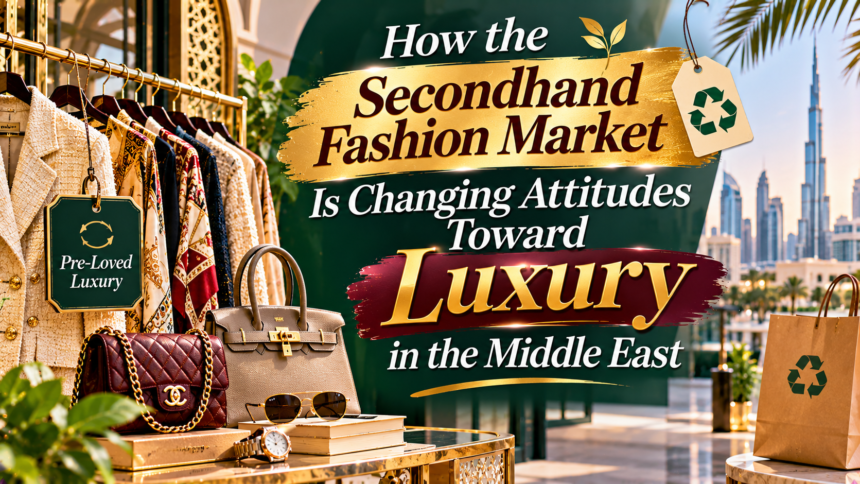
Secondhand Luxury fashion in the Middle East has traditionally been associated with exclusive boutiques, prestigious international brands, limited-edition collections, and the experience of purchasing something new. From Dubai’s luxury shopping destinations to Riyadh’s expanding fashion scene, designer clothing, handbags, watches, and accessories have become important parts of the region’s retail landscape. However, a different approach to luxury consumption is attracting attention as more shoppers explore vintage collections, authenticated designer resale, and previously owned fashion.
- 1. Why Secondhand Luxury Fashion Is Gaining Attention in the Middle East
- 2. How Younger Consumers Are Redefining Luxury Through Vintage Fashion
- 3. How Luxury Resale Platforms Are Changing Shopping Habits in the UAE and Saudi Arabia
- 4. Why Authentication and Product Condition Are Central to Luxury Resale
- 5. How Secondhand Fashion Is Changing the Relationship Between Luxury and Sustainability
- 6. The Economic Opportunities and Challenges of Luxury Resale Businesses
- 7. The Future of Secondhand Luxury Fashion in the Middle East
- Conclusion
Secondhand luxury fashion in the Middle East is challenging the traditional assumption that an expensive fashion purchase must involve a brand-new product. For some consumers, the appeal of luxury is increasingly connected to craftsmanship, rarity, personal style, product history, and the opportunity to purchase desirable pieces at a different price point.
Online resale platforms, specialist boutiques, social media communities, and independent fashion entrepreneurs are helping introduce pre-owned designer products to new audiences. These businesses provide opportunities to buy, sell, and discover items that may no longer be available through conventional retail channels.
The trend is particularly visible in the United Arab Emirates and Saudi Arabia, where growing resale businesses and changing consumer attitudes are attracting attention. However, interest varies between individuals, product categories, and markets. Some shoppers remain hesitant because of concerns about authenticity, hygiene, product condition, or the experience of buying previously owned goods.
Beyond affordability, luxury resale is raising wider questions about sustainability, ownership, exclusivity, and the long-term value of fashion products.
As Middle Eastern retail markets continue evolving, the secondhand fashion industry could influence how consumers define luxury and how businesses develop relationships with customers.
1. Why Secondhand Luxury Fashion Is Gaining Attention in the Middle East
The secondhand fashion market includes previously owned clothing, footwear, handbags, accessories, and other fashion products that are resold rather than purchased directly from their original retail channels.
Within this broader industry, luxury resale focuses on designer and premium products whose desirability may continue beyond their first sale.
This market is not entirely new. Vintage stores, private collectors, consignment businesses, and informal resale networks have existed for decades.
What is changing is the visibility, convenience, and professionalisation of selected resale services.
The Global Growth of Secondhand Fashion
ThredUp’s 2026 Resale Report, prepared with GlobalData, projects that the global secondhand apparel market could reach $393 billion by 2030.
The report anticipates growth approximately twice as fast as the broader apparel retail market.
These estimates concern the worldwide secondhand apparel market, not exclusively luxury fashion and not the Middle East alone.
Nevertheless, they demonstrate why resale has become an important topic for retailers, fashion brands, and investors.
The Changing Meaning of Luxury
Traditional luxury marketing often emphasises exclusivity, heritage, craftsmanship, and the experience of purchasing a new product.
Resale introduces another dimension.
A vintage handbag may be desirable because of its distinctive design, historical significance, limited availability, or connection to an earlier fashion period.
For some consumers, finding a rare piece can feel more personal than purchasing an item widely available in current collections.
This does not mean new luxury products are losing their appeal. Rather, different forms of luxury consumption are beginning to coexist.
Traditional Luxury Shopping Versus Resale
| Feature | New Luxury Retail | Secondhand Luxury Retail |
|---|---|---|
| Product Condition | New, subject to standard retail presentation | Previously owned, with varying condition |
| Availability | Current collections and selected releases | Vintage, discontinued and contemporary items |
| Pricing | Brand retail pricing | Influenced by demand, rarity, condition and seller |
| Customer Experience | Brand-controlled environment | Platform, boutique or private resale experience |
| Authenticity | Direct authorised retail chain | Requires reliable authentication procedures |
| After-Sales Services | Determined by brand and purchase terms | Depends on seller, platform and applicable rights |
| Main Appeal | Newness, brand experience and current design | Discovery, value, rarity and personal style |
Why Regional Differences Matter
Dubai has a well-developed ecosystem of luxury retailers, international shoppers, and specialist resale businesses.
Saudi Arabia is also seeing increased attention toward vintage and pre-owned fashion.
However, these developments should not be treated as evidence that every GCC market is changing at the same pace.
Purchasing habits depend on local retail options, disposable income, cultural expectations, and access to reliable resale services.
2. How Younger Consumers Are Redefining Luxury Through Vintage Fashion
Younger consumers are helping shape new conversations around fashion ownership.
Some shoppers are interested in designer products without feeling that every purchase must come from a current collection.
Others seek clothing or accessories that express individuality rather than following widely promoted trends.
The Appeal of Individual Style
Vintage fashion can offer access to designs that are no longer produced.
A shopper might search for a particular silhouette, discontinued handbag, archival jacket, or distinctive accessory from an earlier collection.
These products may provide a sense of individuality because they are less commonly available through ordinary retail channels.
However, rarity does not automatically make a product valuable.
Commercial desirability depends on condition, authenticity, consumer interest, and market supply.
Secondhand Shopping as a Choice
Historically, buying used clothing has sometimes been associated with financial necessity.
That perception does not fully describe contemporary resale shoppers.
Some consumers purchase pre-owned fashion because of affordability, while others are motivated by collecting, sustainability, or personal taste.
Reporting from Saudi Arabia in November 2026 documents younger consumers seeking discontinued products and authenticated luxury items even when they could afford new alternatives.
It also records continuing reluctance among other consumers who prefer products that have never been owned.
These differing attitudes are important because they show that secondhand fashion is not accepted uniformly.
The Role of Social Media
Social media has made vintage fashion more visible.
Collectors, fashion creators, and resale businesses can display rare finds, explain product histories, and introduce audiences to earlier designer collections.
A particular vintage item may become desirable after appearing in a styling video or influencer post.
However, online attention can also encourage impulsive purchases and speculative pricing.
Consumers should assess the product itself rather than relying exclusively on social media popularity.
Different Motivations for Luxury Resale
| Consumer Motivation | Why It Matters |
|---|---|
| Affordability | Access to selected designer products at lower prices |
| Rarity | Opportunity to find discontinued or unusual pieces |
| Individuality | Less dependence on current collections |
| Collecting | Interest in fashion history and archival design |
| Sustainability | Desire to extend product use |
| Resale Potential | Ability to recover some purchase value later |
These motivations can overlap within the same purchasing decision.
3. How Luxury Resale Platforms Are Changing Shopping Habits in the UAE and Saudi Arabia
Specialist resale businesses are making pre-owned fashion more accessible by introducing organised marketplaces, professional photography, product descriptions, and authentication services.
These services can reduce some of the uncertainty associated with buying from unknown individual sellers.
The UAE’s Developing Resale Ecosystem
The UAE has several businesses specialising in secondhand fashion and luxury products.
Dubai-based The Luxury Closet is an established example of a platform focused on pre-owned designer fashion and accessories.
Independent boutiques and online sellers also operate across different price categories, from high-street clothing to collector-focused luxury pieces.
In July 2025, Vogue Arabia reported increased attention toward curated luxury resale boutiques in the UAE.
The coverage highlighted how some businesses differentiate themselves through authentication, presentation, specialist knowledge, and rare product selection.
The Growth of Vintage Demand
Vogue Arabia also reported that The Luxury Closet had observed an almost 25% increase in vintage sales during the preceding year, with vintage clothing sales growing 15% in 2024.
These figures represent the company’s reported performance rather than overall GCC market growth.
They nevertheless illustrate growing commercial interest in archival fashion within an established resale business.
New Resale Business Models
In September 2026, Dubai-based resale platform The Attire outlined plans to expand into Saudi Arabia.
The platform provides a peer-to-peer marketplace covering high-street and luxury fashion, including support for pickup, delivery, and payments.
Its approach shows how resale businesses can compete through convenience rather than depending exclusively on rare designer goods.
The company also described combining human authentication expertise with AI-assisted screening for potential counterfeit indicators.
Saudi Arabia’s Emerging Resale Culture
Saudi Arabia has seen growing attention toward vintage handbags, pre-owned watches, and curated designer accessories.
Specialist sellers are helping some customers understand the importance of condition, authenticity, rarity, and product history.
However, consumer trust remains a significant factor.
A buyer willing to purchase a previously owned luxury handbag may still prefer new clothing or footwear.
Such differences influence which resale categories may develop more quickly.
Resale Business Models Compared
| Business Model | How It Works | Main Consideration |
|---|---|---|
| Consignment | Seller places item with a business for resale | Commission and payment arrangements |
| Peer-to-Peer Marketplace | Individual sellers list products for buyers | Authentication and dispute resolution |
| Curated Boutique | Business selects and sells particular products | Inventory expertise and pricing |
| Direct Purchase and Resale | Business purchases items before reselling | Inventory and valuation risk |
| Brand-Led Resale | Luxury brand manages or authorises resale | Brand control and authentication |
| Trade-In Programme | Customers exchange used items for value | Condition assessment and valuation |
The appropriate model depends on product category, trust requirements, operating costs, and customer expectations.
4. Why Authentication and Product Condition Are Central to Luxury Resale
One of the biggest differences between buying new luxury products and purchasing them through resale channels is the need to verify authenticity.
Counterfeit designer products can create significant financial and reputational risks.
Buyers must also assess whether a product’s condition matches its description.
Understanding Authentication
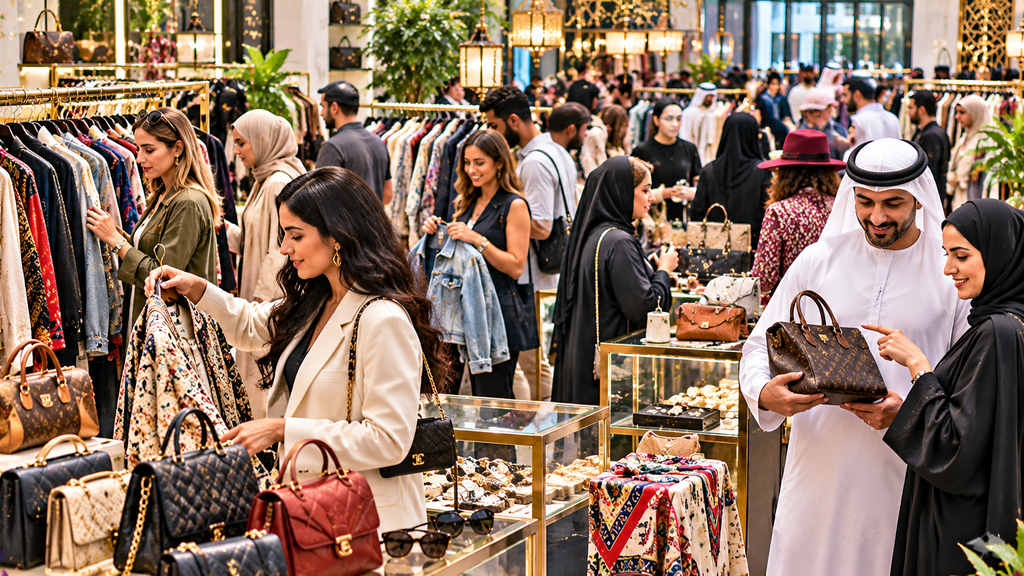
Luxury authentication involves examining a product to determine whether it is consistent with an authentic item from the claimed brand.
Relevant characteristics may include materials, construction, markings, hardware, design details, and other product-specific features.
However, methods differ between brands and product categories.
Packaging, receipts, serial numbers, or digital identifiers should not be treated as conclusive proof individually.
Counterfeiters may imitate these elements.
The Role of Professional Expertise
Specialist authentication services can help identify inconsistencies and provide informed assessments.
However, buyers should understand whether a seller offers an authenticity opinion, a contractual guarantee, or a separate certificate.
These are not necessarily equivalent.
Customers should also review what happens if a product is subsequently found to be counterfeit.
Artificial Intelligence in Authentication
Some resale platforms use AI-assisted image analysis to identify possible inconsistencies in listed products.
This technology may help prioritise items for closer review.
However, photographs do not necessarily reveal every relevant material, construction, or manufacturing detail.
AI screening should therefore complement appropriate product examination rather than automatically replace it.
Product Condition and Pricing
Two authentic examples of the same designer handbag can have different resale values because of condition.
Visible wear, alterations, missing components, damage, and restoration history can influence desirability.
Sellers should provide accurate photographs and clear descriptions of relevant defects.
Luxury Resale Buying Checklist
- Check the seller’s reputation and business information.
- Review the authentication process and its limitations.
- Request clear photographs of the actual item.
- Examine condition descriptions and disclosed repairs.
- Compare prices for genuinely comparable products.
- Understand the return and refund conditions.
- Use a payment method offering appropriate protections.
- Keep transaction records and correspondence.
- Confirm shipping charges and any applicable import costs.
- Be cautious of unusually low prices or unsupported claims.
Consumer Protection Considerations
The UAE’s consumer protection framework provides rights involving accurate product information, safety, and remedies for defective goods within its scope.
The UAE also has anti-commercial-fraud legislation addressing counterfeit products.
However, protections may vary depending on the seller’s location, platform, transaction structure, and applicable jurisdiction.
Buyers should not assume that every international private resale transaction offers the same protections as a purchase from a licensed local retailer.
5. How Secondhand Fashion Is Changing the Relationship Between Luxury and Sustainability
The environmental impact of fashion production is contributing to interest in circular business models.
These approaches attempt to keep products and materials in use for longer instead of depending entirely on producing new goods.
Secondhand fashion can form part of this process.
Extending the Useful Life of Clothing
Luxury products are sometimes designed using durable materials and craftsmanship intended to support long-term use.
Resale can allow suitable products to remain useful after their original owners no longer need them.
A handbag, coat, or accessory may pass between several owners rather than remaining unused or being discarded.
However, resale does not automatically eliminate the environmental effects associated with the original product.
The Potential Environmental Benefits
The European Environment Agency identifies reuse, longer product lifespans, and circular business models as approaches that can help reduce environmental pressures from textiles.
These pressures include raw material consumption, greenhouse gas emissions, and water use.
However, the environmental outcome of a secondhand purchase depends partly on whether it replaces the purchase of a new item.
If resale simply encourages consumers to buy more products, the overall benefit may be smaller.
The Environmental Cost of Resale Operations
Secondhand fashion businesses may require transportation, packaging, storage, cleaning, repairs, and international shipping.
These activities consume resources.
For example, purchasing a pre-owned handbag from another continent may involve more transportation than buying a locally available item.
This does not automatically make the resale purchase environmentally worse, but it demonstrates why sustainability claims require appropriate assessment.
Circular Fashion Models Compared
| Model | Circular Opportunity | Important Limitation |
|---|---|---|
| Resale | Extends product use | May stimulate additional purchasing |
| Repair | Preserves existing products | Depends on cost and repairability |
| Rental | Increases use of selected items | Cleaning and transport requirements |
| Refurbishment | Restores worn products | May require materials and specialised labour |
| Trade-In | Encourages product collection | Does not guarantee reuse |
| Recycling | Recovers suitable materials | Often technically difficult for mixed textiles |
Moving Beyond Sustainability Marketing
Businesses should avoid describing every pre-owned product as automatically sustainable.
More credible communication explains the specific action being taken, such as extending product use, providing repairs, or diverting suitable items from disposal.
The strongest claims are supported by transparent information and appropriate evidence.
6. The Economic Opportunities and Challenges of Luxury Resale Businesses
The development of luxury resale could create opportunities for entrepreneurs, retailers, logistics providers, and fashion specialists.
Unlike conventional retail, resale businesses acquire inventory from existing owners rather than relying entirely on manufacturers’ current collections.
This creates different operational and financial requirements.
New Revenue Opportunities
Resale businesses may earn income through product sales, consignment commissions, authentication, restoration, or premium services.
Some may also offer sourcing assistance for customers seeking particular discontinued pieces.
These activities can provide opportunities for specialised fashion expertise.
However, the availability of desirable inventory is often unpredictable.
The Importance of Inventory Supply
A resale business cannot consistently sell desirable handbags or clothing without obtaining suitable products.
Sellers must be willing to part with items, while buyers must consider the available inventory attractive.
A platform may have substantial buyer interest but insufficient quality stock.
This creates challenges involving sourcing, pricing, and maintaining a useful product assortment.
Pricing Difficulties
The resale value of luxury fashion depends on numerous factors.
These can include authenticity, condition, brand demand, model, size, rarity, and current market interest.
Prices can change as trends evolve.
A product purchased at a high retail price may lose substantial value, while some sought-after pieces may retain value or command premiums.
However, luxury fashion should not generally be treated as a guaranteed investment.
Business Challenges and Possible Responses
| Challenge | Commercial Risk | Possible Response |
|---|---|---|
| Counterfeit Products | Financial and reputational damage | Appropriate authentication controls |
| Unpredictable Supply | Inventory shortages | Multiple sourcing channels |
| Product Condition | Customer disputes | Detailed inspection and disclosure |
| Price Volatility | Reduced margins | Current comparable-market analysis |
| Returns and Logistics | Higher operating costs | Clear processes and reliable partners |
| Consumer Hesitation | Limited conversion | Education and transparent policies |
| Cross-Border Sales | Customs and legal complications | Compliance planning |
The Role of Luxury Brands
Luxury brands may increasingly consider how their products circulate after the initial sale.
Some may explore authorised resale, repair, trade-in programmes, or partnerships with specialist businesses.
EY’s 2025 Luxury Client Index identified notable interest in brand-certified pre-owned luxury among UAE respondents.
This suggests an opportunity for businesses able to combine the trust associated with established luxury brands with the flexibility of resale.
However, interest in a survey does not guarantee future purchases.
7. The Future of Secondhand Luxury Fashion in the Middle East
The future of the secondhand luxury market will likely depend on the relationship between customer trust, product quality, digital convenience, and changing ideas about fashion ownership.
Resale could become a more established part of the Middle Eastern luxury ecosystem, particularly in markets where specialist businesses and authentication services continue developing.
However, it is unlikely to replace conventional luxury retail entirely.
A More Diverse Definition of Luxury
Luxury may increasingly involve several different experiences.
Some customers will continue valuing newly released products and traditional boutique service.
Others may prioritise archival design, craftsmanship, rarity, or the ability to discover a piece unavailable through current collections.
These preferences can coexist within the same consumer.
A person may purchase a new designer item for one occasion and choose vintage fashion for another.
The Potential of Brand-Certified Resale
Luxury brands could create additional services involving authenticated resale and repairs.
Brand participation may help address concerns about authenticity and condition.
However, businesses must evaluate the costs of inspection, logistics, product recovery, and customer support.
Digital Discovery and Personalisation
AI-assisted search, personalised recommendations, and improved digital catalogues may make it easier to discover relevant secondhand products.
For example, a customer could search by designer, period, colour, size, or product condition.
However, recommendation systems should be designed responsibly and should not exaggerate product rarity or resale value.
A Practical Checklist for Luxury Resale Businesses
- Identify a clear customer segment and product category.
- Establish reliable inventory sourcing arrangements.
- Develop documented authentication procedures.
- Apply consistent product-condition grading.
- Use accurate photographs and descriptions.
- Define transparent commissions, fees, and payment terms.
- Provide clear return and dispute processes.
- Review applicable consumer protection and trade requirements.
- Offer secure transactions and protect customer information.
- Measure customer satisfaction, inventory turnover, and financial performance.
What Should Retailers Measure?
Useful performance indicators include repeat purchase rates, average time to sell, authentication disputes, return rates, product margins, and customer acquisition costs.
Businesses should also monitor the quality and quantity of incoming inventory.
A platform attracting many visitors may still struggle commercially if products remain unsold for extended periods.
Similarly, growing sales revenue does not automatically mean improving profitability.
Opportunities Beyond Dubai and Riyadh
The UAE and Saudi Arabia provide visible examples of luxury resale development.
Other Middle Eastern markets may offer opportunities for specialist boutiques, vintage sourcing, designer repair services, and online marketplaces.
However, local demand must be researched rather than assumed.
Consumer preferences, purchasing power, logistics, regulations, and the availability of authentic inventory will influence commercial outcomes.
Conclusion
The secondhand fashion market is beginning to change how some Middle Eastern consumers understand luxury, ownership, and personal style.
Previously owned designer goods are increasingly being discussed not only as lower-priced alternatives but also as desirable products associated with rarity, craftsmanship, history, and individual expression.
The development of specialist resale platforms and curated boutiques in the UAE and Saudi Arabia demonstrates the commercial potential of this shift.
At the same time, consumer hesitation remains significant, particularly around authenticity, hygiene, condition, and trust.
For retailers, successful resale requires more than attractive designer labels. Reliable authentication, transparent pricing, dependable service, and clear product information are essential.
The industry’s relationship with sustainability also requires care. Extending product life may reduce certain environmental pressures, but the overall benefits depend on purchasing behaviour and the resources used in resale operations.
As luxury retail continues evolving, new products and secondhand fashion are likely to remain important parts of the market.
The growing interest in vintage and pre-owned goods suggests that luxury can be defined not only by owning something new, but also by discovering something distinctive, well-made, and personally meaningful.
For Middle Eastern fashion businesses, understanding this change could create opportunities to serve consumers whose expectations of luxury are becoming more varied, informed, and individual.
Do follow us on Instagram
Read More – Why Single-Person Households Could Reshape Housing Demand in Gulf Cities