


Building Powerful Leadership Through Strategic Stillness
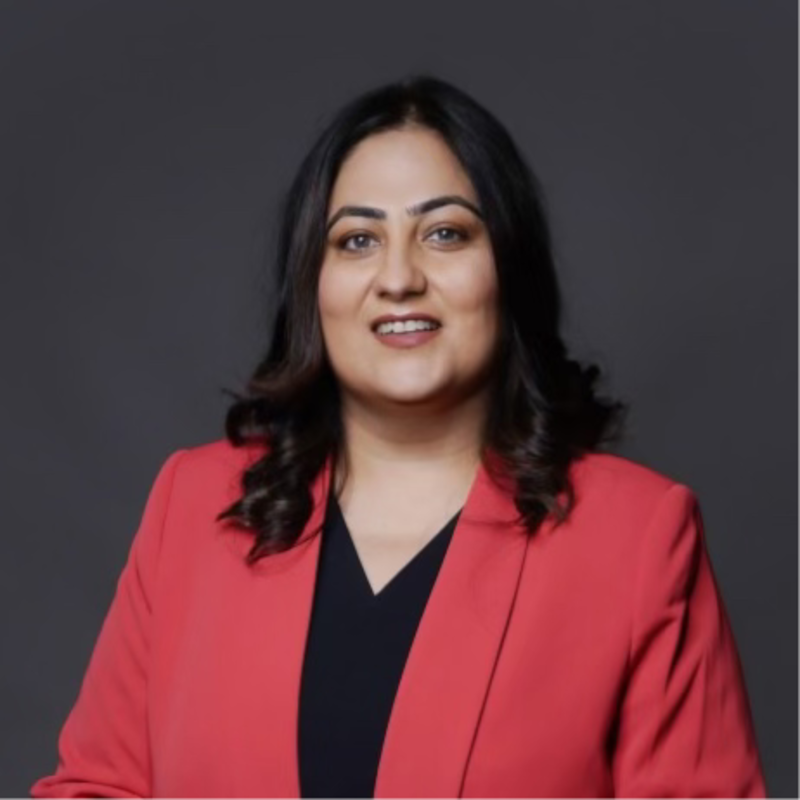
Leadership is often associated with quick answers, constant activity, and the ability to make decisions under pressure. Sukriti Sachdev has spent much of her professional journey discovering another side of leadership. Sometimes the strongest decision begins not with immediate action, but with enough space to understand what is really happening.
- A Journey That Started With Architecture
- Learning to Enter Rooms Without Every Answer
- Building Ekaga Around International Growth
- Why Moving Faster Is Not Always Better
- Strategic Stillness Becomes a Leadership Philosophy
- Growth Through Education and New Experiences
- Finding a More Visible Leadership Voice
- The Next Chapter for Sukriti Sachdev
Today, Sukriti is the Co-Founder and Managing Partner of Ekaga, working with businesses exploring international expansion across the GCC and emerging markets. Her career spans architecture, urban planning, entrepreneurship, market entry, cross border business, and leadership. More recently, she has brought these experiences together through Strategic Stillness, the leadership philosophy that is becoming an important part of her current work and public conversations.
A Journey That Started With Architecture
Long before Sukriti was working with companies expanding internationally, her professional foundation was built around architecture and urban systems.
Architecture taught her to think about structure, relationships, systems, and the way individual elements affect a larger environment. Her education in planning added another perspective, encouraging her to look beyond individual buildings and understand how complex systems work together.
Those lessons eventually became surprisingly useful in business.
When Sukriti moved into entrepreneurship, she entered a world that initially felt unfamiliar. She has openly described herself as a novice when she first stepped into business. She did not come from a traditional business background, and many of the conversations around technology, telecom, markets, and commercial growth required her to learn from the beginning.
Instead of allowing that discomfort to stop her, she kept asking questions.
Learning to Enter Rooms Without Every Answer
One of the strongest lessons from Sukriti Sachdev’s journey is that confidence did not come from knowing everything before she started.
It came from learning while moving.
Entering entrepreneurship meant sitting in rooms where other people understood industries and terminology better than she did. Rather than pretending otherwise, Sukriti researched, listened, asked questions, and gradually built her understanding.
That experience changed her view of leadership.
A leader, she learned, does not always need to be the person with the fastest answer. Sometimes leadership means being comfortable enough to admit there is more to understand.
Over time, curiosity became an advantage rather than something to hide. Every unfamiliar conversation became an opportunity to expand her thinking.
Building Ekaga Around International Growth
At Ekaga, Sukriti’s work now centres on helping businesses enter and grow across new markets.
International expansion can appear exciting from a distance. New countries bring new customers, partnerships, and possibilities. But entering another market also introduces unfamiliar regulations, business cultures, expectations, and relationships.
Sukriti’s work involves helping companies navigate those complexities through market entry strategy, local partnerships, regulatory understanding, and cross border execution.
Through Ekaga, she works across markets including the GCC and other emerging economies. The experience has strengthened one belief that has become central to her leadership philosophy.
Business is ultimately built through relationships.
A company may have a strong product and ambitious expansion plans, but long term growth still depends on trust. People choose partners they believe in, and every market has its own way of developing that trust.
Why Moving Faster Is Not Always Better
Years of entrepreneurship also exposed Sukriti to another reality of modern business.
Everything feels urgent.
Messages need replies. Teams need decisions. Opportunities appear unexpectedly. Clients expect answers. Meetings fill calendars, and international business adds different time zones, flights, negotiations, and constant communication.
For a long time, Sukriti associated responsiveness with strong leadership.
Experience gradually changed that belief.
She began noticing that being responsive and being reactive were not the same thing. Some situations genuinely require immediate action. Others simply feel urgent because they are uncomfortable or demanding attention.
That difference became one of the foundations of Strategic Stillness.
Strategic Stillness Becomes a Leadership Philosophy
Strategic Stillness is not about doing nothing.
For Sukriti, it means creating a small space between what happens and how a leader responds.
Someone may challenge an idea. A negotiation may change unexpectedly. A disappointing message may arrive. In those moments, the first instinct can be to defend, explain, correct, or react immediately.
Strategic Stillness encourages a different question.
Does this situation need an immediate response, or does it need a clearer one?
That pause gives a leader time to separate facts from assumptions, urgency from pressure, and emotion from the decision that actually needs to be made.
Sukriti has increasingly made this philosophy part of her writing, leadership discussions, and international business work.
Growth Through Education and New Experiences
Despite two decades of professional experience, Sukriti continues to position learning as an active part of her journey.
In 2026, she completed the High Performance People Skills for Leaders programme at London Business School. The experience added another layer to the leadership thinking she had already been developing through entrepreneurship and international business.
For someone whose career began in architecture, returning to structured executive learning also reflects the unconventional way her professional life has developed.
The industries changed, but the habit of learning remained.
Her journey has also received recognition along the way. In 2020, Sukriti was named an India 5000 Women Achiever Award winner, recognising her entrepreneurial work and approach to cross border business.
Finding a More Visible Leadership Voice
Another important part of Sukriti’s current chapter is visibility.
Her work is no longer limited to business expansion behind meeting room doors. She increasingly writes, speaks, shares leadership observations, and participates in conversations around entrepreneurship, international markets, women in business, and intentional decision making.
Strategic Stillness has given those conversations a clearer identity.
Sukriti also speaks about the importance of leaving room for other voices. A leader who answers every question immediately can unintentionally dominate a room. A few extra seconds of silence may give another person enough space to contribute a better idea.
This is where her philosophy becomes practical rather than theoretical.
Stillness becomes a way to listen.
The Next Chapter for Sukriti Sachdev
Sukriti Sachdev’s journey cannot be described through one industry.
Architecture taught her systems thinking. Entrepreneurship taught her how to learn through uncertainty. International expansion taught her the importance of relationships and cultural understanding. Leadership taught her that speed and clarity are not always the same thing.
Today, those experiences are coming together through Ekaga and Strategic Stillness.
Her story is particularly relevant in a world where professionals are constantly encouraged to move faster, respond quicker, and remain visible at all times.
Sukriti offers another possibility.
Progress does not always require more noise. Leadership does not always require an immediate answer. Experience does not mean learning has finished.
Sometimes the next important step begins with enough confidence to pause, observe what others are missing, and then move with purpose.
For Sukriti Sachdev, that pause is not the opposite of progress. It has become part of how progress is made.
Do follow Sukriti Sachdev on Linkedin
Read More – 7 Reasons Riyadh Is Becoming a Powerful Global City