




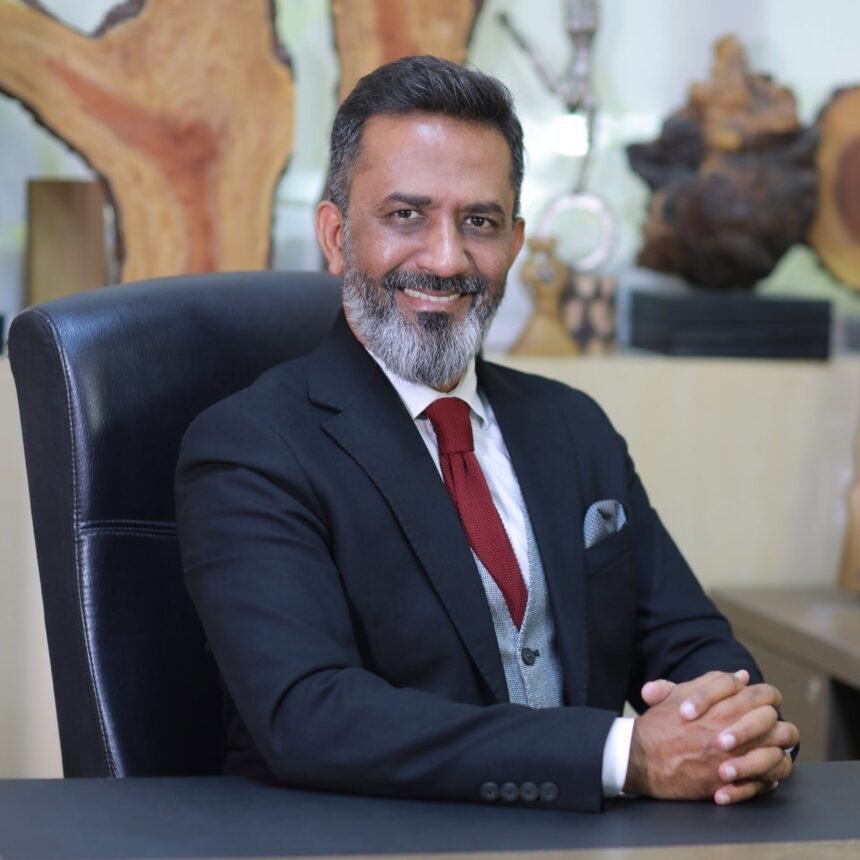
For Murtaza Asgar Balasinourwala, the greatest waste is not always material. Sometimes it is an opportunity that was visible, but not given enough thought, care or courage.
His relationship with wood and joinery began with an appreciation for material, craftsmanship and the possibilities hidden inside things that others might overlook. Over time, however, that thinking has grown into something much broader.
Today, his work is as much about people, manufacturing, education and responsibility as it is about wood.
Through his work in joinery and furniture manufacturing, Murtaza has developed a philosophy around making things properly, developing the people who make them and thinking carefully about the resources, processes and opportunities that can easily be wasted.
That evolution has changed the question at the centre of his work.
It is no longer only about what a material can become.
It is about what a person, process, business or opportunity can become when it is given the right attention.
From Materials To A Bigger Idea
Wood remains an important part of Murtaza’s story.
Earlier in his journey, his work with discarded and reclaimed timber, including Damas trees, helped shape his understanding of sustainability. He was fascinated by the possibility of taking something that had reached the end of its obvious purpose and finding another use for it.
But years of experience have changed the way he looks at that idea.
Today, he sees waste in much broader terms.
A badly planned manufacturing process can waste material. Rework can waste time and energy. Poor communication can lead to unnecessary production. And failing to develop a skilled worker can mean wasting human potential.
For Murtaza, sustainability therefore cannot exist only as a conversation about discarded materials.
It has to be part of the everyday decisions businesses make.
How efficiently are resources being used?
How well are products being made?
Are people being given opportunities to develop?
Can processes be improved?
Is there a better way of doing something?
These questions now sit naturally alongside his work in manufacturing.
The Responsibility Of Making
Murtaza does not see a project simply as an order that needs to be completed.
Every product represents an opportunity to make something useful, considered and lasting.
For him, quality begins much earlier than the final finish. It starts with understanding the design, questioning decisions, selecting the right materials and thinking about how something will actually function once it leaves the factory.
If he believes something could work better, he feels responsible for raising the concern.
Manufacturing, in his view, should not mean blindly reproducing a design simply because it has been approved on paper. Designers, consultants, manufacturers and craftsmen all bring different knowledge to a project, and the manufacturer has a responsibility to contribute that knowledge.
This is where his attention to detail becomes more than an obsession with finishing.
It is about observing, questioning and thinking ahead.
Once material is cut, decisions become physical. Once a product is installed, people live with it.
That is why Murtaza believes commercial value should not be the only measure of good work.
A well-made product should carry the thought, skill and care of the people who created it.
Where Craftsmanship Meets Technology
Murtaza’s work in joinery and furniture manufacturing has also given him a close view of the changing relationship between craftsmanship and technology.
He does not see them as competing ideas.
A skilled craftsman understands material, proportion, detail and behaviour through years of experience. Machinery, technology and modern production systems can bring precision, consistency and efficiency.
The real opportunity is bringing these strengths together.
For Murtaza, technology should ideally make skilled people more capable and more valuable, rather than simply making them easier to replace.
This thinking influences the way he looks at manufacturing.
He pays attention not only to the final product but also to what happens before it is created: planning, production flow, communication, movement, bottlenecks, quality and rework.
The aim is not simply to produce more.
It is to create a manufacturing culture where people, systems and technology work together intelligently.
Through Build Mode Industries FZ LLC, these ideas come together in a practical environment where craftsmanship and industrial discipline can support one another.
People Are Part Of The Sustainability Conversation
Perhaps the biggest evolution in Murtaza’s thinking is the importance he places on people.
A manufacturing business can be measured by its machines, capacity and production numbers, but behind all of those things are individuals.
For many skilled workers, especially those in blue-collar professions, the workplace is much more than somewhere they earn a salary. It is where they develop skills, support their families, build confidence and, potentially, create a better future for themselves.
Murtaza believes businesses should play a role in that development.
He is particularly interested in creating pathways through which skilled workers can increase their professional value and earning potential.
A carpenter can become a specialist.
A skilled worker can grow into a supervisor.
A machine operator can learn about production, quality or team coordination.
Progress does not necessarily mean moving away from skilled work. There is dignity in becoming exceptionally good at a craft.
But blue-collar work should not automatically mean limited career progression or limited aspiration.
For Murtaza, uplifting the workforce means helping people increase their skills, professional value, earning potential and belief in what is possible for them.
That is another form of sustainability: making sure human potential is not wasted.
Bringing Industry Into Education
This belief in developing people extends beyond the workplace.
Murtaza serves as an Industry Expert on the Industry Advisory Board at Manipal Academy of Higher Education, Dubai Campus, where he contributes practical industry perspective to conversations around education and professional development.
For him, the connection between education and industry is important because the two environments teach different things.
As he puts it:
“A classroom can teach principles. Industry teaches consequences.”
Students eventually have to work with real people, solve problems without textbook answers, communicate when things go wrong and understand how decisions affect time, cost, quality and results.
That is why Murtaza has also become involved in hands-on training with students at Manipal.
The purpose is not simply to show students how something is manufactured. It is to help them develop observation, judgement, curiosity and problem-solving skills by experiencing what happens when materials, people, tools and decisions come together in the real world.
He also sees the relationship as two-way.
Young people bring new questions, new ideas and different perspectives on technology, work and sustainability.
The strongest relationship between education and industry, he believes, is one where both continue learning.
Mentoring Through Experience
Murtaza’s involvement with people does not stop with students.
Over time, professionals, entrepreneurs and younger individuals have increasingly approached him for guidance on careers, businesses and difficult decisions.
His approach to mentoring is practical rather than motivational.
He prefers to listen, ask questions and help people understand their own situation more clearly.
What are you actually trying to achieve?
What are you good at?
What are you avoiding?
What will this decision mean a few years from now?
For Murtaza, mentoring is less about giving someone a ready-made answer and more about helping them ask better questions.
His own experiences have taught him that careers and businesses rarely move in a perfectly straight line. Mistakes, pressure and difficult decisions can all become sources of learning.
A lesson learned painfully by one person may help another make a better decision.
That is why he believes experience becomes more valuable when it is shared.
Building A Stronger Industry
Murtaza is also increasingly interested in the joinery and furniture manufacturing sector as an ecosystem rather than simply a collection of individual businesses.
Manufacturers often face similar challenges: skilled manpower, production pressure, material costs, machinery investment, productivity, quality, waste and rework.
Yet many businesses attempt to solve these problems independently.
Murtaza believes there is room for competition and community to exist at the same time.
Manufacturers can understand each other’s capabilities. Business owners can exchange experiences. Educational institutions can better understand the skills industry needs. Suppliers can better understand manufacturing challenges. Experienced professionals can help younger businesses avoid mistakes that have already been made before.
Connecting people does not mean weakening competition.
It means creating a stronger environment in which businesses can compete, learn and grow.
An industry becomes more capable when useful knowledge circulates.
A Broader Definition Of Impact
Today, Murtaza’s understanding of impact has become much broader than commercial success.
A healthy business needs to create economic value, but it can also create environmental, social, educational and human value.
It can reduce waste through better processes.
It can develop people through training.
It can help a worker increase their skills and earning potential.
It can give students practical exposure before they enter professional life.
It can help an entrepreneur make a better decision.
It can connect two businesses that are able to support one another.
Much of this impact is quiet.
It may never appear as a headline or a major achievement.
But when these small decisions are repeated over time, they can change the way a business operates and the way people experience an industry.
That is where Murtaza’s ideas about sustainability, manufacturing and people come together.
Still Building, Still Learning
Despite years of experience, Murtaza does not see himself as having reached a final destination.
There are still better manufacturing processes to discover, better ways to develop people, better connections to build between education and industry, and better ways to use resources responsibly.
That curiosity remains one of the strongest parts of his character.
Wood may have been one of the materials that first taught him to look for possibility, but today that same instinct applies to much more.
A product can be improved.
A process can be redesigned.
A worker can develop.
A student can gain confidence.
A professional can find a new direction.
A business can become more responsible.
And an industry can become more connected.
For Murtaza Asgar Balasinourwala, making something well is therefore only the beginning.
The greater responsibility lies in understanding what that act of making can create for people, businesses and the wider industry.
His journey with wood continues, but the story has grown beyond the material.
Today, it is a story about responsible making, skilled people, practical education, thoughtful manufacturing and the belief that almost every resource—whether material or human—has more potential when it is given the right attention.
Follow Murtaza Asgar Balasinourwala on Instagram
Read More – Complete GCC Visa Guide: 6 Essential Routes for 2026