Why Dubai International Airport Became One of the World’s Busiest Airports
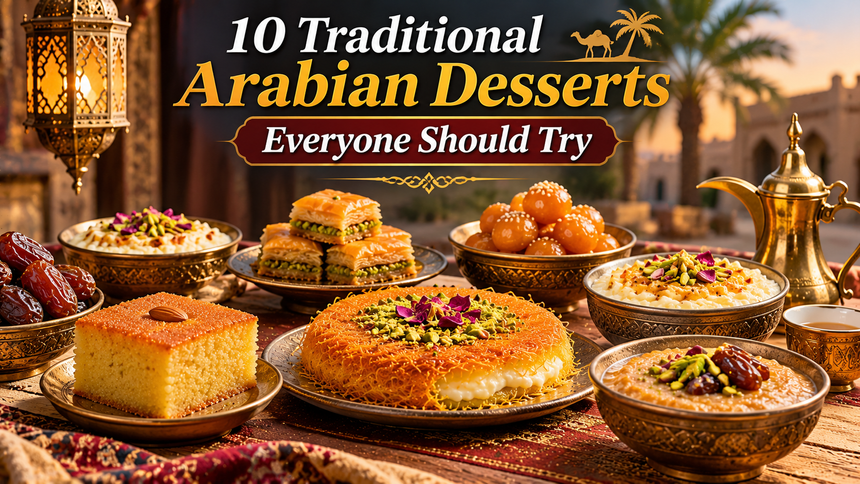
Food has always been an important part of Arabian hospitality. Across the Arabian Peninsula, families welcome guests with Arabic coffee, dates and homemade sweets that reflect generations of culinary tradition. From golden fried dumplings to rich puddings and delicate pastries, Arabian desserts offer a fascinating combination of flavours, textures and cultural influences.
- 1. Luqaimat: Golden Dumplings With Date Syrup
- 2. Omani Halwa: A Rich Sweet That Represents Traditional Hospitality
- 3. Kunafa and Maamoul: Two Famous Arabian Pastry Traditions
- 4. Khabeesa and Aseeda: Warm Desserts Made With Simple Ingredients
- 5. Khanfaroosh and Sago: Two Distinctive Gulf Sweets
- 6. Kleija and Maqshush: Saudi Arabia’s Rich Regional Dessert Heritage
- 7. Why Traditional Arabian Desserts Are Important to Gulf Culture
- 8. How to Explore Traditional Arabian Sweets Across the Gulf
Many of these recipes use simple ingredients such as flour, dates, honey, milk, ghee and nuts. However, their distinctive taste often comes from aromatic additions including cardamom, saffron and rose water.
These ingredients reflect the history of the Arabian Peninsula, where desert agriculture, coastal trading communities and international commerce helped shape local food traditions.
Today, traditional Arabian desserts remain popular throughout Saudi Arabia, the United Arab Emirates, Oman, Qatar, Bahrain and Kuwait. Some are prepared during Ramadan and Eid, while others appear at weddings, family gatherings and ordinary social visits.
Each country has its own culinary identity, but many sweet dishes are shared across the region. Recipes may differ between families, with variations in ingredients, preparation methods and presentation.
A dessert made with dates in Saudi Arabia may have a close relative in the UAE, while sweets enjoyed in Oman may contain flavours introduced through historical trading connections with India, Persia and East Africa.
The region’s food traditions are also more diverse than the familiar combination of dates and Arabic coffee might suggest.
The National Museum of Qatar documents sweets such as luqaimat, sago, assidah and khanfaroosh as part of traditional Qatari celebrations. Meanwhile, Dubai’s official tourism resources highlight the continued importance of Emirati sweets in local hospitality.
For visitors interested in exploring Arabian culture through food, these dishes provide a delicious starting point.
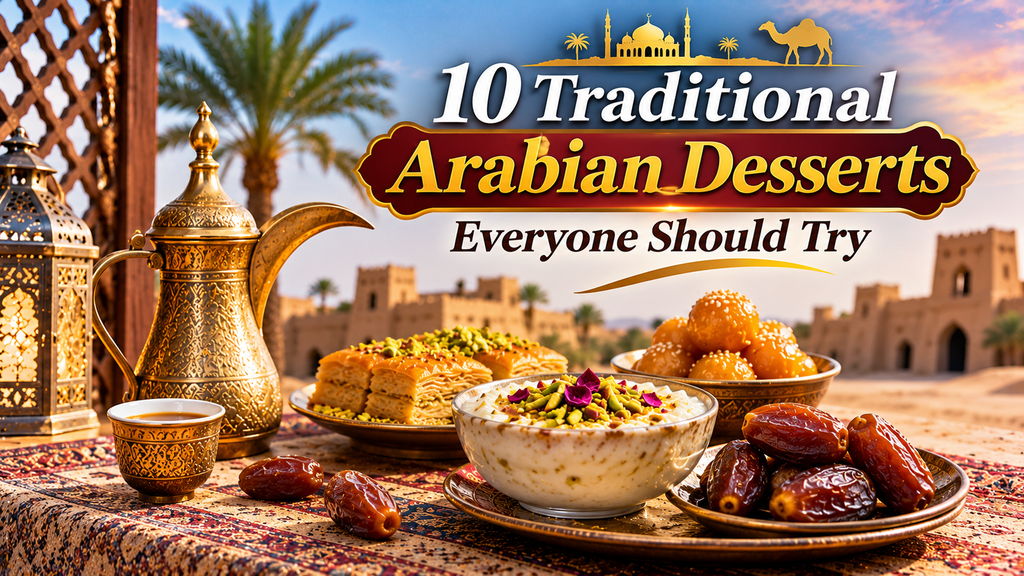
Here are 10 traditional Arabian desserts everyone should try, including their main ingredients, cultural associations and the flavours that make them special.
1. Luqaimat: Golden Dumplings With Date Syrup
DESSERT 1 OF 10 | UAE AND WIDER GULF
Luqaimat is one of the most recognisable sweets in the Arabian Gulf.
These small, golden dumplings are known for their crispy exterior and soft, airy centre. They are usually served warm and covered with date syrup, although some recipes use honey or other sweet toppings.
The name comes from an Arabic word associated with small bites, reflecting the dessert’s bite-sized appearance.
Luqaimat is particularly popular in the UAE, but similar preparations are found across several Gulf countries.
The dough is commonly prepared using flour, water, yeast and other ingredients that vary according to family recipes. Cardamom and saffron may be added to provide a distinctive aroma.
After the dough rises, small portions are carefully placed into hot oil.
As they cook, the pieces become golden and develop a lightly crisp surface.
They are then removed, drained and served with syrup.
Some versions include sesame seeds, adding a subtle nutty taste.
The contrast between the slightly crunchy outside and soft interior is one of the dessert’s main attractions.
Luqaimat is especially associated with Ramadan gatherings and festive occasions.
Families may prepare it for iftar, when people come together after the day’s fast.
However, it is also enjoyed throughout the year in traditional restaurants, food festivals and home kitchens.
The Michelin Guide describes luqaimat as an iconic Emirati sweet and highlights its importance within traditional culinary culture.
Its popularity also reflects how a simple fried dough recipe can become closely associated with hospitality and cultural identity.
What makes luqaimat worth trying? Its freshly fried texture, aromatic dough and sweet date syrup create a balance that is both comforting and distinctive.
For a first introduction to Gulf sweets, this is one of the most approachable choices.
2. Omani Halwa: A Rich Sweet That Represents Traditional Hospitality
DESSERT 2 OF 10 | OMAN
Omani halwa is one of the Sultanate’s most famous traditional foods.
Unlike some crumbly varieties of halwa found elsewhere, this Omani speciality has a smooth, thick and slightly gelatinous texture.
It is usually prepared using ingredients such as sugar, starch, ghee, saffron, rose water and nuts.
Recipes differ between producers and regions, with some versions incorporating additional spices or flavourings.
The mixture is cooked slowly and stirred carefully until it develops its characteristic consistency.
This preparation can require considerable attention because the ingredients must combine evenly without burning.
The finished sweet often has a glossy appearance and a rich aroma.
Depending on the recipe, its colour may range from amber and golden brown to darker shades.
Nuts can provide additional texture, while rose water and saffron contribute floral and aromatic notes.
Omani halwa holds an important place in family celebrations and social gatherings.
It is commonly served with Omani coffee during Eid, weddings and other occasions.
The Sultanate of Oman’s Ministry of Information describes halwa as an important expression of national hospitality, served during celebrations and significant social events.
Its cultural role extends beyond being a sweet served after meals.
Offering halwa to visitors can represent generosity, respect and the importance of sharing food.
Traditional producers have also developed reputations for particular recipes, creating connections between craftsmanship and local identity.
Visitors to Oman may encounter several varieties, including saffron and darker styles.
Trying more than one version can reveal how different proportions of ingredients create different flavours and textures.
What makes Omani halwa worth trying? Its rich consistency, delicate spice notes and strong connection with Omani hospitality make it a memorable culinary experience.
3. Kunafa and Maamoul: Two Famous Arabian Pastry Traditions
This section brings together two desserts that show how pastry-based sweets became important across the wider Arab world.
Although both are widely enjoyed in Gulf countries, their histories extend beyond the Arabian Peninsula.
They demonstrate how culinary exchange has influenced the region’s modern dessert culture.
Dessert 3: Kunafa — Crispy Pastry With a Creamy Filling
Kunafa, also spelled knafeh or kanafeh, is among the most popular sweets across the Middle East.
It is especially associated with Levantine and wider Arab culinary traditions and is now widely available throughout the Gulf.
The dessert is usually prepared with fine shredded pastry or another traditional pastry base.
A filling of cheese or cream is placed between the layers, depending on the regional style.
The pastry is baked until golden, then finished with sweet syrup.
Some versions are garnished with crushed pistachios, which add colour and a nutty flavour.
Kunafa is particularly appealing because of the contrast between its crisp outer layer and soft interior.
Cheese-filled versions may also combine mild saltiness with sweetness.
Regional recipes differ considerably, so the exact texture and flavour depend on the style being prepared.
Dubai’s official tourism guide identifies kunafa as a popular dessert served in Arabian restaurants throughout the city.
It is often enjoyed during celebrations, after meals or as a special treat shared with family and friends.
The dessert also reflects the movement of culinary traditions across the Arab world.
Although kunafa is not exclusive to the Arabian Peninsula, its popularity in Gulf countries makes it an important part of the region’s contemporary food culture.
What makes kunafa worth trying? The combination of crispy pastry, creamy filling and aromatic syrup creates a rich dessert with a distinctive texture.
Dessert 4: Maamoul — Traditional Filled Cookies
Maamoul is a familiar sweet across many Arab communities.
These small pastries are typically prepared with semolina, flour or a combination of both.
They are filled with dates, nuts or other ingredients, depending on the recipe.
Popular fillings include date paste, pistachios and walnuts.
The dough is carefully shaped around the filling before baking.
Traditional moulds are often used to create decorative patterns on the surface.
These designs can make the pastries visually distinctive and sometimes help distinguish between different fillings.
The resulting cookie is tender and slightly crumbly, with a sweet centre.
Date-filled versions are especially relevant to Arabian culinary heritage because dates have long been cultivated and consumed across the peninsula.
Maamoul is commonly prepared for Eid and family celebrations.
In some households, making the pastries is itself a social activity, with relatives working together to shape and fill the dough.
In 2026, Saudi Arabia’s Food and Drug Authority announced the adoption of an international Codex food standard for maamoul, recognising the significance of this traditional product in regional food production and trade.
What makes maamoul worth trying? Its delicate pastry and naturally sweet fillings make it an excellent choice for people who prefer a small dessert rather than a heavy pudding.
It also pairs well with Arabic coffee or tea.
4. Khabeesa and Aseeda: Warm Desserts Made With Simple Ingredients
Some of the region’s most meaningful sweet dishes do not require complicated pastry techniques or expensive ingredients.
Instead, they rely on flour, grains, ghee, dates and aromatic spices.
These ingredients were familiar to generations of Arabian families and continue to appear in traditional cooking today.
Dessert 5: Khabeesa — A Fragrant Flour-Based Sweet
Khabeesa, also called khabees or khabis, is a traditional dessert enjoyed in the UAE, Saudi Arabia and neighbouring Gulf communities.
It is usually made by cooking flour or semolina with ghee, sugar and fragrant ingredients such as cardamom and saffron.
The exact preparation varies between families.
Some recipes begin by lightly roasting the flour to develop its flavour.
Other versions include dates or use different combinations of spices.
As the ingredients cook together, they form a soft or slightly crumbly mixture.
The dessert is generally served warm, allowing the aroma of the spices and ghee to become more noticeable.
Unlike modern cakes, khabeesa does not depend on elaborate decoration.
Its appeal comes from the flavour of toasted grains and the richness of its ingredients.
Saudipedia identifies khabees as a traditional sweet in Saudi Arabia, particularly in the Eastern Province, and notes its connection with Ramadan food traditions.
The dessert also appears in Emirati culinary heritage.
Visit Dubai includes khabeesa among the traditional foods associated with local hospitality and family gatherings. For many people, the dish represents home cooking and the preservation of familiar recipes.
What makes khabeesa worth trying? It offers the comforting flavour of toasted flour combined with warm spices, making it suitable for anyone interested in traditional Gulf home cooking.
Dessert 6: Aseeda — A Soft Pudding With Regional Variations
Aseeda, also written as asida or assidah, is another traditional preparation found across parts of Arabia.
It is generally made by cooking flour or grains with water and other ingredients to produce a thick, smooth mixture.
The dish has several regional variations, and not every version is sweet.
For dessert preparations, honey, dates, date syrup or ghee may be added.
In the UAE, a distinctive variation called aseedat bobar incorporates pumpkin.
The pumpkin contributes sweetness, colour and a smooth consistency.
Saffron and other flavourings may also be included.
Aseeda is traditionally associated with family cooking and celebrations in different communities.
Its preparation can require continuous stirring to achieve the desired consistency.
The dish may be served warm in a bowl or shaped for presentation, depending on the local recipe.
The National Museum of Qatar includes assidah among the traditional sweets enjoyed during Ramadan celebrations.
The existence of multiple versions demonstrates how a basic grain-based preparation can develop distinctive regional identities.
Aseeda also reflects the practical use of ingredients that were historically important in Arabian kitchens.
What makes aseeda worth trying? Its smooth texture and warming flavours make it different from fried pastries and cookies, offering a traditional pudding-style experience.
5. Khanfaroosh and Sago: Two Distinctive Gulf Sweets
The Arabian Gulf has developed several desserts that use aromatic ingredients in very different ways.
Some are light and fried, while others are prepared as soft puddings.
Khanfaroosh and sago are good examples of this variety.
Both have strong associations with Gulf food culture and continue to appear during traditional celebrations.
Dessert 7: Khanfaroosh — Saffron and Cardamom Fried Cakes
Khanfaroosh, also spelled khanfaroosh or khanafaroush, is a traditional sweet found in Qatar, the UAE, Bahrain and parts of Saudi Arabia.
It is commonly prepared using flour or rice flour, eggs, sugar and aromatic spices.
Cardamom and saffron are particularly important to its characteristic flavour.
The mixture is shaped into small portions and fried until golden.
Depending on the recipe, the finished pieces may resemble small cakes, doughnuts or thick biscuits.
Their texture is different from luqaimat.
While luqaimat is commonly valued for its crisp shell and airy interior, khanfaroosh often has a more cake-like consistency.
Some versions are lightly sweetened, while others are served with additional syrup or honey.
Visit Dubai identifies khanfaroosh as a traditional fried pastry made with flour, eggs and sugar, flavoured with saffron and cardamom.
Qatari culinary heritage also recognises the dessert as part of traditional celebrations.
It may be prepared at home or purchased from businesses specialising in local sweets.
Khanfaroosh illustrates the importance of aromatic spices in Gulf cuisine.
Even when the ingredients are relatively simple, saffron and cardamom can give the finished dessert a distinctive flavour.
What makes khanfaroosh worth trying? Its golden exterior, soft texture and fragrant spices offer a delicious alternative to more familiar doughnuts and pastries.
Dessert 8: Sago — A Sweet Pudding Popular in Gulf Homes
Sago, often called sagoo or saqo in Gulf culinary traditions, is a soft pudding associated with Qatar, the UAE and neighbouring communities.
It is commonly prepared using sago pearls, water, sugar and aromatic ingredients.
Cardamom, saffron and rose water may be added, depending on the recipe.
Sago pearls are made from starch and develop a soft, translucent texture when cooked.
As they simmer, the mixture thickens into a pudding.
The finished dessert may have a golden, amber or reddish appearance depending on the ingredients used.
Some versions include nuts for additional texture.
The result is very different from a baked cake or fried pastry.
It is soft, spoonable and gently flavoured.
Sago also reflects the influence of maritime trading connections on Gulf cuisine.
Starch-based ingredients entered regional food cultures through wider trading relationships, including connections with South and Southeast Asia.
However, identifying the exact origin of a particular family recipe is not always possible.
The National Museum of Qatar includes sago among the traditional desserts associated with Qatari celebrations.
A peer-reviewed 2025 nutritional study of traditional GCC dishes also documents sago preparations containing sugar, saffron, rose water, cardamom and nuts.
What makes sago worth trying? Its unusual texture and delicate aromatic flavour make it an interesting choice for visitors looking beyond familiar Arabian sweets.
6. Kleija and Maqshush: Saudi Arabia’s Rich Regional Dessert Heritage
Saudi Arabia’s culinary traditions vary considerably between regions.
The country’s deserts, mountains, oases and historic trading towns influenced the ingredients available to local communities.
This diversity is particularly noticeable in traditional sweets.
Two important examples are kleija from Al-Qassim and maqshush, a dessert associated with Saudi Arabia’s northern and central culinary heritage.
Dessert 9: Kleija — Spiced Pastries From Al-Qassim
Kleija, also spelled klija or kleicha, is a traditional Saudi pastry especially associated with Al-Qassim Province.
The region is known for date cultivation and food traditions using locally important ingredients.
Kleija is commonly made from wheat-based dough with a sweet filling.
Date paste or date syrup may be used, sometimes combined with spices.
Recipes can also include other fillings, and the pastry’s texture varies between traditional and contemporary versions.
The dough is shaped into small portions before baking.
The finished pastry is often golden brown, with a gently crisp or firm exterior and a flavourful centre.
One of its distinctive characteristics is the use of spices.
Depending on the recipe, the filling may include cardamom, cinnamon or other flavourings.
This produces a taste that is different from a plain date cookie.
Saudipedia identifies kleija as an important traditional dessert of Al-Qassim and describes several varieties, including versions made with dates, molasses and other ingredients.
The pastry is also connected with regional hospitality and food festivals.
It demonstrates how agricultural products and inherited baking techniques can become symbols of local identity.
Kleija may be enjoyed with Saudi coffee or tea, making it suitable for social gatherings.
What makes kleija worth trying? Its spiced filling and baked texture provide a distinctive taste of Saudi Arabia’s regional culinary heritage.
Dessert 10: Maqshush — Saudi Arabia’s National Dessert
Maqshush is a traditional Saudi sweet made from small pieces of wheat-based dough.
It is particularly associated with the Hail region and nearby culinary traditions.
The dough is cooked until the pieces develop a soft but lightly browned texture.
They are then commonly served with ingredients such as ghee, honey or date molasses.
Depending on the preparation, the resulting dish may resemble small pancakes or pieces of sweet bread.
Its appeal lies in the combination of warm wheat-based dough and rich toppings.
In 2023, Saudi Arabia’s Culinary Arts Commission selected maqshush as the country’s national dessert as part of an initiative to identify representative dishes.
Saudipedia records this selection and explains its significance within the wider programme celebrating Saudi food heritage.
The recognition reflects growing efforts to document and preserve traditional regional cuisine.
Maqshush is also an example of how simple agricultural ingredients can produce dishes with strong cultural significance.
Wheat, honey and ghee have longstanding roles in Arabian food traditions.
Their combination creates a dessert that is closely connected with home cooking and hospitality.
What makes maqshush worth trying? Its warm, lightly sweet flavour offers a traditional Saudi dessert experience that differs from richer pastry-based sweets.
7. Why Traditional Arabian Desserts Are Important to Gulf Culture
Traditional sweets are closely connected with Arabian hospitality, family celebrations and cultural identity.
Although their ingredients and preparation methods differ, many share an important purpose: bringing people together.
In several Gulf countries, offering food is a familiar expression of welcome.
Visitors may be served Arabic coffee and dates before receiving other refreshments.
On special occasions, families often prepare sweet dishes that have been passed down through generations.
The importance of Ramadan and Eid
Ramadan is an important period for traditional food preparation in many Arabian households.
Families gather for iftar after sunset, and some prepare familiar desserts to share.
Luqaimat, khanfaroosh, aseeda and other sweets may appear as part of these meals, although customs vary between families and countries.
Eid celebrations also provide opportunities to prepare pastries, puddings and special dishes.
Maamoul is particularly associated with festive hospitality in many Arab communities.
Sharing sweets during celebrations can help maintain relationships between relatives and neighbours.
The role of dates in Arabian cooking
Dates have been cultivated across suitable areas of the Arabian Peninsula for centuries.
They remain important in traditional diets and hospitality.
Their natural sweetness makes them useful in desserts, where they may be eaten whole, mashed into a paste or processed into syrup.
Dishes such as kleija, maamoul and certain regional puddings illustrate the continuing importance of dates in Arabian food culture.
Saudipedia documents several traditional Saudi dishes made with dates and explains their connection with regional agricultural traditions.
How trade influenced dessert ingredients
The Arabian Peninsula’s history of maritime and overland commerce also influenced its cuisine.
Merchants transported spices, grains and other ingredients through trading networks connecting Arabia with South Asia, Persia and East Africa.
Cardamom, saffron and other aromatic ingredients became familiar elements of regional cooking.
However, these influences developed over long periods, and a shared ingredient does not necessarily prove that one modern recipe originated in a particular country.
Food traditions often evolve through exchange, adaptation and family preferences.
Why traditional recipes remain meaningful
Some desserts require specialised preparation skills that are learned through observation and practice.
Older family members may teach younger relatives how to judge the consistency of dough, control cooking temperatures or balance different flavours.
These experiences preserve culinary knowledge while creating opportunities for intergenerational connection.
Traditional recipes can also change.
Modern cooks may experiment with alternative fillings, presentation styles and ingredients.
Such innovations do not automatically erase heritage, but distinguishing contemporary variations from established recipes helps preserve an accurate understanding of culinary traditions.
Common ingredients and their cultural roles
| Ingredient | Use in traditional sweets |
|---|---|
| Dates | Fillings, pastes and natural sweetness |
| Honey | Sweetener and topping |
| Ghee | Richness, cooking and flavour |
| Cardamom | Distinctive aromatic spice |
| Saffron | Colour and fragrance |
| Rose water | Floral aroma |
| Semolina and flour | Pastries, puddings and dough |
| Nuts | Fillings, toppings and texture |
The cultural importance of these sweets lies not only in their taste but also in the knowledge, memories and relationships associated with preparing and sharing them.
8. How to Explore Traditional Arabian Sweets Across the Gulf
For visitors interested in Arabian cuisine, trying local desserts can be an enjoyable way to discover regional traditions.
However, the best experience often comes from understanding the ingredients and cultural background of each dish rather than simply choosing the sweetest option.
Some desserts are best enjoyed immediately after cooking.
Others can be stored and served over several days.
Luqaimat, for example, is especially appealing when freshly fried.
Its outer surface is crisp, while the interior remains soft.
Omani halwa has a different character, with a rich, dense consistency that makes small portions satisfying.
Cookies such as maamoul and kleija are convenient to share and may be available in packaged forms.
Puddings such as aseeda and sago offer a softer texture and may be more appealing to people who prefer spoonable desserts.
Which sweets should first-time visitors try?
| Dessert | Main flavour or texture | Cultural association |
|---|---|---|
| Luqaimat | Crispy dumplings with sweet syrup | UAE and wider Gulf |
| Omani halwa | Rich, smooth and aromatic | Oman |
| Kunafa | Crispy pastry with cheese or cream | Wider Arab world and Gulf |
| Maamoul | Tender filled cookies | Arab communities across the region |
| Khabeesa | Warm, lightly crumbly sweet | UAE and Saudi Arabia |
| Aseeda | Soft grain-based pudding | Several Arabian countries |
| Khanfaroosh | Fragrant fried cakes | Qatar, UAE, Bahrain and Eastern Saudi Arabia |
| Sago | Soft, translucent pudding | Gulf culinary traditions |
| Kleija | Spiced baked pastry | Al-Qassim, Saudi Arabia |
| Maqshush | Small wheat-based pieces with sweet toppings | Saudi Arabia |
Where to find authentic preparations
Traditional restaurants, cultural food festivals and specialist sweet shops can offer useful introductions to local dishes.
However, authenticity should not be judged only by the age or appearance of a business.
Family recipes vary, and traditional cooking methods can be used in both established and newer kitchens.
Visitors may benefit from asking how a dish is prepared and whether it follows a particular regional style.
In Oman, specialist halwa producers can provide opportunities to compare different flavours.
In Saudi Arabia, regional food festivals may introduce visitors to kleija, maqshush and other local preparations.
Across the UAE and Qatar, traditional restaurants often serve familiar Gulf sweets alongside Arabic coffee.
Understanding dietary ingredients
Not all traditional desserts are suitable for every dietary requirement.
Many contain wheat, milk, butter, ghee, eggs or nuts.
Some are fried, while others contain substantial amounts of sugar or syrup.
People with allergies should check ingredients carefully, especially when buying sweets from bakeries or food stalls.
Those managing blood glucose or other dietary concerns may also need to consider portion sizes and ingredients.
Traditional sweets can be enjoyed as part of a varied diet, but they should not automatically be described as healthy simply because they contain dates, honey or familiar natural ingredients.
The value of exploring regional differences
Two desserts with the same name may taste different in separate countries.
For example, khabeesa can vary in texture and sweetness.
Aseeda may contain different grains, toppings or flavourings.
Even luqaimat may be served with different syrups or garnishes.
These differences are part of the region’s culinary richness.
Trying multiple preparations can help visitors appreciate the creativity of local cooks and the influence of family traditions.
Conclusion: Arabian Desserts Offer a Delicious Connection to Cultural Heritage
Traditional Arabian desserts reflect the history, hospitality and culinary diversity of the Arabian Peninsula.
From the golden dumplings of luqaimat to the rich flavours of Omani halwa, each dish offers something distinctive.
Kunafa and maamoul demonstrate the region’s connections with wider Arab food traditions, while khabeesa and aseeda highlight the importance of simple household ingredients.
Khanfaroosh and sago reveal the variety of textures and aromatic flavours found in Gulf cuisine.
Saudi Arabia’s kleija and maqshush show how regional culinary traditions can develop strong cultural identities.
These sweets continue to appear during Ramadan, Eid, weddings and family gatherings, helping connect generations through shared recipes.
Their cultural value extends beyond ingredients and cooking methods.
They represent memories, craftsmanship and the importance of welcoming others.
As contemporary chefs experiment with new styles, traditional recipes remain an important part of the region’s living heritage.
Ultimately, exploring traditional Arabian desserts is more than a culinary experience. It is an opportunity to understand the flavours, histories and social traditions that have helped shape Arabian culture for generations.
Do follow us on Instagram
Read More – Why Sandstorms Are So Common in the Middle East