


Common Mistakes Visitors Make When Trying Saudi Food
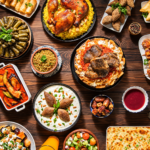
The traditional Saudi dishes every visitor should try reveal just how diverse the Kingdom’s food culture really is. Saudi cuisine is not built around one national recipe or one style of cooking. Different regions have developed their own dishes based on climate, agriculture, trade routes and local ingredients.
- Traditional Saudi Dishes Every Visitor Should Try at a Glance
- Jareesh: Saudi Arabia’s National Dish
- Kabsa: The Famous Saudi Rice Dish Visitors Should Not Miss
- Saleeg: A Creamy Hijazi Rice Dish From Western Saudi Arabia
- Marqooq, Mandi and Haneeth Show Saudi Arabia’s Regional Diversity
- Traditional Saudi Breads, Breakfast Foods and Everyday Dishes
- Saudi Coffee, Dates and the Meaning of Hospitality
- Desserts Every Visitor Should Try in Saudi Arabia
- Discover Seafood and Southern Saudi Food Beyond the Famous Rice Dishes
- How to Eat Traditional Saudi Food Like a Respectful Visitor
- Where to Look for Authentic Saudi Food During Your Trip
- Common Mistakes Visitors Make When Trying Saudi Food
- Traditional Saudi Dishes Every Visitor Should Try on a First Trip
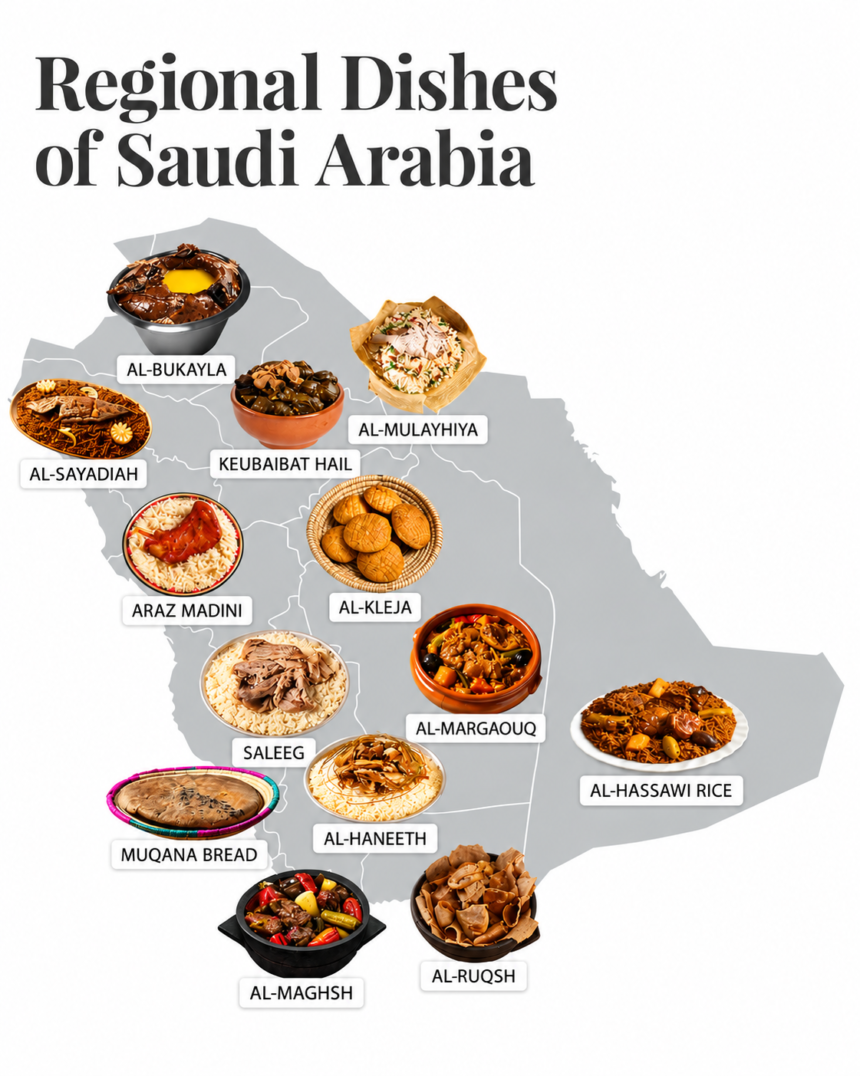
Visit Saudi describes Saudi cuisine as highly regional, with Jareesh officially recognised as the national dish. It also highlights Marqooq in Riyadh, Saleeg in Makkah, Kleija in Al Qassim, Hasawi rice in the Eastern Province and Haneeth in Aseer as examples of foods strongly connected with particular parts of the country.
That regional diversity is what makes eating in Saudi Arabia interesting for travellers. A visitor in Riyadh can encounter wheat-based Najdi dishes, while Jeddah and the Hijaz have their own rice, seafood and breakfast traditions. Aseer brings mountain cooking and slow-prepared meat, while Jazan has dishes based on fish, fermented breads, corn, millet, banana, honey and ghee.
Saudi hospitality is also closely connected with food. Guests are traditionally welcomed with Saudi coffee and dates, reflecting a wider cultural emphasis on generosity and hosting.
For visitors, the best approach is therefore not to search only for one famous dish. Try a combination of rice, wheat, bread, meat, sweets and coffee so that you experience several sides of the country’s culinary heritage.
Traditional Saudi Dishes Every Visitor Should Try at a Glance
Saudi food ranges from large rice platters and slow-cooked meat to creamy wheat dishes, regional breads and rich desserts.
| Dish | Main Ingredients | Region or Association |
|---|---|---|
| Jareesh | Crushed wheat, meat, spices | Najd / national dish |
| Kabsa | Rice, chicken or meat, spices | Across Saudi Arabia |
| Saleeg | Rice, milk, broth, chicken | Hijaz / Makkah-Taif |
| Marqooq | Thin dough, meat, vegetables | Najd / Riyadh |
| Haneeth | Slow-cooked meat | Aseer |
| Mandi | Rice and slow-cooked meat | Southern and western regions |
| Mutabbaq | Stuffed folded pastry | Popular in western Saudi Arabia |
| Kleija | Spiced filled biscuit | Al Qassim |
| Areeka | Bread or dough, dates, honey, ghee | Aseer / south |
| Hasawi rice | Red rice and regional accompaniments | Al Ahsa / Eastern Province |
| Samak Mkashan | Spiced grilled fish | Jazan |
| Saudi coffee and dates | Coffee, cardamom, dates | Across the Kingdom |
The strongest food itinerary mixes nationally recognised dishes with specialties from the region you are visiting.
A traveller spending several days in Riyadh, Jeddah and Aseer will therefore encounter very different versions of Saudi food.
Jareesh: Saudi Arabia’s National Dish
Jareesh is one of the most important dishes to try because Visit Saudi identifies it as the Kingdom’s official national dish.
It is based on cracked or crushed wheat and is traditionally cooked slowly until it develops a thick, comforting texture. Meat, stock, spices and dairy ingredients may be incorporated depending on the recipe and region.
Visit Saudi’s culinary guide explains that wheat played a major role in Saudi cooking before rice became as widespread as it is today. Dishes such as jareesh and harees reflect that older grain-based food tradition.
What does Jareesh taste like?
The texture is softer and heavier than rice. Depending on preparation, it may have flavours from meat stock, ghee and spices such as cardamom, cumin or cinnamon.
It is generally more comforting than spicy.
When is it eaten?
Jareesh can appear during family meals, celebrations and traditional restaurant menus. Similar slow-cooked wheat dishes also have strong connections with Ramadan and wedding occasions.
Who should try it?
Visitors interested in traditional food history should put Jareesh high on the list because it represents a side of Saudi cuisine that existed before rice became dominant.
It also offers a useful contrast to Kabsa and other rice-based dishes.
Kabsa: The Famous Saudi Rice Dish Visitors Should Not Miss
Kabsa is probably one of the most internationally recognisable Saudi dishes.
Earlier Visit Saudi culinary material described chicken Kabsa as widely considered a national dish before Jareesh received official national-dish recognition. It remains one of the country’s most important and popular foods.
Kabsa combines rice with meat or chicken and a complex mixture of spices.
Typical flavouring can include:
- Cumin
- Coriander
- Turmeric
- Cloves
- Cardamom
- Cinnamon
- Saffron
- Dried black lime
The protein is often cooked with the spices before the rice absorbs the resulting broth and flavour.
How is Kabsa served?
Large platters are common, particularly when the dish is being shared.
Garnishes can include nuts or raisins, while a spicy tomato-based sauce may be served alongside.
Visit Saudi’s guide notes that chicken may be replaced by lamb or beef depending on the version.
Why visitors should try it
Kabsa demonstrates how Saudi cooking uses aromatic spices rather than relying purely on chilli heat.
It is also a strong example of communal dining because large platters are often shared.
For first-time visitors unsure where to begin, Kabsa is one of the most accessible Saudi dishes.
Saleeg: A Creamy Hijazi Rice Dish From Western Saudi Arabia
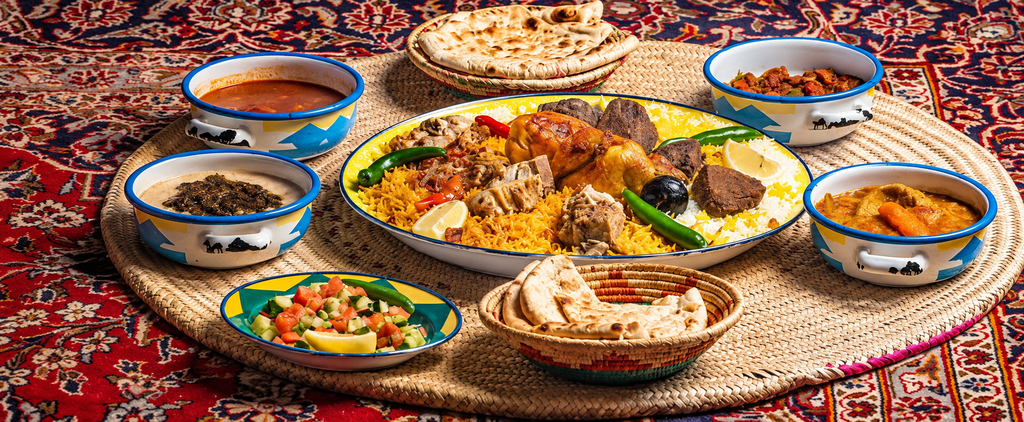
Saleeg is very different from Kabsa even though both dishes use rice and chicken.
It is closely associated with western Saudi Arabia, particularly the Hijaz, Makkah and Taif.
Visit Saudi describes Saleeg as a regional specialty and explains that the rice is cooked with broth before milk, butter or ghee is added to create a creamy consistency.
The result can feel closer to a savoury rice pudding or creamy risotto than a typical Gulf rice platter.
What makes Saleeg distinctive?
The texture is the main difference.
Kabsa usually features more separate grains of seasoned rice, while Saleeg is soft and creamy.
Chicken is typically served on top or alongside the rice.
Cardamom is one of the ingredients closely associated with the dish. Visit Saudi specifically notes its role in the flavour of Saleeg.
Where should visitors try it?
Taif is particularly strongly associated with Saleeg. Visit Saudi’s recent destination guide specifically recommends local restaurants for the city’s signature Saleeg.
Travellers exploring Jeddah, Makkah Province or Taif should therefore consider making it part of their regional food itinerary.
Marqooq, Mandi and Haneeth Show Saudi Arabia’s Regional Diversity
Some of the most interesting Saudi dishes become easier to understand when you connect them with geography.
Marqooq, Mandi and Haneeth each represent a different side of regional cooking.
Marqooq
Visit Saudi identifies Marqooq as a specialty associated with Riyadh.
The dish typically combines meat, vegetables and pieces of thin dough cooked together in a rich broth.
Instead of rice, the dough becomes an important carbohydrate component.
This makes Marqooq especially useful for travellers who want to discover traditional Najdi food beyond Kabsa.
Mandi
Mandi is widely eaten across Saudi Arabia and the wider Arabian Peninsula.
It generally combines seasoned rice with meat cooked slowly until tender. Traditional preparations are associated with cooking methods that use enclosed heat to produce soft meat and distinctive flavour.
Visitors will find many restaurants specialising in Mandi, particularly in cities where southern and Yemeni culinary influences are strong.
Haneeth
Haneeth is strongly associated with Aseer and southern Saudi Arabia.
Visit Saudi describes traditional Haneeth as meat cooked slowly using heated earth, wood and local plants, with preparation taking several hours before the meat is served with rice.
The method is important because Haneeth is not simply another plate of meat and rice.
Its identity comes from slow cooking and the way heat and local materials are used to tenderise the meat.
Why regional dishes matter
Trying only Kabsa can create the impression that Saudi cuisine is dominated entirely by similar rice dishes.
Marqooq and Haneeth show that cooking methods, grains and textures change significantly from region to region.
Traditional Saudi Breads, Breakfast Foods and Everyday Dishes
Not every memorable Saudi dish is a large dinner platter.
Breakfast, bread and simple everyday food can provide an equally useful introduction to local cuisine.
Khubz
Visit Saudi’s food guide describes khubz as a simple flatbread traditionally used to accompany stews, dips and other dishes.
Fresh bread is particularly important because it often acts as both an accompaniment and a way of eating shared food.
Regional breads
Southern Saudi Arabia has its own bread traditions.
Visit Saudi notes that Jazan commonly uses khameer and lahooh. Both can be prepared from wholewheat or corn and may be fermented before cooking, producing a distinctive flavour.
In Aseer, Mifa bread is another important regional bread traditionally baked in a tannour-style oven after fermentation.
Mutabbaq
Mutabbaq is a popular folded and stuffed pastry commonly associated with western Saudi Arabia.
Depending on the version, the filling may contain egg, vegetables and meat.
It works particularly well as a casual meal or street-food-style snack rather than a formal restaurant dish.
Breakfast culture
Saudi breakfast can also include beans, eggs, bread, cheeses and regional preparations.
Visitors should avoid focusing only on lunch and dinner because casual breakfast restaurants often reveal how residents actually eat in everyday life.
For food travellers, one traditional breakfast can provide as much insight as an expensive evening meal.
Saudi Coffee, Dates and the Meaning of Hospitality
Saudi food culture is not complete without coffee and dates.
Visit Saudi describes hospitality as one of the defining characteristics of Saudi society and says guests are traditionally welcomed with Saudi coffee and dates.
This is more than a refreshment.
It is a social ritual connected with generosity and respect.
Saudi coffee
Saudi coffee is generally lighter in appearance than the dark espresso-style coffee many visitors expect.
It is commonly flavoured with cardamom and can incorporate other aromatic ingredients depending on the region or household.
Visit Saudi notes that cardamom is ground with coffee beans as part of the region’s signature coffee tradition.
Dates
Saudi Arabia produces many varieties of dates, and different regions are associated with different types.
Ajwa is particularly associated with Madinah, while Khalas is another highly regarded variety with a caramel-like flavour profile.
Dates are frequently served beside coffee because their sweetness balances the coffee’s aromatic bitterness.
How visitors should approach the experience
If you are offered coffee and dates in a cultural centre, traditional hotel or private gathering, accept them as part of the hospitality experience rather than thinking of them simply as complimentary snacks.
Observe how the host serves other guests and follow their lead.
Desserts Every Visitor Should Try in Saudi Arabia
Saudi desserts often combine dates, bread, flour, honey, ghee and regional ingredients.
They can be considerably heavier than Western-style cakes and are frequently designed for sharing.
Kleija
Kleija is particularly associated with Al Qassim.
Visit Saudi identifies it as one of the Kingdom’s important regional specialties.
It is a baked pastry or biscuit with a spiced filling and is often enjoyed with coffee or tea.
For visitors travelling through Qassim, it can also make a practical edible souvenir.
Areeka
Areeka is strongly associated with the south, particularly Aseer.
Traditional versions combine bread or dough with ingredients such as dates, honey and ghee.
Visit Saudi’s Aseer guide describes a regional preparation where the dough is cooked, then served with ghee and honey and decorated with dates.
It is rich, filling and best shared.
Marsah
Jazan has its own distinctive dessert called Marsah.
Visit Saudi describes it as a mixture of bread and banana topped with honey and ghee.
The combination reflects the ingredients and food traditions of the region.
Dates as dessert
Sometimes the simplest ending is also the most traditional.
High-quality dates served with Saudi coffee can be enough, particularly after a heavy rice or meat meal.
Discover Seafood and Southern Saudi Food Beyond the Famous Rice Dishes
Saudi Arabia has long coastlines on both the Red Sea and Arabian Gulf, so visitors should not assume local cuisine revolves only around meat.
Jazan, Jeddah and Eastern Province destinations provide especially interesting seafood traditions.
Samak Mkashan
Visit Saudi lists Samak Mkashan among the traditional dishes of Jazan.
The dish uses Hamour fish seasoned with spices and cooked over embers with vegetables.
It demonstrates the importance of fire cooking and seafood in southwestern cuisine.
Jazan flavours
Jazan cooking can also include fermented breads, corn, millet, banana and locally distinctive coffee preparations.
The region’s cuisine therefore feels noticeably different from central Saudi food.
Hasawi rice
The Eastern Province also has its own regional ingredient traditions.
Visit Saudi identifies Hasawi rice with the Eastern Province as one of the examples of Saudi Arabia’s regional culinary diversity.
Travellers spending time in Al Ahsa should therefore look beyond general Saudi restaurant menus and ask about local dishes using regional ingredients.
Why seafood travellers should explore locally
A generic seafood restaurant may serve internationally familiar grilled fish.
A traditional regional restaurant may use local spices, cooking methods and accompaniments that provide a much stronger sense of place.
How to Eat Traditional Saudi Food Like a Respectful Visitor
Saudi restaurants range from international dining rooms to traditional floor-seating spaces.
Visitors do not need to know complicated etiquette, but a few habits can make the experience smoother.
Expect sharing
Large Saudi meals are often designed for several people.
A large platter of rice and meat may arrive in the centre rather than as individual plates.
If you are dining with Saudi hosts, watch how the group begins eating and follow their lead.
Right-hand tradition
When food is eaten directly by hand in a traditional setting, using the right hand is customary.
In ordinary restaurants where cutlery is provided, using normal cutlery is perfectly acceptable.
Visitors should not feel pressured to eat by hand simply to appear authentic.
Do not over-order
Saudi portions can be generous, especially rice and meat dishes.
Ask staff about serving size before ordering several mains.
Sharing two or three different dishes may provide a better food experience than everyone ordering the same large platter.
Ask about regional origin
One useful question is:
“Which region is this dish from?”
Saudi cuisine becomes much more interesting when you understand whether a recipe comes from Najd, Hijaz, Aseer, Jazan, Qassim or the Eastern Province.
Accept local recommendations
Visit Saudi itself encourages travellers to ask residents for recommendations because many memorable cultural experiences are discovered through local knowledge.
This advice is particularly useful with food.
Where to Look for Authentic Saudi Food During Your Trip
Travellers should not assume traditional food is only available in heritage villages.
Saudi cities have restaurants specialising in local cuisine at many price levels.
Riyadh
Riyadh is a strong destination for Najdi food.
Look for:
- Jareesh
- Marqooq
- Kabsa
- Traditional meat dishes
Restaurants focusing specifically on Saudi comfort food can provide a more useful introduction than international hotel dining.
Jeddah
Jeddah combines Hijazi traditions with Red Sea influences.
Visitors can look for:
- Saleeg
- Mutabbaq
- Seafood
- Traditional breakfast
- Regional rice dishes
Historic Jeddah is also useful for exploring markets and food culture. Visit Saudi describes Bab Makkah Souq as a longstanding market with spices, dried fruit, herbs and local delicacies.
Taif
Taif is particularly important for Saleeg.
Visit Saudi specifically identifies restaurants in the city where travellers can experience this signature regional dish.
Aseer and Abha
Look for:
- Haneeth
- Areeka
- Mifa bread
- Aseedah
These dishes offer a substantially different experience from Riyadh or Jeddah cuisine.
Jazan
Seek out:
- Samak Mkashan
- Mahshoosh
- Khameer
- Lahooh
- Marsah
Visit Saudi’s Jazan food guide describes these as regional preparations passed through generations.
Common Mistakes Visitors Make When Trying Saudi Food
One common mistake is assuming every traditional Saudi dish is Kabsa.
Kabsa is important, but Jareesh, Saleeg, Haneeth, Marqooq and regional breads tell equally important stories.
Another mistake is ordering too much. Large rice platters may be designed for sharing, so asking about portions can reduce waste and allow you to sample more dishes.
Visitors should also avoid treating all Gulf cuisine as identical. Saudi food shares ingredients and traditions with neighbouring countries, but regions within Saudi Arabia themselves have distinctive recipes.
Another mistake is eating only at international restaurants in major shopping centres. These can be excellent, but they may reveal very little about Saudi food heritage.
Travellers who want an authentic experience should include traditional restaurants, breakfast places, local markets and regional specialties.
Finally, do not judge a restaurant entirely by its décor. A simple family restaurant may serve a more traditional recipe than an expensive venue designed primarily for visitors.
Traditional Saudi Dishes Every Visitor Should Try on a First Trip
If you have limited time in Saudi Arabia, focus on variety rather than trying ten similar rice dishes.
A practical first-time tasting list could include:
| Food Experience | What to Try |
|---|---|
| National dish | Jareesh |
| Classic rice dish | Kabsa |
| Hijazi specialty | Saleeg |
| Najdi dish | Marqooq |
| Southern meat dish | Haneeth |
| Casual food | Mutabbaq |
| Bread | Khubz or regional bread |
| Dessert | Kleija, Areeka or Marsah |
| Hospitality tradition | Saudi coffee and dates |
| Coastal dish | Regional grilled fish |
This gives you grains, rice, meat, bread, dessert, seafood and hospitality traditions rather than one narrow view of Saudi cuisine.
The traditional Saudi dishes every visitor should try ultimately depend on where the journey takes you.
Jareesh provides a link to the Kingdom’s wheat-based culinary heritage and now holds official recognition as the national dish. Kabsa remains one of the most famous Saudi meals, while Saleeg brings a creamier Hijazi approach to rice and chicken.
Marqooq reflects Najdi traditions, Haneeth represents Aseer’s slow-cooking methods, and regional foods in Jazan show how seafood, fermented breads, banana, honey and local grains can reshape the Saudi dining experience.
Desserts such as Kleija, Areeka and Marsah add another layer, while Saudi coffee and dates demonstrate that hospitality itself is an essential part of the country’s food culture.
The best Saudi food journey therefore does not begin with asking, “What is the one famous dish?”
It begins by asking which region you are visiting, what people there traditionally eat and which local recipe tells the strongest story about that place.
Do follow us on Instagram
Read More – How to Find Authentic Emirati Food in Dubai: A Local Food Guide for Visitors